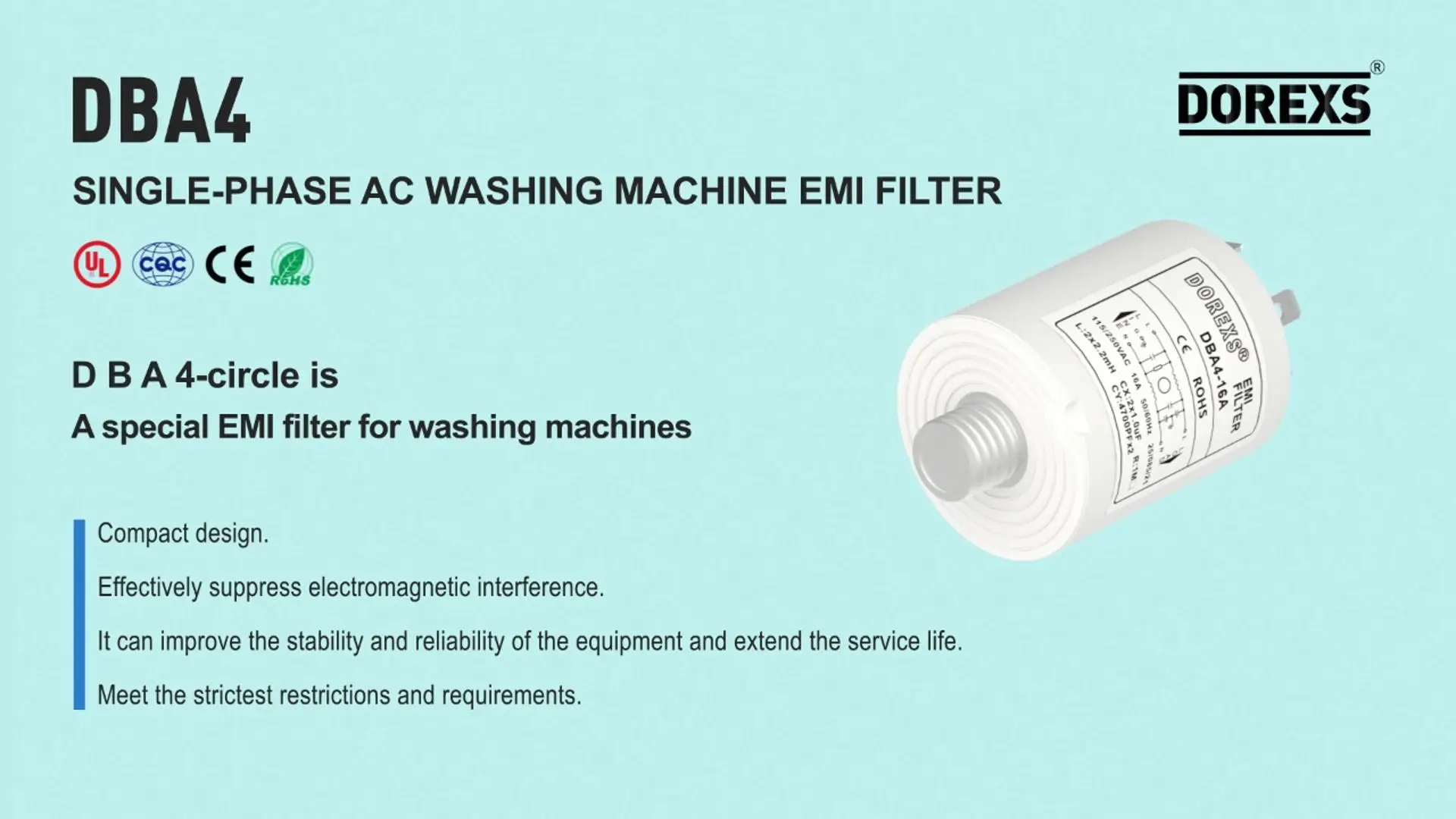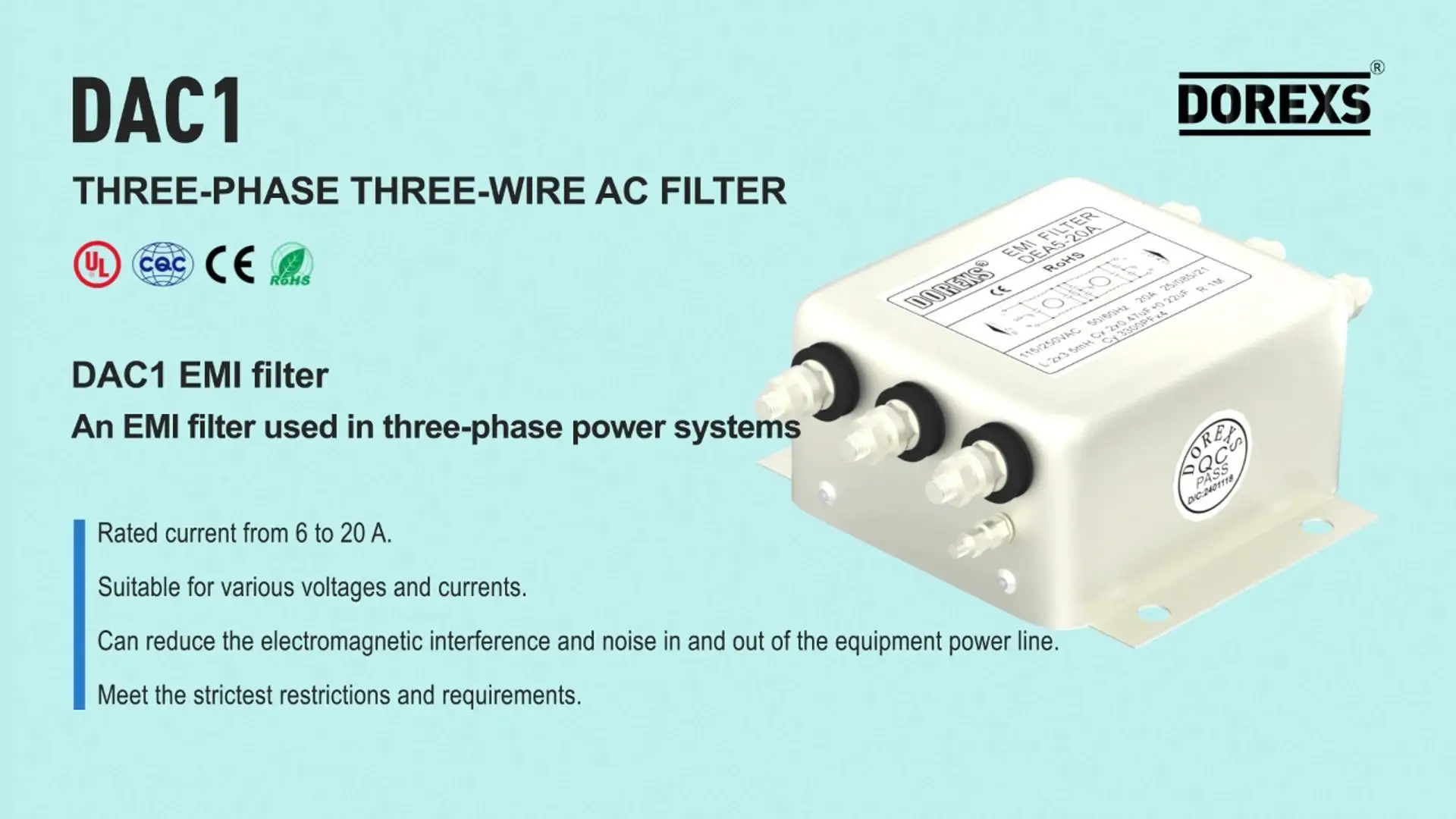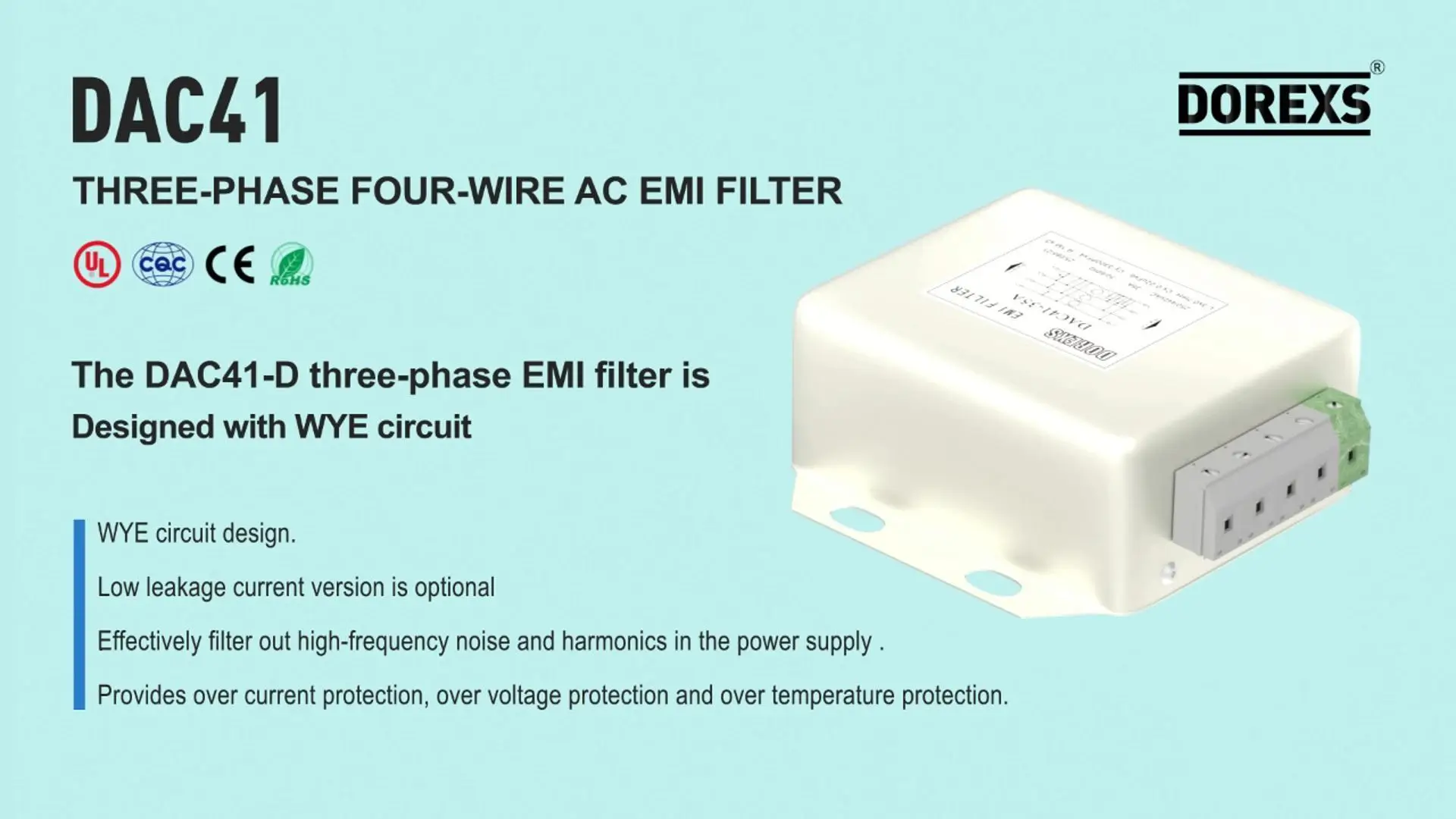
EMI Filter for AC Power Supply

An EMI filter for AC power supply is a passive bidirectional network used to filter out electromagnetic interference in AC power supply systems. The main function of an AC power EMI filter is to prevent external electromagnetic noise from interfering with the operation of the power supply device and its load while suppressing the EMI generated by the power supply device itself, as well as the EMI generated by other devices and propagated through the power supply. In electronic equipment, an EMI power filter can be inserted between the AC power grid and the power supply, creating a blocking barrier between the EMI noise of the two and providing bidirectional noise suppression.
Learn more about selecting the right power filter...
Working Principle
The principle of an AC power EMI filter is based on an impedance matching network. The greater the impedance matching between the input and output sides of the filter and the power supply and load sides, the more effective the attenuation of electromagnetic interference. The power filter can effectively filter out specific frequencies in the power line or frequencies outside of the desired range, resulting in a power signal of a specific frequency or eliminating power signals beyond a specific frequency.
 |
Main Components
- Common-mode inductor: Used to attenuate common-mode noise on the AC input line. The two coils of the common-mode inductor generate magnetic flux in the same direction. After coupling, the total inductance increases rapidly, presenting a large inductive reactance to the common-mode signal, making it difficult to pass.
- Differential-mode inductor: forms a low-pass filter between the independent ports of the AC input line along with the differential-mode capacitor. It is used to suppress differential-mode interference noise on the AC input line.
- Common-mode capacitor: connected across the output terminals, with its midpoint grounded. It effectively suppresses common-mode interference.
- Differential-mode capacitor: connected across both ends of the AC input line to filter out line-to-line interference between the two power lines, also known as series-mode interference.
Types and Structures
- Based on the processed signal, it can be divided into analog filters and digital filters.
- Based on the structure, it can be divided into integrated and discrete. The integrated type encapsulates the inductor coil, capacitor, etc., in a metal or plastic shell, while the discrete type installs the inductor coil, capacitor, etc., on a printed circuit board to form a noise suppression filter.
A more complex EMI filter uses a dual-stage or multi-stage structure, consisting of two or more single-stage EMI filters, which can better suppress grid noise.
Applications and Precautions
- EMI filters installed at the input of power supply equipment can effectively prevent electromagnetic interference from affecting the power supply equipment and its load.
- Widely used in electronic equipment to suppress conducted EMI noise.
 |
Consider a scenario where a sensitive data acquisition system is powered by AC power. To ensure the reliability and accuracy of the system, an EMI filter is installed at the input of the power supply.
- Challenge: The power line is susceptible to electromagnetic noise from nearby industrial equipment, causing errors in the data acquisition system.
- Solution: Install a multi-stage EMI filter. The first stage consists of a common-mode choke to suppress common-mode noise. The second stage includes differential-mode inductors and capacitors to suppress differential-mode noise. The filter is designed to meet the specific noise requirements of the data acquisition system.
- Result: After installing the filter, the noise level on the power line is significantly reduced, ensuring accurate and reliable data acquisition.
- When selecting an EMI filter, consider its insertion loss, rated current, and other parameters to ensure the filter performs well under maximum operating current conditions.
- When installing the EMI filter, ensure it is properly connected to the power supply and load, and pay attention to the grounding measures of the filter.
- Avoid bundling the wires at the filter's input (power) end and output (load) end together, as this may increase electromagnetic coupling between the input and output terminals, negatively affecting the filtering effect.
As a leading manufacturer of EMI filtering solutions, DOREXS has extensive R&D experience and advanced production equipment. We are committed to providing customers with high-quality EMI filtering products and services to meet the needs of multiple fields from industrial to consumer electronics.
DBA3 Series EMI Power Filters: High-Performance Solutions
DAP1 Series PCB EMI Filters: Integrated Circuits
Related Article