

Model No: HFT
High Frequency Transformer 1KW-80KW
1KW-80KW
1KV~1.4KV/400~600V
16K~20KHz
Support customization
1KV~1.4KV/400~600V
16K~20KHz
Support customization
Quantity :
Subscribe to our Newsletter
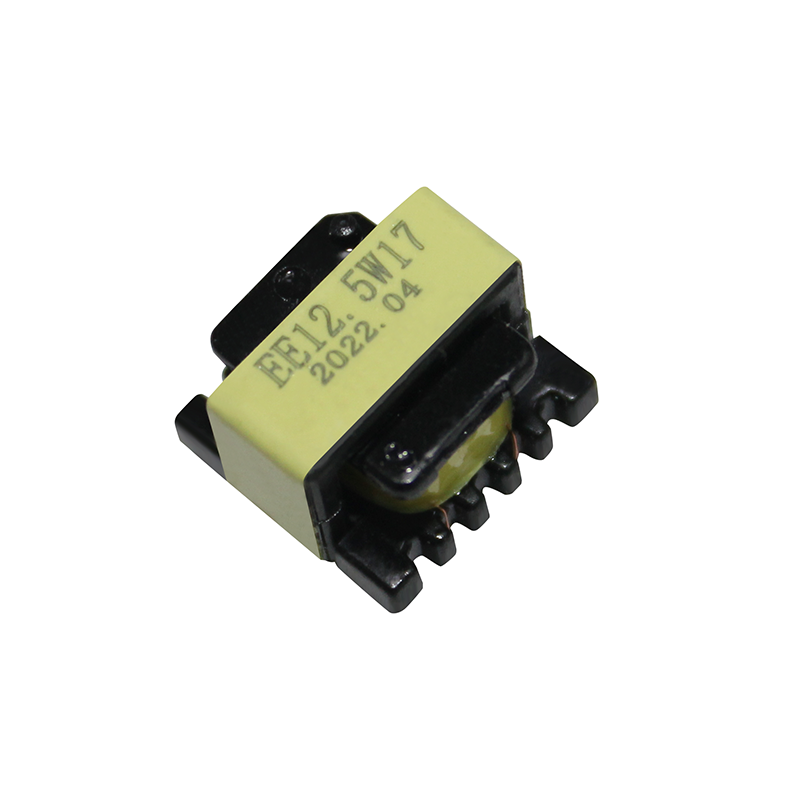 | HFT 12KHZ-20KHZ High Frequency Transformer | |
Certification: CE、Rohs | Capacity:1KW~80KW | |
| Rated Frequency: 16K~20KHz | Input voltage: 1KV~1.4KV/400~600V | |
| Sound Level: <60dB |
HFT series high frequency transformer is an electronic component widely used in high frequency circuits. It is widely used in rapid traffic auxiliary inverters, power converters, LLC topology converters, photovoltaic inverters, phase-shifted full-bridge topology converters and communication equipment.
Features
1. Safe, stable, flame retardant and fireproof.
2. Small size and light weight.
3. Wide frequency characteristics and high efficiency.
4. Low loss and excellent performance.
5. High power density and high insulation strength.
6. Strong customization capability
2. Small size and light weight.
3. Wide frequency characteristics and high efficiency.
4. Low loss and excellent performance.
5. High power density and high insulation strength.
6. Strong customization capability
High Frequency Transformer TIPS
Working principle of high frequency transformer
The transformer is a device that transforms AC voltage, current and impedance. It is composed of an iron core (or magnetic core) and a coil, and works on the principle of electromagnetic induction. High frequency transformers usually operate in the frequency range of 20 kHz to several hundred kHz, and are suitable for voltage conversion and power transmission in high-frequency circuits.
The difference between high frequency transformer and low frequency transformer
The working principle of low-frequency transformer is the same as that of high frequency transformer, and the main difference lies in the operating frequency range. High frequency transformers usually work in the frequency range of tens of KHz to hundreds of KHz, while low-frequency transformers usually work at 50 Hz/60 Hz. High frequency transformers are usually smaller, lighter, and more efficient, but the design and manufacturing process are more complicated.
How are high-frequency transformers classified according to their operating frequency?
High frequency transformers can be classified according to their operating frequency: 10kHz-50kHz, 50kHz-100kHz, 100kHz~500kHz, 500kHz~1MHz, and above 10MHz.
What are the main applications of high frequency transformers?
- Switching power supplies
- Communication equipment
- Medical equipment
- Photovoltaic inverters
- Electronic instruments and equipment
- Electronic vehicle chargers
Is it normal for a high frequency transformer to generate heat during operation?
It is normal for a high-frequency transformer to generate a certain amount of heat during operation. Reasonable design and effective heat dissipation management can ensure that the transformer operates within a safe temperature range. Excessive temperature may affect the performance and life of the transformer, so effective temperature control management is required.
Common problems and solutions for high frequency transformers
What to do if the temperature rise is too high?
Solution: Strengthen the heat dissipation measures of the transformer, such as adding cooling fans, using heat sinks, etc.
How to deal with winding breakdown?
Solution: Use higher quality and stronger pressure-resistant insulating materials, and reasonably design the winding structure.
How to solve the noise generated by the circuit?
Solution: Use high-quality materials to reduce the generation of impurity signals in the circuit, and add circuit components such as capacitors for noise filtering.
What to do if the inductance value deviation is too large?
Solution: Use high-precision coil manufacturing technology, accurately design the number of turns and wire diameter, and improve production quality.
Precautions for high frequency transformer wiring
- Select wires and connectors of appropriate specifications to ensure that the connection is tight and reliable.
- Keep the wiring length short, avoid cross wiring, and reduce the impact of inductance and resistance on the circuit.
- Pay attention to shielding treatment to improve the system's anti-interference ability.
- Reasonably arrange heat dissipation to ensure that the transformer operates stably within the normal operating temperature range.
Comprehensive score