Application of EMI Filter in Inverter
Inverters are electronic devices that convert direct current (DC) into alternating current (AC), and they play a vital role in modern power systems. Especially in the field of renewable energy, such as solar and wind energy, inverters are the bridge between energy generation equipment and the power grid, ensuring that the generated electricity can be efficiently integrated into the power grid or supplied to local loads. Therefore, the performance and stability of the inverter directly affect the utilization efficiency of renewable energy and the overall reliability of the system.
Due to the high-frequency switching operation of the inverter, a large amount of electromagnetic interference (EMI) is usually generated. EMI not only affects the normal operation of the inverter itself, but also affects other sensitive electronic equipment in the circuit, such as communication failure or equipment damage. Therefore, solving the EMI problem is the key to improving the performance and stability of the inverter. This article focuses on the working principle of the inverter EMI filter, its function, classification and how to select the inverter EMI filter.
Due to the high-frequency switching operation of the inverter, a large amount of electromagnetic interference (EMI) is usually generated. EMI not only affects the normal operation of the inverter itself, but also affects other sensitive electronic equipment in the circuit, such as communication failure or equipment damage. Therefore, solving the EMI problem is the key to improving the performance and stability of the inverter. This article focuses on the working principle of the inverter EMI filter, its function, classification and how to select the inverter EMI filter.
 |
Working principle of inverter and EMI generation mechanism
Power conversion process
The basic working principle of the inverter is to convert DC power into AC power by controlling the switching state of switching elements (such as IGBT, MOSFET, etc.). This process usually includes steps such as DC voltage adjustment, PWM (pulse width modulation) control, and filtering to ensure that the output AC power has a stable voltage and frequency.
Example of solar inverter
Example of solar inverter
- 1. Solar energy collection: Solar energy is collected and stored through photovoltaic panels (PV panels).
- 2. DC power generation and regulation: Photovoltaic cells use the photoelectric effect to convert light energy into direct current (DC). The DC voltage regulator then adjusts the DC power of different voltages to a suitable input range for the inverter.
- 3. Inverter conversion: DC power is converted into alternating current (AC) through an inverter. The working principle of the inverter is to convert the current and voltage of DC power into AC power that can be used in the home, usually a 50Hz or 60Hz sine waveform.
- 4. AC power distribution: The converted AC power can be directly used by the household, or it can be transmitted to the household circuit through the power distribution system for use by household appliances. If the system is grid-connected, the AC power will be fed into the grid; if it is an off-grid system, it will be stored in the battery for use when the sun is insufficient.
- 5. Energy storage system (optional):In some systems, the electricity generated can be stored in batteries for use when the sun is not shining. Energy storage systems need to be used in conjunction with inverters to ensure that the energy is converted and distributed efficiently.
The conversion process is mainly achieved through the inverter, so the stability and reliability of the inverter operation are crucial.
EMI Generation Mechanism in Inverter
The main reasons for the EMI generated by the inverter during operation include switching frequency, fast switching of switching elements, parasitic inductance and capacitance in the circuit, etc. High-frequency switching operations will produce rapid changes in voltage and current, which will in turn generate electromagnetic radiation and conducted interference. These interferences will propagate through power lines, ground lines, and space radiation, affecting surrounding equipment.
Steps to effectively reduce EMI
- Proper Grounding: Make sure the inverter is properly grounded to minimize the risk of EMI.
- High-quality components: Use high-quality components in the inverter circuit , such as selecting low-noise, high-efficiency switching elements (such as MOSFET or IGBT) to reduce EMI.
- Optimize circuit layout: shorten high-frequency signal and high-current paths as much as possible, and reduce wire length to reduce EMI caused by inductance and resistance.
- Shielding: Use metal casing or shielding materials to surround key components inside the inverter, and use shielded cables to connect circuits to reduce the radiation of external interference and the propagation of internal noise.
- Ferrite Beads: Ferrite beads are placed on DC and AC cables to absorb EMI.
- Install EMI filters : Install inverter EMI filters at the input and output of the inverter to reduce EMI .
- Intelligent control algorithm: Use intelligent control algorithm to dynamically adjust the inverter's operating mode to reduce EMI.
- Proper installation of the inverter and cables will also reduce EMI.
Reducing electromagnetic interference (EMI) in the inverter is very important to maintain the stability and safety of the circuit system. By taking the above measures, the EMI risk can be effectively reduced, the performance and stability of the inverter can be guaranteed, and the utilization efficiency of renewable energy can be improved .
Some common EMI filters used in DC to AC conversion applications
Common mode choke: Common mode choke, also known as common mode inductor, is an electronic component used to suppress common mode interference. It is usually used to filter common mode electromagnetic interference signals, especially in computer switching power supplies, to suppress the electromagnetic waves generated by high-speed signal lines from radiating outward. Common mode chokes also have the advantages of high balance, easy use, and high quality. They are widely used in common mode interference suppression of switching power supply input L, N lines and high-speed differential signals. Common mode chokes play a role in suppressing the introduction of external EMI signals and attenuating the EMI signals generated by the line itself when it is working, thereby effectively reducing the intensity of EMI interference.
Common mode chokes are a simple, reliable and cost-effective solution for reducing common mode noise.
Common mode chokes are a simple, reliable and cost-effective solution for reducing common mode noise.
Common mode filter: A common mode filter is a device used to suppress EMI noise in electronic devices. It is usually placed at the output end of the inverter to reduce EMI.
Common mode filters usually use ferrite cores and are wound in parallel with two wires. They have the characteristics of suppressing interference sources with low differential mode noise signals and are difficult to deform in high-speed signals. They have excellent noise suppression measures and can effectively suppress high common mode noise and low differential mode noise signals.
Common mode filters filter out common mode signals through a series combination of capacitors and inductors. When a differential mode signal enters, no impedance is generated and the signal can pass; when common mode noise enters, a mutually reinforcing impedance is generated, which hinders the passage of common mode noise, thereby effectively filtering it out of the signal.
Common mode filters usually use ferrite cores and are wound in parallel with two wires. They have the characteristics of suppressing interference sources with low differential mode noise signals and are difficult to deform in high-speed signals. They have excellent noise suppression measures and can effectively suppress high common mode noise and low differential mode noise signals.
Common mode filters filter out common mode signals through a series combination of capacitors and inductors. When a differential mode signal enters, no impedance is generated and the signal can pass; when common mode noise enters, a mutually reinforcing impedance is generated, which hinders the passage of common mode noise, thereby effectively filtering it out of the signal.
Differential mode filter: The differential mode filter is an EMI filter placed at the input of the inverter to reduce differential mode interference signals. It attenuates differential mode interference signals by utilizing the characteristics of low impedance of inductors at low frequencies and high impedance at high frequencies, and the characteristics of high impedance of capacitors at low frequencies and low impedance at high frequencies.
Differential mode filters are usually composed of components such as inductors and capacitors, and can form structures such as L-type "π-type filter circuit" to effectively filter out differential mode interference signals.
Differential mode filters are usually composed of components such as inductors and capacitors, and can form structures such as L-type "π-type filter circuit" to effectively filter out differential mode interference signals.
LC filter: LC filter is a filter circuit composed of an inductor (L) and a capacitor (C) to remove or allow signals of a specific frequency to pass . It is usually placed at the AC input end of the inverter.
It uses the characteristics of capacitors passing high frequencies and blocking low frequencies, and inductors passing low frequencies and blocking high frequencies, and uses them in combination to filter out or allow signals of specific frequencies.
LC filters are widely used in electronic devices, such as power supply circuits, communication interface circuits, etc., to improve the electromagnetic compatibility of the equipment. In addition, they are also used in audio equipment such as sound systems and radios to adjust the frequency band of audio signals.
Line filter: Line filter is an EMI filter placed at the AC input of the inverter to reduce EMI. It usually consists of two or more windings wound on a magnetic core and is designed to suppress common-mode interference in AC signals without affecting differential-mode signals.
 |
There are many types of line filters, such as LC filters, Pi filters, etc., which are usually placed between the power supply and the powered device to reduce the amount of high-frequency noise transmitted from the power supply to the device. Line filters are an effective and reliable solution to reduce EMI in electrical systems . They are widely used in electronic devices, such as power supply circuits, communication interface circuits, etc., to improve the electromagnetic compatibility of the equipment.
The basic principle of EMI filter
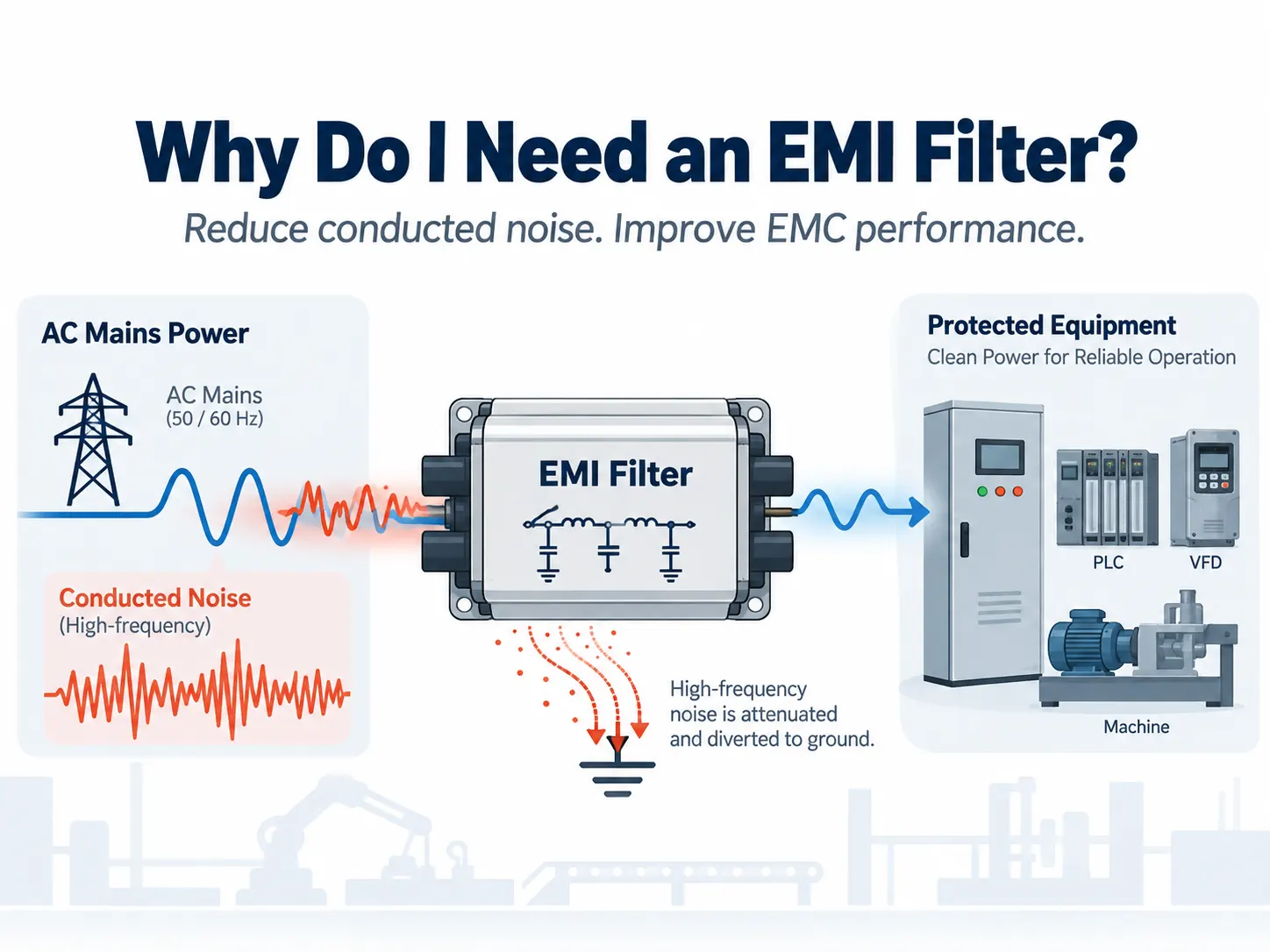
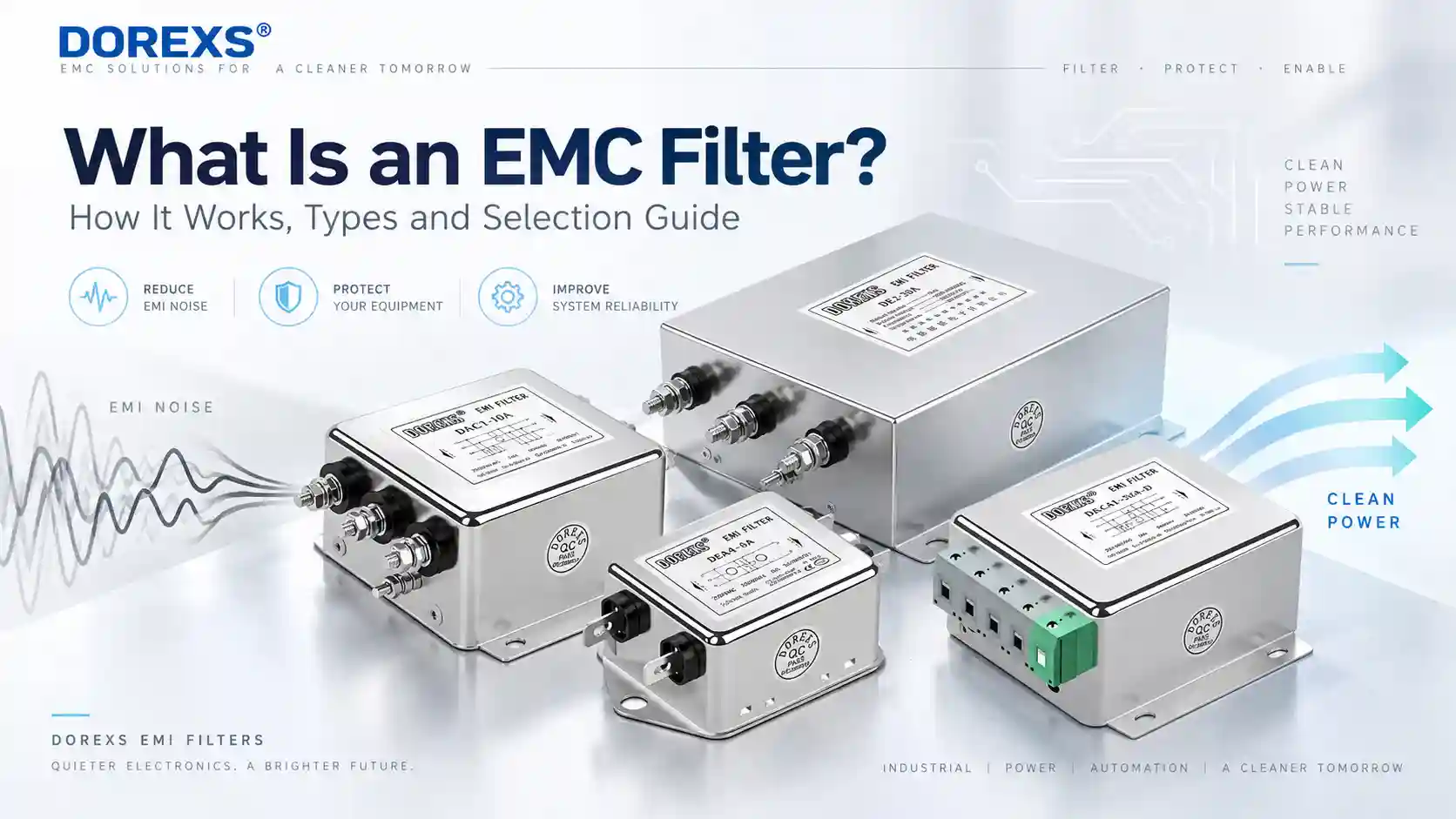
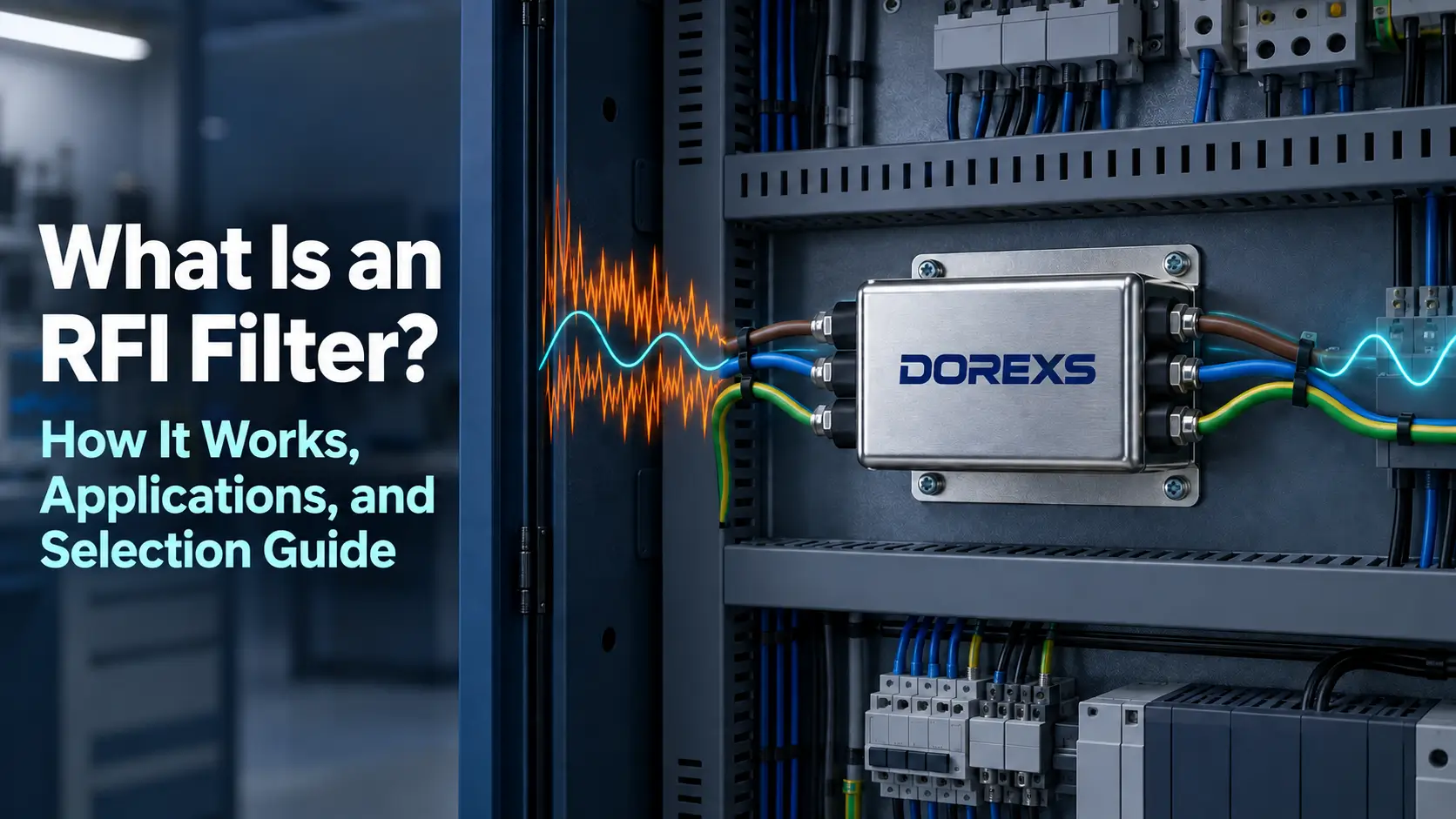
EMI filter, or electromagnetic interference filter, is based on the principle of using filters to selectively transmit or block electromagnetic waves, thereby suppressing the propagation of electromagnetic interference signals. It filters high-frequency noise and interference in power or signal lines through a network composed of passive electronic components such as capacitors and inductors. Specifically, capacitor filtering uses the small impedance of capacitors to high-frequency signals to filter out high-frequency interference signals; inductor filtering uses the large impedance of inductors to high-frequency signals to filter out low-frequency interference signals. In addition, EMI filters also minimize reflection and loss of signals during transmission through impedance matching, thereby further improving the filtering effect. EMI filters are the preferred tool for electronic equipment design engineers to control conducted electromagnetic interference and radiated electromagnetic interference. They are widely used in various electronic equipment to ensure the normal operation of the equipment and reduce interference to other equipment.
Specific application of EMI filter in inverter
Some common inverter applications
- Photovoltaic inverter: used to convert the direct current generated by solar photovoltaic panels into alternating current for supply to the power grid or household use.
- Wind inverter: Converts the direct current generated by a wind turbine into alternating current and is usually connected to the grid.
- UPS Inverter: The inverter in an uninterruptible power supply (UPS) ensures stable AC power during power outages.
- Electric vehicle inverter: used in electric vehicles to convert direct current in the battery into alternating current to drive the motor.
- Home inverter: used for home power supply system, connecting solar panels and home power grid.
- Industrial inverters: Used to control electric motors and other equipment in industrial applications, providing precise power management.
- Portable inverter: used for mobile power solutions, usually for travel or outdoor activities, capable of converting DC power to AC power.
The role of EMI filters in inverters
Surge and spike suppression: In the inverter AC output circuit, the EMI filter can absorb the generated surge and peak harmonic voltage to ensure the normal operation of the inverter.
Improve power quality: By installing an EMI filter at the input end of the inverter power supply, the electromagnetic noise in the power supply can be effectively removed to provide high-quality power.
Hybrid filter application: In high-power electric vehicle drive inverters, hybrid EMI filters that combine active and passive filters are used to effectively suppress common-mode EMI noise while reducing the filter size.
Improve power quality: By installing an EMI filter at the input end of the inverter power supply, the electromagnetic noise in the power supply can be effectively removed to provide high-quality power.
Hybrid filter application: In high-power electric vehicle drive inverters, hybrid EMI filters that combine active and passive filters are used to effectively suppress common-mode EMI noise while reducing the filter size.
How to choose inverter EMI filter
When selecting an inverter EMI filter, the following key factors need to be considered:
- Filtering performance: According to the electromagnetic interference characteristics in the inverter application scenario, select a filter with appropriate filtering performance to ensure the filtering effect.
- Operating frequency: Make sure the operating frequency range of the selected filter matches the actual operating frequency of the inverter to achieve effective filtering.
- Rated voltage and current: According to the voltage and current requirements in the inverter circuit, select an EMI filter with appropriate rated voltage and current to ensure it works properly and protects the circuit safety.
- Operating temperature: Select a filter that meets the inverter’s operating ambient temperature range to ensure its stability and reliability.
- Connection method: Select the appropriate connection method, such as wires, studs, terminal blocks, etc., according to the specific needs of the inverter equipment.
- Certification and standards: Ensure that the filter complies with relevant electromagnetic compatibility (EMC) standards and certification requirements to ensure its performance and safety.
- Manufacturer reputation and support : Choose a manufacturer with a good reputation and ensure they provide technical support and after-sales service.
Taking all the above factors into consideration, choosing an EMI filter with stable performance and reasonable price is of great significance to improving the electromagnetic compatibility of the inverter.
Improve efficiency with DOREXS inverter EMI filters
In order to ensure the safety and stability of the inverter and improve the utilization of renewable energy, DOREXS has designed an EMI filter for inverter applications to help meet performance requirements.
Our inverter EMI filter design allows you to easily pass relevant EMC regulations and ensure the safety and reliability of the overall system. We have been providing EMI solutions for the most stringent industries (medical and military), and we are experienced and can meet your design needs.
Explore our EMI filter products online. If you need to customize, please contact our team in time!
Our inverter EMI filter design allows you to easily pass relevant EMC regulations and ensure the safety and reliability of the overall system. We have been providing EMI solutions for the most stringent industries (medical and military), and we are experienced and can meet your design needs.
Explore our EMI filter products online. If you need to customize, please contact our team in time!
Research on the Impact, Standards, and Mitigation Methods of Electromagnetic Interference (EMI)
Power EMI Filters: Enhancing Power Quality and Noise Suppression