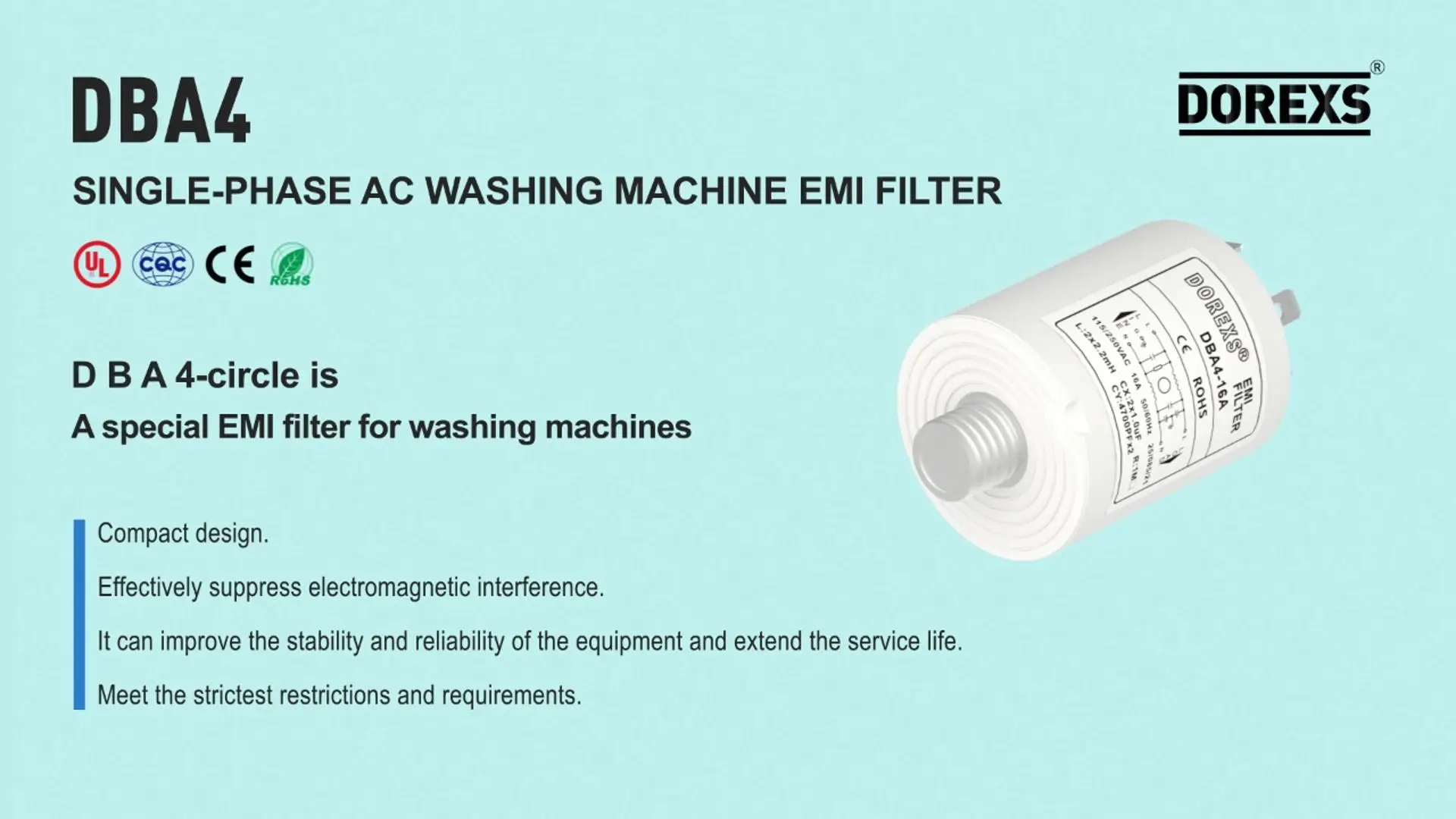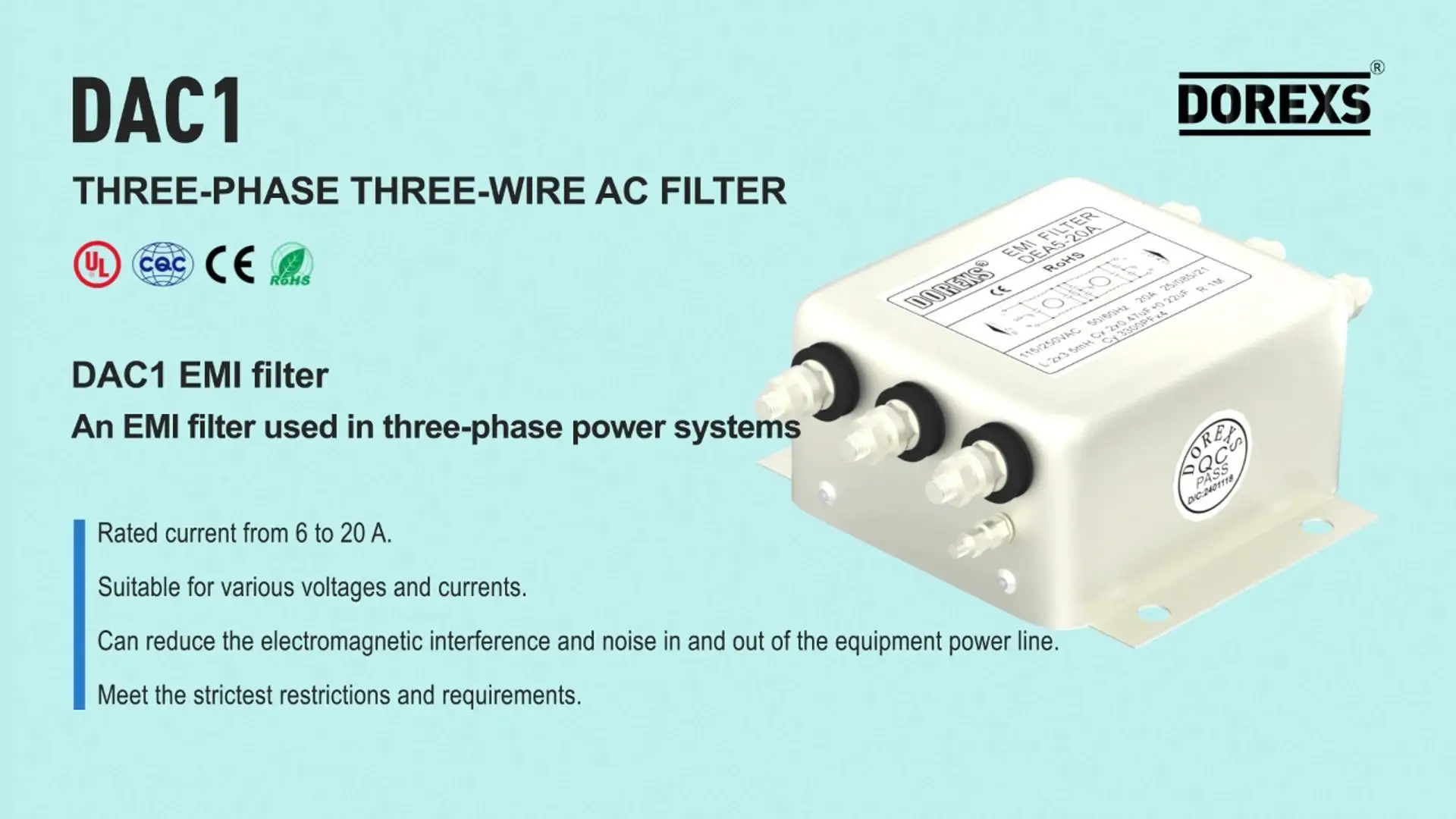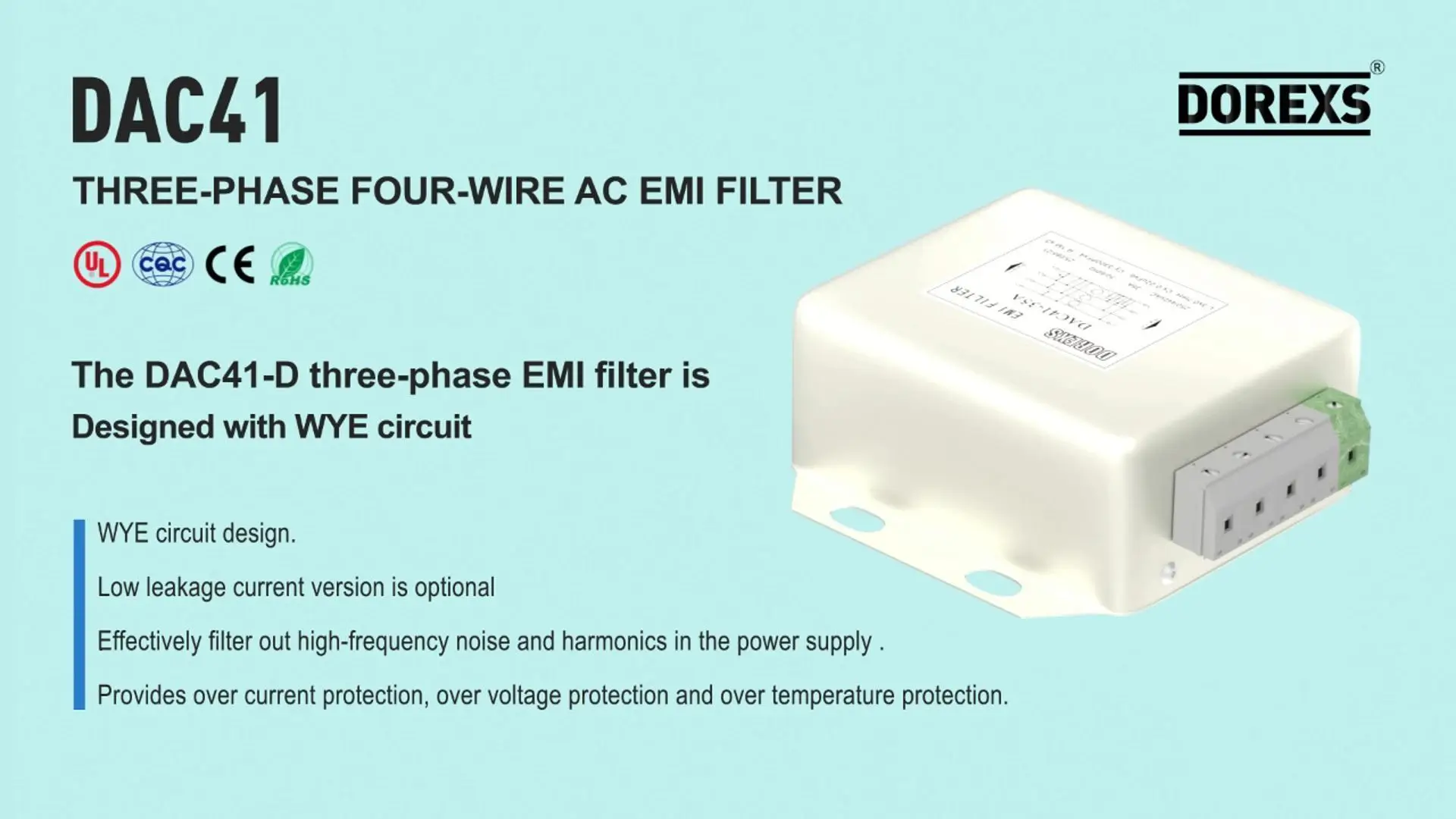
Details on EMI Filtering: Source and Classification
Today’s electronic equipment has a wide range of applications, ranging from individual users to commercial and industrial users. With the widespread use of electronic equipment, the problem of EMI (electromagnetic interference) has become more and more serious. EMI refers to undesirable electromagnetic disturbances generated by electronic devices or natural sources, which can interfere with the operation of other devices. EMI may come from the electronic equipment itself or from other equipment in the environment. Identifying the noise source is crucial for effective EMI filtering. Improper handling of EMI will cause heavy losses and affect the stability and work efficiency of the equipment.
Therefore, effective EMI filters are one of the core components to ensure the normal operation of electronic systems. EMI filtering leads to improved performance of electronic devices by reducing electromagnetic noise, especially as devices operate at higher frequencies. Achieving EMC compliance is also a key reason for implementing EMI filters.
This article introduces the sources of EMI and the classification of EMI filters.
EMI Filter Basics
EMI filters are essential components in modern electronic devices and systems, playing a critical role in minimizing electromagnetic interference (EMI) and ensuring electromagnetic compatibility (EMC). Electromagnetic interference refers to unwanted electromagnetic emissions or disturbances that can disrupt the normal operation of nearby devices or sensitive electronic equipment. By integrating EMI filters into power supplies, power line filters, and panel mount filters, design engineers can effectively block or attenuate EMI noise and unwanted signals, safeguarding the performance and reliability of electronic systems.
The primary function of an EMI filter is to prevent noise, high frequency signals, and high frequency noise from entering or leaving electronic equipment through power or signal lines. This is particularly important in environments with multiple electronic devices in close proximity, where noise coupling and conducted emissions can easily occur. EMI filters help maintain EMC by allowing desirable currents and signals to pass through while suppressing unwanted current and interference, thus protecting sensitive equipment such as medical devices, industrial equipment, and automotive electronics.
EMI filters are widely used in a variety of applications, including power electronics, wireless devices, and test equipment. In power supplies and power line applications, EMI filters reduce both radiated emissions and conducted emissions, ensuring compliance with regulatory standards set by organizations like the Federal Communications Commission (FCC). This is crucial for preventing data corruption, maintaining reliable operation, and avoiding interference with other nearby devices.
The construction of EMI filters typically involves discrete components such as capacitors and inductors, which are carefully selected to provide the necessary attenuation across the relevant frequency range. Many EMI filters are designed as low pass filters, allowing low-frequency, desirable currents to flow while blocking high frequency interference and noise. The choice of filter components and topology depends on the specific requirements of the application, including the type of noise to be suppressed and the operating frequency range.
In the automotive industry, EMI filters are used to protect sensitive electronic systems from high voltage noise generated by dc motors and power electronics. Similarly, in medical equipment such as MRI machines and diagnostic devices, EMI filters are critical for preventing electromagnetic interference from affecting test results and ensuring patient safety. Design engineers must ensure that their products meet EMC requirements and regulatory standards to guarantee reliable operation and prevent interference with other electronics.
Overall, EMI filters are indispensable for achieving electromagnetic compatibility, improving performance, and protecting electronic devices from the adverse effects of electromagnetic interference. For a broader understanding of these concepts, you can explore EMI filter basics and their role in EMI protection. Whether used in industrial equipment, medical devices, or consumer electronics, EMI filters help prevent noise, ensure compliance, and support the reliable operation of today’s advanced electronic systems.
Electromagnetic interference (EMI) source
1. External sources:
- Electromagnetic radiation caused by electronic equipment in the surrounding environment.
- Radio frequency interference from sources such as radio transmitters, mobile phones or wireless networks.
- Power line interference or surge.
- Environmental factors such as lightning strikes or electromagnetic pulses.
2. Internal sources:
- Operation of switches within electronic devices or equipment.
- Digital circuits produce harmonics or high-frequency noise.
- Motors or other inductive loads that generate electromagnetic interference.
Various classifications of EMI filters:
Design-based classification:
-
Pi filter: A Pi filter consists of two capacitors and an inductor arranged in the shape of the Greek letter “Pi” (π). These filters are designed to suppress both common-mode and differential mode signals, which is critical for maintaining signal integrity in data transmission. They provide effective filtering in common-mode and differential-mode configurations.
-
T filter: The T filter has a topology similar to the letter “T” and consists of an inductor and two capacitors. T filters are designed to suppress both common-mode and differential mode signals, ensuring reliable data transmission. They are commonly used for differential mode filtering.
-
L-C Filters: These filters utilize inductors and capacitors to create low-pass, high-pass, or band-pass configurations, depending on the desired frequency range. Low-pass filters, also known as low pass filters, are used to block high-frequency electromagnetic noise while allowing low-frequency signals to pass, making them essential for reliable EMI power filter solutions in many applications. Mutual inductance between filter components affects the effectiveness of common-mode and differential-mode noise suppression.

Frequency-based classification:
-
Single level EMI filter:Single stage EMI filters are often used for low frequency EMI interference problems. In single-stage filters, inductors are often used to combat low-frequency EMI. This design approach is common since low frequency EMI cannot be filtered out by capacitors.
-
Multi-stage EMI filter:Multistage EMI filters are often used for high frequency EMI interference problems. Ferrite beads and capacitors are very useful components in high frequency EMI filter design. Multistage filters usually use different types of capacitors or inductors, or combine them in parallel or in series.
Based on installation classification:
-
Internal filters: Internal filters are often integrated directly onto the circuit board during the design and manufacturing of electronic devices. These filters are frequently integrated onto the printed circuit board (PCB), where PCB layout techniques—such as careful component placement and trace routing—are important for optimizing EMI suppression. They are to prevent the electromagnetic interference signals generated by the electronic equipment itself from propagating from the inside of the system, and to prevent external electromagnetic interference signals from entering the system. Internal filters typically include power supply filters and signal line filters.
-
External filter: An external filter is an accessory independent of electronic equipment and can be used on power lines, signal lines or other connection lines. External filters are commonly installed on power leads to suppress EMI conducted through wiring, especially in automotive and industrial applications where long or unshielded power leads can act as antennas emitting high-frequency signals. They are used to suppress electromagnetic interference signals propagating from the power grid, other equipment, or the environment to maintain normal operation of equipment. External filters usually include plug filters, filter sockets, and filter modules.
Proper placement of EMI filters is crucial to prevent coupling of noise back into the input wires.
EMI filters are installed on signal and power lines to suppress noise and ensure compliance with EMC standards.
Classification based on filter characteristics:

-
Low-pass filter: used to filter out high-frequency signals and only allow low-frequency signals to pass through.
-
High-pass filter: used to filter out low-frequency signals and only allow high-frequency signals to pass through.
-
Bandpass filter: used to filter out frequency ranges other than high-frequency and low-frequency signals, and only allows frequency signals in a specific range to pass through.
-
Band stop filter (notch filter): used to suppress the transmission of signals within a certain frequency range and only allow other frequency signals to pass.
There are many types of EMI filters, including passive filters and active filters. Passive filters use passive components such as resistors, capacitors and inductors to attenuate high-frequency noise, while active EMI filters use active electronic components to monitor and cancel electromagnetic interference, usually using an internal power supply. Passive EMI filters are simple, cost-effective, and are often used to suppress specific interference frequencies; while active EMI filters are more effective in high-frequency and high-power systems. EMI suppression filters (also known as EMI suppression filters) play a vital role in reducing electromagnetic noise and protecting electronic devices from interference.
Low-pass LC filters are composed of an inductor and input capacitor combination, and are generally used to suppress conducted noise on the input power line or AC power line. Selecting the right EMI filter is essential to effectively suppress noise and meet industry standards. EMI filters can prevent electromagnetic interference from interfering with electronic equipment and play a vital role in ensuring compliance with EMC standards and maintaining system reliability.
EMI filters and inductors suppress conducted noise voltages propagating through power lines, while shielding and filtering are essential to reducing radiated EMI and radiated emissions that can affect equipment performance. Electromagnetic noise and EMI interference can come from both internal and external sources, affecting the operation of electronic devices. EMI filters can mitigate unwanted interference, unwanted EMI, and unwanted signals that can interfere with sensitive equipment. Noise energy can be diverted, absorbed, or neutralized within the filter element to reduce its effects. Noise coupling can occur through shared or high impedance ground paths, resulting in common-mode noise.
Some EMI filters target both common-mode and differential-mode noise to ensure comprehensive suppression. Common-mode inductors are rated based on the maximum input current or currents they must handle, so it is critical to select components that can withstand the maximum input expected during operation. Filter ratings are also dependent on input voltage, with different filters designed for different AC voltages to ensure proper protection. Input capacitors reduce differential noise voltage and are placed on the input power lines or AC power lines for noise filtering.
Circuit protection components, such as input fuses, are installed on the non-grounded input terminals between the input power and the protection device, protecting the circuit from voltage surges and absorbing transient energy from events such as lightning strikes. In power supply design, output voltage, output ripple voltage, output transient voltage suppression, output isolation, output terminals, and output terminations are all critical for stable operation and EMI filtering. Switching power supplies are a common source of EMI noise and require a robust filtering solution.
EMI filtering is critical to protecting home and industrial equipment, electrical equipment, electronic equipment, sensitive equipment, sensitive electronic equipment, and medical equipment from electromagnetic interference. Industrial control systems and control systems also require EMI filtering to ensure reliable operation. Ground planes and low-impedance grounding are critical for noise reduction and signal integrity, and passive components are widely used in EMI filters. EMI filters prevent unwanted currents from interfering with equipment operation and prevent noise from entering or leaving the system through filters and grounding techniques. Innovative EMI filtering solutions, such as hybrid EMI filters, are being developed to meet new challenges. Effective EMI filtering ensures the normal operation of electronic equipment, especially as high frequencies and higher frequencies become more common in modern electronic products.
Application-based classification:
-
Power Line Filters: These filters are used to suppress EMI conducted through power lines. They are commonly used in power supplies, inverters, motor drives and other electrical equipment.
-
Signal Line Filters: Signal line filters are designed to attenuate EMI present on signal or data lines. They are used in applications such as telecommunications, audio/video equipment, and data transmission systems, alongside single-phase 220V AC EMI filters for industrial and control equipment.
-
RF Filters: Radio frequency (RF) filters are specialized filters used to suppress interference in RF circuits. They are critical in wireless communication systems, RF amplifiers and receivers.
EMI filters are used in a wide range of applications, including residential, industrial, military, and healthcare. In each area, selecting the right EMI filter is critical to ensuring equipment reliability, protecting sensitive equipment, and ensuring compliance with EMC standards, which is why partnering with a specialized EMI filter supplier and company like DOREXS is so important.
Special filter:
-
Medical EMI Filters: Meet stringent EMC (electromagnetic compatibility) standards for medical devices, ensuring patient safety and equipment reliability.
-
Military Grade Filters: Designed to meet the stringent electromagnetic interference and environmental requirements of military and aerospace applications, providing high reliability and performance in harsh environments.
DOREXS-Professional EMI filter manufacturer
If you need effective EMI protection, DOREXS offers durable and reliable EMI filters for every application. Our filters are suitable for use in specialized fields such as military and medical, as well as residential and industrial use. For applications requiring a custom solution, our professional team can design EMI filters to meet your specific requirements.
With 15 years of experience in solving electromagnetic interference, DOREXS is a trusted EMI filter manufacturer and power quality product provider for medical, military and commercial applications. All of our EMI filters are designed to meet industry standards and comply with EMC regulations. Explore our selection of EMI filters or submit a custom quote request to get the perfect EMI filter for your needs. For more information on DOREXS custom and standard EMI filters.
please contact us.
DAA1 EMI Power Filters: Ideal for Improving Power System Performance
What is an EMI Filter
Related Article