The Impact of EMI Power Filters on Power Output and Optimization Recommendations

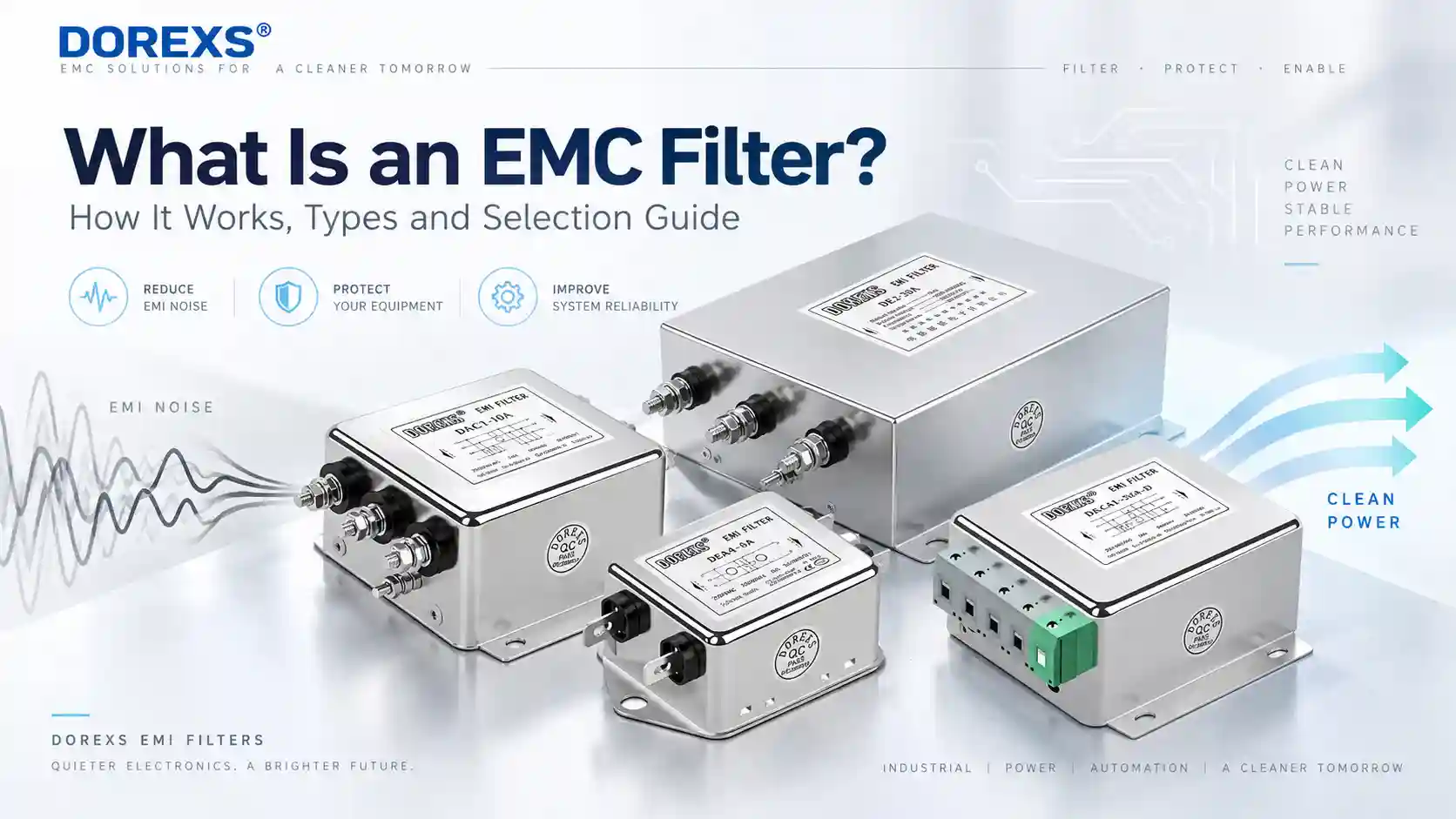
EMI power filters play a vital role in modern electronic systems. Their main functions are to suppress electromagnetic interference (EMI), improve power quality, and ensure stable equipment operation. EMI filters can improve system reliability and save costs by preventing electromagnetic interference in various applications such as industrial machinery, power systems, medical equipment, and laboratory instruments, helping to maintain operational integrity, reduce errors, and ensure compliance with regulations, thereby protecting sensitive equipment and promoting continuous operation. However, the introduction of filters may cause some power loss or voltage drop, thereby affecting power output. This article explores the mechanism by which power filters affect power output, and based on the technical advantages of DOREXS EMI filters, provides optimization strategies to help achieve efficient filtering and minimize power loss.
Learn more about selecting the right power filter...
1. Basic Principles of EMI Power Filter
1.1 Working Principle of Filters
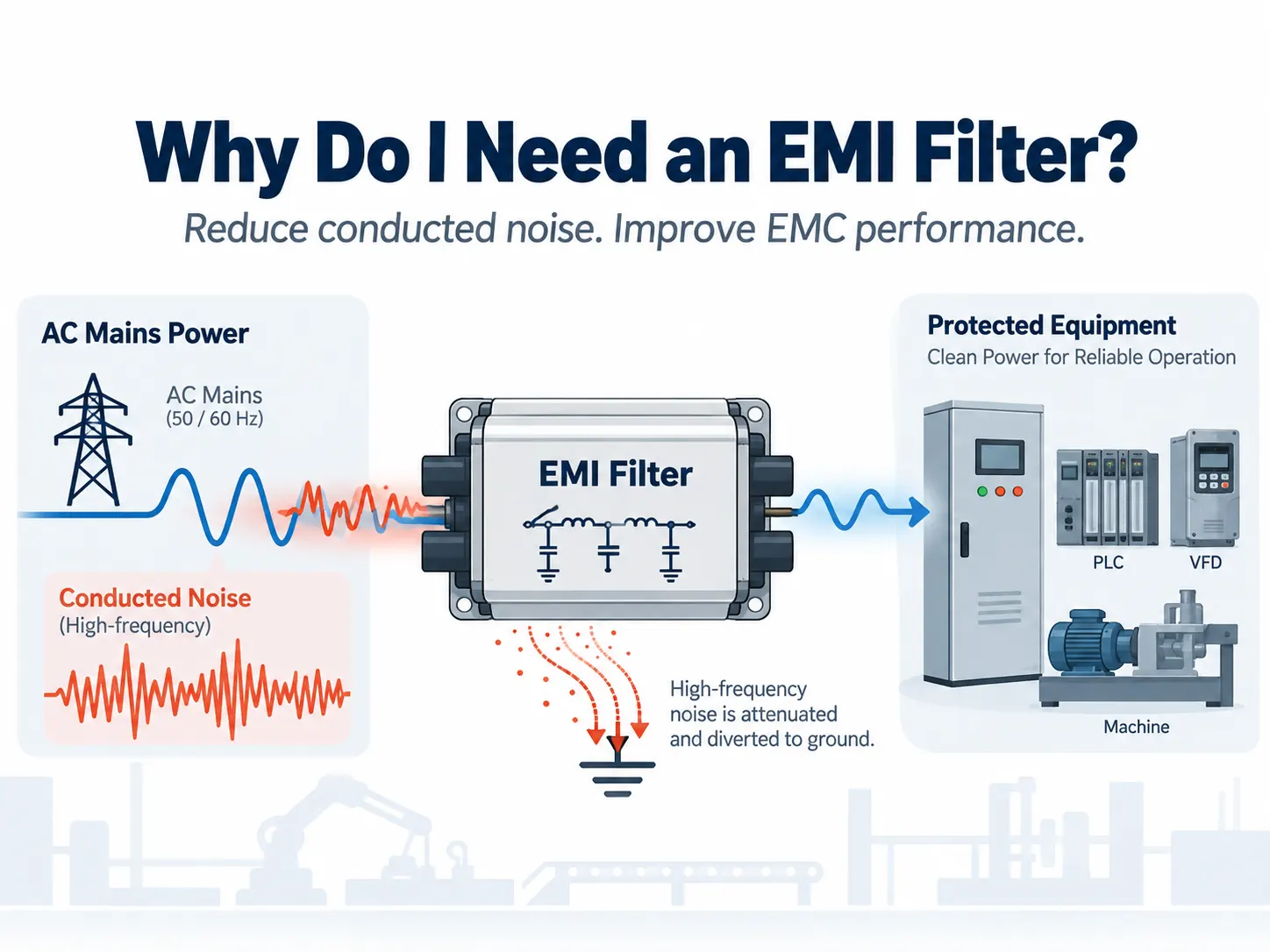
- High-Frequency Noise Suppression: Utilizing the low impedance characteristic of capacitors to short-circuit high-frequency signals, preventing interference from reaching the next circuit stage.
- Low-Frequency Noise Filtering: Leveraging the high impedance characteristic of inductors to suppress low-frequency interference.
- Differential-mode noise suppression: Differential-mode filters and chokes are used to attenuate reverse-direction noise flowing through conductors, which is critical for meeting EMC regulations and targeting differential currents.
1.2 Advantages of DOREXS EMI Filter

- Wide Applicability: Suitable for industrial automation, medical devices, communication systems, household appliances, and more.
- International Certifications: Meets UL, CE and RoHS international EMC compatibility standards and designs EMI filters that meet global EMC compliance.
- High-Performance Design: Ensuring low insertion loss while providing excellent EMI suppression, the compact design using amorphous metal improves efficiency and reduces size.
2. The Impact of EMI Filters on Power Output
2.1 Normal Operating Conditions
- Slight Voltage Drop: Under optimal design conditions, the voltage drop introduced by the filter is minimal and usually does not significantly affect power output. Most electronic devices can tolerate this slight power loss. On the input side, the characteristics of the AC voltage, such as rating and waveform, affect the performance of the filter and manage noise rejection.
- Improved Power Quality: Because filters effectively reduce power supply noise, they can actually improve overall system performance. EMI filters also play a vital role in suppressing electrical noise and electromagnetic interference, ensuring system reliability and compliance. Effective filtering ensures that desired signals are preserved and transmitted without distortion, while suppressing unwanted noise.
2.2 Potential Issue
- Improper design or selection: If filter parameters (such as capacitor and inductor values) are not properly selected, a large voltage drop can result, which can cause a significant drop in power output. Selecting the right filter requires careful consideration of electrical characteristics, interference type, system requirements, and compatibility with other components to ensure optimal performance.
- Component Aging or Damage: Over time, filter components may degrade or fail, further increasing power losses. In addition, parasitic capacitance within the filter or between circuit components can negatively impact electromagnetic compatibility and filter performance.
- Large Load Variations: In applications with large load fluctuations, the dynamic response of the filter may affect power stability, resulting in power output fluctuations. External interference sources such as voltage spikes or electromagnetic interference can also affect power output, and appropriate protective measures should be taken.
3. Power Loss Mechanism in Power Filters
3.1 Power Characteristics of Filter Topologies
In the filter structure, the input capacitor plays a key role in noise suppression, filtering out differential mode noise and maintaining power quality, especially in power factor correction circuits.
When designing filters for DC power supply systems, the DC input must be considered to ensure that noise standards are met and optimal system performance is achieved. Identifying noise sources within the system is essential to optimize filter design and achieve effective EMI suppression.
3.2 Key Loss Factors
- Copper loss in inductor windings:
Pcopper=I2×RDC - Equivalent Series Resistance (ESR) of capacitors:
PESR=I2×RESR
| Component Type | Specification | DCR/ESR Range |
|---|
| Power Inductor | 1mH / 10A | 2-5mΩ |
| Electrolytic Capacitor | 1000μF / 25V | 20-50mΩ |
RAC≈RDC×(1+0.005f)
4. Optimizing Power Filter Design
4.1 Proper Selection
4.2 Precision Design
4.3 Regular Maintenance
4.4 Comprehensive System Consideration
5. Practical Application Recommendation
5.1 Industrial Applications
5.2 Consumer Electronics
5.3 Medical Equipment
5.4 Professional Consultation
6. Regulatory Considerations and Standards
EMI filter manufacturers rigorously design and test their products to meet these regulatory requirements, ensuring that their filters help improve electromagnetic compatibility and ensure reliable operation of electronic devices. For end users, whether in industrial, medical or consumer environments, it is critical to select EMI filters that are certified to the relevant standards for their specific applications. By complying with these regulations, manufacturers and users can help prevent unwanted electromagnetic emissions, thereby supporting the safe and efficient operation of all connected devices.
7. EMI Filter Safety and Precautions
Key safety precautions include:
- Avoid direct contact with live components during installation or maintenance.
- Ensure that the EMI filter is properly grounded to prevent ground loops and enhance noise suppression.
- Protect the filter from excessive voltage, current surges, or high temperatures, which may degrade the filter's performance or cause it to fail.
- Regularly inspect and maintain the filter to detect signs of wear, overheating, or damage.
8. EMI Filter Cost and Budget
When planning your budget, consider the following:
- The type and specification of EMI filters required for your application.
- The ongoing maintenance and inspection costs to ensure long-term reliability.
- The potential financial impact of noncompliance with regulations, such as fines or the need to redesign noncompliant products.
- The risk of equipment failure or data loss due to inadequate filtering.
9. EMI Filter Case Studies and Examples

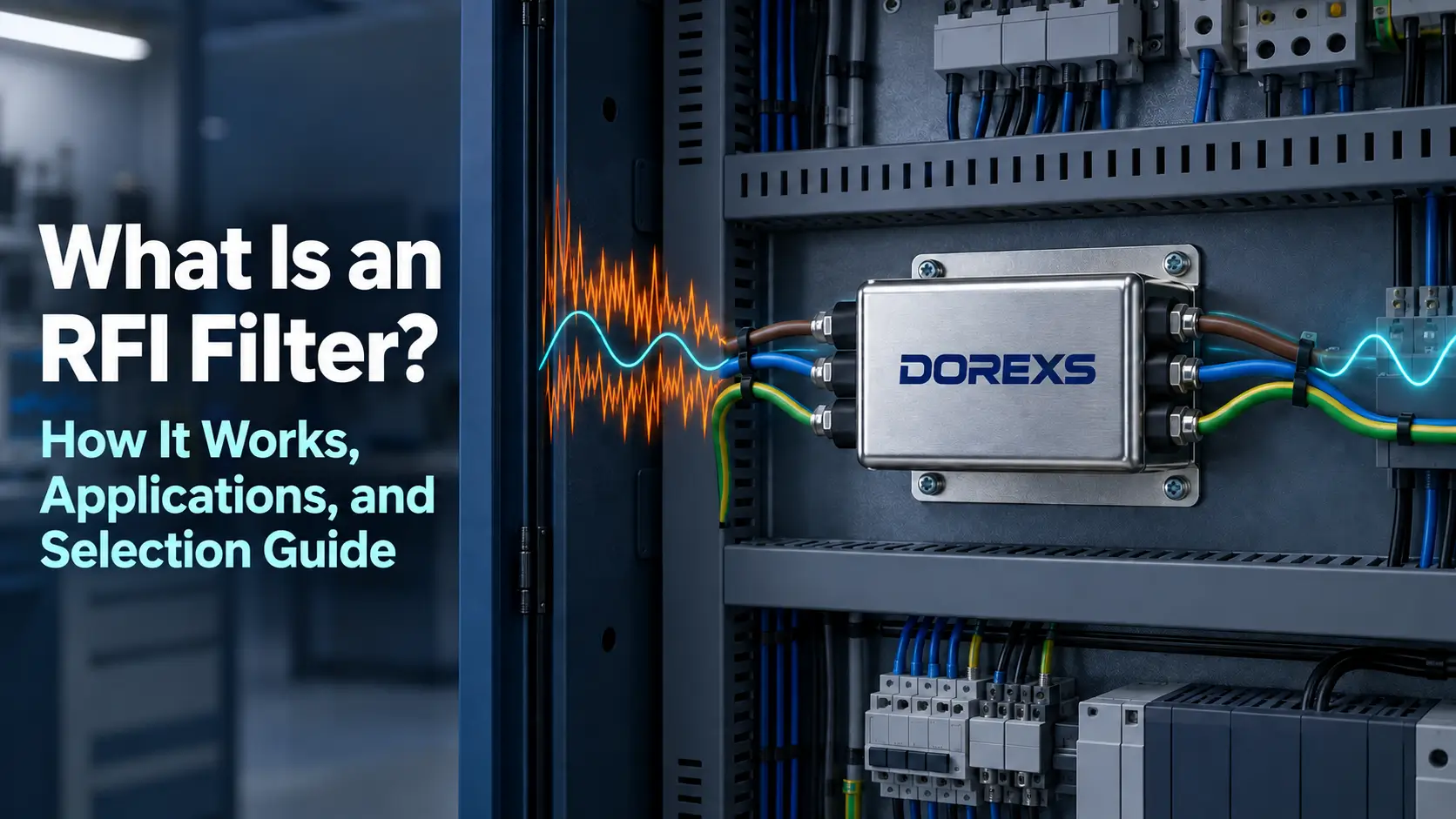
In industrial settings, EMI filters are used to protect sensitive equipment from electromagnetic interference generated by high-voltage power lines, fast switching, and large motors. For example, in manufacturing plants, installing the right EMI filters on power lines can prevent interfering signals from disrupting automated control systems, ensuring smooth and reliable operation of equipment.
10. Conclusion
As a leading manufacturer of EMI filtering solutions, DOREXS has extensive R&D experience and advanced production equipment. We are committed to providing customers with high-quality EMI filtering products and services to meet the needs of multiple fields from industrial to consumer electronics.
EMI Power Filter in Industry-Application and Case Analysis in Industrial Equipment
PLC Filter Usage Precautions and Optimization Guide