3 Phase 3 Wire EMI Filter VS 3 Phase 4 Wire EMI Filter
Electricity plays a key role in supplying numerous devices that provide essential conveniences to people and industrial processes around the world. Three phase power supplies play a vital role in the design of electrical systems, and three phase EMI filters have become an important component of electrical equipment in various markets, especially in the heavy industrial sector and commercial residential sectors.
Industrial equipment often requires high power to drive large motors, heating systems, inverters, rectifiers, power supplies, and induction circuits. Therefore, high-power equipment is often designed to use three phase or multi-phase AC power. Such a design allows the total power demand to be distributed among multiple phases, thus optimizing the design of the power system and the performance of the equipment.
In a three-phase system, alternating current is carried through three conductors. These conductors are usually labeled phase A, B, and C and have the same voltage amplitude and frequency but are 120° out of phase. This phase difference enables constant power transfer during electrical cycles, providing stable and reliable power support for industrial applications.
Although three-phase power configurations bring many advantages, converting large powers can generate excessive high-frequency noise (EMI), especially higher harmonics at various switching frequencies. These electromagnetic interferences can interfere with the normal operation of equipment, so in three-phase applications, three phase EMI filters become critical. Their role is to reduce electromagnetic interference, protect equipment from interference, and ensure that businesses comply with EMC regulations.
What is a three phase power line filter ?
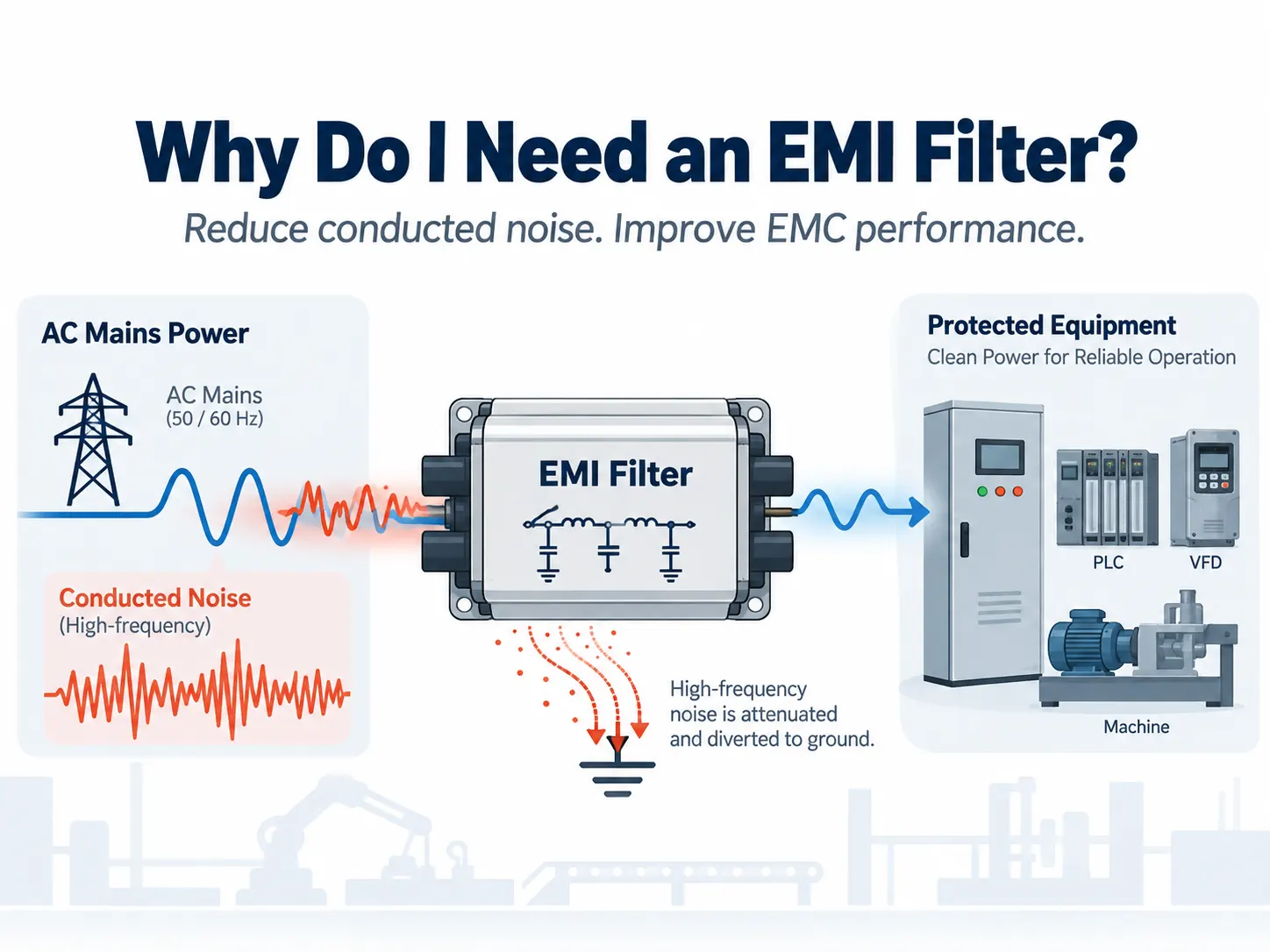
Three phase power line filter is an important part of electrical equipment. It is used to reduce electromagnetic interference (EMI) in three-phase power supply and effectively filter out various interference sources in the power supply (such as switching power supply, frequency converter, etc.) of high-frequency noise and harmonics, ensuring the stability of the power system and the normal operation of equipment and meeting strict industrial EMC regulatory requirements.
Three phase power line filters usually consist of capacitors, inductors and filter devices (such as filter capacitors, filter inductors, resistors, etc.). General requirements for their design include input current, line voltage, size constraints and required insertion loss. These configurations depend on the required filtering effect, the characteristics of the power system and the requirements of the application environment.
Industrial equipment often requires high power to drive large motors, heating systems, inverters, rectifiers, power supplies, and induction circuits. Therefore, high-power equipment is often designed to use three phase or multi-phase AC power. Such a design allows the total power demand to be distributed among multiple phases, thus optimizing the design of the power system and the performance of the equipment.
In a three-phase system, alternating current is carried through three conductors. These conductors are usually labeled phase A, B, and C and have the same voltage amplitude and frequency but are 120° out of phase. This phase difference enables constant power transfer during electrical cycles, providing stable and reliable power support for industrial applications.
Although three-phase power configurations bring many advantages, converting large powers can generate excessive high-frequency noise (EMI), especially higher harmonics at various switching frequencies. These electromagnetic interferences can interfere with the normal operation of equipment, so in three-phase applications, three phase EMI filters become critical. Their role is to reduce electromagnetic interference, protect equipment from interference, and ensure that businesses comply with EMC regulations.
What is a three phase power line filter ?
Three phase power line filter is an important part of electrical equipment. It is used to reduce electromagnetic interference (EMI) in three-phase power supply and effectively filter out various interference sources in the power supply (such as switching power supply, frequency converter, etc.) of high-frequency noise and harmonics, ensuring the stability of the power system and the normal operation of equipment and meeting strict industrial EMC regulatory requirements.
Three phase power line filters usually consist of capacitors, inductors and filter devices (such as filter capacitors, filter inductors, resistors, etc.). General requirements for their design include input current, line voltage, size constraints and required insertion loss. These configurations depend on the required filtering effect, the characteristics of the power system and the requirements of the application environment.
| Browse Three Phase EMI Filters |
The difference between 3 phase 3 wire EMI filter and 3 phase 4 wire EMI filter
1. Power system structure:
3 phase 3 wire system: There are three phase conductors and a common neutral conductor in the three phase three wire EMI filter. The three-phase three-wire system is mainly suitable for industrial and commercial electricity, where the voltage is usually 400V or 480V. This power supply method is common in older power systems, especially in Europe. In such systems, EMI filters need to consider handling electromagnetic interference between phases, as well as interference between wires and ground.
3 phase 4 wire system: There are three phase conductors, a neutral conductor and a ground conductor in the three-phase four-wire EMI filter. The three-phase four-wire system is mainly suitable for residential and commercial buildings, especially in North America. Compared with the three-phase three-wire system, the filter of the three-phase four-wire system needs to deal with more electromagnetic interference between the conductors.
 |
2. Connection and installation:
3 phase 3 wire system: Compared with the three phase four wire system, due to the lack of a bottom line, the three phase three phase system only needs to consider the phase line and neutral line. The installation is relatively simple, but the filter needs to better handle the interference between phases.
3 phase, 4 wire system: The filter needs to be connected to phase, neutral and ground, so installation and connections can be slightly more complicated. However, connecting via a ground wire provides better EMI suppression.
3. EMI Filter design:
Three-Phase Three-Wire Filters: When designing a three-phase three-wire filter, you need to consider how to handle interference between phases while ensuring proper filtering of the common neutral conductor.
Three-phase four-wire filter: In addition to dealing with the interference between phases, the interference between the neutral conductor and the ground wire also needs to be considered. Therefore, three-phase four-wire filters may require a more complex design to handle interference between the additional conductors.
4. EMI suppression effect:
Three-phase three-wire system: Three-phase three-wire power supply filters usually do not have zero-line harmonic filtering capabilities. They mainly improve the stability and safety of the power supply through common-mode and differential-mode interference suppression characteristics. Its filtering frequency band and function are the same as those of the three-phase four-wire filter, and it is suitable for various power equipment connected in a triangle manner.
Three-phase four-wire system: The three-phase four-wire power supply filter has a zero-line harmonic filter circuit, which can further process the harmonics in the zero line based on the three-phase three-wire filter. This enables the three-phase four-wire filter to have a more comprehensive filtering function, which can better protect the power system and improve the quality and stability of the power supply;
5. Application areas:
Three-phase three-wire filter: mainly suitable for industrial and commercial power, especially older power systems. It is usually used to supply large machinery and equipment, industrial production lines, electric motors and other high-power loads. Since there is no neutral conductor, the three-phase three-wire system cannot directly provide the circuit required for single-phase loads.
Three-phase four-wire filter: mainly suitable for residential and commercial buildings, especially in North America. It can provide the circuits required for three-phase loads and single-phase loads at the same time, meeting the requirements of various household and commercial equipment. The three-phase four-wire system can also better achieve balanced distribution of electric energy and reduce power loss.
By comparing these aspects, you can more fully understand the differences between three-phase three-wire filters and three-phase four-wire filters, and choose the appropriate filter design and configuration based on specific application needs.
DOREXS 3 phase 3 wire EMI filter and 3 phase 4 wire filter
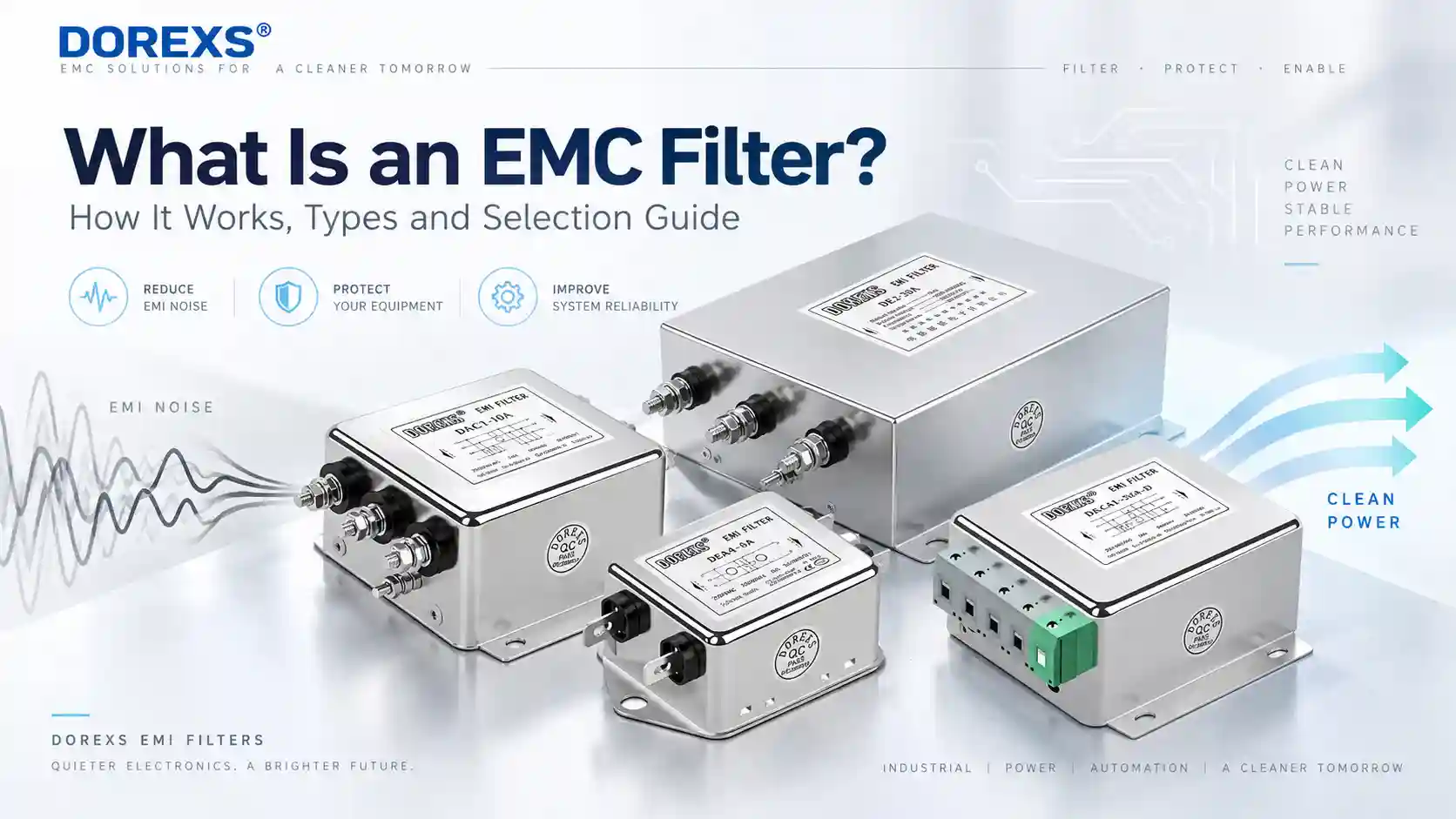
At DOREXS, you can find a variety of standard off-the-shelf three-phase three-wire, three-phase four-wire EMI filters and single-phase filters. These three-phase power filters adopt single-pole, bipolar and multi-stage designs to meet different scenarios. requirements and can help you comply with strict EMC regulations. The three-phase EMI filters we provide have rated voltages of 380VAC-600VAC and rated currents up to 2000A. At the same time, in DOREXS you can also enjoy comprehensive customization services from our designer team.
Browse our range of three phase EMI filters or contact our team to learn more about products that can help meet your requirements.
EMI Impact in Gaming Equipment
Understanding the Difference Between 3-Phase 3-Wire and 3-Phase 4-Wire EMI Filters