
EMI and EMI Filters in Industry
author: DOREXS
2022-09-21
In industry, as the degree of automation and digitization becomes higher and higher, more EMI will be generated, the probability of EMI causing harm will also increase, and the sensitivity of equipment to electromagnetic interference (EMI) will also increase. Severe EMI may cause equipment failure, resulting in production accidents. Therefore, filtering or shielding these devices from EMI is critical to ensure uninterrupted operation and output.
In an industrial environment, machines operate close to each other and the equipment operating environment is more complex, so they are susceptible to EMI interference. EMI can also originate from the internal components of modern electronic devices, such as smartphones and industrial equipment, and these internal components can be both sources and victims of electromagnetic disturbances. In order to prevent the spread of noise and interference, it is crucial to choose an EMI filter.

Sources of EMI in Industry
- Power and wire interference.
- Electric motors and transmission systems: high power motors and frequency converters.
- Switchgear and frequency converters: Electromagnetic noise and interference are generated during the switching process.
- Sources of radio frequency interference: Electromagnetic waves emitted by radio frequency equipment may interfere with surrounding equipment and systems.
- Lighting equipment: high-frequency electronic ballasts, LED lighting and other lighting equipment.
- Electrostatic discharge: In a dry environment, the accumulation of static electricity may cause electrostatic discharge and produce electromagnetic radiation.
- Commutation: Turning power on and off creates strong transients. This produces high frequency noise.
- Servo and Variable Frequency Drives (VFD): These drives switch frequencies (usually between 8kHz and 20kHz) to generate pulses used to regulate the motor.
- Switching Power Supplies (SMPS): SMPS produce higher EMI levels than linear power supplies.
- Uninterruptible power supplies (UPS): In the event of a power failure, the UPS may produce significant high-frequency noise at the output while performing DC-AC conversion.
- Dimming circuits: Triac-based dimmer switches produce periodic spikes that are synchronized with the line frequency, creating high-frequency noise.
- Harmonics: Nonlinear loads performing AC-DC conversion produce high-frequency harmonics at the fundamental AC frequency. Harmonics are like very low frequency noise.
- Electrostatic discharge: Electrostatic discharge (ESD) can cause short circuit voltage spikes or pulses.
- Sources of electromagnetic radiation: Various sources of electromagnetic radiation may exist in industrial facilities, such as radar equipment, wireless communication systems, radio frequency transmitters, etc.
- Environmental factors: Environmental factors in industrial sites may also introduce electromagnetic interference, such as weather conditions (such as thunderstorms), electromagnetic field interference (such as induced voltages from high-voltage transmission lines), etc.
- Power electronics: Switching operations in power electronics generate unwanted high frequency noise and higher frequencies, which can propagate through electronic systems.
- Renewable energy systems: Power inverters and DC-DC converters in solar and wind applications can be significant EMI sources.
- Cell phones and mobile devices: Cell phone signals and wireless devices can emit electromagnetic noise that affects nearby devices and control systems.
- Printed circuit boards: EMI can be generated or mitigated at the PCB level, especially when discrete components or multilayer ceramic capacitors are used for EMI filtering.
- Industrial machinery and industrial devices: Motors, pumps, and automation equipment are both sources and victims of EMI.
Possible harm caused by EMI (electromagnetic interference) in the industrial field
- Equipment failure and damage
- Production interruptions and losses
- Personnel safety risks
- Cause EOS
- Data corruption and loss
- Equipment and product compliance
- Impact on sensitive equipment and electronic equipment, risking proper functioning and regulatory compliance
Ways to Prevent EMI in Industrial Automation
To prevent EMI in industry, we must not only conside the EMI inside the equipmernt, but also consider the external influence. Generally we have the following methods:
- Proper equipment installation and wiring: Correct equipment installation and wiring paths can effectively avoid equipment and equipment. Interference opportunities between lines.
- Use EMI filters: Choosing the right EMI filter can effectively reduce electromagnetic interference on power lines and signal lines, and can also help you comply with industrial regulatory standards.
There are many types of EMI filters, including active EMI filters, passive filters, panel mount filters, and EMI suppression filters, each of which is suitable for specific EMI filter applications with various frequency components. It is critical to select the right filter type (such as differential mode filter, common mode filter, or low-pass filter) to handle specific EMI noise, interfering signals, and common mode noise. The filtering process involves the working principle of EMI filters, which is to provide a low impedance path for unwanted high-frequency noise and electrical noise, thereby suppressing radiated emissions and conducted EMI. Ferrite cores are essential in EMI filtering, especially in high-frequency and radiated EMI filtering. Meeting EMC compliance and electromagnetic compatibility is essential, and EMI filtering helps meet these regulatory requirements. Installing EMI filters at the power entry point and inside the power supply is essential to prevent interference and ensure that the current is not disturbed by EMI. EMI filters play a key role in industrial applications such as variable frequency drives, control systems, and electronic systems to ensure normal operation and prevent interference. When designing an EMI filtering solution, many factors must be considered, such as the EMI source, frequency range, and type of EMI (conducted, radiated, pulsed, etc.). EMI refers to all electromagnetic interference, including radio signals, and EMI noise can affect both industrial and consumer electronic devices. EMI filtering is critical to maintaining electromagnetic compatibility of electronic devices, electronic systems, and electronic equipment in industrial environments.
- Metal shielding: The design of metal shielding or enclosed equipment can effectively limit the spread of electromagnetic radiation and conducted interference.
- Electromagnetic shielding: Establish an electromagnetic shielding environment to protect equipment from external electromagnetic interference.
- Ground wire design and grounding: Good ground wire design and grounding are the keys to reducing electromagnetic interference. Correct ground wires help lead interference signals to the ground, thereby reducing the impact on equipment.
- Signal isolation and segmentation: Use optocoupler isolators or isolation amplifiers to isolate digital and analog signal lines.
- Regular maintenance and inspection: Regular maintenance can help discover and solve potential problems in time, thereby reducing the impact of EMI on system performance.
Choose DOREXS’s EMI filters to protect your machines

If you need effective EMI protection or EMC testing, DOREXS offers reliable and durable EMI filters for every application. Our EMI filters include high-quality EMI filters for professional applications in the military, aerospace and medical fields, as well as cost-effective EMI filters for small household equipment and industrial use. DOREXS also offers panel mount filters and solutions for a broad range of EMI filter applications, including industrial, medical, and renewable energy systems. If you need an EMI filter with special custom requirements, our team of experts can design an EMI suppression filter that meets your specific requirements. We provide both active and passive filters, and offer custom solutions for specific frequency components and high frequencies. Proper installation at the power entry point and within the power supply is important to suppress EMI and ensure EMC compliance. Our filter designs utilize ferrite cores and discrete components to address unwanted signals and EMI noise across a broad frequency range.
With 15 years of EMI experience, DOREXS is a trusted manufacturer of high quality EMI filters for medical, military, commercial and residential applications. All our EMI filters comply with industry standards and EMC regulations. Explore our selection of EMI filters or submit a custom quote request to get the perfect EMI filter for your needs. For more information about DOREXS custom and standard EMI filters, please contact us.
EMI Filters Bring Variable Frequency Drives Up to Speed
How to Suppress EMI from Charging Piles
Related Article
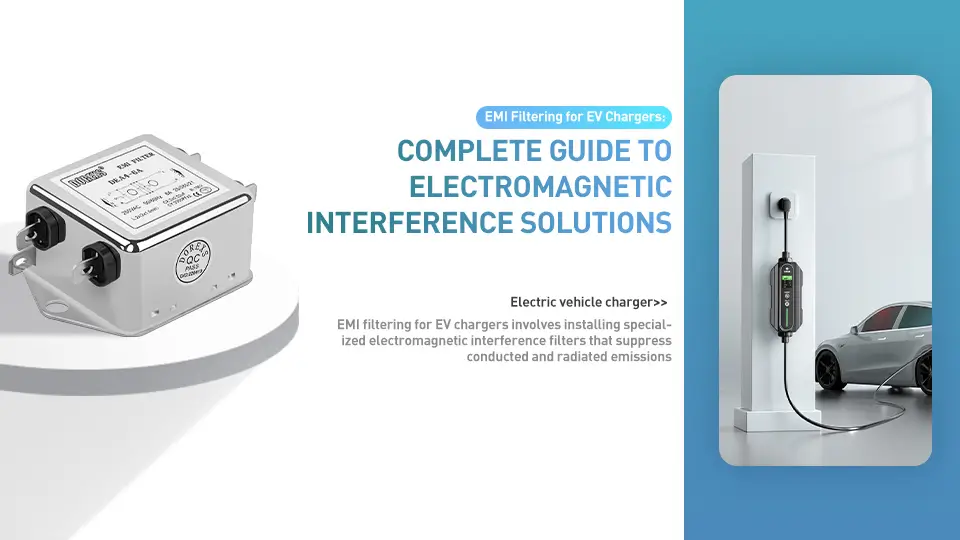
This guide covers DC and AC EMI filtering solutions, regulatory compliance requirements, and practical implementation strategies for charging station operators, OEMs, and facility managers.
EMI Filtering for EV Chargers: Complete Guide to Electromagnetic Interference Solutions
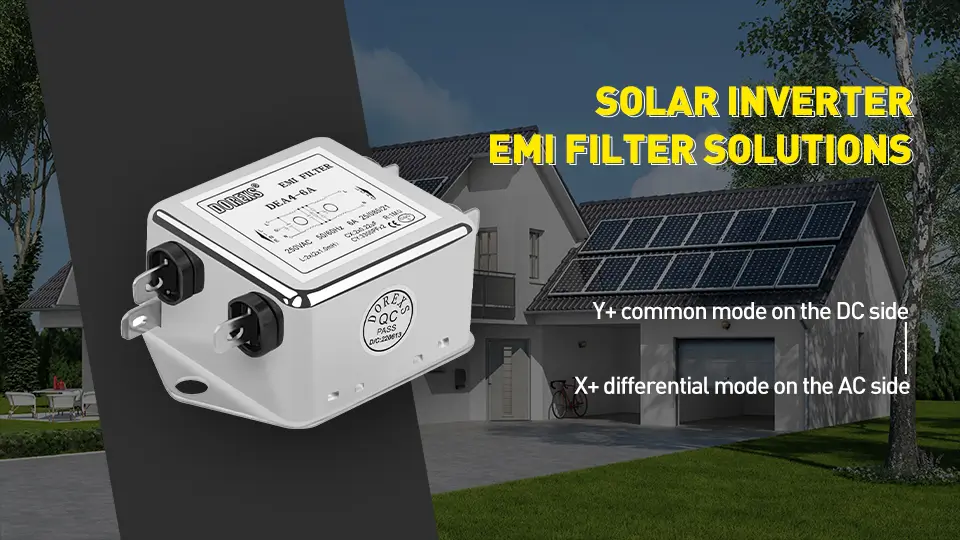
EMI from solar power systems can affect the performance of sensitive electronic devices, such as computers, medical devices, appliances, electrical devices, and other devices.
Solar Inverter EMI Filter Solutions: Professional EMC Solutions for Grid-Tied and PV Inverter Systems

In today’s fast-growing smart manufacturing era, CNC machines are expected to deliver not only machining capability but consistent precision, long-term stability, and zero-downtime reliability.However, as machine power increases and electronic components operate at higher speeds, EMI (Electromagnetic Interference) has become one of the most serious hidden threats in CNC systems.
EMI Interference in CNC Equipment & DOREXS Industrial Filter Solutions
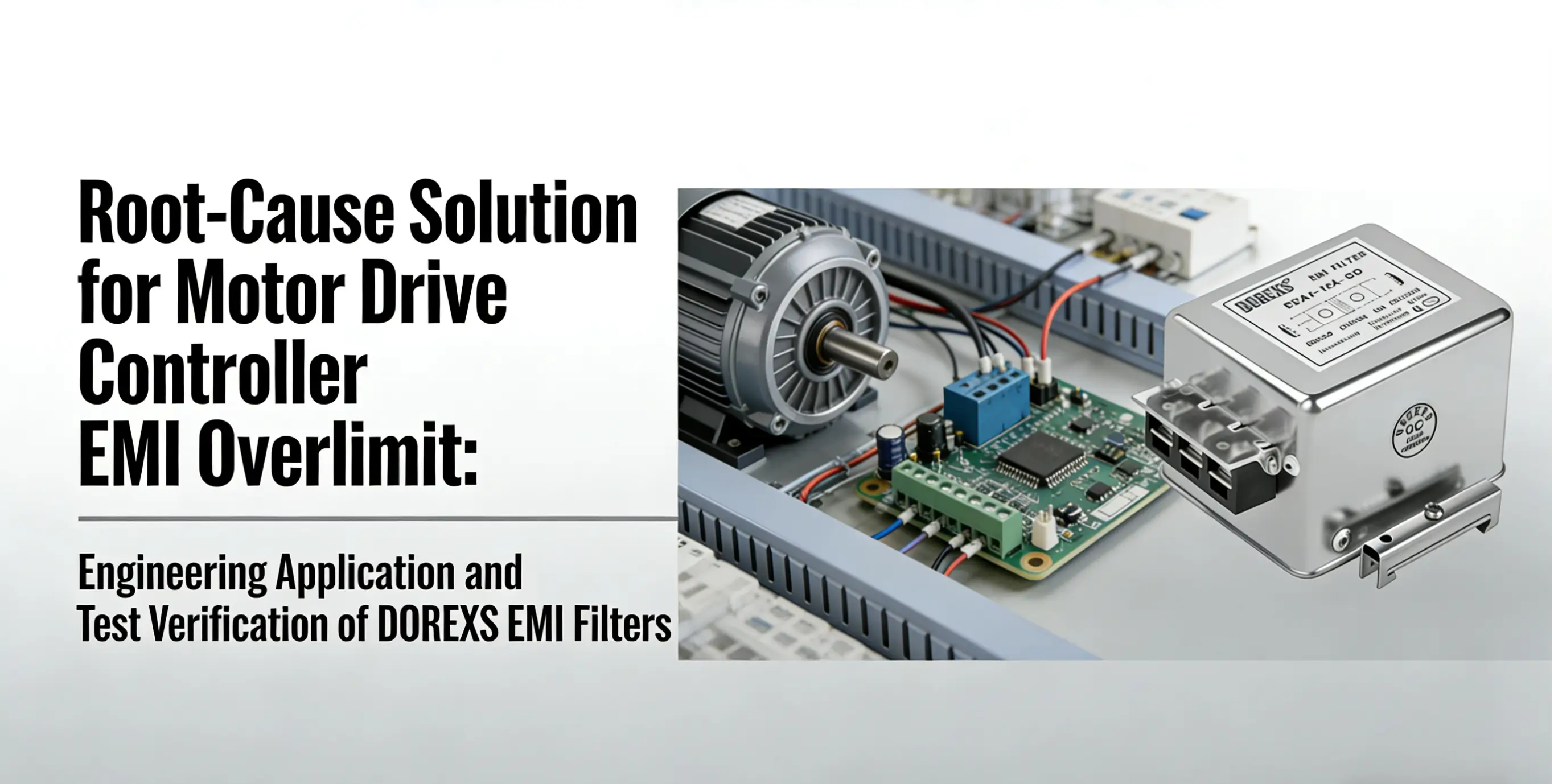
Based on an actual mitigation case, this article systematically explains the EMI generation mechanisms in motor drive controllers, the functional role of DOREXS EMI power filters, and an engineering-proven combination of filters + PCB design + grounding measures.
EMI Over-Limit Mitigation for Motor Drive Controllers: Engineering Application and Field Verification of DOREXS EMI Power Filters