Research and Application of an Active Common-mode EMI Filter for Switch-mode Power Supply
Research and Application of an Active Common-mode EMI Filter for Switch-mode Power Supply
Due to the high power density, high switching operating frequency and compact structure of switching power supplies, higher requirements are placed on their electromagnetic compatibility.
Most traditional switching power supplies use single-stage or multi-stage passive filters composed of discrete common-mode inductors, differential-mode inductors, X, Y capacitors, etc. These filters use a lot of passive components. Such as filter inductors and capacitors.
Many one-stage filters cannot meet battery compatibility requirements, and two or more stages must be used, which increases the size of the passive filter and thus increases the losses.
In addition, since distribution parameters such as distributed capacitance and lead inductance of passive components have a great impact on the filter effect, especially in the high-frequency region, the impact of these distribution parameters will be more serious and difficult to control. In this case, the high-frequency filtering characteristics are attenuated.
As the main component of common mode and differential mode filter inductors---the magnetic core, its electromagnetic parameters have frequency-varying characteristics, and the performance of the magnetic core itself is also limited by the technological level and production materials. This limitation brings limitations to the application of magnetic cores.

Generally speaking, traditional passive EMI filters have the following shortcomings:
- Large in size and high in cost, it cannot meet the increasing miniaturization and high-density needs of switching power supplies.
- The attenuation band of the passive filter is narrow, and in the low frequency band, the insertion loss needs to be increased by increasing the inductance and capacitance values.
- Today's switching power supply is required to be a green power supply with small size, light weight, high efficiency, high reliability and high power density. However, due to the filter as an important part of the switching power supply, the reduction in volume is limited. Therefore, it restricts the development of switching power supply.
The shortcomings of passive filters are destined to fail to meet the needs of filtering technology in today's increasingly serious electromagnetic pollution. Moreover, the active EMI filter adopts active elimination technology, which effectively suppresses the EMI noise current. And it can be dynamically compensated and adjusted without adversely affecting the stability of the system.
In addition, compared with passive filters, active EMI filters use semiconductor devices and electronic circuits, making them smaller and lighter, which is beneficial to integrated packaging. So it becomes a new development trend.
Basic principles of active common mode EMI filters
Active EMI filters essentially compensate for noise signals in real time. The basic principle is to sample the common mode signal first and then pass the feedback. Dynamically output a compensation current (voltage) that is equal to the sampled noise current (voltage) but in the opposite direction. It actually provides a very low impedance internal loop for common mode current.
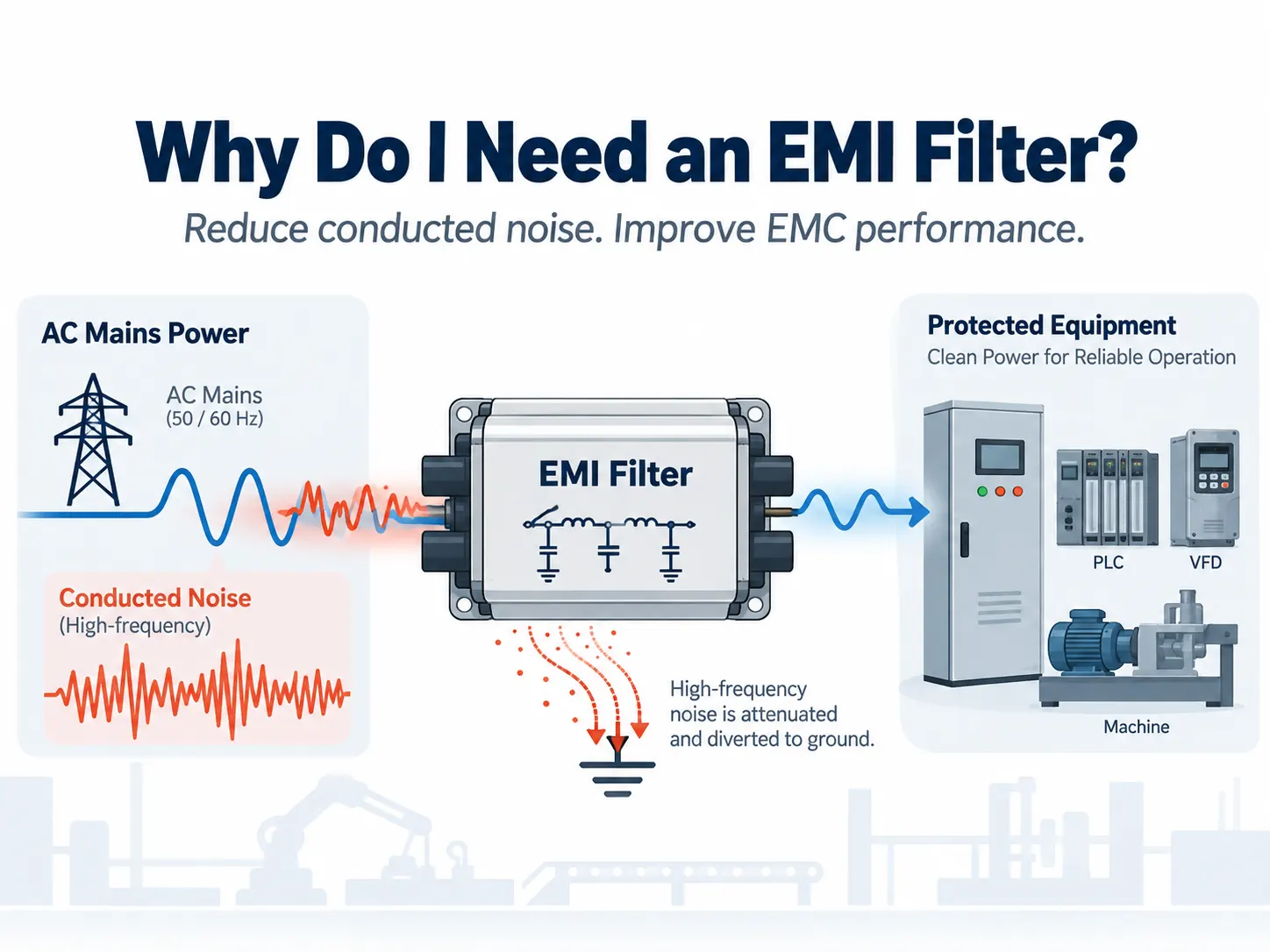
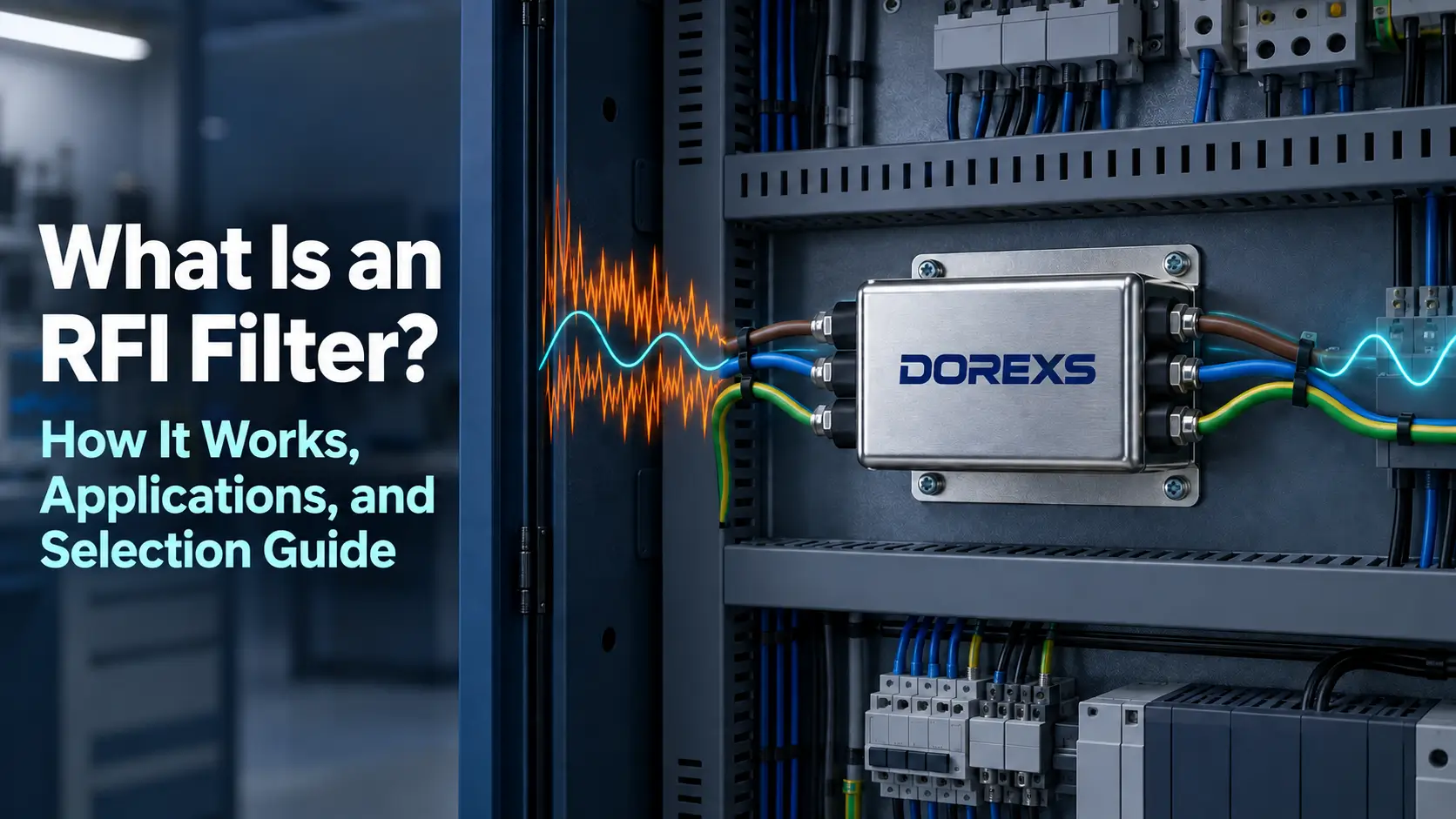
EMI filters are an effective way to protect against the harmful impacts of electromagnetic interference. When attached to devices or circuits, EMI filters can suppress electromagnetic noise transmitted through conduction. These filters extract any unwanted current conducted through wiring or cables, while allowing desirable currents to flow freely. EMI filters that suppress noise from grid power are also called EMI power line filters.
Most electromagnetic noise is in a higher frequency range, so EMI filters are often low-pass filters that sift out high frequencies while letting lower frequencies pass through. Different EMI line filters suppress specific frequencies of noise, while allowing others to flow unimpeded. After the filtering process, electromagnetic noise gets diverted away from the device and to the ground. Some EMI filters may also route unwanted currents back to the noise source or absorb them.
Because EMI filters only protect against conducted EMI, they often pair with shields that block radiated EMI. An unshielded EMI filter can still transmit noise through the air to damage the device. Noise can get emitted from a wire on one side of the EMI filter and then travel to the device by recoupling with the wire on the other side.
Adding a shield at the attachment point of the electromagnetic interference filter can effectively block all forms of EMI. However, if there is only a small length of conductor between the filter and the source of EMI, using a filter alone can be sufficient.


DOREXS Manufacturing on EMI Filter
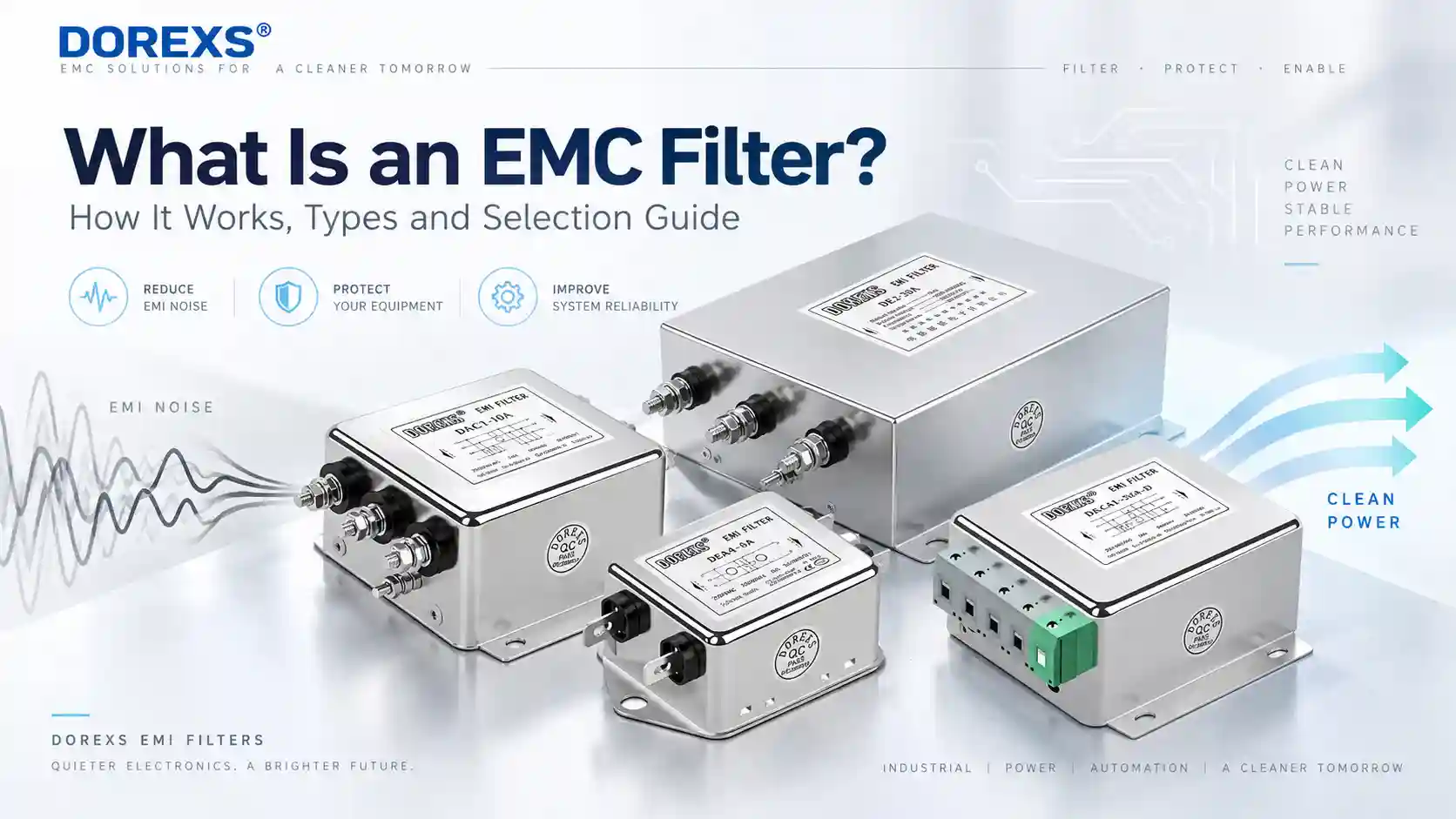
DOREXS has many years of experience in EMI filter manufacturing and is proficient in applying EMI filters to switching power supplies.
Moreover, DOREXS has multiple product certifications, including CE, ISO9001, UL and other certifications, which meet the technical requirements of European and American countries.
Contact us to get more EMI filters suitable for use in switching power supplies
What is the Purpose of EMI Filters
Understanding EMI Filter Role in the Robotics and Automation Industry