What Is Leakage Current and Why It Matters : A Complete Guide to Electrical Safety
Introduction
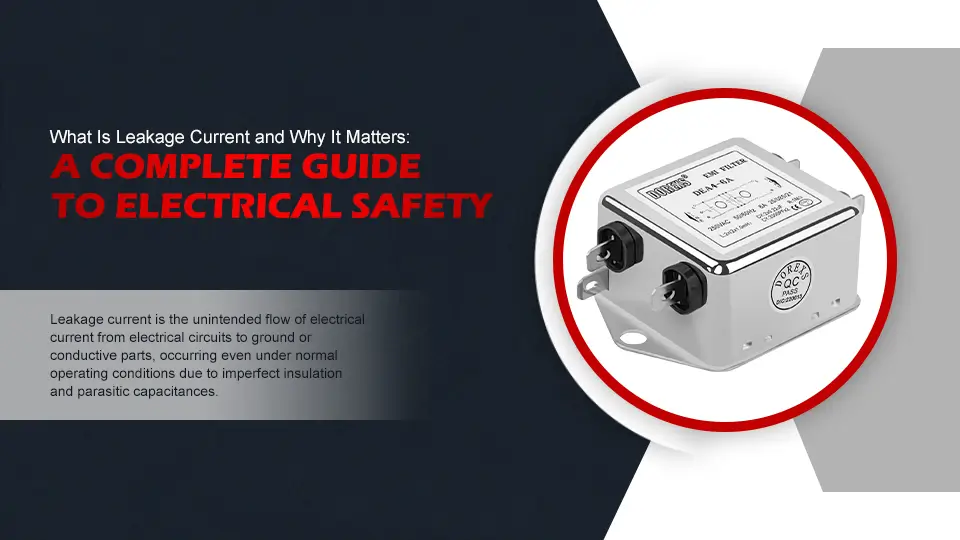
Leakage current is the unintended flow of electrical current from electrical circuits to ground or conductive parts, occurring even under normal operating conditions due to imperfect insulation and parasitic capacitances. This phenomenon affects virtually all electrical equipment and represents a critical safety consideration that electrical professionals must understand and control.
Leakage current occurs because no insulation is perfect—even high-quality materials have finite resistance, and modern equipment deliberately includes components like EMI filters that create controlled leakage paths for noise suppression.
Leakage current occurs because no insulation is perfect—even high-quality materials have finite resistance, and modern equipment deliberately includes components like EMI filters that create controlled leakage paths for noise suppression.
What This Guide Covers
This comprehensive guide explains leakage current types, measurement methods, safety standards, and practical control strategies for electrical systems. We cover both the fundamental physics and real-world applications across medical, industrial, and consumer electronics.
Who This Is For
This guide is designed for electrical engineers, safety professionals, technicians, and equipment designers who need to understand leakage current risks and compliance requirements. Whether you’re designing medical devices with ultra-strict limits or troubleshooting industrial equipment with nuisance RCD trips, you’ll find actionable technical guidance.
Why This Matters
Leakage current directly impacts electrical safety, equipment reliability, and regulatory compliance. Excessive leakage can cause electric shocks, equipment malfunctions, energy waste, and costly failures during safety certification testing.
What You’ll Learn:
What You’ll Learn:
-
Core leakage current mechanisms and measurement principles
-
Safety standards and testing procedures across different industries
-
Common sources and prevention strategies for various equipment types
-
Practical solutions for challenging leakage current scenarios
Understanding Leakage Current Fundamentals
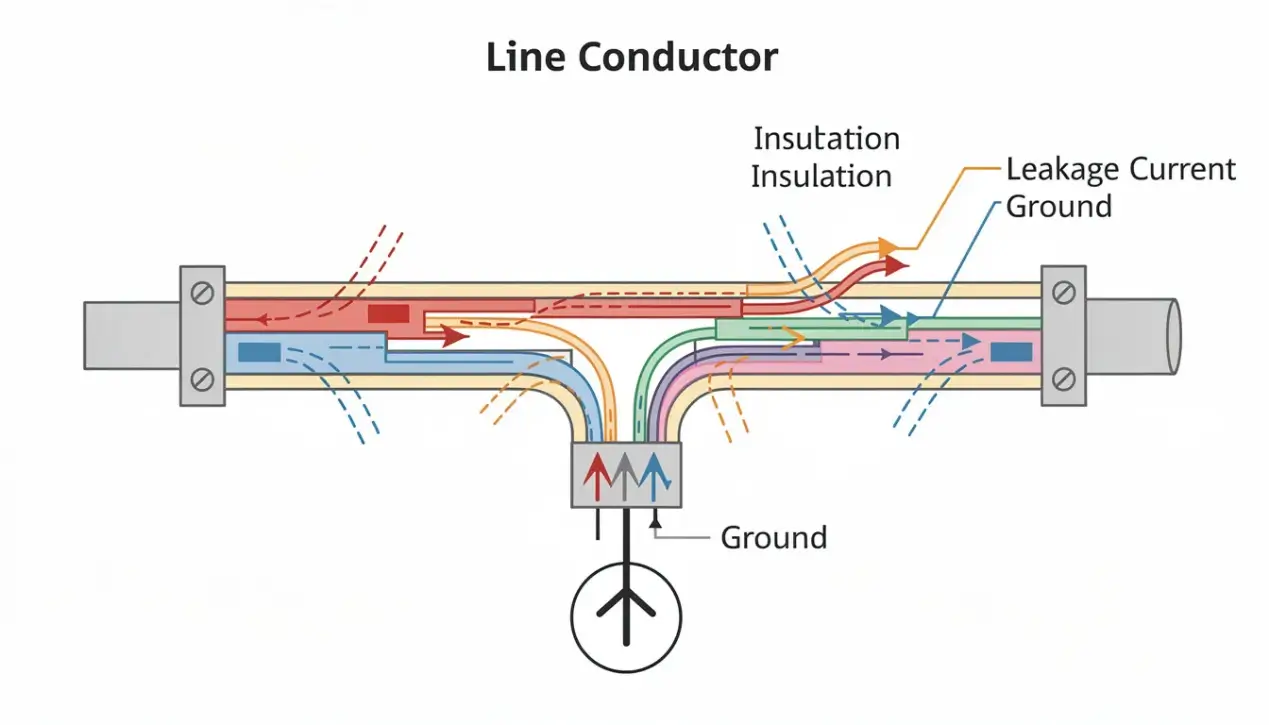
Leakage current is electric current that flows through unintended or unwanted conductive paths, typically through insulation or parasitic capacitances, from live conductors to ground or accessible conductive parts under normal conditions.
This current exists even when equipment operates correctly—it’s not a fault condition but rather an inherent characteristic of electrical systems. The key distinction from normal operating current is that leakage flows outside the intended electrical path, often through insulating materials or environmental contaminants.
Unlike fault current, which indicates insulation breakdown and typically triggers protective devices, leakage current represents ongoing, low-level current flow that must be controlled within specific limits defined by safety standards.
Types of Leakage Current
Capacitive leakage current occurs when AC voltage applies across parasitic or intentional capacitances between conductors. This displacement current follows the relationship I = 2πfCV, where frequency, capacitance, and voltage directly influence magnitude. EMI filters commonly use Y-capacitors between line conductors and ground, creating predictable capacitive leakage paths.
Resistive leakage current flows through finite resistance in insulating materials or contaminated surfaces. This type often indicates degradation, moisture ingress, or manufacturing defects. Unlike capacitive leakage, resistive current appears under both AC and DC conditions and typically increases with insulation aging.
Earth leakage current specifically flows from live conductors to the protective earth conductor through insulation or filter components. This measurement forms the basis for many safety compliance tests and directly affects RCD operation in electrical installations.
Touch current represents the current that would flow through a person’s body when touching accessible conductive equipment parts. Safety standards strictly limit this parameter, especially for medical equipment and handheld devices where human contact is frequent.
Building on these fundamental types, measurement challenges arise because different leakage mechanisms may occur simultaneously, requiring careful test setup design to isolate specific current components.

Common Applications and Industries
Medical equipment requires the most stringent leakage current control, with IEC 60601-1 standards limiting patient leakage to microamp levels. Devices like patient monitors, surgical equipment, and diagnostic instruments must maintain these extremely low thresholds while providing necessary EMI filtering performance.
Industrial electronics including variable frequency drives, power supplies, and automation equipment typically allow higher leakage current limits but face challenges with cumulative effects when multiple devices share common protective devices. Quality EMI filters like those from DOREXS help engineers achieve optimal noise suppression while controlling earth leakage within acceptable limits.
Consumer electronics must balance leakage control with cost considerations, meeting safety standards while maintaining competitive manufacturing costs. Household appliances, IT equipment, and power adapters each have specific leakage requirements based on their classification and intended use patterns.
This connects to electrical safety because different applications determine acceptable leakage limits—what’s safe for fixed industrial equipment may be dangerous for portable medical devices in direct patient contact.
Transition: Understanding these application contexts helps explain why leakage current sources vary significantly across different equipment types and operating environments.
Sources and Causes of Leakage Current
Every electrical system contains multiple potential leakage paths, from intentional filter components to environmental contamination. Identifying these sources enables targeted prevention strategies and helps predict leakage behavior during equipment design and operation.
Insulation-Related Causes
Insulation degradation represents the most common long-term leakage source in electrical equipment. Temperature cycling, UV exposure, mechanical stress, and chemical contamination gradually reduce insulation resistance, increasing current flow through previously effective barriers. High-voltage applications particularly suffer from partial discharge effects that create carbonized tracking paths.
Manufacturing defects in insulating materials include voids, thin sections, contamination, and improper curing processes. These defects often manifest as elevated leakage current during initial testing, though some may develop over time as stress concentrates at weak points.
Moisture and contamination create conductive films on insulator surfaces, dramatically reducing surface resistance. Salt deposits, industrial pollutants, and even fingerprint residues can lower insulation effectiveness by orders of magnitude, particularly affecting high-impedance circuits and precision measurement applications.
Unlike designed-in leakage from components, these insulation-related mechanisms typically indicate deteriorating safety margins requiring corrective action.
Design and Installation Factors
Improper grounding systems create unpredictable leakage paths and can concentrate currents in unsafe ways. Poor ground connections, corroded bonds, and inadequate earth electrodes all contribute to elevated touch currents and reduced protective device effectiveness.
Component selection issues include using filter capacitors with excessive leakage specifications or EMI filters not optimized for the application’s leakage budget. Engineers must balance noise suppression requirements against cumulative leakage effects, particularly in installations with multiple filtered devices.
Circuit design considerations such as inadequate creepage distances, poor PCB layout, and insufficient isolation barriers allow unintended current paths to develop. High-frequency switching circuits particularly require careful design to minimize parasitic coupling between primary and secondary circuits.
Building on component selection, installation errors like damaged cables, loose connections, and improper routing create additional leakage sources that may not appear during initial testing but develop over operational time.
Environmental and Operational Factors
Humidity and moisture ingress affects both surface and volume resistivity of insulating materials. Sealed enclosures can trap moisture during temperature cycling, while outdoor equipment faces direct water exposure. Conformal coatings and proper sealing help minimize moisture-related leakage in critical applications.
Temperature effects influence insulation properties in complex ways—higher temperatures generally reduce resistance while thermal cycling creates mechanical stress. Power electronics operating at elevated temperatures must account for increased leakage in thermal design calculations.
Contamination sources include airborne particles, cleaning solvents, and process chemicals that deposit conductive films on insulators. Industrial settings with metallic dust, salt spray, or corrosive atmospheres require specialized protection strategies and more frequent cleaning maintenance.
Transition: These diverse leakage sources highlight why comprehensive testing protocols and safety standards have developed to ensure reliable operation across various operating conditions.
Safety Implications and Testing Methods
Understanding leakage current sources becomes critical when implementing testing procedures that verify equipment safety and regulatory compliance. Proper measurement techniques and interpretation of results directly impact product certification and user protection.
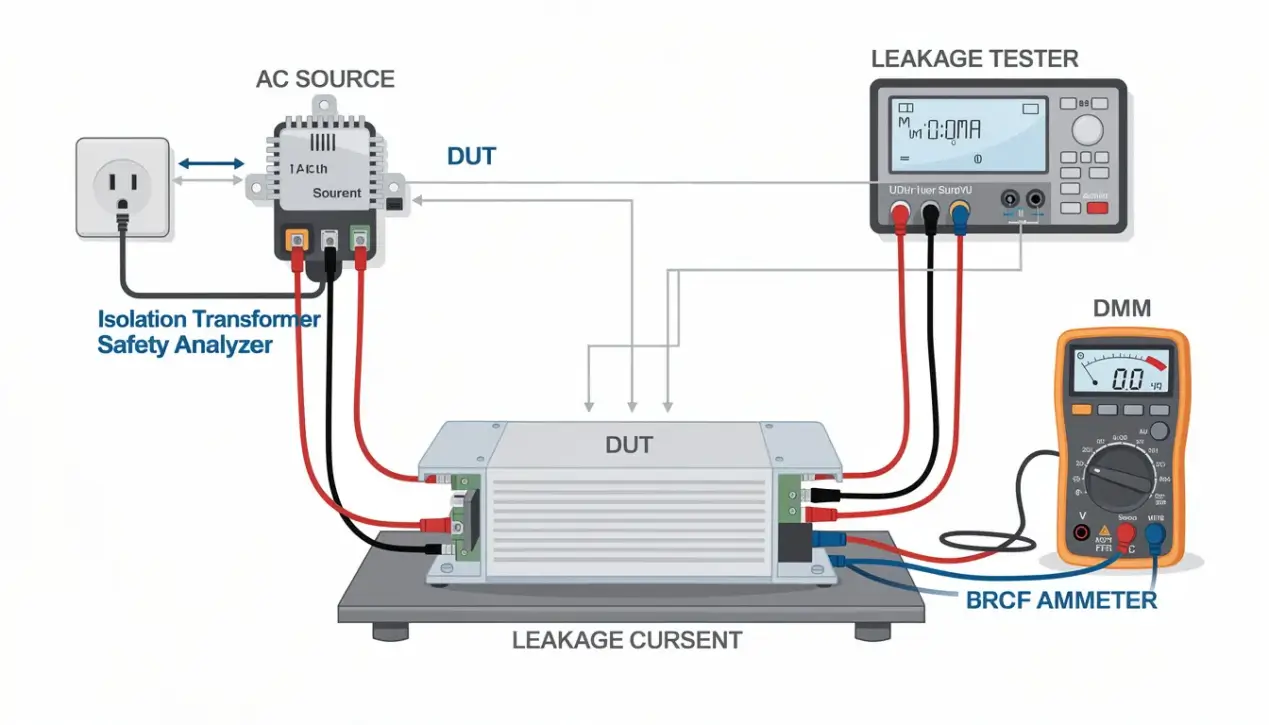
Step-by-Step Leakage Current Testing
When to perform testing: During design validation to verify safety margins, manufacturing quality control to catch defective units, and periodic maintenance to monitor insulation degradation over equipment lifetime.
-
Prepare test equipment and safety precautions: Calibrate leakage current tester, verify ground integrity, and establish safe working procedures. Ensure test voltages match applicable standards and equipment ratings.
-
Configure measurement setup according to applicable standards: Connect test leads properly, install any required human body impedance networks for touch current testing, and verify proper isolation from other equipment.
-
Apply test voltage and measure leakage current: Energize circuit at specified voltage and frequency, allow stabilization period for capacitive charging, and record steady-state leakage values under normal and single fault conditions.
-
Compare results against acceptance criteria: Evaluate measurements against relevant safety standard limits, considering equipment classification, intended use, and operating environment factors.
-
Document results and take corrective action if needed: Record all measurements with test conditions, investigate any values approaching limits, and implement design changes or component replacements as required.
Comparison: Different Measurement Standards
Equipment Type |
Normal Condition Limits |
Single Fault Limits |
Measurement Method |
|
Medical (IEC 60601-1)
|
100-500 µA depending on applied part type
|
1-5 mA maximum
|
AC test voltage, body impedance network
|
|
Consumer (UL standards)
|
0.25-3.5 mA based on equipment class
|
2x normal limits typically
|
AC test at rated voltage
|
|
Laboratory (IEC 61010)
|
3.5 mA for permanently connected
|
2x normal for single fault
|
Standard measurement circuit
|
The choice of appropriate standard depends on equipment classification, intended market, and user exposure risk. Medical devices require the most stringent limits due to direct patient contact, while industrial equipment allows higher leakage levels with proper grounding systems.
Transition: Even with proper testing procedures, real-world applications present challenging scenarios that require specialized solutions and ongoing monitoring.
Common Challenges and Prevention Solutions
Testing and standards provide the framework, but electrical professionals regularly encounter specific leakage current challenges that require targeted engineering approaches and careful component selection.
Challenge 1: Excessive Leakage in High-Frequency Circuits
Solution: Implement proper EMI filtering and shielding techniques using optimized filter designs that balance noise suppression with leakage control. DOREXS EMI filters are specifically engineered to provide effective common-mode noise attenuation while maintaining earth leakage within acceptable limits for various applications.
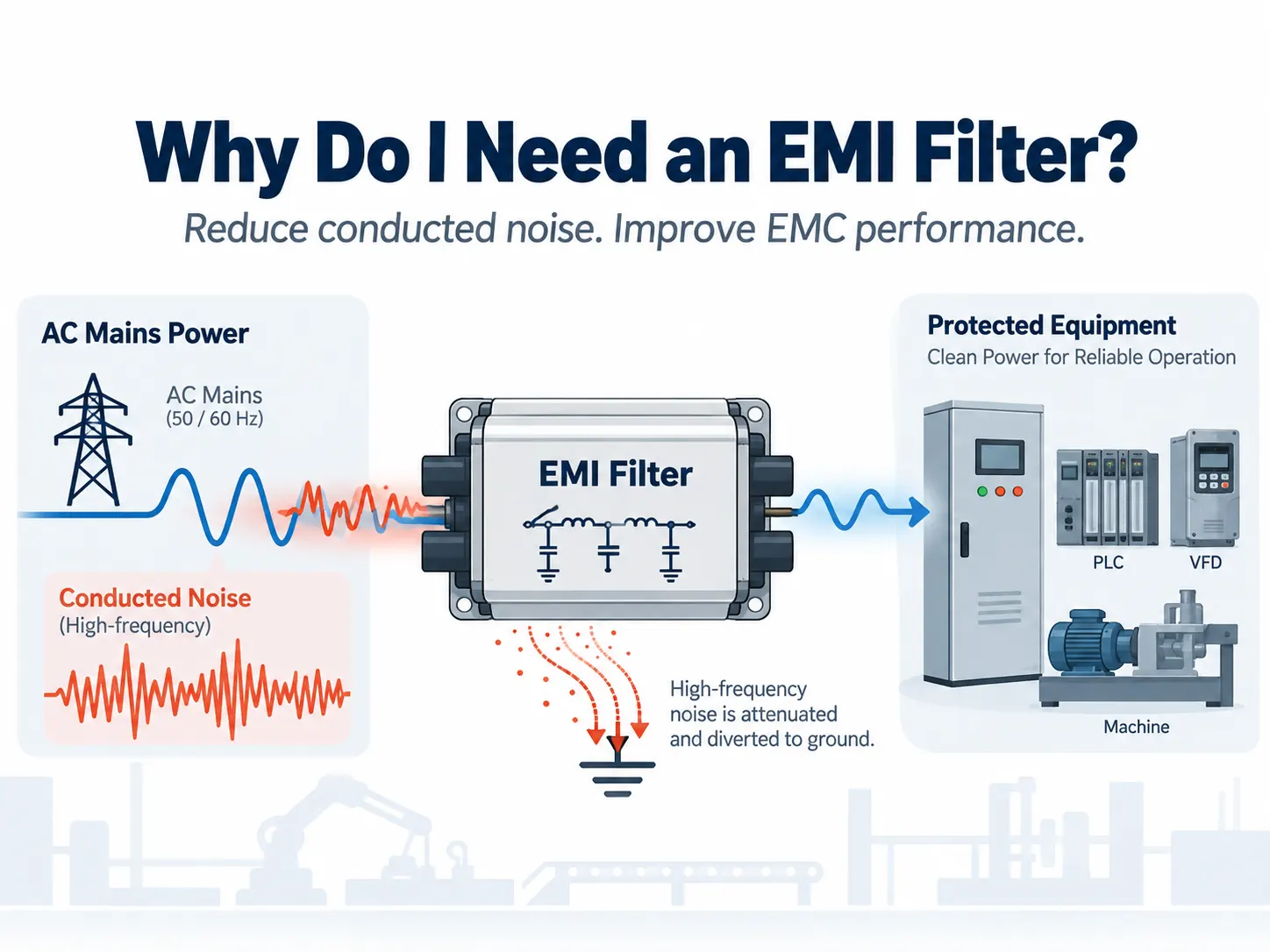
High-frequency switching circuits create both differential-mode and common-mode noise that requires Y-capacitors between line and ground for effective suppression. However, these same capacitors contribute to 50/60 Hz earth leakage current through displacement current mechanisms.
Challenge 2: Leakage Current Drift Over Time
Solution: Establish regular maintenance schedules with trending analysis to detect gradual insulation degradation before it reaches unsafe levels. Implement continuous monitoring systems where practical, and maintain detailed service records to identify patterns.
Trending data helps distinguish between normal aging effects and accelerated degradation that requires immediate attention. Components operating near temperature limits or in contaminated environments require more frequent evaluation.
Challenge 3: Meeting Stringent Medical Device Requirements
Solution: Design with appropriate safety margins using certified low-leakage components and specialized medical-grade EMI filters. DOREXS offers ultra-low leakage filter solutions specifically designed for IEC 60601-1 compliance, enabling medical device manufacturers to meet stringent patient safety requirements.
Medical applications often require leakage limits orders of magnitude lower than general industrial equipment, necessitating careful component selection and specialized measurement techniques to verify compliance.
Transition: These practical solutions demonstrate how understanding leakage current mechanisms enables proactive engineering approaches rather than reactive problem-solving.
Conclusion and Next Steps
Leakage current represents an unavoidable but manageable aspect of electrical system design that directly impacts safety, reliability, and regulatory compliance. Proper understanding of leakage mechanisms enables engineers to design systems that meet performance requirements while maintaining appropriate safety margins.
The key insight is that leakage current cannot be eliminated but must be controlled through proper component selection, design practices, and ongoing monitoring. Different applications require vastly different approaches—medical devices demand ultra-low leakage while industrial equipment can tolerate higher levels with appropriate protective systems.
To get started:
-
Assess current equipment leakage levels using appropriate test procedures and safety standards
-
Establish regular testing and maintenance programs to monitor insulation condition over time
-
Implement proper EMI filtering strategies that balance noise suppression with leakage control requirements
Related Topics: EMI filter selection and design, electrical safety standard compliance, power quality analysis, and protective device coordination for complex electrical installations.
Additional Resources
Key Safety Standards:
-
IEC 60601-1: Medical electrical equipment safety requirements
-
UL 2089: Health/medical electrical equipment for North American markets
-
IEC 61010: Safety requirements for electrical equipment in laboratory use
Professional Resources:
-
Electrical safety testing equipment suppliers and calibration services
-
IEEE and IEC technical committees for ongoing standards development
-
DOREXS technical documentation for EMI filter applications requiring controlled leakage current
Industry Training:
-
Professional electrical safety associations offering certification programs
-
Equipment manufacturer training on specific leakage current testing procedures
-
Regulatory compliance consulting for international market requirements
How Grounding Impacts EMI Performance: A Practical Engineering Guide
Why EMI Requirements Are Becoming Tighter: Key Drivers & Business Impacts