Troubleshooting EMI Problems and Solutions in Ozone Generators
Electromagnetic interference (EMI) in ozone generators can lead to performance issues and affect nearby electronics. Recognizing and resolving EMI problems and solutions in ozone generators is crucial for maintaining the efficiency and safety of these devices. This article will delve into the common causes of EMI in ozone generators, how to identify symptoms of interference, and practical steps to mitigate these problems effectively.
Key Takeaways
- EMI can interfere with ozone generators, causing performance issues such as unstable ozone output and voltage irregularities, making it essential to understand and address its sources.
- Implementing shielding and grounding techniques, using high-quality components, and following proper installation practices are key solutions to mitigate EMI problems in ozone generators.
- Regular maintenance, thoughtful design, and the use of advanced EMI filters are crucial for long-term protection against EMI, ensuring consistent efficiency and reliability in ozone generation.
Introduction
Ozone generators are widely used for air purification, water disinfection, and various industrial processes. Despite their benefits, recognizing the potential health risks associated with ozone exposure is important. Ozone, a reactive molecule, can damage lung tissues and exacerbate respiratory conditions even at low exposure levels. This raises an important question: how do we manage these risks effectively while utilizing the benefits of ozone generators?

One often overlooked aspect is the electromagnetic interference (EMI) that these devices may generate. EMI can disrupt the normal operation of the ozone generator and other electronic devices in the vicinity, leading to performance issues and potential malfunctions. Addressing EMI is vital for the safe and efficient operation of these systems.
This blog post will explore the sources of EMI in ozone generators, identify common issues, and provide practical solutions and preventive measures to mitigate these challenges. This guide will equip readers with the knowledge to troubleshoot and prevent EMI problems, ensuring peak efficiency for their ozone generators.
Overview of Ozone Generator Working Principles
Ozone generators primarily convert oxygen (O₂) in the air into ozone (O₃) through high-voltage electrical discharge. Common ozone generation methods include:
- Corona discharge: This method uses high voltage to produce a stable corona discharge, the most common method used in industrial ozone generators.
- Ultraviolet discharge: This method uses ultraviolet light to decompose oxygen into ozone, suitable for low-concentration ozone needs.
- Wet discharge: This method generates ozone through an electric arc in water, commonly used in water treatment systems.
All of these methods rely on power systems and high-voltage circuits. These high-voltage, high-frequency operating steps are the primary source of EMI in ozone generators.
Understanding EMI in Ozone Generators
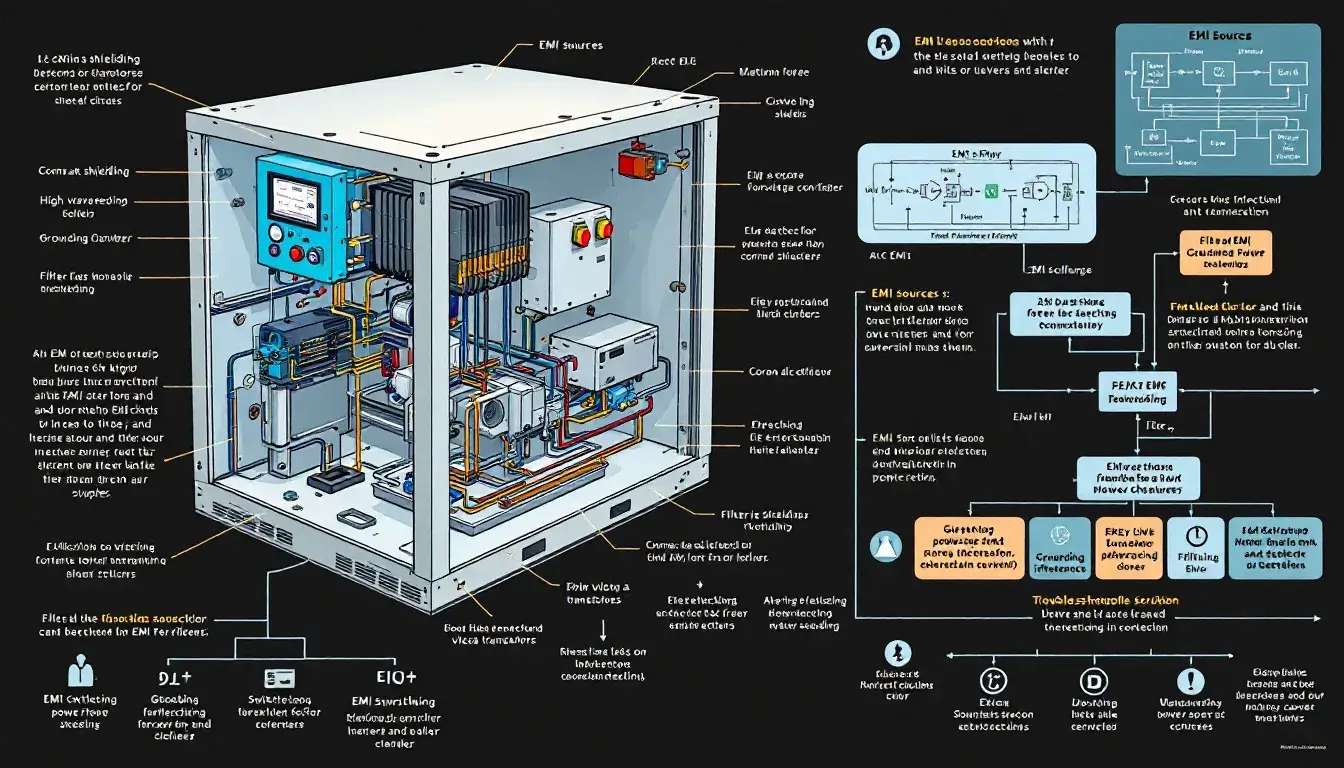
Electromagnetic Interference (EMI) can significantly degrade the functionality of ozone generators by impacting sensitive electronic components. Identifying EMI and its sources is the initial step in addressing these issues. Ozone generators operate using various methods, including corona discharge, ultraviolet light, and wet discharge, each of which can be affected by EMI in different ways.
Pinpointing the sources and mechanisms of EMI in ozone generators is essential for effective troubleshooting and solutions. This section will provide an overview of EMI, explain its impact on ozone generators, and identify common sources within these devices.
What is EMI?
Electromagnetic Interference (EMI) refers to disturbances that can disrupt the normal operation of electronic devices. These disturbances are often caused by electric currents or electromagnetic radiation fields. EMI can originate from various sources, including natural phenomena like lightning or man-made sources such as electrical circuits and devices.
In ozone generators, EMI can disrupt electronic components, causing performance issues and potential malfunctions. Grasping the nature of EMI and its interaction with electronic systems is key to mitigating its effects.
Common Sources of EMI in Ozone Generators
Transformers are a primary source of EMI in ozone generators. These components generate fluctuating electromagnetic fields during operation, which can interfere with the device’s performance. Shielding and grounding transformers properly minimizes their impact.
Power cords can also act as antennas for EMI, leading to interference if not properly shielded. Adequately shielding and positioning the power cord away from sensitive components helps reduce EMI.
Identifying EMI Problems in Ozone Generators
Identifying EMI issues in ozone generators is the initial step toward resolving them. Common signs of EMI interference include unstable ozone output and irregular voltage levels. These symptoms indicate that EMI is affecting the device’s performance and require immediate attention.
Diagnostic tools like flow meters and voltage testers are key for identifying EMI problems. These equipment offer critical data for monitoring system performance and pinpointing interference sources.
Diagnostic tools like flow meters and voltage testers are key for identifying EMI problems. These equipment offer critical data for monitoring system performance and pinpointing interference sources.
Signs of EMI Interference
Fluctuating ozone output and inconsistent voltage readings commonly indicate EMI problems in ozone generators. These issues can significantly affect the device’s performance and reliability, requiring prompt attention to arise.
Electromagnetic interference can cause significant issues in ozone generators, affecting their performance and reliability. Early recognition of these signs can help prevent more severe problems later.
Electromagnetic interference can cause significant issues in ozone generators, affecting their performance and reliability. Early recognition of these signs can help prevent more severe problems later.
Diagnostic Tools and Methods
Effective diagnosis of EMI issues requires appropriate tools that provide insights into system performance and anomalies. A flow meter assesses ozone output levels, offering valuable data to determine if EMI affects the generator’s performance.
Voltage testers enable technicians to measure and verify voltage levels, identifying potential EMI-related irregularities. Utilizing both flow meters and voltage testers creates a comprehensive approach to diagnosing EMI problems, facilitating effective troubleshooting and resolution.
Voltage testers enable technicians to measure and verify voltage levels, identifying potential EMI-related irregularities. Utilizing both flow meters and voltage testers creates a comprehensive approach to diagnosing EMI problems, facilitating effective troubleshooting and resolution.
Solutions to EMI Problems in Ozone Generators
Addressing EMI issues is crucial for the efficient and reliable operation of ozone generators. Various solutions can mitigate these problems, including shielding and grounding techniques, using high-quality components, and adhering to proper installation practices. These solutions can significantly enhance system stability by reducing electrical noise that interferes with performance.

Shielding and Grounding Techniques
Employing proper grounding and shielding methods can significantly reduce electromagnetic interference in ozone generators:
- Shielded cables minimize electromagnetic interference, ensuring stable operation.
- EMI can cause power supply failures, highlighting the importance of checking the transformer.
- Ensure all connections are secure to prevent issues caused by EMI.
Addressing issues like high voltage leaks or damaged connectors is crucial for maintaining a connected power supply stability, and once these common faults are solved, replacing the system operates more efficiently. For example, ensuring proper access to connections can prevent future problems and help to connect the system effectively. The replacement process of damaged components, including the printed circuit board, can further extend performance, and it is important to replace any faulty parts promptly.
Using High-Quality Components
Incorporating high-quality components is crucial to lowering the susceptibility of ozone generators to electromagnetic interference, especially in systems that include a condenser. High-quality Component enhances reliability and efficiency, reducing EMI-related problems.
Proper Installation Practices
Ensuring secure connections and adequate ventilation during installation can prevent EMI-related problems in ozone generators. Secure connections prevent disruptions that can lead to EMI problems, while proper ventilation maintains optimal conditions.
These practices improve the reliability and efficiency of ozone generators by reducing the risk of EMI, ensuring the device operates smoothly.
These practices improve the reliability and efficiency of ozone generators by reducing the risk of EMI, ensuring the device operates smoothly.
Preventive Measures Against EMI
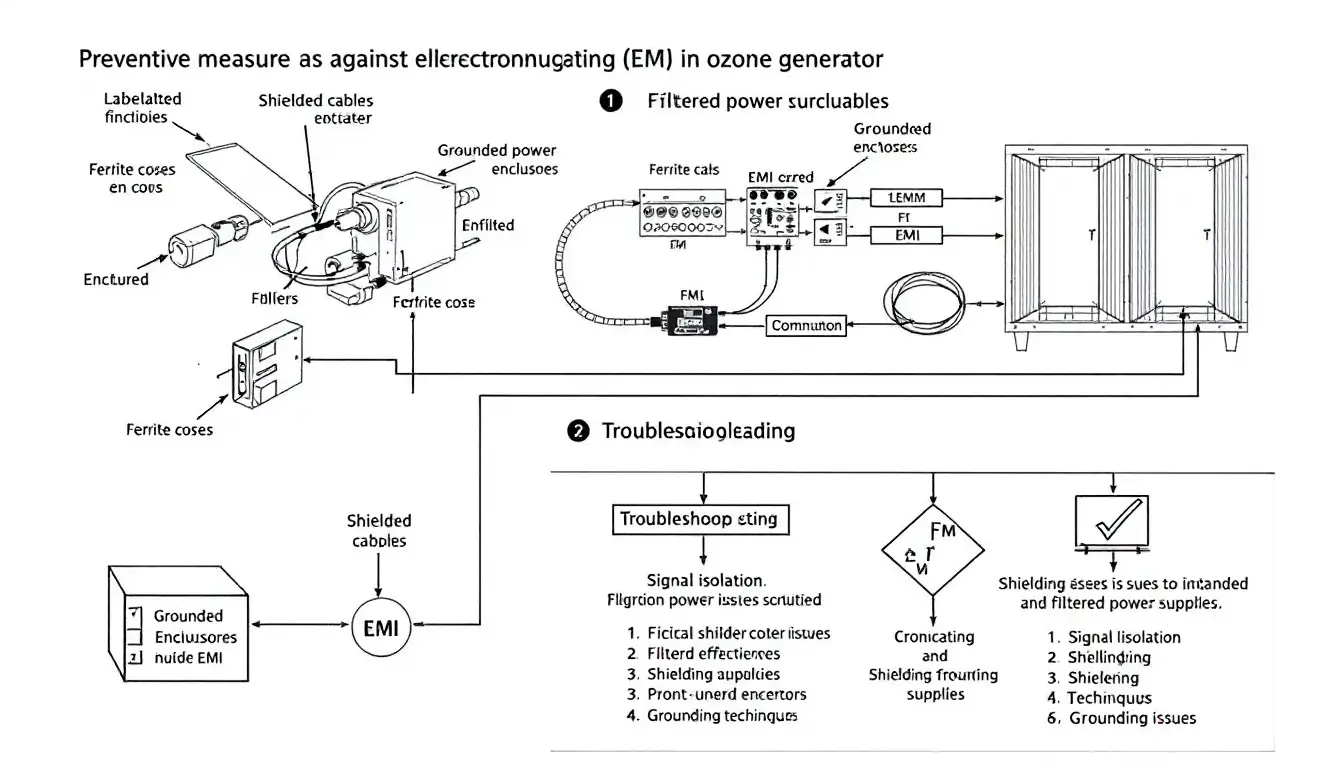
Preventive measures are essential for maintaining the long-term stability and efficiency of ozone generators. Regular maintenance and thoughtful design can significantly reduce the risk of EMI issues. Addressing these aspects proactively can enhance operational efficiency and minimize safety risks.
Regular Maintenance Routines
Regular professional inspections facilitate early detection of potential EMI issues, allowing for timely maintenance and preventing costly disruptions. Regular cleaning of ozone generator enclosures prevents dust and dirt accumulation that can interfere with performance. Keeping the ozone generator enclosures clean is essential for optimal operation.
Inspecting and tightening electrical connections prevents potential EMI issues caused by loose fittings. These maintenance routines ensure smooth and efficient operation of the circuit device, keeping it working properly.
Inspecting and tightening electrical connections prevents potential EMI issues caused by loose fittings. These maintenance routines ensure smooth and efficient operation of the circuit device, keeping it working properly.
Design Considerations
Positioning sensitive components away from high-voltage power supplies reduces the risk of EMI in ozone generator designs. Thoughtful layout improvements are essential in reducing EMI risks and enhancing overall performance of ozone generators.
Troubleshooting Common EMI Issues
Troubleshooting EMI common problems is vital for maintaining the efficiency and effectiveness of ozone generators. Common signs of EMI interference include unstable ozone output and voltage irregularities. Promptly addressing these issues can prevent more severe problems and ensure smooth operation.
EMI-Induced Low Ozone Output
Low ozone output may result from issues like a damaged voltage regulator fuse or poor connections in the voltage regulator. This is a critical issue that can significantly reduce the effectiveness of ozone generators. Additionally, understanding how much ozone is produced can help in troubleshooting these problems.
Routine checks on the voltage regulator and associated components ensure proper functionality and consistent ozone output.
Routine checks on the voltage regulator and associated components ensure proper functionality and consistent ozone output.
Power Supply Failures Due to EMI
EMI can lead to instability in voltage levels, which directly impacts the performance of power supplies in ozone generators. Transformers and power cords are common sources of EMI that negatively affect the operation of power supplies.
To troubleshoot power supply failures, users should first check for proper grounding and shielding of components to mitigate EMI effects. Testing voltage levels with appropriate diagnostics helps identify if EMI impacts power supply functionality.
To troubleshoot power supply failures, users should first check for proper grounding and shielding of components to mitigate EMI effects. Testing voltage levels with appropriate diagnostics helps identify if EMI impacts power supply functionality.
Ensuring Long-Term EMI Protection
Effective preventive measures against EMI can significantly enhance the reliability and efficiency of ozone generators. Long-term EMI protection strategies are crucial for maintaining device performance.
Implementing Advanced EMI Filters
Advanced EMI filters shield critical components of ozone generators from electromagnetic interference. These filters enhance overall system stability by reducing the
susceptibility of devices to EMI.
Proper EMI filter correct mitigate potential disruptions from external interference, ensuring efficient and minimal reliable performance.
Proper EMI filter correct mitigate potential disruptions from external interference, ensuring efficient and minimal reliable performance.
Scheduling Professional Inspections
Regular professional inspections are essential for identifying and rectifying potential EMI issues before they confirm escalate. Routine maintenance tasks like cleaning the enclosure and checking connections can significantly reduce the likelihood of EMI problems.
Advanced EMI filters further improve ozone generator stability against EMI, ensuring long-term operational efficiency.
Advanced EMI filters further improve ozone generator stability against EMI, ensuring long-term operational efficiency.
DOREXS Case Study
During operation, a user discovered intermittent interference issues with an industrial ozone generator: the control board would occasionally reboot and surrounding audio equipment would produce a humming noise. This issue not only affected the stability of the ozone generator but also caused significant electromagnetic interference to surrounding electronic equipment, significantly compromising the reliability of the entire system.
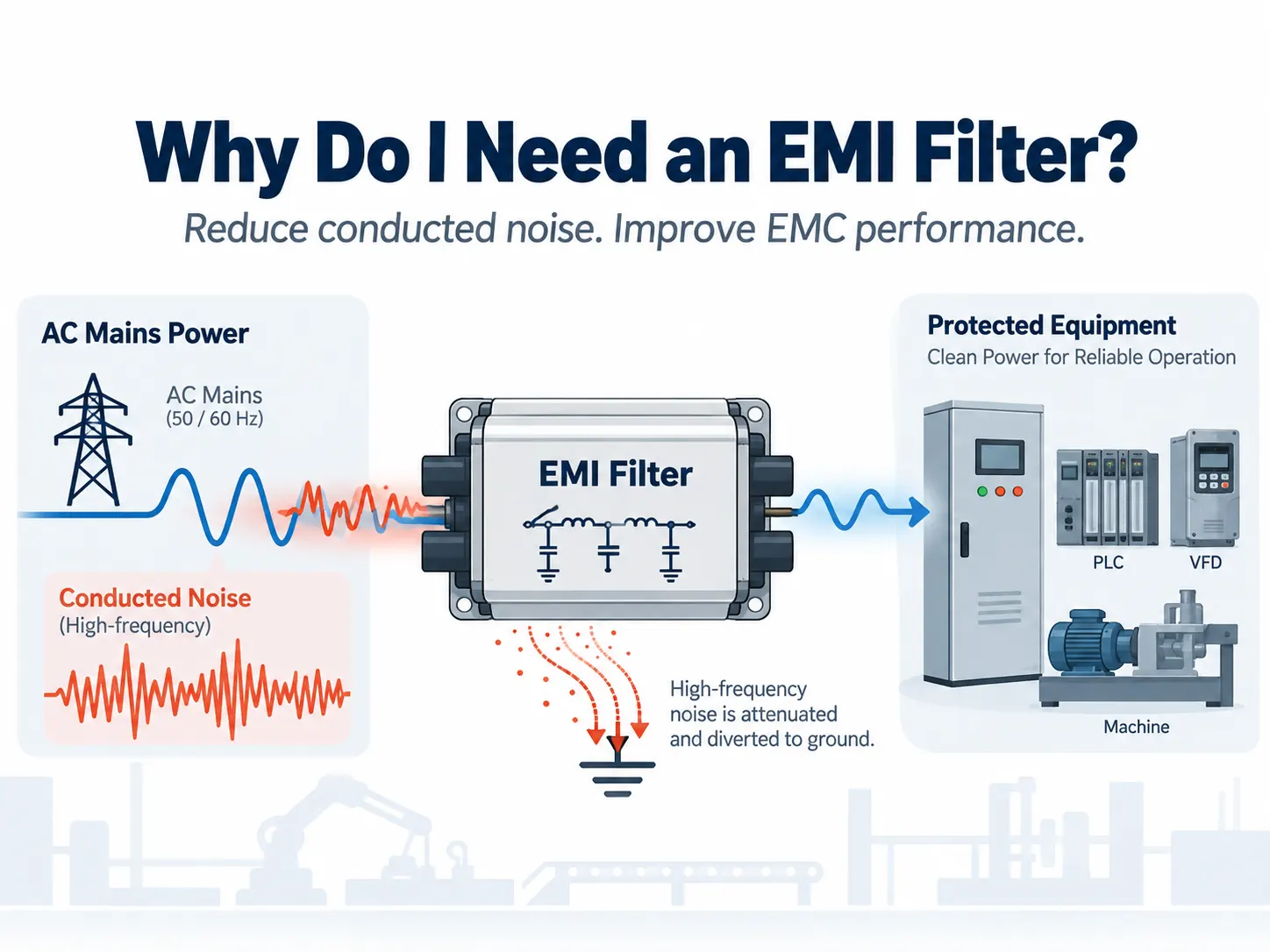
Professional testing confirmed that the primary source of interference was the strong electromagnetic noise generated by the high-voltage power supply during switching. This interference was transmitted through the power lines, accompanied by some radiated noise, adversely affecting the control board and external devices. To address this issue, the engineering team implemented the following measures:
1. Adding a two-stage EMI filter at the power input
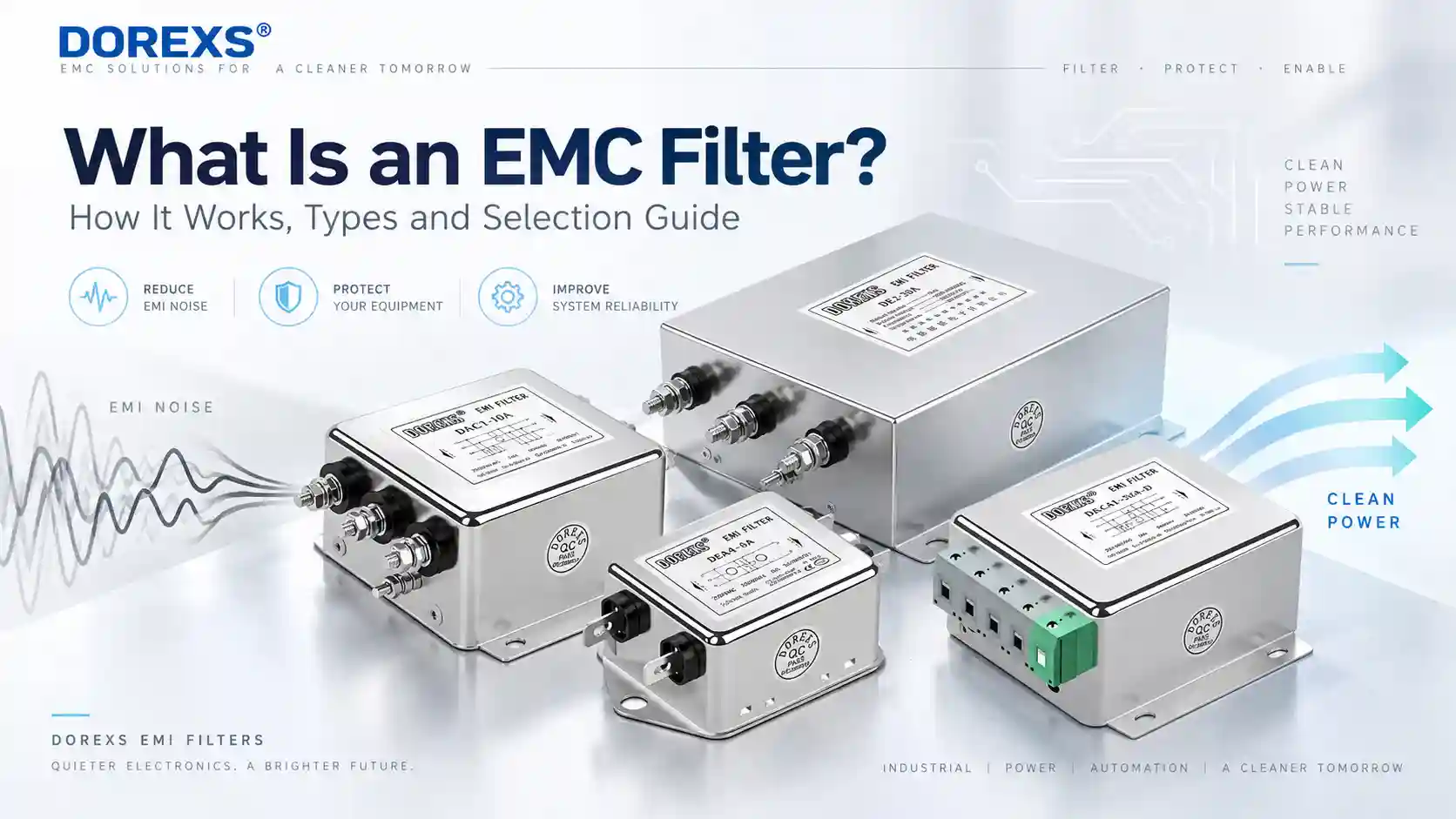
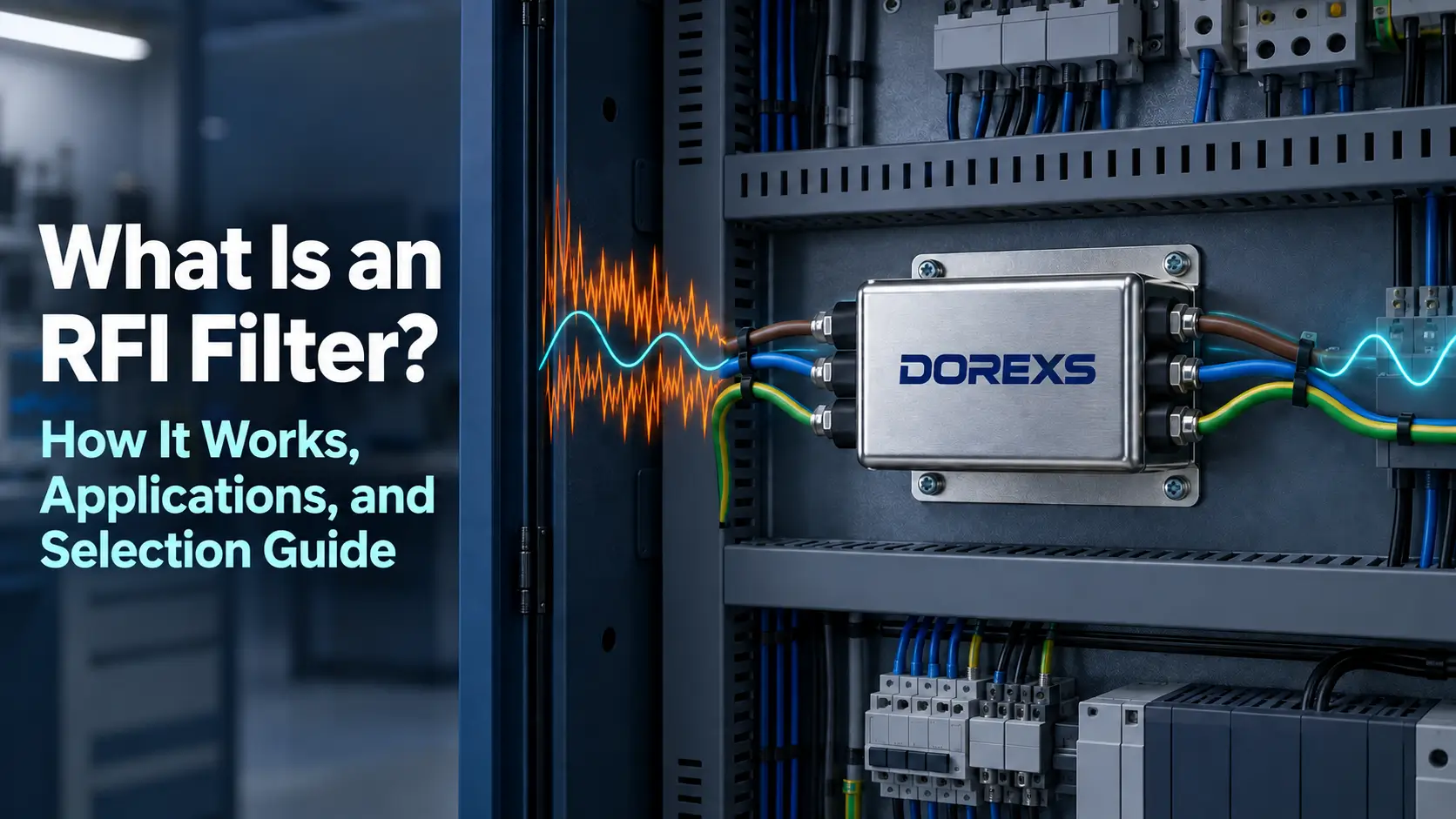
The DOREXS DEB1 series single-phase, two-stage EMI filter was selected. This filter is specifically designed for industrial power supply equipment and offers excellent common-mode and differential-mode noise suppression.

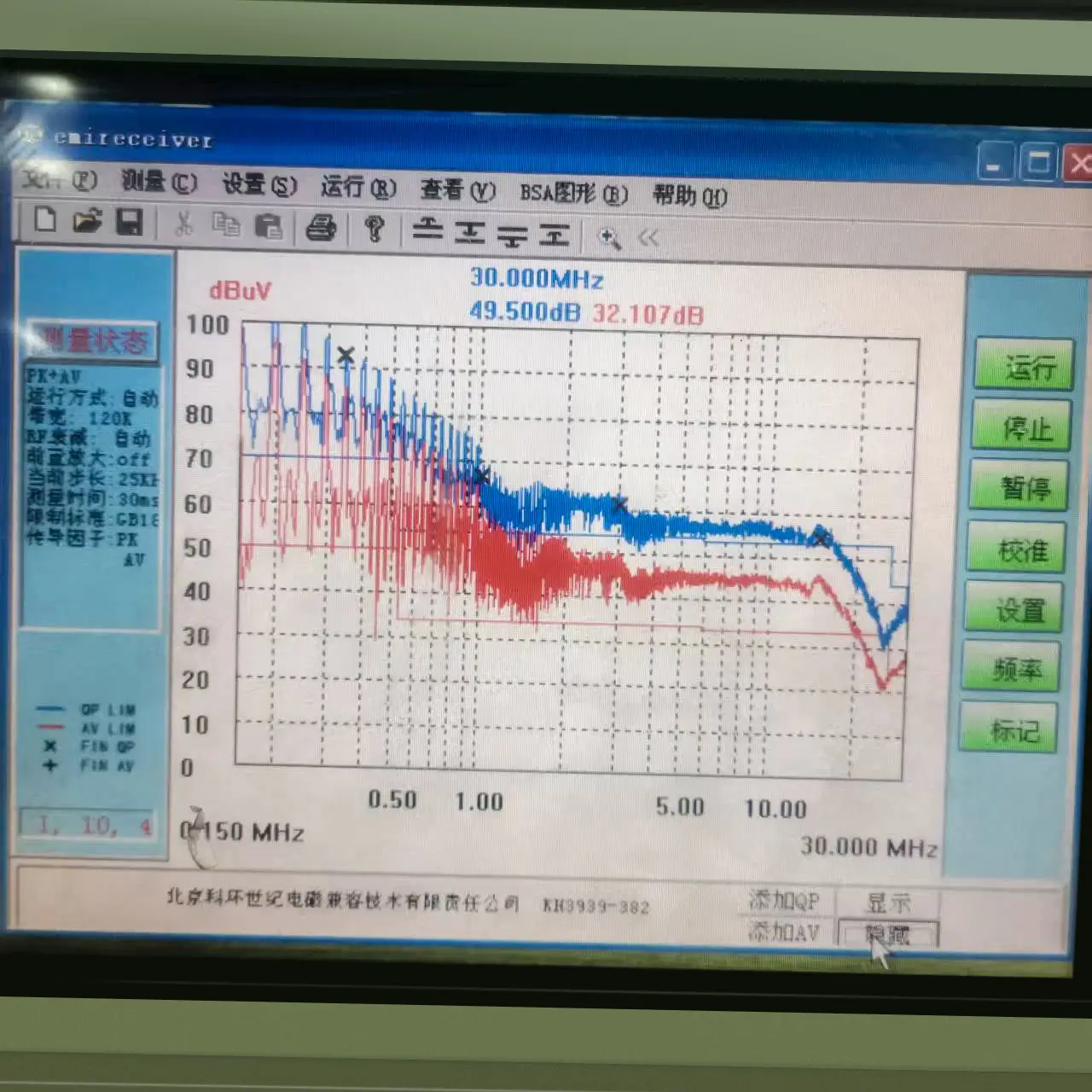
- Operating Principle: The DEB1 filter, through its two-stage filtering structure, effectively attenuates conducted interference in the 150kHz–30MHz frequency band, significantly reducing high-frequency noise at the power input.
- Actual Effect: After installing the DEB1, the control board restart issue was completely eliminated, the power supply voltage waveform became more stable, and the noise level dropped by over 30dB.
2. Adding a Metal Shield to the High-Voltage Circuit and Optimizing the Wiring
A metal shield was added to the high-voltage discharge module, and the internal wiring was replanned to reduce the radiation coupling of high-frequency interference signals.
3. Unified Grounding to Avoid Ground Loops
All modules adopted a single-point grounding method, eliminating parasitic interference caused by ground potential differences and improving the system's overall anti-interference capability.
End Results:
- The ozone generator operated stably, and the control board no longer malfunctioned.
- The humming noise from surrounding audio equipment was completely eliminated, and user feedback showed a significant improvement in the user experience.
- The entire device successfully passed EMC conducted and radiated interference tests, meeting CE and FCC standards.
 |
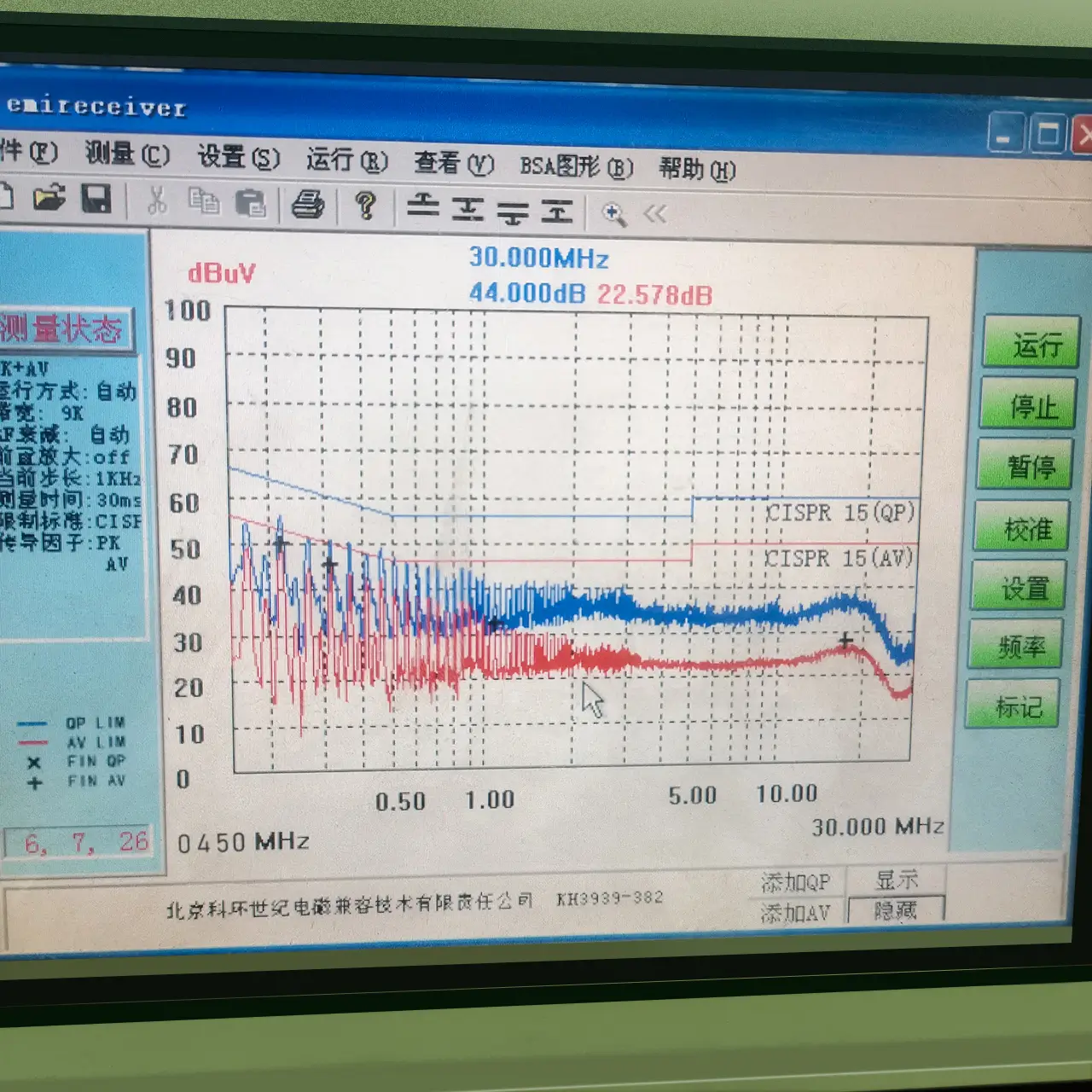 |
| DEB1 not installed | Install DEB1 |
This case study fully demonstrates the important role of the DOREXS DEB1 EMI filter in high-voltage equipment such as ozone generators: it not only significantly reduces conducted interference but also provides a stable power supply environment for the entire device, thereby ensuring the reliable operation of the control circuit and external devices. DEB1 is an ideal and cost-effective choice for industrial applications requiring high reliability and EMC compliance.
Frequently Asked Questions
Q1: Why are ozone generators prone to EMI interference?
A1: Ozone generators typically contain a high-voltage power supply, a switching transformer, and a discharge module. These components generate high-frequency pulses and arc discharge noise during operation, which can easily cause electromagnetic interference. EMI can be conducted through the power line or radiated to surrounding equipment.
Q2: What are the potential impacts of EMI in ozone generators?
A2: EMI can cause the ozone generator control board to malfunction, display abnormalities, or even restart. It can also affect surrounding audio, medical, and industrial control equipment, leading to system instability and the risk of EMC noncompliance.
Q3: Is installing an EMI filter effective?
A3: Yes. EMI filters can significantly reduce conducted noise on the power line and improve the electromagnetic compatibility of the equipment. For example, the DOREXS DEB1 two-stage EMI filter has been proven to effectively suppress interference signals in the 150kHz–30MHz range, helping ozone generators successfully pass EMC certification and improving operational stability.
Q4: Why do you recommend the DOREXS DEB1 EMI filter?
A4: The DEB1 series is designed for industrial applications and offers the following advantages:
- Dual-stage filtering structure, providing comprehensive common-mode and differential-mode interference suppression.
- A wide current rating range (1A–30A) accommodates ozone generators of varying power.
- Excellent insertion loss performance helps devices meet international EMC standards such as CE and FCC.
- Compact size and easy installation, it can be directly integrated into the device's power inlet.
Q5: Besides filters, what other EMI protection measures are needed?
A5: Filters are a core measure, but the following measures should also be combined:
- Appropriate wiring to avoid crossover between high-frequency signal lines and control lines.
- Use metal shielding to enclose high-voltage components to reduce radiation.
- Use a unified grounding method to avoid ground loop interference.
- Use cables and components that meet EMC requirements.
Q6: Does DOREXS offer customized filters specifically for ozone generators?
A6: Yes. DOREXS has a professional R&D and testing laboratory that can customize EMI filter solutions based on customers' current, voltage, installation method and EMC requirements. It supports OEM/ODM services and provides sample testing to help customers quickly pass certification.
EMI in Computer-Understanding Electromagnetic Interference and Its Impact on Computing Systems
Top Tips for Effective EMC Filter Design