What is a Power Line Filter?
Electromagnetic interference (EMI) is a significant issue that cannot be overlooked in modern electronic devices. It not only affects the normal operation of equipment but can also lead to safety hazards. To address this problem, engineers have designed power line EMI filters. This article will provide an in-depth introduction to:
- What is a power line EMI filter?
- How does a power line EMI filter work?
- Types of power line EMI filters
- Applications of power line EMI filters
- How to install a power line EMI filter?
- How to choose a suitable power line EMI filter?
What is a power line filter?
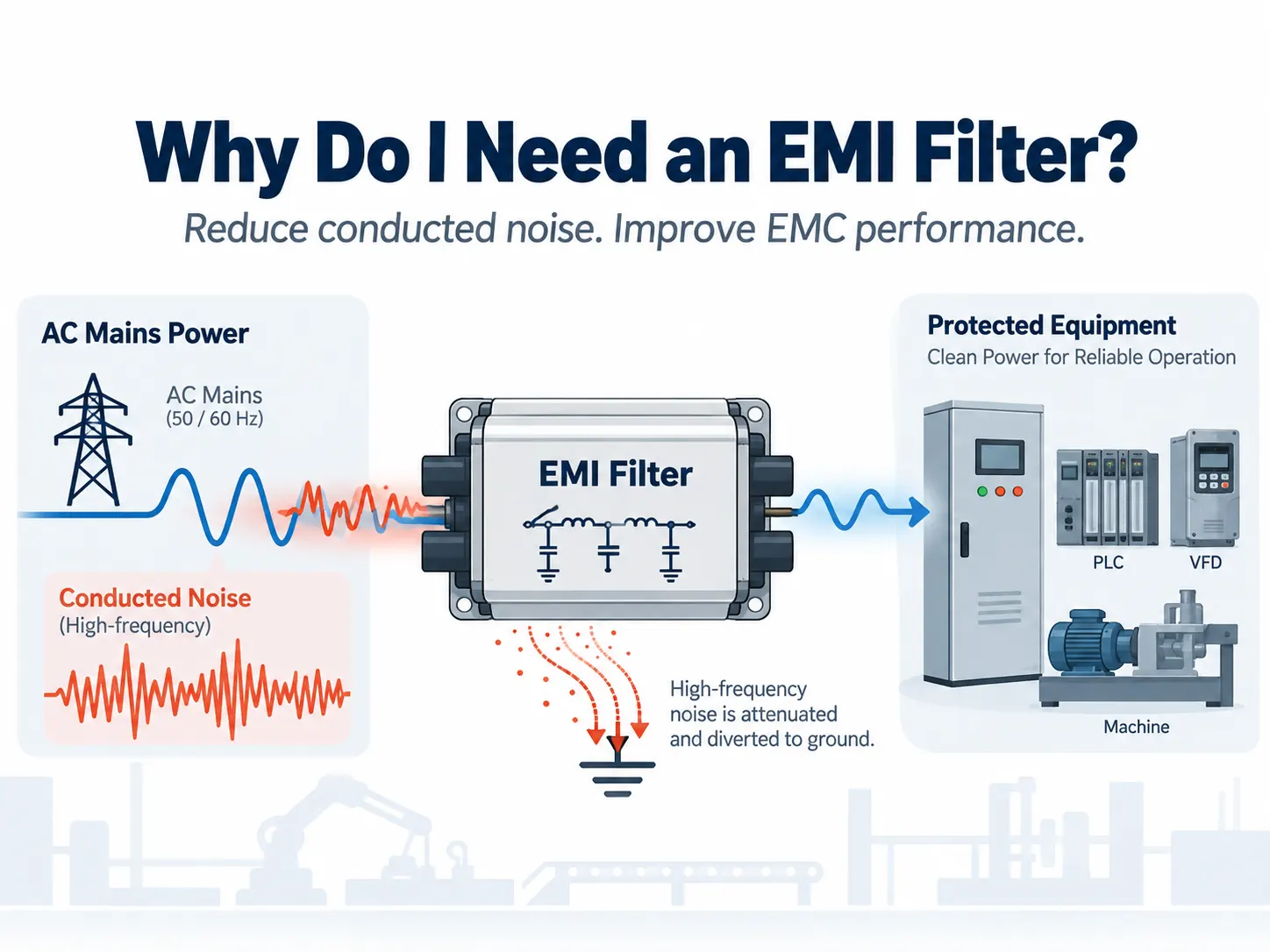
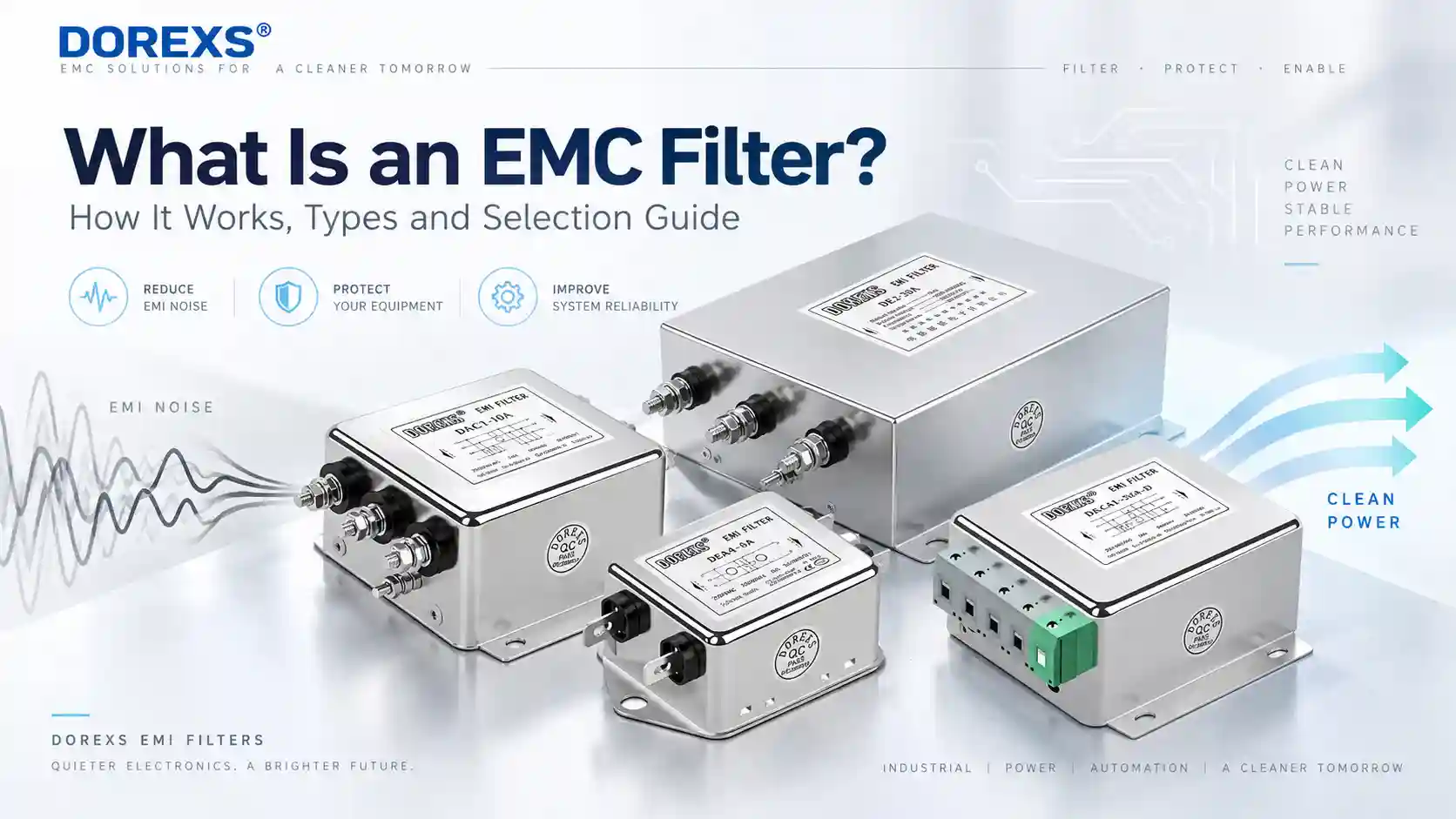
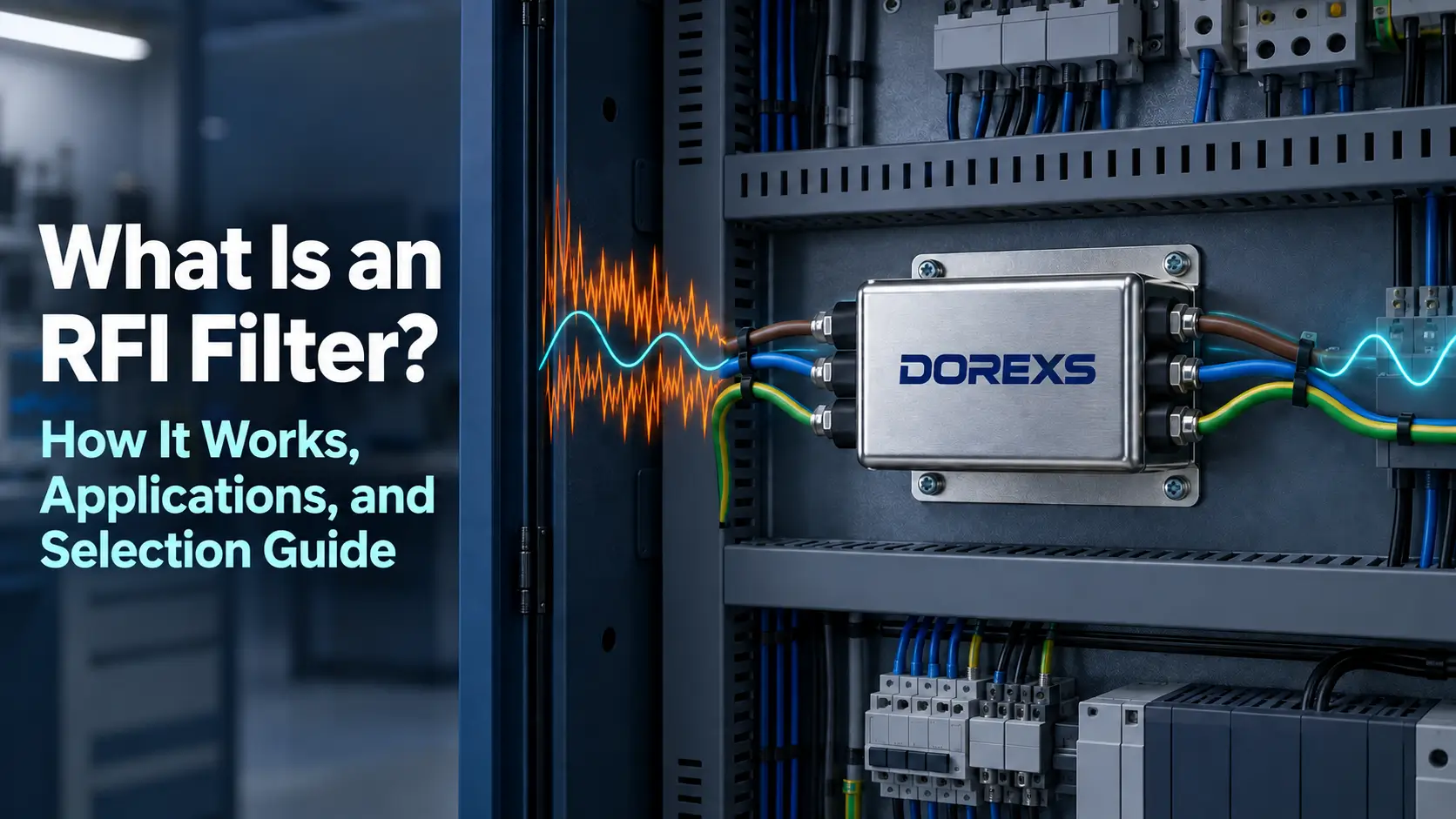
Power line filters are also known as EMC filters (electromagnetic compatibility filters), EMI filters (electromagnetic interference filters) or RFI filters (radio frequency interference filters). These filters effectively suppress the effects of interfering signals, ensuring that electronic devices function properly and comply with electromagnetic compatibility (EMC) standards. Filters usually include shielding to protect circuits from radiated EMI. These filters can be integrated into electrical and electronic devices or power supplies, or used as standalone devices. They can attenuate common-mode and differential-mode interference, playing a vital role in power supply protection and equipment stability.
Power line filters are specifically designed to attenuate conducted emissions and protect sensitive circuits from external interfering signals that propagate along the power supply lines. By integrating passive components such as inductors, capacitors, and sometimes resistors, these line filters are able to block high-frequency noise while allowing the desired low-frequency power current to pass unimpeded. The effectiveness of power line filters is largely due to their operating principle: creating a larger impedance mismatch between the input/output of the line filter and the connected power supply or load side, resulting in more efficient EMI attenuation.
Power line filters are usually designed for both AC and DC power supplies, providing bidirectional EMI noise suppression. They are usually installed at the power entry point (between the AC grid and the power supply) to shield EMI noise and prevent it from affecting the performance of electronic devices. Filters are usually potted, which helps protect them from environmental factors, but the temperature characteristics of the potting material and filter capacitors affect the overall environmental characteristics and reliability of the filter.
In the field of power electronics, power line filters are essential to reduce harmonics and high-frequency noise generated by switching power supplies such as switching power supplies (SMPS), inverters, and rectifiers. The input power line of these devices is a major problem because it can become a channel for EMI noise, affecting other electronic devices connected to the same grid. By installing power line filters, engineers can significantly reduce high-frequency noise on the power line, helping to prevent interference with other devices.
The internal structure of the power line filter usually uses a common-mode inductor, which consists of two coils wound in the same direction on the same ferrite magnetic ring. This design can effectively attenuate common-mode interference signals - a common EMI noise that degrades the performance of electronic devices. In addition to common-mode inductors, filter capacitors (such as X capacitors and Y capacitors) are also used to suppress differential-mode interference and common-mode interference respectively, further enhancing the filter's ability to block interference signals over a wide frequency spectrum.
Power line filters are specifically designed to attenuate conducted emissions and protect sensitive circuits from external interfering signals that propagate along the power supply lines. By integrating passive components such as inductors, capacitors, and sometimes resistors, these line filters are able to block high-frequency noise while allowing the desired low-frequency power current to pass unimpeded. The effectiveness of power line filters is largely due to their operating principle: creating a larger impedance mismatch between the input/output of the line filter and the connected power supply or load side, resulting in more efficient EMI attenuation.
Power line filters are usually designed for both AC and DC power supplies, providing bidirectional EMI noise suppression. They are usually installed at the power entry point (between the AC grid and the power supply) to shield EMI noise and prevent it from affecting the performance of electronic devices. Filters are usually potted, which helps protect them from environmental factors, but the temperature characteristics of the potting material and filter capacitors affect the overall environmental characteristics and reliability of the filter.
In the field of power electronics, power line filters are essential to reduce harmonics and high-frequency noise generated by switching power supplies such as switching power supplies (SMPS), inverters, and rectifiers. The input power line of these devices is a major problem because it can become a channel for EMI noise, affecting other electronic devices connected to the same grid. By installing power line filters, engineers can significantly reduce high-frequency noise on the power line, helping to prevent interference with other devices.
The internal structure of the power line filter usually uses a common-mode inductor, which consists of two coils wound in the same direction on the same ferrite magnetic ring. This design can effectively attenuate common-mode interference signals - a common EMI noise that degrades the performance of electronic devices. In addition to common-mode inductors, filter capacitors (such as X capacitors and Y capacitors) are also used to suppress differential-mode interference and common-mode interference respectively, further enhancing the filter's ability to block interference signals over a wide frequency spectrum.
 |
How do power line EMI filters work?
Power line EMI filters are usually designed as passive filters, consisting of passive components such as capacitors and inductors. These passive filters can take various structural forms, including L filters, C filters, LC filters, CL filters, T filters, and Pi filters.
Power line EMI filters function as low-pass filters, attenuating or blocking interference signals at specific frequencies without affecting low-frequency signals in the power line (such as the 50Hz or 60Hz mains signals). Inductors are used to block high-frequency interference signals, while capacitors divert these high-frequency signals to the ground, effectively eliminating or reducing electromagnetic interference.
 |
| Single-phase power line filter topologies |
Typical power line EMI filters work through the following mechanisms:
- Differential mode interference suppression: Filters interference signals between the phase and neutral lines.
- Common mode interference suppression: Filters interference signals between the phase and ground lines.
By combining these two mechanisms, power line EMI filters eliminate both common-mode and differential-mode interference, enhancing the electromagnetic compatibility (EMC) of electronic equipment.
Types of power line filters
Power line EMI filters are classified based on application and design requirements. Common types include:
- Single-phase filters: Designed for suppressing electromagnetic interference in single-phase power systems, suitable for small devices and household appliances.
- Three-phase filters: Used to handle interference in three-phase power systems, commonly found in industrial and high-power equipment.
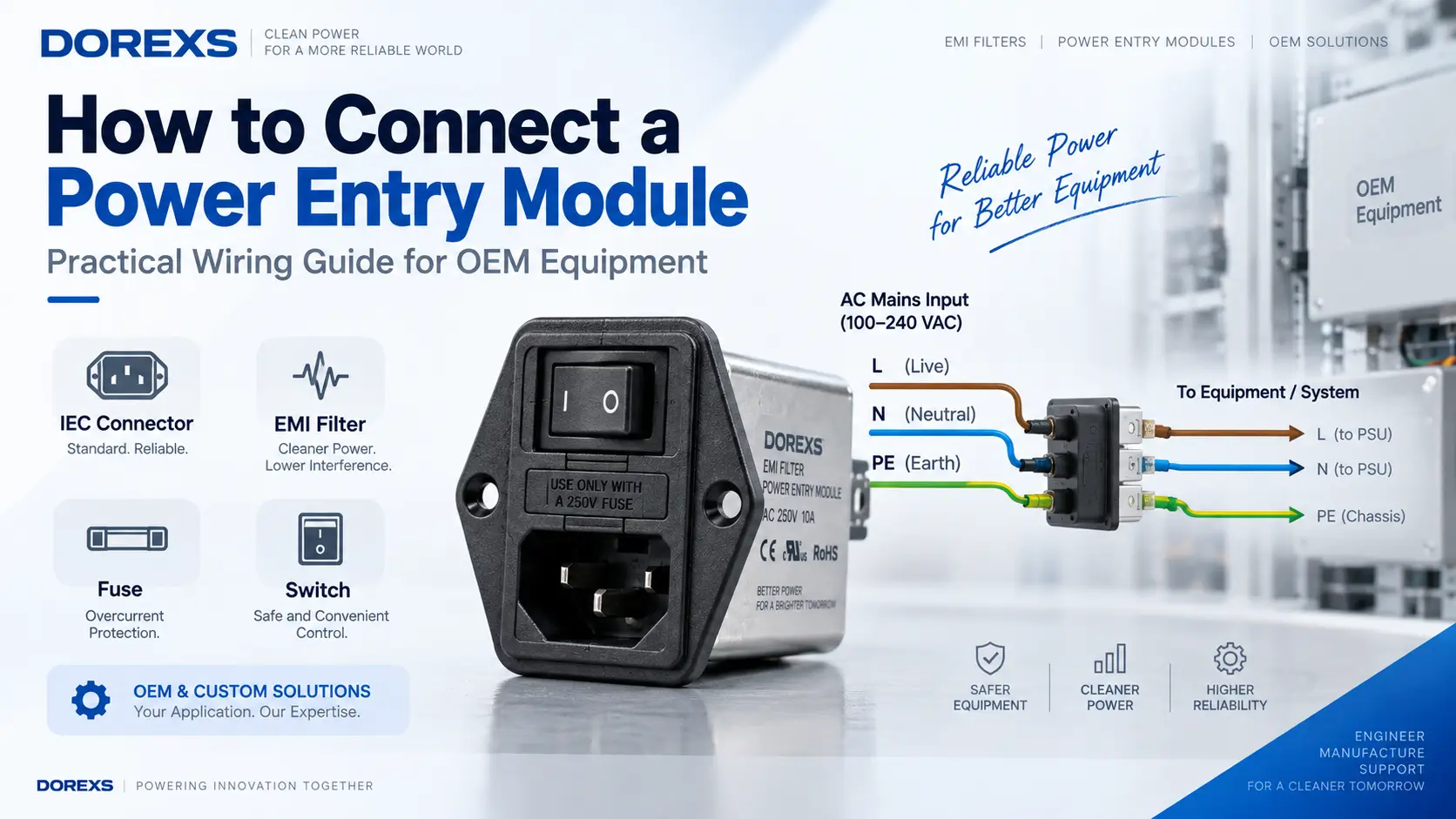
- IEC inlet filters: Integrated into IEC power sockets, providing convenient filtering solutions for portable devices.
- PCB filters: Mounted directly onto printed circuit boards, commonly used in small electronic devices and control circuits.
- DC filters: Applied in DC power systems, used in solar inverters, electric vehicles, and other DC-powered equipment.
Applications of power line filters
Power line EMI filters are widely used across various fields, including:
- Switching power supplies
- Power supplies
- Computers
- Telecommunications equipment
- Home appliances
- Industrial machinery
- Industrial automation equipment
- Medical equipment
- UPS systems
- Inverters
- Test and measurement equipment
- EMC test chambers
- Energy management systems
- Military/aerospace systems
How to install a power line filter?
Proper installation of a power line EMI filter is essential for it to function effectively. Incorrect installation can reduce the filter’s efficiency and even lead to safety issues. Here are the installation steps and precautions:
- Determine the installation location: Power line filters should be installed as close as possible to the equipment’s power line entrance, before the power line enters the device.
- Electrical connections: Ensure proper connection of the input and output ends, and pay attention to polarity.
- Grounding: It is crucial to ensure that the filter’s metal housing or elements are properly grounded.
- Physical fixation: Power line filters typically have mounting holes or brackets for securing them to a metal base or electrical cabinet.
- Electromagnetic compatibility: In high-interference environments, take extra care to shield the filter.
- Inspection and testing: After installation, test the filter for proper operation.
Correct installation improves the filter's performance and protects equipment from electromagnetic interference.
How to choose a suitable power line filter?
When selecting a power line filter, it is important to consider several key factors, including voltage and current ratings, insertion loss, and the physical size and structure of the filter. The filter should be chosen to provide adequate attenuation at the frequencies where the device is most susceptible to EMI, ensuring compliance with safety and EMC standards. Additionally, the temperature tolerance of potting materials and filter capacitors should be evaluated, as these can affect the filter’s performance in different environmental conditions.
When selecting a power line EMI filter, consider several factors to ensure the filter’s effectiveness and equipment compatibility:
- Frequency range: Different EMI filters are designed to suppress interference at different frequency ranges. Choose the filter based on the interference frequency your equipment needs to mitigate.
- Rated current and voltage: Ensure the filter’s rated current and voltage match your power system to handle the current and voltage load safely.
- Common-mode and differential-mode attenuation: Choose filters with appropriate attenuation characteristics based on the specific interference your equipment faces.
- Leakage current: Consider leakage current to ensure compliance with safety standards.
- Insulation resistance (MΩ): High insulation resistance helps minimize leakage current, ensuring electrical system safety and reliability.
- Insertion loss: Filters with higher insertion loss attenuate EMI signals more effectively. Insertion loss is typically measured in dB.
- Package type: Choose a package type (screw mounting, DIN rail, chassis, PCB, panel mounting) based on your equipment.
- Size and structure: The filter’s size should match the equipment requirements; PCB filters are usually compact, while industrial three-phase filters are larger.
- Certifications and standards: Filters with relevant certifications (such as UL, CE, ROHS) ensure quality and reliability, especially in fields like medical, military, and aerospace, where safety is critical.
Power line EMI filters play a crucial role in modern electronic equipment by effectively reducing the impact of electromagnetic interference and improving equipment reliability and stability. With the increasing complexity of electronic systems, the applications of power line EMI filters continue to expand. By choosing the right filter, you can enhance electromagnetic compatibility for various electrical devices, ensuring their proper function in complex electromagnetic environments.
FAQ
Why are power line EMI filters so important?
They reduce high-frequency noise and protect equipment from electromagnetic interference that can disrupt operation or cause malfunctions.
What is the difference between common-mode interference and differential-mode interference?
Common mode refers to noise between phase and ground; differential mode refers to noise between phase and neutral. An effective EMI filter can handle both types of interference.
Can the same EMI filter be used for both AC and DC systems?
No. EMI filters are designed for either AC or DC environments. Using the wrong filter may result in degraded performance.
How do I know if my EMI filter needs to be replaced?
Signs include increased EMI, equipment malfunction, or EMC compliance test failures. Regular inspection and testing is recommended.
Does DOREXS offer custom EMI filter solutions?
Yes. DOREXS offers standard and custom-designed EMI filters to meet specific industrial, medical, and military requirements.
Treadmill EMI Filters
What is a Transformer? Types, Applications, and How to Choose the Right One