What is EMI Filter in Power Supply
Introduction:
Nowadays, electronic and electrical equipment are ubiquitous in our production and daily lives, all requiring power supply, whether DC or AC. Regardless of the type, power supply quality is crucial for maintaining equipment stability.
Excellent power supply quality reflects the excellence of power supply products. However, in modern electronic and electrical equipment, electromagnetic interference (EMI) poses a significant threat to power supply quality. This interference can cause malfunctions or even damage equipment. Hence, when engineers design circuits, power supply filters have become a highly effective means of suppressing EMI. They not only protect sensitive equipment from electromagnetic noise but also ensure clean and stable power delivery.
Next, let's delve into what is EMI filter in power supply. Throughout this article, we will cover:
- What an EMI filter is in a power supply
- AC power filters
- DC power filters
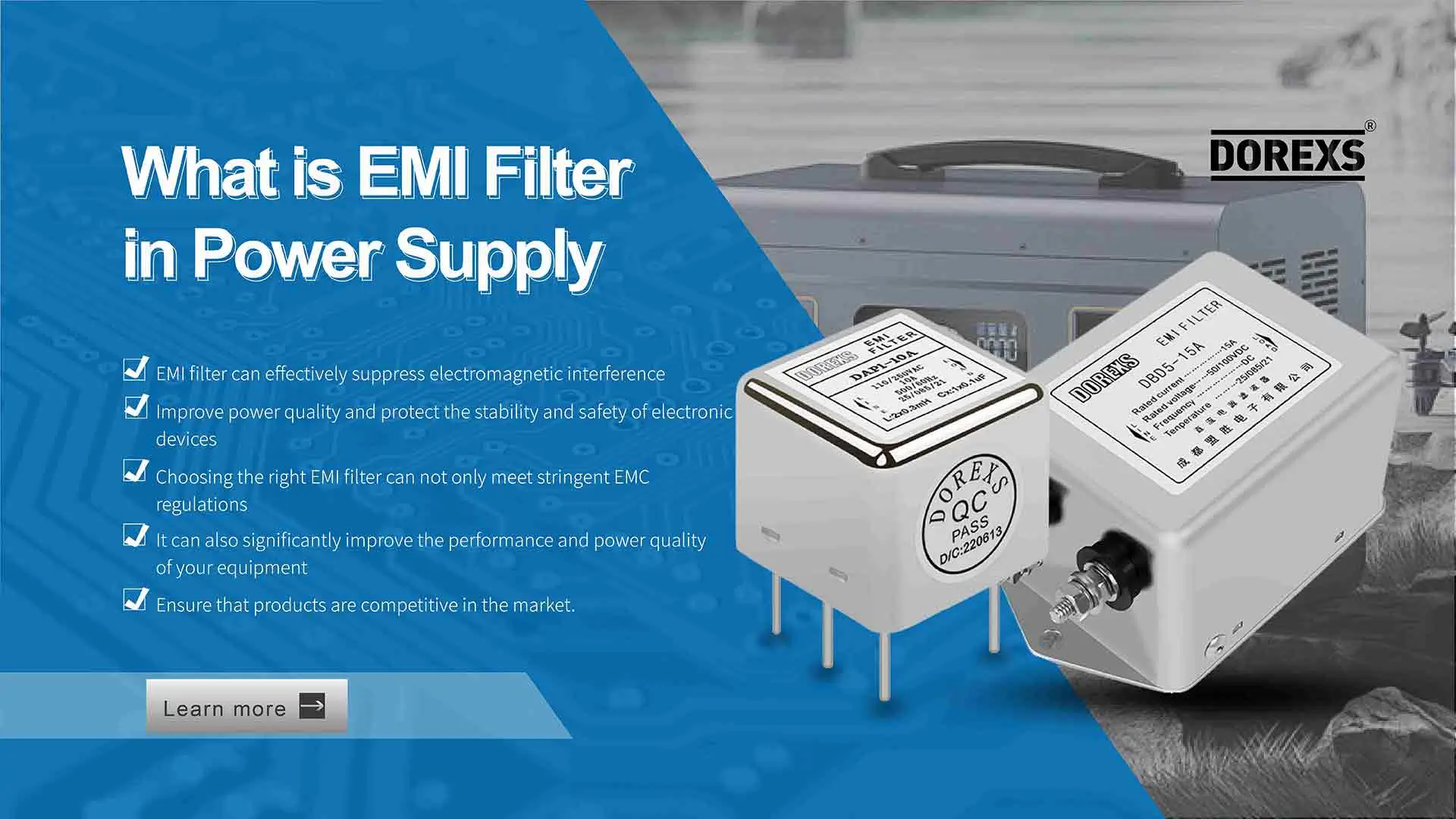
What is an EMI filter in a power supply?
All power supplies generate varying levels of electromagnetic interference (EMI). This EMI first affects the power supply product itself and subsequently determines whether the product can be marketed. Most countries or regions have stringent electromagnetic compatibility (EMC) regulations that control the radiation emissions of power supply products. To protect our products and meet market requirements, selecting the appropriate EMI power filter is essential.
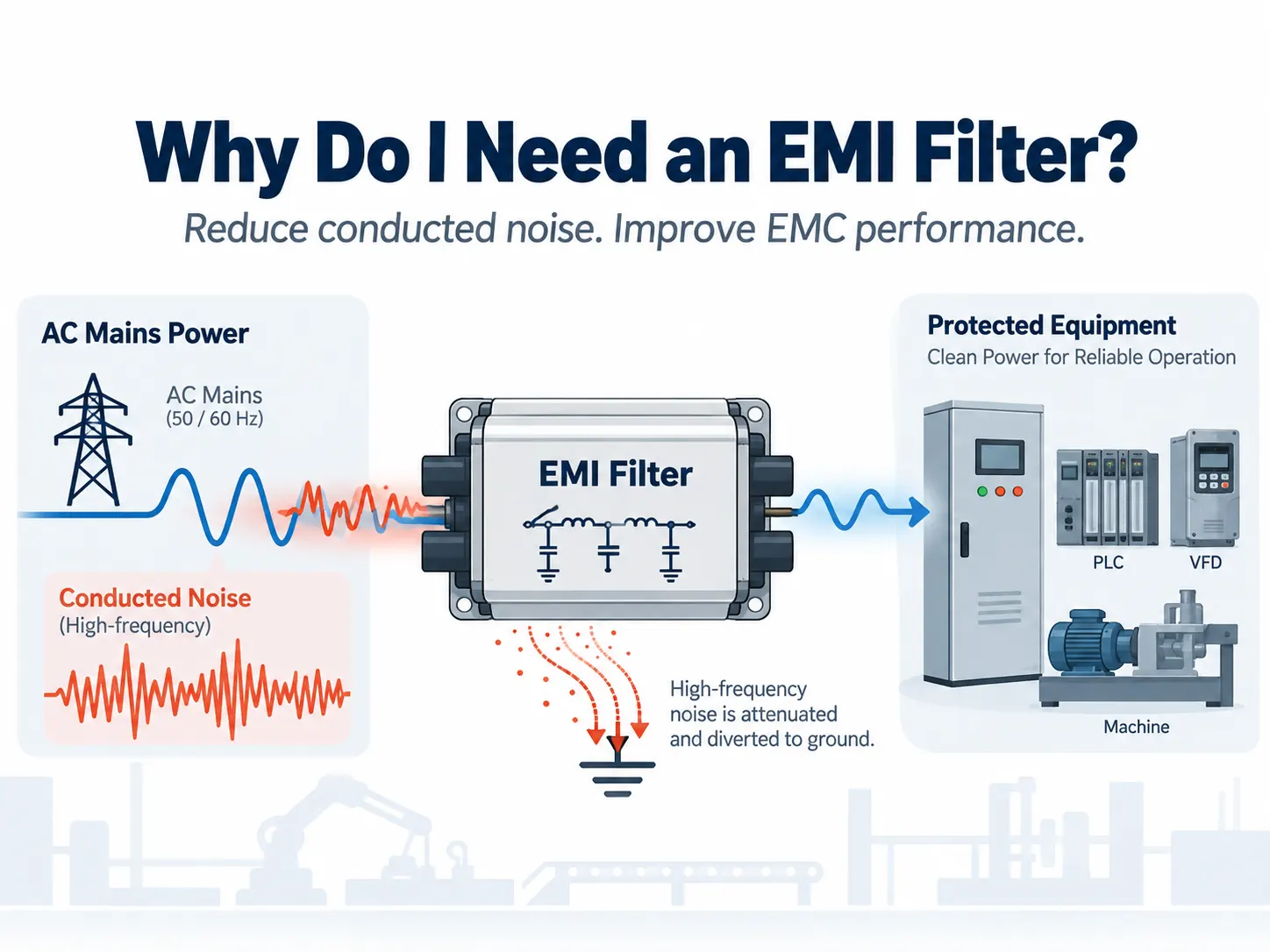
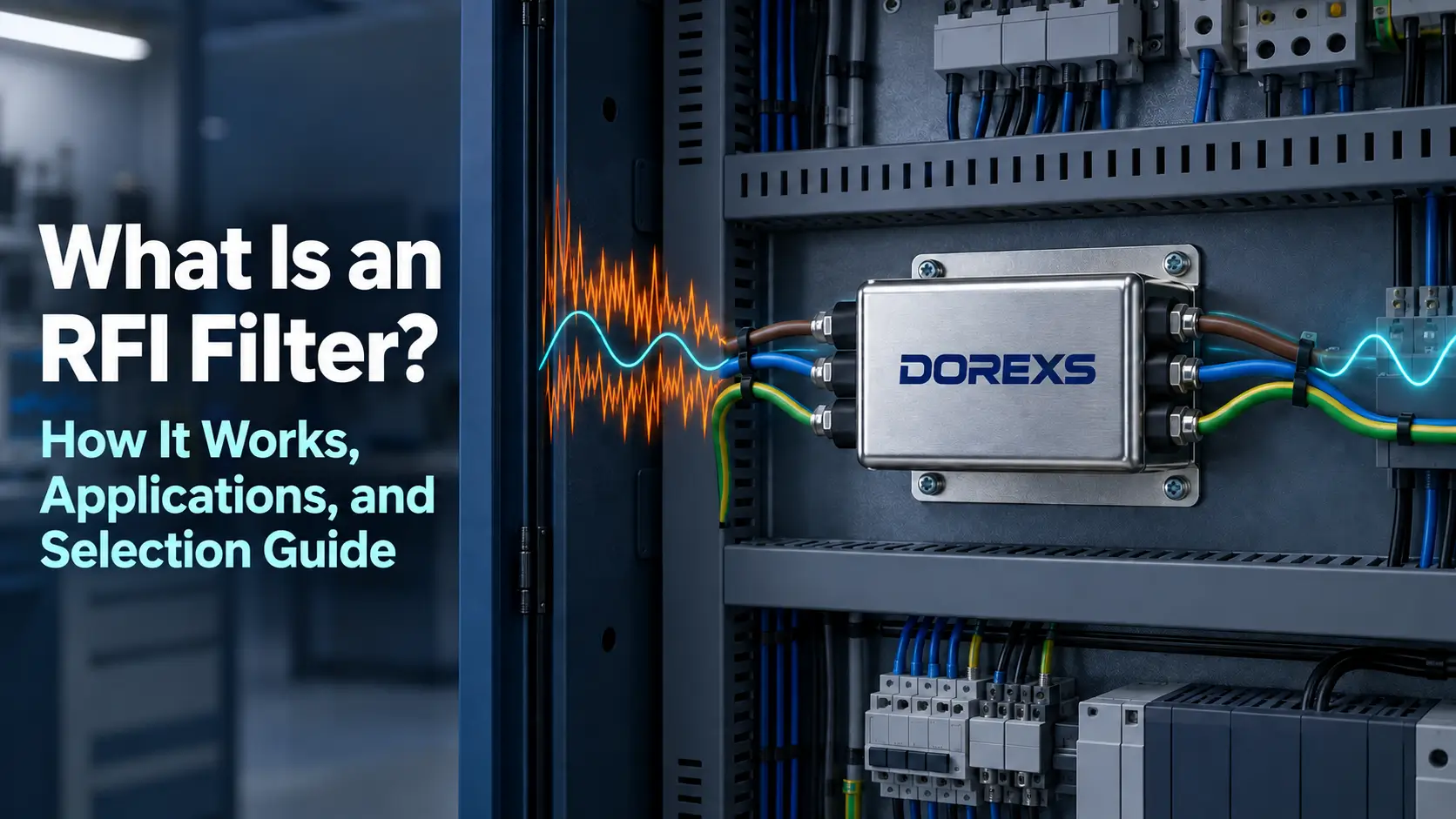
An EMI filter in a power supply, also known as an EMI power line filter, suppresses differential and common-mode noise originating from power supply equipment. It mitigates both conducted and radiated EMI, safeguarding the power supply equipment and sensitive electronic devices in its vicinity.
EMI power line filters are typically installed between the power supply of electronic and electrical equipment and the equipment itself. They receive input signals from the power supply, filter out unwanted current signals using their unique circuit structures (typically composed of capacitors and inductors), and allow only the necessary current signals to pass through. This ensures protection of electronic equipment and enhances power quality.
Classification of power supplies and corresponding EMI power filters:
Power supplies are generally categorized into two types: DC power supplies and AC power supplies, each providing the necessary power for various electronic equipment or circuits.
EMI filter in AC power supply:

For AC power supplies, the electromagnetic noise generated is typically high-frequency. Therefore, low-pass EMI filters are commonly used, allowing low-frequency signals to pass while blocking high-frequency signals. These filters can be active or passive. Active filters are systems, whereas passive filters are specialized circuits composed of components (capacitors and inductors) arranged to suppress both differential and common-mode noise.
Based on internal circuit structure, AC power filters are typically classified as single-stage, two-stage, three-stage, or multi-stage filters, with filtering effectiveness increasing with the number of stages. According to power type, AC power filters are further divided into single phase filters (for single-phase power supply) and three phase filters (for three-phase power supply).
Most electronic devices using AC power require power filters. Industries with stringent EMC regulations include:
Household appliances: EMI filters prevent equipment-generated electromagnetic noise (e.g., from washing machines, refrigerators, air conditioners, and ovens) from interfering with other electronic devices, ensuring compliance with EMC standards.
Industrial equipment: Operating in high-current, high-voltage environments (e.g., robots, servo motors, inverters), industrial equipment generates strong electromagnetic interference. Accordingly, EMI filters for industrial AC power supply are complex to ensure equipment operates normally and maintains electromagnetic compatibility with its surroundings.
Medical equipment: In medical devices (e.g., CT scanners, diagnostic instruments, testing equipment), EMI filters are crucial due to stringent power quality requirements. Any electromagnetic interference can cause equipment malfunction or data inaccuracies.
EMI filter in DC power supply:
In DC power supplies, EMI filters similarly suppress high-frequency interference signals. This is particularly critical in switching power supplies where switching frequencies and harmonics generate significant electromagnetic interference. DC power filters typically consist of one or more groups of capacitors and inductors, commonly of the LC type. This circuit design effectively suppresses high-frequency interference signals from switching power supplies.
DC power filters are designed for switching power supplies, battery-powered equipment, and communication equipment—devices sensitive to noise. They effectively suppress interference noise generated by these devices.
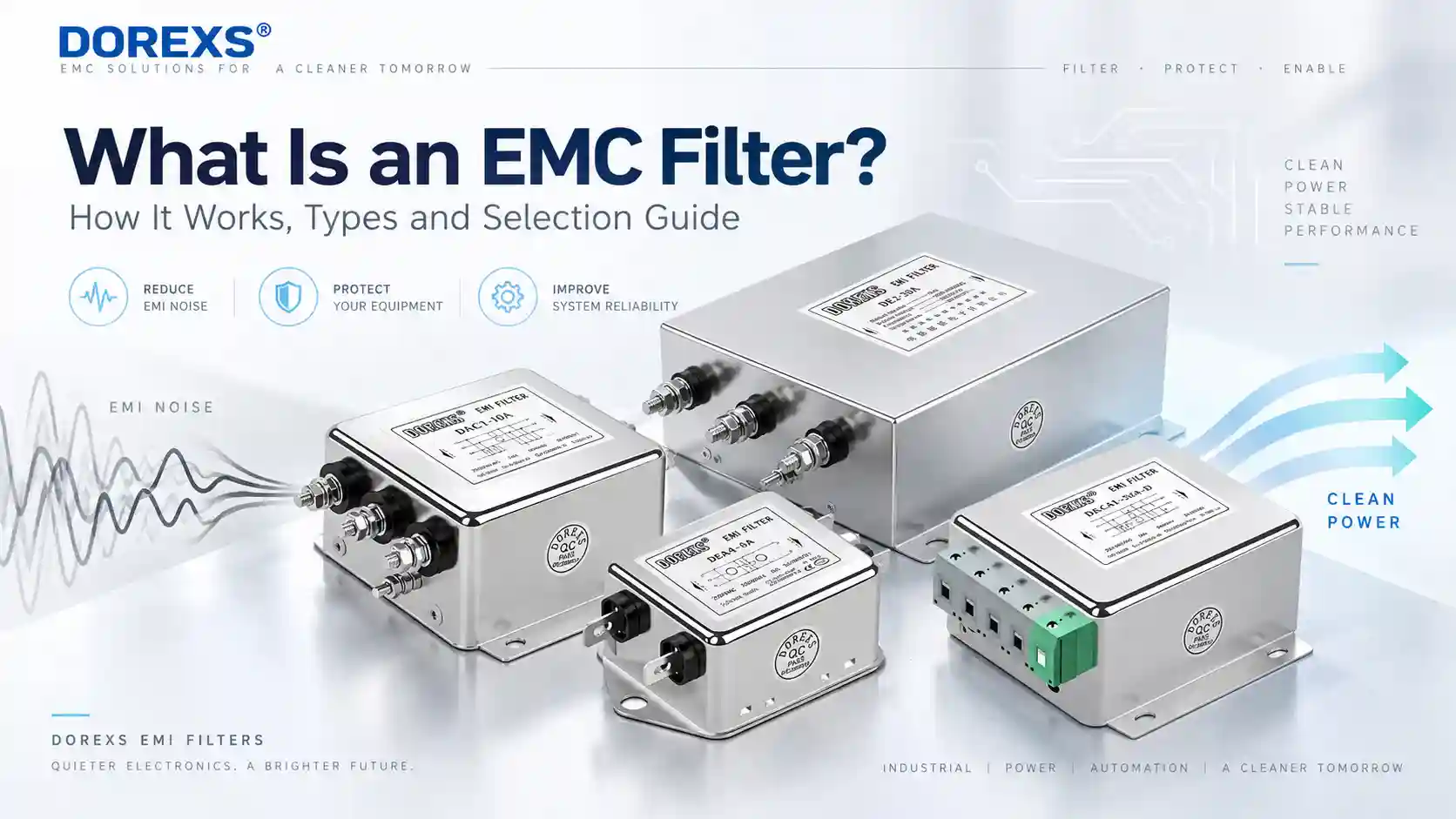
As electronic and electrical equipment utilization continues to rise, equipping power supplies with suitable filters ensures high-quality power delivery. Choosing the right EMI power filter significantly reduces electromagnetic noise effects and improves power quality. With decades of experience, DOREXS' design and development team specializes in EMI power filters, assisting in selecting the best filter for your electronic equipment, ensuring compliance with safety regulations, and enhancing product performance.
How To Make EMI EMC Filter
Basic Knowledge of EMI RFI Filter