Basic Knowledge of EMI RFI Filter
If you are a manufacturer or user of electronic and electrical equipment, you might encounter radio frequency interference (RFI) issues. To eliminate RFI effects on your products or ensure the normal operation of your electronic and electrical equipment, you may need highly reliable methods to reduce or eliminate RFI and prevent potential damage to your equipment. In addition to causing damage, EMI/RFI can lead to degradation or impairment of electronic systems, affecting their performance and reliability.
In this regard, choosing filters to mitigate or eliminate RFI might be a very safe and reliable solution for you. However, you might only know that filters can solve this problem for you, but you may not understand the working principle of RFI/EMI filters and their specific functions. RFI typically occurs at high frequencies, which can disrupt the normal operation of sensitive devices. This is why we are writing this article—to discuss the sources and hazards of RFI and explain the basic knowledge of EMI/RFI filters. Common sources of EMI/RFI include switching power supplies, motors, and relays, which are prevalent in many industries.

What is Radio Frequency Interference (RFI)?
Radio frequency interference is a type of electromagnetic interference (EMI) that occurs in the frequency range of 300 kHz to 30 GHz. These interference signals are usually caused by electromagnetic leakage and radiation generated during the operation of high-frequency equipment.
RFI can severely impact other electronic and electrical equipment, precision instruments, communication signals, and parameter testing equipment operating near high-frequency devices, and can even disrupt their operation.
Sources of Radio Frequency Interference
RFI is a common interference phenomenon in both industrial production and daily life. Its main sources include:
- Natural Phenomena: Lightning or solar radiation can cause radio frequency interference.
- Human Factors: Common household appliances, communication transmission devices, industrial equipment, and relays can all cause radio frequency interference.
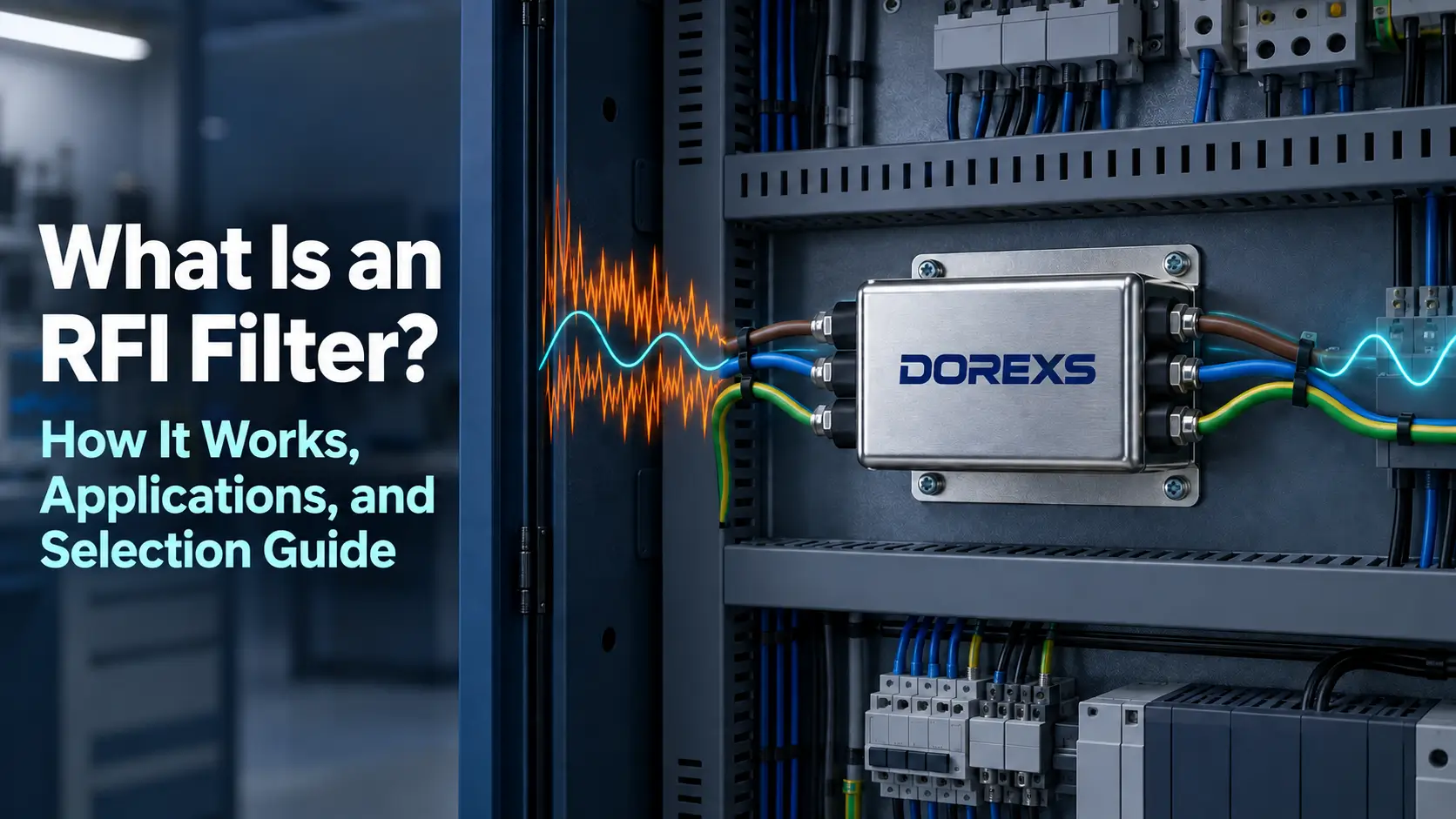
Some RFI is transmitted as conducted rfi through power lines, which can be mitigated by using appropriate power line filters.
Examples of Electromagnetic Interference in Electronic Equipment
Understanding common examples of electromagnetic interference can help better understand the causes of RFI and formulate effective solutions.
1.RFI in Switching Power Supplies: When using switching power supplies, the moment of switching action generates high-frequency pulse currents, which can radiate high-frequency electromagnetic waves and form RFI. For instance, the operation of a computer power supply might interfere with the signals of nearby wireless devices.
2.RFI in Motors and Frequency Converters: Motors or frequency converters produce broadband electromagnetic noise during rapid current changes or switching actions. This noise can interfere with nearby wireless sensor network signals.
3.RFI in Household Appliances: When using a microwave oven, high-frequency current signals generate electromagnetic noise, which can affect WiFi signals and the signal reception of wireless devices in the room.
Electromagnetic interference (EMI) is ubiquitous in our daily lives, affecting everything from small devices like mobile phones to large industrial automation equipment.
2.RFI in Motors and Frequency Converters: Motors or frequency converters produce broadband electromagnetic noise during rapid current changes or switching actions. This noise can interfere with nearby wireless sensor network signals.
3.RFI in Household Appliances: When using a microwave oven, high-frequency current signals generate electromagnetic noise, which can affect WiFi signals and the signal reception of wireless devices in the room.
Electromagnetic interference (EMI) is ubiquitous in our daily lives, affecting everything from small devices like mobile phones to large industrial automation equipment.
Whether RFI originates from the electronic devices themselves or from the natural environment, this interference can cause irreversible damage to electronic devices, leading to costly repairs or even equipment replacement.
How to Reduce Electromagnetic Interference (EMI/RFI)
Whether interference is naturally occurring or human-made, effective solutions are needed to reduce or eliminate EMI/RFI to ensure normal operation in our lives or work. Here are two effective measures:
- Shielding: Using shielding measures can prevent the leakage of RFI from the device itself and protect electronic devices from external interference. Common shielding methods include metal films, metal boxes, and conductive foam.
- Filter Treatment: DOREXS excels at eliminating or reducing electromagnetic interference signals. Filters can effectively limit the conduction of EMI/RFI by passing only the desired signals, such as DC, while blocking unwanted interference. In addition, ground plays a crucial role in differentiating noise types, especially in distinguishing common mode noise, where the reference point is between the power line and ground potential. Using filters in conjunction with shielding methods provides a perfect solution to electromagnetic interference.
Importance of RFI Filters in Modern Communication Systems
RFI filters effectively filter out unnecessary frequency components, allowing only the desired frequency signals to pass through. This helps improve signal clarity and quality, reducing noise and interference.
In complex communication environments, RF filters can effectively suppress interference from other signal sources, helping the system precisely select and manage frequency ranges, avoiding the waste of spectrum resources.
Power Line Considerations in EMI/RFI Filtering
Power lines are a critical pathway for both delivering power and transmitting unwanted electromagnetic interference (EMI) and radio frequency interference (RFI) throughout industrial environments. In many cases, power lines themselves can become major sources of disruption, affecting sensitive components and equipment connected to the same network. Effective EMI/RFI filtering on power lines is essential to ensure the reliable operation of industrial equipment and to protect against interference that can lead to equipment malfunction or data loss.
When selecting an EMI/RFI filter for power line applications, several factors must be considered. The type of power supply—whether single-phase or three-phase—determines the appropriate filter configuration. Single phase filters are commonly used for smaller devices and equipment, while three phase filters are essential for larger industrial machinery and systems. The frequency range of the interference and the required level of attenuation also play a significant role in filter selection.
In complex industrial environments, technical support and expertise are often necessary to ensure that the chosen filter is suitable for the specific power line conditions and the sensitive components it is meant to protect. Proper installation and maintenance of EMI/RFI filters help prevent disruption, maintain equipment performance, and ensure compliance with industry standards. By addressing these essential factors, manufacturers and users can effectively mitigate EMI/RFI issues and safeguard their power supply networks.
When selecting an EMI/RFI filter for power line applications, several factors must be considered. The type of power supply—whether single-phase or three-phase—determines the appropriate filter configuration. Single phase filters are commonly used for smaller devices and equipment, while three phase filters are essential for larger industrial machinery and systems. The frequency range of the interference and the required level of attenuation also play a significant role in filter selection.
In complex industrial environments, technical support and expertise are often necessary to ensure that the chosen filter is suitable for the specific power line conditions and the sensitive components it is meant to protect. Proper installation and maintenance of EMI/RFI filters help prevent disruption, maintain equipment performance, and ensure compliance with industry standards. By addressing these essential factors, manufacturers and users can effectively mitigate EMI/RFI issues and safeguard their power supply networks.
Radiated RFI: Understanding and Mitigation
Radiated RFI is a form of electromagnetic interference that travels through the air as electromagnetic waves, rather than through direct conduction along power lines or electrical circuits. This type of interference can originate from a variety of sources, including motors, high-frequency signals, and other devices that generate strong electromagnetic fields. In industrial environments, radiated RFI can pose a significant threat to the performance and reliability of electronic devices and equipment.
To effectively mitigate radiated RFI, it is essential to understand both its sources and its pathways. Shielding and enclosure techniques are among the most effective methods for preventing the radiation of electromagnetic fields from equipment. By enclosing sensitive components in conductive materials or specialized enclosures, it is possible to block or absorb unwanted radiation before it can cause disruption.
In addition to physical shielding, EMI/RFI filters play a crucial role in reducing the impact of radiated RFI. These filters can be installed at key points in the electrical system to suppress high-frequency noise and prevent it from affecting other devices. Proper grounding and bonding techniques are also essential, as they help to prevent the conduction of RFI through power lines and other conductors.
Compliance with industry regulations regarding radiated emissions is critical, especially in industrial settings where multiple devices operate in close proximity. By implementing a combination of shielding, filtering, and grounding strategies, organizations can effectively mitigate radiated RFI, protect their equipment, and ensure uninterrupted operation.
To effectively mitigate radiated RFI, it is essential to understand both its sources and its pathways. Shielding and enclosure techniques are among the most effective methods for preventing the radiation of electromagnetic fields from equipment. By enclosing sensitive components in conductive materials or specialized enclosures, it is possible to block or absorb unwanted radiation before it can cause disruption.
In addition to physical shielding, EMI/RFI filters play a crucial role in reducing the impact of radiated RFI. These filters can be installed at key points in the electrical system to suppress high-frequency noise and prevent it from affecting other devices. Proper grounding and bonding techniques are also essential, as they help to prevent the conduction of RFI through power lines and other conductors.
Compliance with industry regulations regarding radiated emissions is critical, especially in industrial settings where multiple devices operate in close proximity. By implementing a combination of shielding, filtering, and grounding strategies, organizations can effectively mitigate radiated RFI, protect their equipment, and ensure uninterrupted operation.
What Makes an EMI/RFI Filter?
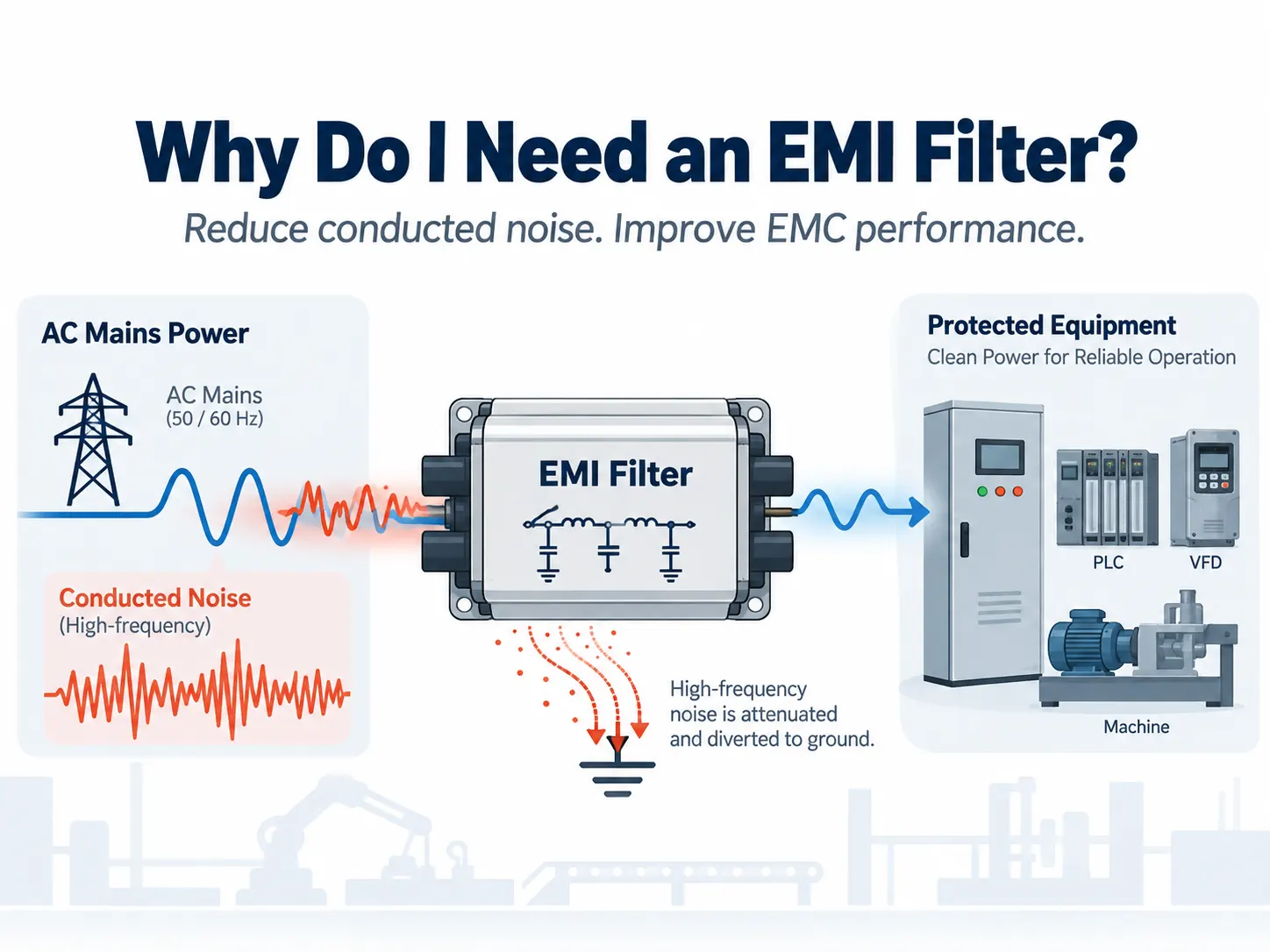
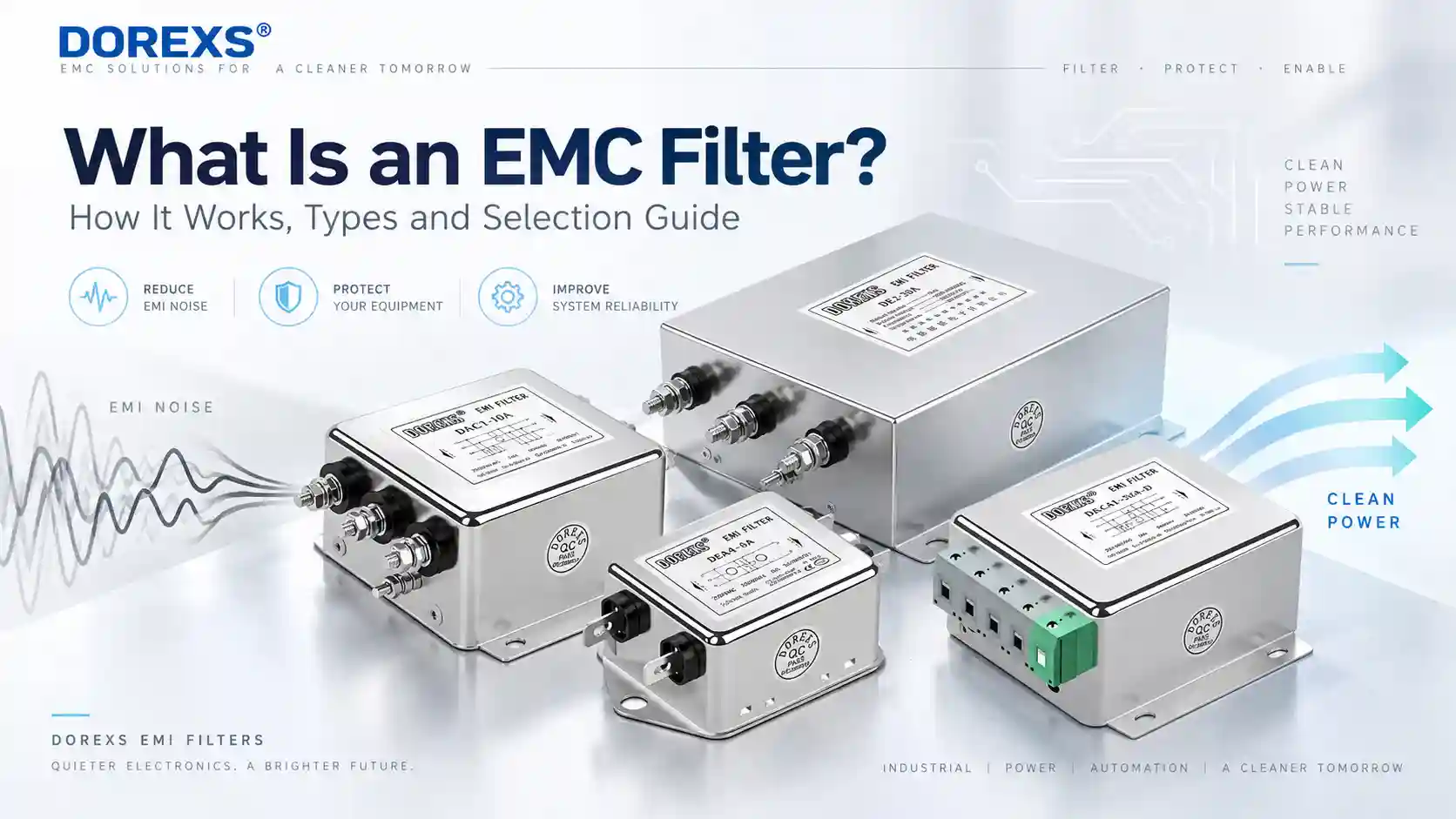
EMI/RFI filters are passive components specifically designed to allow certain frequencies or signals to pass while blocking interference signals. They are typically composed of capacitors and inductors, ensuring the safe and stable operation of electronic devices or communication systems.
How Do EMI/RFI Filters Work?
There are a few types of EMI/RFI filters, each designed for specific applications and signal types to address diverse electrical filtering needs. EMI/RFI filters work by combining inductors and capacitors to form low-pass filters, preventing high-frequency noise, such as conducted RFI, from entering or leaving the equipment.
Common Classifications of EMI/RFI Filters
Low-Pass Filter (LPF): Allows lower-frequency electromagnetic noise to pass while blocking higher-frequency noise. Ideal for allowing low-frequency power signals through while blocking higher-frequency EMI. Commonly used in audio equipment and power filtering.
High-Pass Filter (HPF): Allows higher-frequency electromagnetic noise to pass while blocking lower-frequency noise. Commonly used in wireless communication and audio systems.
Band-Pass Filter (BPF): Allows signals within a specific frequency range to pass through while blocking all other signals. Commonly used in radio receivers, signal processing, and communication systems.
Band-Stop Filter (BRF): Allows all signals except those at specific frequencies to pass through. Commonly used in audio equipment and wireless communication systems.
High-Pass Filter (HPF): Allows higher-frequency electromagnetic noise to pass while blocking lower-frequency noise. Commonly used in wireless communication and audio systems.
Band-Pass Filter (BPF): Allows signals within a specific frequency range to pass through while blocking all other signals. Commonly used in radio receivers, signal processing, and communication systems.
Band-Stop Filter (BRF): Allows all signals except those at specific frequencies to pass through. Commonly used in audio equipment and wireless communication systems.
Designing Effective EMI/RFI Filters
Designing an effective EMI/RFI filter requires a comprehensive understanding of both electromagnetic interference and radio frequency interference, as well as the specific needs of the equipment and environment. The process begins with identifying the type of equipment to be protected—such as power supplies, industrial equipment, motors, or computers—and determining the frequency range and intensity of the interference.
The core of any EMI/RFI filter is its passive components, typically capacitors and inductors, which are selected based on the desired filtering characteristics. The choice of component values and configurations depends on many factors, including the signal frequency, noise level, and the operational environment. For example, filters designed for industrial equipment may require higher attenuation and more robust construction to withstand harsh conditions.
It is also important to consider the potential impact of the filter on both the protected equipment and other devices within the same system. An improperly designed filter can inadvertently affect signal integrity or cause compatibility issues. Therefore, careful analysis and testing are essential to ensure that the filter provides the necessary protection without introducing new problems.
Compliance with relevant regulations and standards is another critical aspect of EMI/RFI filter design. Meeting these requirements not only ensures legal operation but also helps prevent equipment degradation and operational disruption. By taking into account all these essential factors and leveraging technical expertise, it is possible to design EMI/RFI filters that deliver reliable performance, mitigate interference, and support the long-term operation of sensitive industrial and electronic devices.
The core of any EMI/RFI filter is its passive components, typically capacitors and inductors, which are selected based on the desired filtering characteristics. The choice of component values and configurations depends on many factors, including the signal frequency, noise level, and the operational environment. For example, filters designed for industrial equipment may require higher attenuation and more robust construction to withstand harsh conditions.
It is also important to consider the potential impact of the filter on both the protected equipment and other devices within the same system. An improperly designed filter can inadvertently affect signal integrity or cause compatibility issues. Therefore, careful analysis and testing are essential to ensure that the filter provides the necessary protection without introducing new problems.
Compliance with relevant regulations and standards is another critical aspect of EMI/RFI filter design. Meeting these requirements not only ensures legal operation but also helps prevent equipment degradation and operational disruption. By taking into account all these essential factors and leveraging technical expertise, it is possible to design EMI/RFI filters that deliver reliable performance, mitigate interference, and support the long-term operation of sensitive industrial and electronic devices.
Common Applications of EMI/RFI Filters
EMI/RFI filters are standard configurations in many commercial, industrial, and residential electrical devices and appliances. Here are some examples:
Consumer Appliance Filters: Effective in reducing or eliminating RFI in washing machines, air conditioners, microwave ovens, and dishwashers, ensuring compliance with EMC regulations.

Single Phase Filters: Suitable for small electronic devices or single-phase power equipment like computers, printers, and test measurement instruments.
Three Phase Filters: Suitable for large equipment or devices powered by three-phase power systems like large industrial automation equipment, industrial machinery power supplies, frequency converters, and power distribution stations.
Medical-Grade Filters: Essential for the sensitive medical industry, requiring high precision and high-quality product performance.
Medical-Grade Filters: Essential for the sensitive medical industry, requiring high precision and high-quality product performance.

Military Filters: Effectively prevent interference in aerospace equipment, military communication devices, and navigation systems.

To meet diverse application requirements, EMI/RFI filters are available in various configurations, with many models kept in stock for immediate delivery. This high availability and quick access help minimize downtime and ensure operational efficiency for industrial users.
Future Trends of RFI Filters
As communication technology advances, RF filters need to maintain high efficiency while supporting higher frequency ranges and bandwidths. High power handling capability and miniaturization are future directions for EMI/RFI filter development, achieving higher performance in limited spaces. These advancements rely on new materials, which can significantly enhance the performance of EMI/RFI filters while saving space.
Reliable EMI/RFI Filters from DOREXS

If you have concerns about electromagnetic interference (EMI), please contact us. DOREXS specializes in providing cost-effective electromagnetic interference solutions and high-quality EMI filters. With nearly 20 years of experience in designing, developing, and manufacturing EMI filters for various industries, we are confident in our ability to address your needs.
By partnering with us, you will spend minimal time and effort solving electromagnetic interference problems. We offer not only superior EMI filters but also provide training and support services to ensure you receive satisfactory EMI solutions.
What is EMI Filter in Power Supply
EMI Interference Noise Rectification Case: Elevator Frequency Conversion System