How to Mitigate EMI Radiation in Electronic Devices
EMI radiation disturbs electronic devices with unwanted signals. This article explains EMI radiation, its sources, impacts, and how to measure and mitigate it. You’ll also learn about regulatory standards for managing EMI.
Key Takeaways
Key Takeaways
-
EMI radiation can severely impact electronic devices, leading to data corruption, hardware malfunctions, and operational disruptions, highlighting the need for effective mitigation strategies.
-
Mitigation methods, including shielding with suitable materials, effective grounding, and the use of twisted pair cables, are essential in design to prevent EMI interference and ensure device reliability.
-
Compliance with regulatory standards such as CISPR improves product safety and reliability while reducing the risk of failures; regular EMC testing is crucial during the device development process.
Understanding EMI Radiation

Electromagnetic interference (EMI) acts as an unwelcome intrusion in the realm of electronic devices. The generation of electric and magnetic fields by electrical currents can lead to undesirable signal disruptions within an electrical device. This form of interference is propelled by various elements such as electromagnetic radiation, electromagnetic waves, and spans across the entire electromagnetic spectrum encompassing types like radio, microwave, and even visible light frequencies — this also includes both unlicensed radio frequency interference and general radio frequency interference.
The properties of this disruptive radiation are largely dependent on its frequency. Thus, when EMI emanates from electronic devices at higher frequencies, it has the potential to cause significant interruptions to their functionality. Effectively managing EMI is crucial for ensuring that circuits remain operational without failing or exhibiting impaired performance due to these interferences.
Sources of EMI Radiation
Radiation from EMI can stem from natural phenomena as well as man-made elements. Atmospheric disturbances, such as lightning strikes and solar emissions, are examples of the former that can lead to considerable electromagnetic disruptions. Meanwhile, we frequently encounter sources originating from human activity in our daily environment. Electronics along with power lines and various types of infrastructure stand out for their continuous release of electromagnetic energy which has the potential to cause interference with surrounding devices.
Understanding where EMI comes from is key to lessening its influence on technology. Determining whether the source of interference is naturally occurring or a product of human creation enables us to focus our mitigation efforts more effectively, thereby diminishing the overall adverse effects caused by EMI in our increasingly digital world.
Understanding where EMI comes from is key to lessening its influence on technology. Determining whether the source of interference is naturally occurring or a product of human creation enables us to focus our mitigation efforts more effectively, thereby diminishing the overall adverse effects caused by EMI in our increasingly digital world.
Types of EMI Radiation
The issue of EMI, or electromagnetic interference, is not uniform. It appears in various manifestations. Conducted EMI is a type of interference that is transferred along direct pathways such as power lines and interconnection cables. This form poses particular challenges since it propagates through the conduits that supply power to and link our devices.
Contrastingly, radiated EMI originates from the unintended consequences of radio frequencies emitted by high-power transmitters. Such emissions can disrupt nearby electronic equipment’s functionality, causing problems such as computers rebooting unexpectedly or Wi-Fi connectivity issues. Based on its frequency coverage, EMI can be classified into two categories: broadband EMI affects a wide range of the spectrum while narrowband EMI impacts specific individual frequencies.
When exploring how conduction modes contribute to this complexity with regard to interference transmission pathways within systems—differential mode involves disturbances between distinct conductors whereas common mode refers to disruptions shared across all conductors within an arrangement—it becomes evident why comprehending these distinctions is essential for devising precise countermeasures against specific types and instances of electromagnetic disturbances.
Contrastingly, radiated EMI originates from the unintended consequences of radio frequencies emitted by high-power transmitters. Such emissions can disrupt nearby electronic equipment’s functionality, causing problems such as computers rebooting unexpectedly or Wi-Fi connectivity issues. Based on its frequency coverage, EMI can be classified into two categories: broadband EMI affects a wide range of the spectrum while narrowband EMI impacts specific individual frequencies.
When exploring how conduction modes contribute to this complexity with regard to interference transmission pathways within systems—differential mode involves disturbances between distinct conductors whereas common mode refers to disruptions shared across all conductors within an arrangement—it becomes evident why comprehending these distinctions is essential for devising precise countermeasures against specific types and instances of electromagnetic disturbances.
Measuring EMI Radiation

The process of gauging EMI radiation requires the use of specialized tools such as amplifiers, receiving antennas, and spectrum analyzers. These instruments are designed to capture and scrutinize electromagnetic emissions across the radio spectrum. They play a pivotal role in pinpointing and quantifying undesirable frequencies that may lead to interference by employing emi measurement equipment.
To conduct effective emissions testing, one typically operates within an anechoic chamber—a space intentionally constructed to suppress echoes—thereby ensuring reliable measurements of radiated emissions remain unaltered by external factors. Such controlled conditions facilitate precise evaluations. Early-stage assessment is facilitated through pre-compliance testing apparatuses equipped with items like near-field probes and EMI receivers. These are essential for detecting potential EMC complications involving conducted emissions during the preliminary stages of product development.
Routine upkeep coupled with frequent utilization of spectrum analyzers is integral in identifying and addressing EMI problems before they worsen. Prompt discovery permits timely corrections that help devices conform to required performance criteria while also averting disruptive interference effects.
Impact on Electronic Devices
EMI’s influence on electronic devices varies, ranging from minor interference to significant damage. At its least harmful level, EMI may introduce errors in data processing, compromising the reliability of various systems’ information. This can lead to unexpected data loss and system downtime, interrupting essential services and
impacting the affected devices.

In extreme scenarios, EMI has the potential to cause serious hardware issues and expose security flaws—issues that are especially critical within data centers where maintaining electronic component integrity is crucial. Radiated EMI might trigger involuntary device restarts, disrupt Wi-Fi connectivity or impair communication system efficiency due primarily to the proximity of an emi source.
For military operations where equipment must perform flawlessly under rigorous conditions, uncontrolled EMI could have dire repercussions by undermining operational effectiveness with potentially grave outcomes. The susceptibility of devices during brief but intense electrical disturbances underscores how vital comprehensive strategies for managing EMI truly are.
For military operations where equipment must perform flawlessly under rigorous conditions, uncontrolled EMI could have dire repercussions by undermining operational effectiveness with potentially grave outcomes. The susceptibility of devices during brief but intense electrical disturbances underscores how vital comprehensive strategies for managing EMI truly are.
Mitigating EMI Radiation in Design

Crafting electronic devices that are impervious to EMI is a sophisticated combination of creativity and technical expertise. Employing metallic barriers, such as copper or aluminum, serves as an effective defense in obstructing intrusive electromagnetic waves. The strategic placement of EMI shielding gaskets is pivotal in safeguarding delicate internal components from these invasive signals.
Incorporating EMI protection early on during the design phase can thwart expensive alterations down the line. Establishing robust grounding practices—particularly through using a unified ground point—as well as spacing out devices appropriately aids in diminishing levels of interference and curtails the potency of EMI.
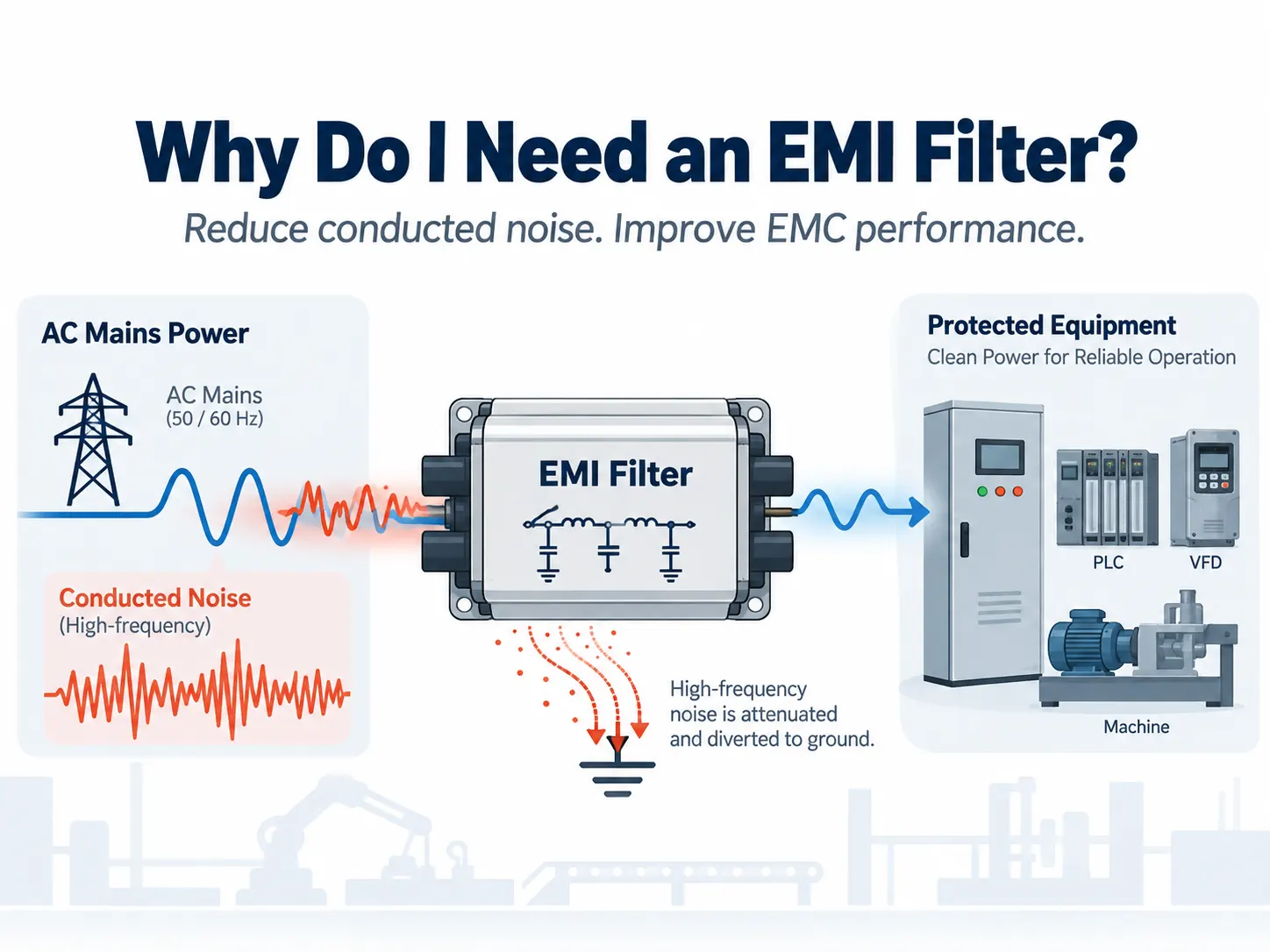
Employment of twisted pair wiring significantly helps neutralize electromagnetic fields and thus is advantageous for data transmission purposes. To combat disruptive noise emanating from power sources to electronic instruments, power line filters prove instrumental for their role in facilitating smoother functionality. The prototyping stage coupled with judicious selection of materials tailored for EMI gaskets plays a decisive role influencing both operational efficacy and the financial investment required. It’s essential that power cables are designed to optimize energy delivery effectively between sources and electronics.
Regulatory Compliance
Ensuring compliance with regulatory standards is essential for product safety and dependability. Institutions such as ISO, IEC, and CISPR provide guidelines that address issues of electromagnetic interference (EMI) and electromagnetic compatibility (EMC). Notably, CISPR concentrates on setting acceptable thresholds for EMI in terms of measurement limits and techniques.
The process of measuring EMI includes pre-compliance testing conducted during a product’s design stage as well as official laboratory testing mandated for adherence to regulatory requirements. Laboratory evaluations examine both conducted emissions and radiated emissions while also performing immunity tests to verify conformity with recognized benchmarks. By meeting these criteria, products can achieve enhanced reliability and safety, which minimizes potential malfunctions along with subsequent warranty claims.
Achieving certifications like the CE mark serves as an indication that a consumer good has fulfilled European health, safety, and environmental stipulations. Conforming to these norms not only guarantees legislative compliance, but also strengthens consumers’ trust in the integrity of the product.
The process of measuring EMI includes pre-compliance testing conducted during a product’s design stage as well as official laboratory testing mandated for adherence to regulatory requirements. Laboratory evaluations examine both conducted emissions and radiated emissions while also performing immunity tests to verify conformity with recognized benchmarks. By meeting these criteria, products can achieve enhanced reliability and safety, which minimizes potential malfunctions along with subsequent warranty claims.
Achieving certifications like the CE mark serves as an indication that a consumer good has fulfilled European health, safety, and environmental stipulations. Conforming to these norms not only guarantees legislative compliance, but also strengthens consumers’ trust in the integrity of the product.
Best Practices for Reducing EMI Radiation
Ensuring the reduction of EMI radiation is essential for the peak functioning of consumer electronics and various electronic devices. Utilization of filtering strategies can serve to successfully prevent lower frequencies from infiltrating a device. Employing shielding approaches with materials like metal housings helps diminish emissions and guards against external interference—akin to the protection offered by a Faraday cage—to mitigate EMI effects.
EMI disturbances that are man-made typically originate from nearby electronic apparatuses. It’s imperative to use grounding methods which provide an effective conduit for extraneous currents in order to lessen EMI influence significantly, thus enhancing best practices implementation crucial for safeguarding electronic devices from these disruptions.
EMI disturbances that are man-made typically originate from nearby electronic apparatuses. It’s imperative to use grounding methods which provide an effective conduit for extraneous currents in order to lessen EMI influence significantly, thus enhancing best practices implementation crucial for safeguarding electronic devices from these disruptions.
Importance of EMC Testing
EMI and EMC are two sides of the same coin. While EMI refers to interference, EMC measures a device’s ability to operate without affecting other equipment in a shared operating environment. EMC testing ensures that a device can function properly without causing interference to other devices.
Pre-compliance EMC testing identifies issues early in product development, ensuring the device meets standards and behaves as expected throughout all design stages. Addressing EMC issues early prevents costly modifications and ensures device reliability and safety, reducing the risk of product failure.
Pre-compliance EMC testing identifies issues early in product development, ensuring the device meets standards and behaves as expected throughout all design stages. Addressing EMC issues early prevents costly modifications and ensures device reliability and safety, reducing the risk of product failure.
Case Studies
Examples from real-world applications demonstrate the challenges posed by electromagnetic interference (EMI) and how they are addressed under actual operating conditions across diverse industries. For example, in an optical scanner dealing with high current flows, the replacement of standard traces with polygonal routing was employed to enhance heat dissipation. This strategic alteration greatly diminished EMI issues and boosted device efficiency.
In a separate scenario involving a microcontroller within a sophisticated configuration, designers utilized inner layers and the bottom layer for component connections to secure adequate spacing between elements thereby reducing susceptibility to EMI disturbances. Implementing daisy chain routing techniques for Serial Peripheral Interface (SPI) communication lines on printed circuit boards facilitated better signal propagation among multiple integrated circuits (ICs), augmenting system performance.
Employing calculated design methods is pivotal in addressing electromagnetic interference concerns effectively. Such considerations not only improve the functionality but also ensure that devices operate reliably while meeting safety standards set forth by regulations—a testament to engineering’s role in mitigating risks associated with EMI in electronic devices.
In a separate scenario involving a microcontroller within a sophisticated configuration, designers utilized inner layers and the bottom layer for component connections to secure adequate spacing between elements thereby reducing susceptibility to EMI disturbances. Implementing daisy chain routing techniques for Serial Peripheral Interface (SPI) communication lines on printed circuit boards facilitated better signal propagation among multiple integrated circuits (ICs), augmenting system performance.
Employing calculated design methods is pivotal in addressing electromagnetic interference concerns effectively. Such considerations not only improve the functionality but also ensure that devices operate reliably while meeting safety standards set forth by regulations—a testament to engineering’s role in mitigating risks associated with EMI in electronic devices.
Summary
Ensuring that electronic devices function dependably hinges on effective management of EMI. Recognizing where EMI originates, its various forms, gauging its influence, and adopting efficient design measures help diminish its impact and secure the safe use of our electronics. Compliance with regulatory guidelines also improves the trustworthiness of products and cultivates consumer confidence.
In summary, confronting EMI demands a well-rounded strategy. Adhering to top practices and meeting compliance requirements enables us to manufacture electronic devices capable of functioning at their best within communal settings. We must dedicate ourselves to minimizing EMI in order to bolster both safety and dependability within the realm of electronics.
In summary, confronting EMI demands a well-rounded strategy. Adhering to top practices and meeting compliance requirements enables us to manufacture electronic devices capable of functioning at their best within communal settings. We must dedicate ourselves to minimizing EMI in order to bolster both safety and dependability within the realm of electronics.
Frequently Asked Questions
What is EMI and why is it important to manage it?
EMI, or electromagnetic interference, is unwanted noise affecting electrical circuits, and managing it is essential to ensure reliable circuit performance and prevent malfunctions.
Proper EMI management safeguards the integrity of electronic devices and systems.
Proper EMI management safeguards the integrity of electronic devices and systems.
What are the common sources of EMI radiation?
Common sources of EMI radiation include natural phenomena such as solar radiation and electrical storms, alongside human-made sources like power lines and various electronic devices.
How can EMI be measured?
EMI can be effectively measured using spectrum analyzers, receiving antennas, and amplifiers, typically in an anechoic chamber to ensure accuracy.
This method allows for precise assessment of electromagnetic interference levels.
This method allows for precise assessment of electromagnetic interference levels.
What are some best practices for reducing EMI radiation?
To effectively reduce EMI radiation, it is essential to implement filtering methods, utilize shielding techniques, and ensure proper grounding practices.
These strategies will significantly mitigate the effects of electromagnetic interference on electronic devices.
These strategies will significantly mitigate the effects of electromagnetic interference on electronic devices.
Why is EMC testing important?
Conducting EMC testing is essential to ensure that a device functions efficiently and does not cause interference with other equipment when they are used in close proximity. By performing these tests at the beginning stages of product development, it helps detect potential electromagnetic compatibility problems early on, ensuring the equipment meets necessary performance standards.
Best Washing Machine EMI Filter - Save Your Appliances from Electrical Noise
Top Uses for a Low Pass Filter in Modern Electronics