Three Phase EMI Filters vs Single Phase: Key Differences
Introduction
Three phase EMI filters and single phase EMI filters differ fundamentally in their power system configurations, voltage ratings, current handling capabilities, and industrial applications. While single phase emi filters operate with two conductors and serve residential and light commercial applications up to 250VAC, three phase emi filters manage three current-carrying conductors with phase-shifted voltages and support industrial equipment requiring 480VAC to 600VAC power levels.
Understanding these differences is critical for electromagnetic interference suppression in electrical systems, as the wrong emi filter selection can compromise device performance and regulatory compliance.
Understanding these differences is critical for electromagnetic interference suppression in electrical systems, as the wrong emi filter selection can compromise device performance and regulatory compliance.

What This Guide Covers
This guide provides a comprehensive comparison between three-phase and single-phase electromagnetic interference filters, covering technical specifications, filter performance characteristics, installation requirements, and application-specific selection criteria. We focus on practical differences that affect filter selection rather than theoretical electromagnetic compatibility concepts.
Who This Is For
This guide is designed for engineers, technicians, and procurement specialists working with electrical systems, power supplies, and industrial equipment. Whether you’re specifying emi filters for sensitive equipment or evaluating electromagnetic interference emi solutions for frequency converters, you’ll find actionable guidance for the right emi filter selection.
Why This Matters
Proper emi filter selection directly impacts electromagnetic noise interference suppression, regulatory compliance with electromagnetic compatibility standards, and protection of electronic devices from unwanted electromagnetic noise. Incorrect filter specification can result in inadequate emi suppression filter performance or unnecessary cost escalation.
What You’ll Learn:
-
Core differences in single phase and three phase power system configurations
-
Voltage and current rating variations between filter types
-
Application-specific advantages for residential versus industrial equipment
-
Selection criteria for protecting sensitive equipment from electrical interference
Understanding EMI Filter Fundamentals
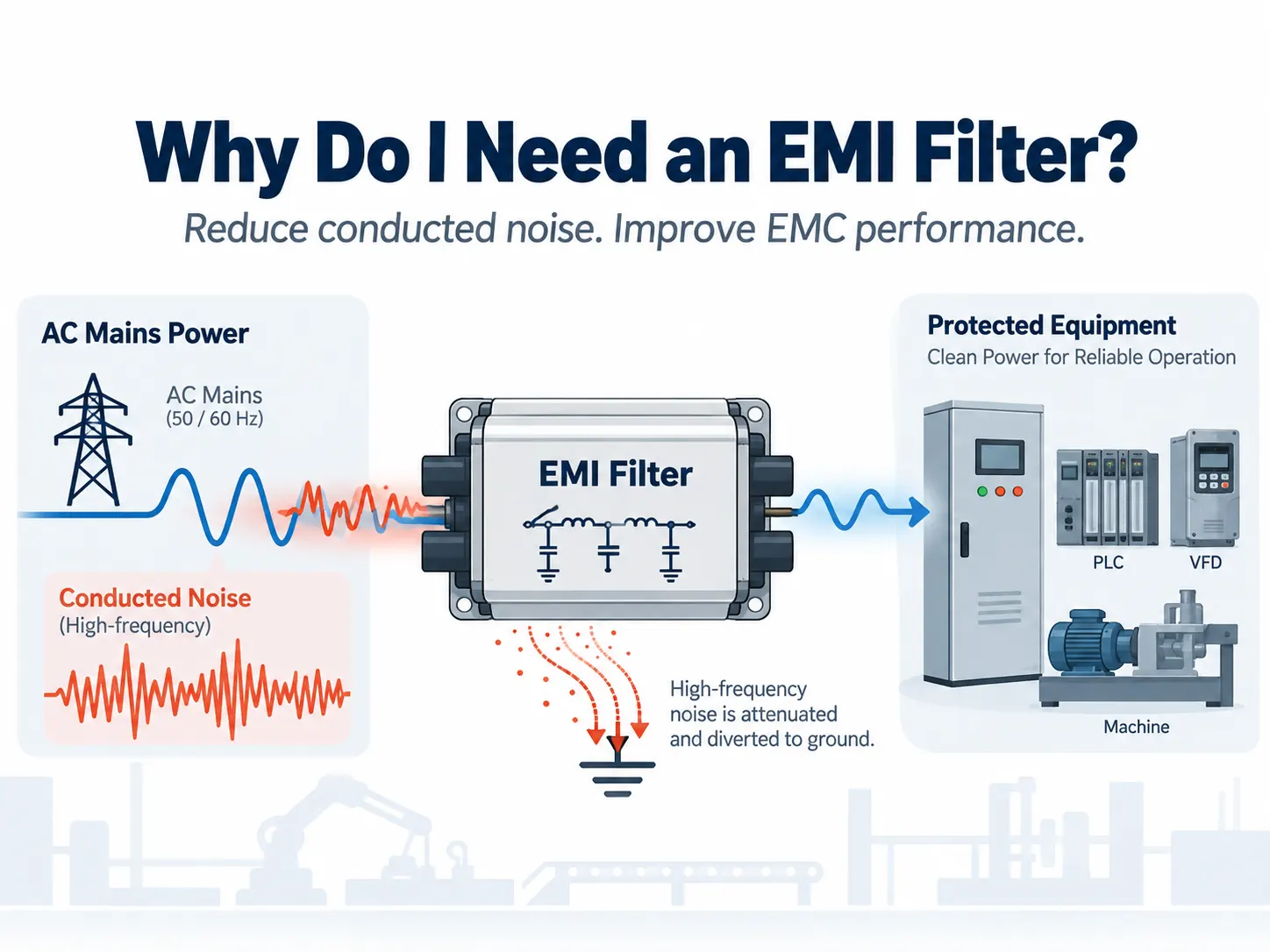
EMI filters are passive filters designed to reduce electromagnetic interference by attenuating unwanted electrical noise between 150kHz and 30MHz while allowing desired signals at power frequency (50/60Hz) to pass through unimpeded.
These electromagnetic interference filters serve as critical components in electronic systems, preventing unwanted electromagnetic noise from entering sensitive equipment through power or signal lines while simultaneously blocking radiated emi from exiting equipment and affecting other electronic devices.
These electromagnetic interference filters serve as critical components in electronic systems, preventing unwanted electromagnetic noise from entering sensitive equipment through power or signal lines while simultaneously blocking radiated emi from exiting equipment and affecting other electronic devices.
Power System Configurations
Single phase power systems deliver electrical power through two conductors carrying alternating voltage, commonly found in residential applications at 120V/240V and light commercial installations. This connects to emi filter design requirements because single phase emi filters need only manage electromagnetic noise interference across two power lines plus ground connection.
Three phase power systems operate with three current-carrying conductors, each set at the same voltage and frequency but phase-shifted by 120 degrees, creating constant power transfer throughout electrical cycles. Building on single phase concepts, this configuration requires three phase emi filters to address more complex electromagnetic interference patterns across multiple phase conductors.
Three phase power systems operate with three current-carrying conductors, each set at the same voltage and frequency but phase-shifted by 120 degrees, creating constant power transfer throughout electrical cycles. Building on single phase concepts, this configuration requires three phase emi filters to address more complex electromagnetic interference patterns across multiple phase conductors.
EMI Filter Classification
Passive emi filters utilize filter components including capacitors and inductors to create low pass filters that attenuate high frequency noise without requiring active electronic components. Unlike active emi filters that use integrated circuits, passive filters provide reliable electromagnetic interference suppression across wide operating temperature ranges without power consumption.
Transition: Understanding these foundational concepts establishes the framework for examining how single phase and three phase configurations create distinct filter requirements.
Transition: Understanding these foundational concepts establishes the framework for examining how single phase and three phase configurations create distinct filter requirements.
Single Phase EMI Filters
Single phase emi filters address electromagnetic interference in residential and light commercial applications where power system configuration involves line, neutral, and ground connections with maximum line voltage typically limited to 250VAC.
Design Characteristics
Single phase electromagnetic interference filters feature simplified circuit topology with two-wire line and neutral configuration plus ground connection. These filters prevent line noise from entering electronic equipment while blocking unwanted electrical noise generated by switching power supplies from propagating onto ac power lines.
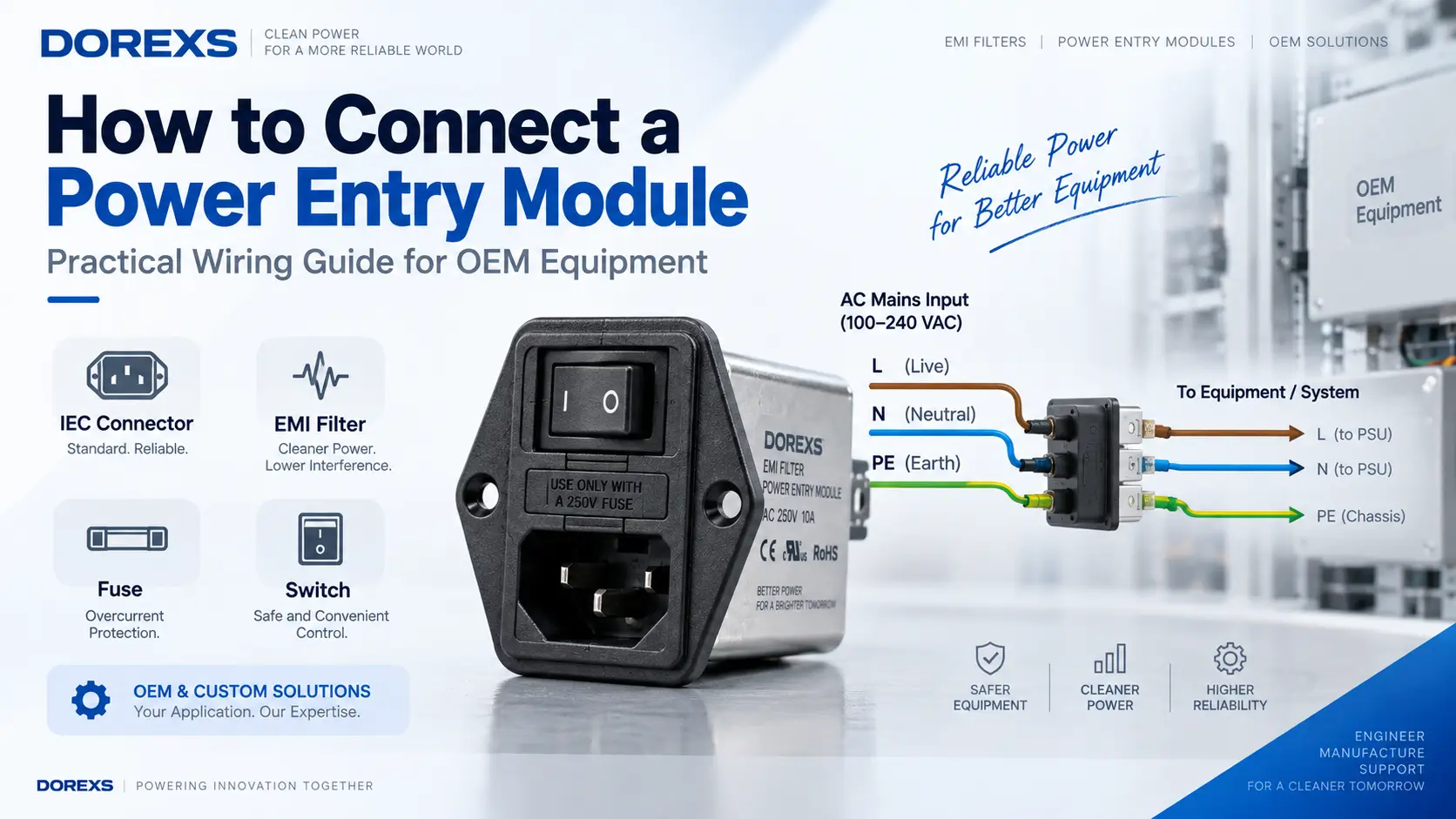
Filter placement typically occurs at power entry points using IEC inlet configurations, chassis mount options, or pcb filters for printed circuit board integration. Most commercial filters in single phase applications feature compact designs optimized for space-constrained residential and office environments.
Filter placement typically occurs at power entry points using IEC inlet configurations, chassis mount options, or pcb filters for printed circuit board integration. Most commercial filters in single phase applications feature compact designs optimized for space-constrained residential and office environments.
Performance Specifications
Filter performance in single phase applications focuses on conducted emi suppression across frequency ranges from 150kHz to 30MHz, with insertion loss characteristics optimized for differential mode noise and common mode electromagnetic interference. Operating temperature range typically spans -25°C to +85°C with ambient temperature rating suitable for consumer and commercial environments.
Leakage current considerations become critical in medical equipment applications where patient safety requires limiting ground fault currents below 0.5mA for medical devices.
Leakage current considerations become critical in medical equipment applications where patient safety requires limiting ground fault currents below 0.5mA for medical devices.
Typical Applications
Single phase emi filters serve household appliances, office equipment, medical devices, and small power supplies where electrical power requirements remain below industrial levels. These applications prioritize cost-effectiveness and compact mounting while achieving adequate electromagnetic interference suppression for regulatory compliance.
Key Points:
Key Points:
-
Maximum voltage ratings limited to 250VAC for standard applications
-
Current ratings from under 1 amp to 100+ amps for residential use
-
Simplified installation with line, neutral, and ground connections
Transition: While single phase filters address basic electromagnetic interference needs, industrial applications require more sophisticated three phase solutions.
Three Phase EMI Filters
Three phase emi filters handle substantially higher electrical power levels and more complex electromagnetic interference patterns generated by industrial equipment, frequency converters, and high-power electronic systems operating at 480VAC to 600VAC.
Configuration Types
Wye (Star) configuration: Features neutral connection availability, common in North American power system configuration installations where line-to-neutral voltage differs from line-to-line voltage. This configuration enables loading flexibility through both high voltage line-to-line connections and lower voltage line-to-neutral connections.
Delta configuration: Operates without neutral connection, typical in European and industrial applications where only three phase conductors are required. This configuration reduces installation cost by eliminating neutral wiring while providing higher starting torque capabilities for motor-driven applications.
Delta configuration: Operates without neutral connection, typical in European and industrial applications where only three phase conductors are required. This configuration reduces installation cost by eliminating neutral wiring while providing higher starting torque capabilities for motor-driven applications.
Industrial Requirements
Industrial emi filters must withstand harsh operating environment conditions including temperature extremes, vibration, and electromagnetic interference from variable frequency drives and switching power supplies. These filters require enhanced electromagnetic interference suppression to meet CISPR, IEC, and EN electromagnetic compatibility standards.
Multi stage filters improve filter performance by combining multiple filter stages in series configuration, lowering the filter’s resonant frequency while achieving superior insertion loss across extended frequency range compared to single stage filter designs.
Multi stage filters improve filter performance by combining multiple filter stages in series configuration, lowering the filter’s resonant frequency while achieving superior insertion loss across extended frequency range compared to single stage filter designs.
Advanced Design Considerations
Three phase electromagnetic interference filters must account for unbalanced harmonic currents that create differential current flow into neutral and ground wiring. This phenomenon requires sophisticated filter components including properly oriented common-mode inductors that manage all three phases plus neutral simultaneously.
Transition: These industrial requirements create substantial differences when comparing three phase versus single phase specifications and applications.
Transition: These industrial requirements create substantial differences when comparing three phase versus single phase specifications and applications.
Detailed Comparison: Three Phase vs Single Phase
Building on the individual characteristics of each filter type, systematic comparison reveals how power system configuration drives fundamental differences in specifications and applications.
Technical Specifications Comparison
Specification |
Single Phase EMI Filters |
Three Phase EMI Filters |
| Maximum Line Voltage | 250VAC standard | 480VAC to 600VAC typical |
| Current Capacity | 1A to 100A+ | 10A to 1000A+ |
| Frequency Range | 150kHz to 30MHz | 150kHz to 30MHz |
| Configuration | Line, Neutral, Ground | Wye (4-wire) or Delta (3-wire) |
| Physical Size | Compact designs | Larger, robust construction |
Three phase filters provide two-to-threefold voltage handling advantage over single phase alternatives, while current ratings scale proportionally with industrial power requirements. Both filter types operate across similar frequency ranges for electromagnetic interference suppression, but three phase designs handle more complex harmonic distortion patterns.
Application Suitability
Residential and light commercial: Single phase electromagnetic interference filters dominate household appliances, office equipment, small medical devices, and consumer electronics where power load remains manageable and cost sensitivity drives selection. These applications rarely justify three phase infrastructure costs.
Industrial and commercial: Three phase emi filters become essential for motor drives, industrial automation systems, frequency converters, and high-power electronic equipment where electrical power demands exceed single phase capabilities. The robust construction and higher voltage ratings justify increased costs through superior device performance and reliability.
Industrial and commercial: Three phase emi filters become essential for motor drives, industrial automation systems, frequency converters, and high-power electronic equipment where electrical power demands exceed single phase capabilities. The robust construction and higher voltage ratings justify increased costs through superior device performance and reliability.
Installation and Grounding Requirements
Single phase filter installation involves straightforward line, neutral, and ground connections with minimal grounding complexity. Three phase installations require careful attention to delta versus wye grounding strategies, balanced load requirements, and proper neutral handling in wye configurations to ensure optimal emi suppression filter effectiveness.
Transition: Understanding these differences guides proper filter selection while avoiding common specification challenges.
Transition: Understanding these differences guides proper filter selection while avoiding common specification challenges.
Selection Criteria and Common Challenges
Proper selection of appropriate emi filter requires evaluating power system configuration, voltage and current requirements, electromagnetic interference suppression needs, and regulatory compliance demands specific to protecting sensitive equipment.
Challenge 1: Voltage and Current Rating Mismatches
Solution: Analyze equipment nameplates and maximum operating conditions to determine required filter input specifications, ensuring selected filters exceed maximum line voltage and current requirements with appropriate safety margins.
Derating factors should account for operating temperature variations and power load fluctuations that could exceed nameplate ratings during startup or fault conditions.
Derating factors should account for operating temperature variations and power load fluctuations that could exceed nameplate ratings during startup or fault conditions.
Challenge 2: Inadequate EMI Suppression Performance
Solution: Review insertion loss curves across the complete frequency range where electromagnetic interference occurs, matching filter performance characteristics to specific unwanted electromagnetic noise frequencies generated by electronic equipment.
Pre-compliance testing validates that selected emi filters adequately remove high frequency noise before formal electromagnetic compatibility certification testing.
Pre-compliance testing validates that selected emi filters adequately remove high frequency noise before formal electromagnetic compatibility certification testing.
Challenge 3: Leakage Current and Safety Compliance
Solution: Evaluate Y-capacitor impact on ground fault protection systems, particularly in medical equipment where patient safety requires limiting leakage current below regulatory thresholds.
Understanding different emi filters’ leakage current characteristics prevents ground fault circuit interruptor nuisance tripping while maintaining electromagnetic interference suppression effectiveness.
Transition: Professional EMI filter manufacturers provide specialized solutions addressing these common challenges across both single and three phase applications.
Understanding different emi filters’ leakage current characteristics prevents ground fault circuit interruptor nuisance tripping while maintaining electromagnetic interference suppression effectiveness.
Transition: Professional EMI filter manufacturers provide specialized solutions addressing these common challenges across both single and three phase applications.
DOREXS Power Filter Solutions
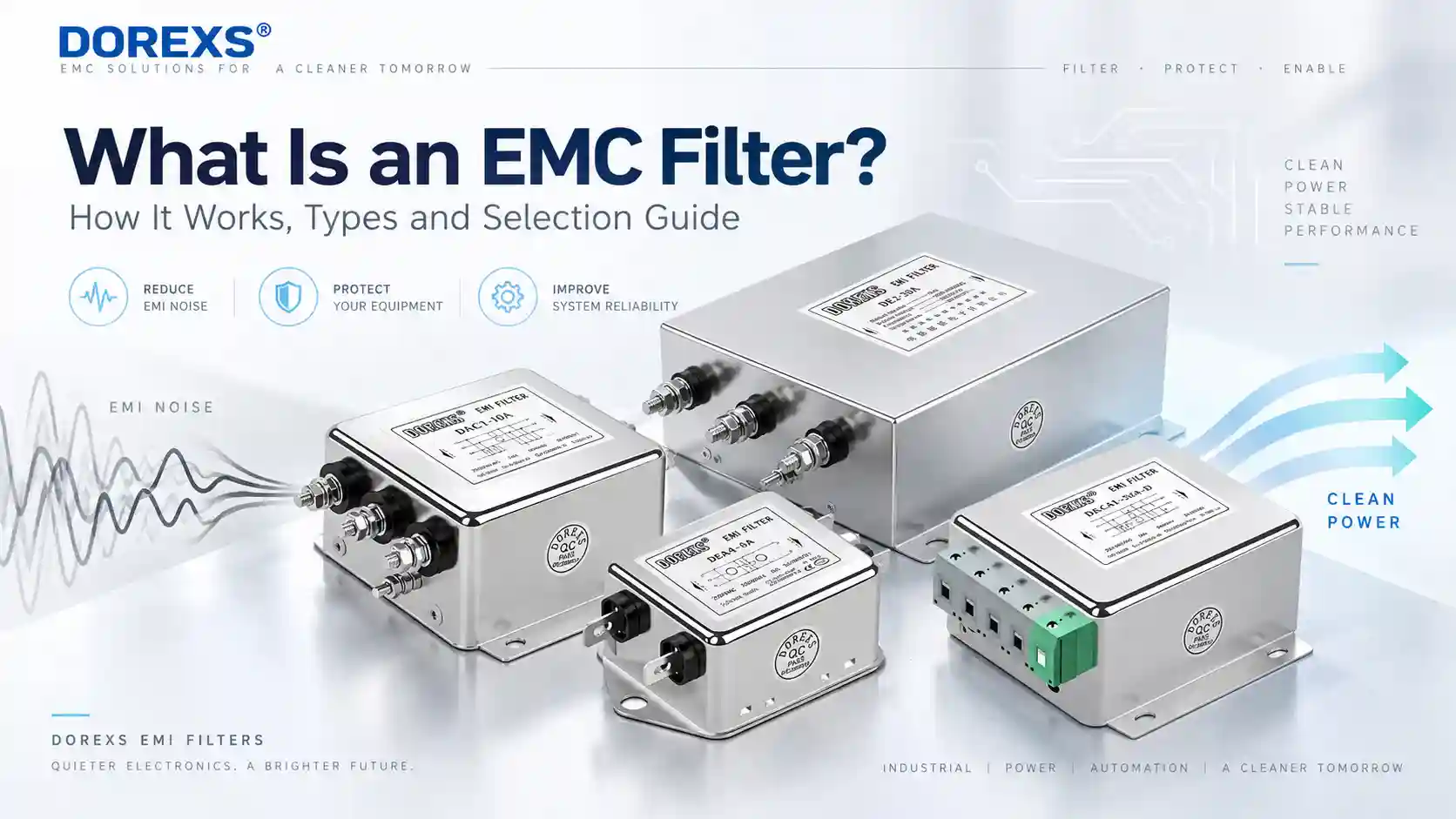
DOREXS manufactures comprehensive electromagnetic interference filters and power quality products designed for both single phase and three phase applications, providing specialized solutions for residential, commercial, and industrial electronic systems requiring electromagnetic interference suppression.
Single phase offerings: DOREXS single phase emi filters serve residential appliances, medical equipment, and commercial electronic devices with various mounting configurations including power entry modules, chassis mount options, and specialized medical devices filters meeting stringent leakage current requirements for patient safety.
Three phase portfolio: DOREXS three phase electromagnetic interference filters address industrial equipment including frequency converters, motor drives, automation systems, and high-power switching power supplies with both wye and delta configurations supporting voltage ratings from 480VAC to 600VAC and current handling up to 1000A+.
Custom design capabilities: DOREXS engineering team develops application-specific emi filters for harsh operating environment conditions, specialized electronic equipment requirements, and unique electromagnetic compatibility challenges where standard commercial filters prove inadequate.
Quality certifications ensure DOREXS emi filters meet international electromagnetic compatibility standards including CISPR, IEC, and EN specifications while providing reliable electromagnetic interference suppression across demanding industrial applications.
Single phase offerings: DOREXS single phase emi filters serve residential appliances, medical equipment, and commercial electronic devices with various mounting configurations including power entry modules, chassis mount options, and specialized medical devices filters meeting stringent leakage current requirements for patient safety.
Three phase portfolio: DOREXS three phase electromagnetic interference filters address industrial equipment including frequency converters, motor drives, automation systems, and high-power switching power supplies with both wye and delta configurations supporting voltage ratings from 480VAC to 600VAC and current handling up to 1000A+.
Custom design capabilities: DOREXS engineering team develops application-specific emi filters for harsh operating environment conditions, specialized electronic equipment requirements, and unique electromagnetic compatibility challenges where standard commercial filters prove inadequate.
Quality certifications ensure DOREXS emi filters meet international electromagnetic compatibility standards including CISPR, IEC, and EN specifications while providing reliable electromagnetic interference suppression across demanding industrial applications.
Conclusion and Selection Guidelines
Three phase emi filters and single phase emi filters serve fundamentally different applications driven by power system configuration, voltage requirements, and industrial demands. Single phase filters excel in residential and light commercial applications up to 250VAC, while three phase filters address industrial equipment requiring 480VAC to 600VAC power levels with superior electromagnetic interference suppression capabilities.
To get started with EMI filter selection:
To get started with EMI filter selection:
-
Identify your power system configuration (single phase or three phase) based on equipment specifications and installation requirements
-
Determine voltage and current requirements from equipment nameplates, ensuring filter ratings exceed maximum operating conditions
-
Assess electromagnetic interference suppression needs based on regulatory requirements and electromagnetic compatibility testing demands
-
Consult with EMI filter manufacturers like DOREXS for application-specific recommendations and custom design solutions
Related Topics: Consider exploring electromagnetic compatibility testing procedures, power quality analysis, and harmonic distortion mitigation strategies that complement proper emi filter selection for comprehensive electrical interference management.
Why EMI Requirements Are Becoming Tighter: Key Drivers & Business Impacts
Differential Mode vs Common Mode Noise Explained : A Complete EMC Guide