DC Noise Filter - Complete Guide to Power Supply Noise Suppression
Modern electronic systems face an ever-increasing challenge with electrical noise contaminating their power supplies. Whether you’re dealing with alternator whine in your car stereo, switching noise in industrial equipment, or interference in sensitive audio gear, a properly selected dc or ac noise filter can be the difference between clean operation and frustrating performance issues.

DC noise filters serve as guardians of power supply integrity, blocking unwanted electrical interference while allowing your desired DC voltage to pass through unimpeded. From simple ferrite cores costing under $6 to sophisticated 50-amp industrial filters priced at $42.49, these components play a crucial role in maintaining signal quality across countless applications.
In this comprehensive guide, we’ll explore everything you need to know about DC noise filters – from basic operating principles to specific product recommendations for automotive, audio, and industrial applications. You’ll learn how to select the right filter for your current requirements, understand installation best practices, and troubleshoot common problems that can compromise your system’s performance.
What is a DC Noise Filter
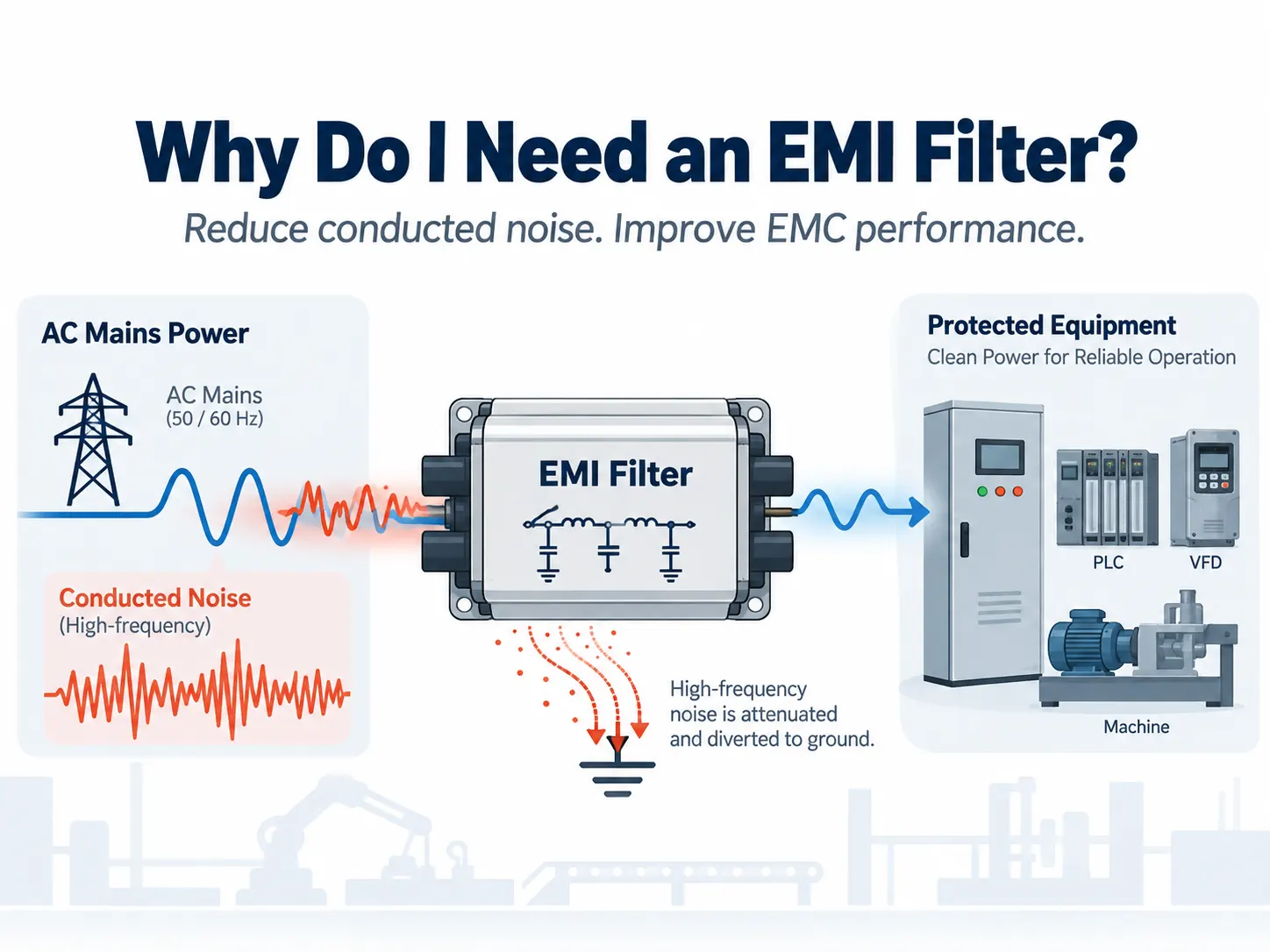
A dc noise filter is an electronic component designed to suppress unwanted electrical interference in direct current power supply circuits. These filters work by blocking or significantly reducing electromagnetic interference (EMI), radio frequency interference (RFI), and other electrical noise that can disrupt sensitive electronics or degrade audio quality.
The primary function of these filters centers around impedance-based attenuation. The filter presents high impedance to noise frequencies while maintaining low impedance to the desired DC voltage. This selective filtering action allows clean power to reach your equipment while blocking the interference that causes problems.

Common sources of DC power supply noise include switching frequencies from power converters, harmonic distortion from motor drives, alternator whine in automotive systems, and high-frequency interference from digital circuits. These noise sources can range from low-frequency ripple in the kilohertz range to high-frequency EMI extending into the gigahertz spectrum.
The basic working principle relies on a combination of passive components. Capacitors provide a low-impedance path for high-frequency noise currents to ground, while inductors present increasing impedance as frequency rises. Ferrite cores enhance the inductive effect and provide additional suppression of common-mode interference. When these components are properly combined and sized, they create an effective barrier against unwanted noise while preserving the integrity of your DC power.
Most DC noise filters operate by targeting two distinct types of interference: differential mode noise that appears between the positive and negative power lines, and common mode noise that affects both lines simultaneously relative to ground. Understanding this distinction helps in selecting the right filter topology for your specific application.
Types of DC Noise Filters
The world of DC noise filters encompasses several distinct categories, each optimized for specific applications and installation requirements. Understanding these different types helps ensure you select the most effective solution for your particular noise suppression needs.
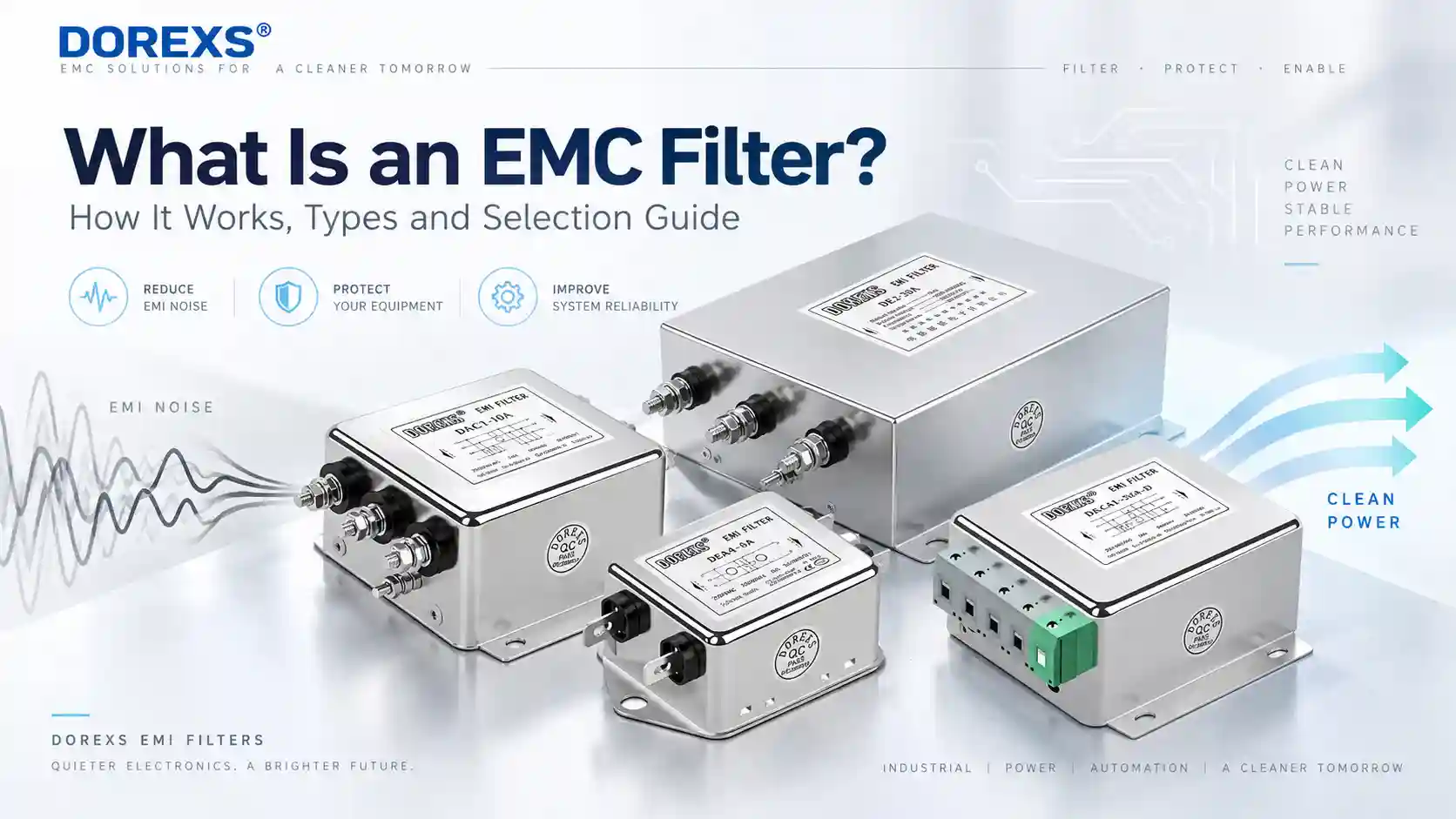
In-line power noise filters represent the most common category for direct current path installation. These filters connect directly in series with your power supply line, typically featuring wire terminals or connector interfaces. They excel at suppressing both differential and common mode noise through internal LC filter networks. Current ratings typically range from 2 amps for small electronics up to 50 amps for heavy-duty industrial applications.
Clip-on ferrite core filters offer the simplest installation method for cable-mounted noise suppression. These cylindrical or toroidal cores simply clip around existing power cables without requiring any wire cutting or soldering. The ferrite material provides inductive impedance that increases with frequency, making them particularly effective against high-frequency interference. Cable diameter compatibility ranges from 3.5mm for small signal cables up to 13mm for heavy power conductors.
EMI filter boards specifically target Class D amplifiers and switching power supplies where circuit board integration is preferred. These compact modules combine multiple filter stages in a small footprint, often incorporating both input and output filtering. They’re designed to mount directly onto PCBs and handle the specific noise characteristics generated by switching topologies.

Ground loop isolators serve dual-purpose roles in audio applications by breaking ground loops while simultaneously filtering power supply noise. These devices prove invaluable in car audio systems where multiple ground points can create unwanted current paths and associated noise. They typically incorporate transformer isolation or active circuitry to maintain signal integrity while eliminating interference.
Feed-through bulkhead filters cater to high-frequency applications requiring shielded enclosure penetration. These filters mount in panel cutouts and provide filtered power connections while maintaining electromagnetic shielding integrity. They’re commonly specified in military, aerospace, and sensitive instrumentation applications where both power filtering and EMI containment are critical.
Each filter type offers unique advantages depending on your installation constraints, performance requirements, and budget considerations. The key lies in matching the filter characteristics to your specific noise suppression challenges.
Current Rating Classifications
Proper current rating selection forms the foundation of effective DC noise filter application. Undersized filters can fail catastrophically or provide inadequate performance, while oversized units may be unnecessarily expensive and bulky for your application.
Low current filters in the 2A to 4A range primarily serve small electronic devices, portable equipment, and sensitive instrumentation. These filters often emphasize high-frequency noise suppression over power handling capability. Common applications include laboratory test equipment, medical devices, and precision measurement instruments where clean power is more critical than high current capacity. Prices for quality low-current filters typically start around $5.99 for basic ferrite core types.
Medium current filters spanning 10A to 15A ratings target automotive and audio applications where moderate power levels combine with significant noise challenges. Car stereo installations frequently require filters in this range to handle amplifier power while suppressing alternator whine and ignition interference. The Install Bay IBNF10 and IBNF15 models exemplify this category, offering proven performance for automotive installers at price points around $15 to $25.
High current filters rated for 20A to 50A serve industrial and heavy-duty applications where substantial power levels must be maintained while achieving effective noise suppression. These filters incorporate robust internal components capable of handling continuous high current without introducing significant voltage drop. Industrial motor drives, welding equipment, and high-power audio amplifiers often specify filters in this range. Premium 50-amp models like the Install Bay IBNF50 command prices up to $42.49 but provide the performance needed for demanding applications.
Current Rating |
Typical Applications |
Price Range |
Key Features |
| 2A - 4A | Test equipment, medical devices | $5.99 - $15.00 | High-frequency focus, compact size |
| 10A - 15A | Car audio, marine electronics | $15.00 - $25.00 | Balanced performance, automotive rated |
| 20A - 50A | Industrial drives, high-power audio | $25.00 - $42.49 | Heavy-duty construction, low voltage drop |
Voltage range considerations typically span 0-50V DC systems, though some specialized filters handle higher voltages for specific applications. The relationship between current rating and filter effectiveness isn’t always linear – a properly designed 10A filter may outperform a poorly designed 30A unit in terms of noise suppression characteristics.
When selecting current ratings, consider both your steady-state power requirements and any transient current demands. A safety margin of 25-50% above calculated requirements helps ensure reliable operation and accounts for component aging and temperature effects.
Automotive DC Noise Filters
Automotive electrical systems present unique challenges for noise suppression due to the harsh environment, multiple interference sources, and the critical importance of audio quality in vehicle entertainment systems. The 12V car stereo environment combines alternator whine, ignition noise, and switching interference from modern vehicle electronics.
12V car stereo noise filters specifically target alternator whine elimination, one of the most common and annoying noise sources in automotive audio systems. Alternator whine typically manifests as a high-pitched tone that varies with engine RPM, caused by the switching action of the alternator’s rectifier diodes. Quality automotive filters incorporate both differential and common mode suppression to address this multi-faceted interference source.
The most effective automotive filters feature aluminum shells for heat dissipation and electromagnetic shielding. Wire gauge compatibility typically accommodates 8 to 4 AWG power conductors commonly used in car audio installations. Installation flexibility comes from various connection options including ring terminals, spade connectors, and direct wire splicing capabilities.
Ground loop isolators prove essential for car audio systems where multiple components share common power and ground connections. These devices break the circular current paths that can introduce low-frequency hum and buzz into audio signals. Professional installers often combine power line filtering with ground loop isolation for comprehensive noise suppression.

Engine noise suppressors address the broader spectrum of automotive electrical interference beyond just alternator whine. Modern vehicles generate switching noise from fuel injection systems, ABS controllers, electronic transmissions, and LED lighting systems. Comprehensive automotive noise suppression may require multiple filter stages positioned at strategic points throughout the electrical system.
Installation considerations for vehicle power lines include secure mounting locations that avoid excessive heat and vibration, proper fusing for safety, and maintaining adequate wire gauge throughout the filtered circuit. The filter installation should be positioned as close as possible to the noise source for maximum effectiveness.
Popular Automotive Models
The DOREXS DF series represents a comprehensive range of automotive dc noise filters with proven track records in professional installations. The DCA4 handles 10-amp applications for moderate power systems, while the DCA5 accommodates 30-amp requirements typical of multi-amplifier installations. For high-power competition systems, the DCA6 provides 50-amp capacity with minimal voltage drop.
The DOREXS D series inline power noise filter offers an alternative approach with RCA connector integration for systems where signal-level filtering complements power line suppression. This dual-approach strategy proves particularly effective in complex installations with multiple noise sources.
Car power filters with aluminum shells and robust construction typically range from $10.44 for basic 10-amp units to $42.49 for premium 50-amp models. The price differential reflects not only current handling capacity but also the sophistication of the internal filter networks and the quality of construction materials.
Professional installers often stock multiple filter types to address the variety of noise sources encountered in different vehicle makes and models. The investment in quality filters pays dividends in customer satisfaction and reduced callback visits for noise-related issues.
Audio Applications
Audio systems demand exceptionally clean power supplies to maintain signal fidelity and prevent noise from contaminating the listening experience. DC noise filters in audio applications must balance effective interference suppression with minimal impact on audio quality and dynamics.
Noise suppression for speakers, amplifiers, and radio equipment requires understanding the frequency spectrum of both the audio signals and the interference sources. Audio frequencies typically span 20Hz to 20kHz, while power supply noise often extends well beyond this range. Effective audio power filtering targets the noise frequencies while preserving the audio bandwidth.
Class D amplifier systems present particular challenges due to their switching topologies that generate high-frequency noise. The switching frequencies, typically between 200kHz and 1MHz, can couple into audio circuits through power supply connections, ground paths, or electromagnetic radiation. Specialized EMI suppression boards designed for Class D amplifiers combine input filtering, output filtering, and sometimes active noise cancellation.
Home audio device noise filtering often relies on ferrite cores applied to power cables and interconnects. These simple solutions can dramatically reduce high-frequency interference without requiring circuit modifications. Multiple ferrite cores spaced along cable runs provide enhanced suppression across broader frequency ranges.
Professional audio power amplifier DC blocking filters serve a different purpose by preventing DC voltage from reaching loudspeaker drivers. While not strictly noise filters, these components often incorporate AC noise suppression as a secondary function. They prove essential in systems where asymmetrical power supplies or component aging might introduce DC offsets.

The choice between passive and active filtering approaches depends on the specific noise characteristics and system requirements. Passive filters using inductors and capacitors provide reliable, maintenance-free operation but may have limited effectiveness against certain types of interference. Active filters can adapt to changing noise conditions but introduce complexity and potential failure points.
Grounding strategies play a crucial role in audio power filtering effectiveness. Star grounding configurations, where all ground connections converge at a single point, minimize ground loops that can introduce noise. The power filter should integrate seamlessly with the overall grounding scheme to maximize noise suppression without creating new interference paths.
Industrial and Military Applications
Industrial and military environments demand the highest levels of power supply filtering performance due to mission-critical operations, safety requirements, and stringent electromagnetic compatibility standards. These applications often involve higher voltages, more severe environmental conditions, and broader frequency coverage requirements.
14V and 28V DC aircraft and rotorcraft power supply filtering addresses the unique requirements of aviation electrical systems. Aircraft power systems operate at higher voltages than automotive applications and must maintain filtering effectiveness across extreme temperature ranges and altitude variations. The reduced atmospheric pressure at altitude can affect component performance and require special consideration in filter design.
Military vehicle electrical system noise suppression encompasses ground vehicles, naval vessels, and aircraft platforms where reliable communications and electronic warfare systems depend on clean power. These systems often incorporate multiple filter stages, redundant filtering paths, and built-in diagnostic capabilities to ensure continued operation under combat conditions.
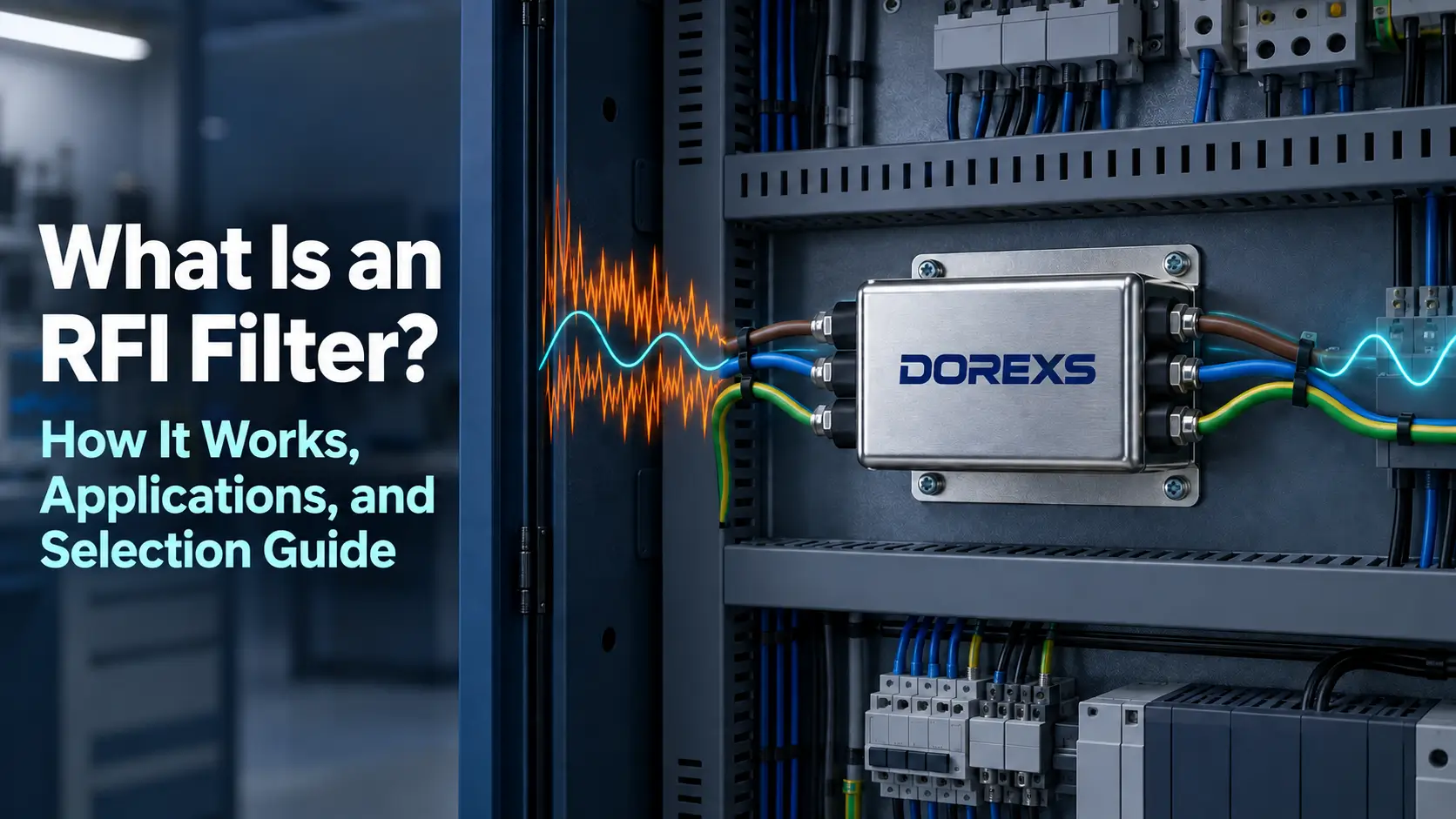
Industrial control panel EMI filtering solutions protect programmable logic controllers (PLCs), variable frequency drives, and process control instrumentation from power line interference. Industrial environments present challenging noise scenarios with high-power motor drives, welding equipment, and switching power supplies all contributing to the electromagnetic environment.

High-frequency performance extending from kilohertz to gigahertz ranges requires sophisticated filter designs that maintain effectiveness across extremely broad bandwidths. Feed-through filters with carefully controlled impedance characteristics provide the necessary performance for sensitive military and aerospace applications.
Component selection for these demanding applications emphasizes reliability, temperature stability, and long-term performance consistency. Military-specification components undergo extensive testing for vibration resistance, moisture tolerance, and temperature cycling to ensure reliable operation throughout their specified service life.
The verification process for military and aerospace filters often includes detailed testing protocols that measure insertion loss, impedance characteristics, and temperature performance across the full operational envelope. Documentation requirements may include test certificates, traceability records, and compliance statements for various military standards.
Selection Criteria
Choosing the right dc noise filter requires a systematic evaluation of your system requirements, noise characteristics, and performance objectives. The selection process involves balancing multiple technical and practical considerations to identify the optimal solution.
Current rating matching forms the primary selection criterion, as inadequate current capacity can result in filter failure or unacceptable voltage drop. Calculate your system’s maximum continuous current draw and add a safety margin of 25-50% to account for transient demands and component aging. Remember that current capacity often determines the physical size and cost of the filter.
Voltage compatibility with your DC power supply typically involves systems operating at 0-50V DC, though specialized applications may require higher voltage ratings. The filter’s voltage rating must exceed your system’s maximum operating voltage with adequate safety margin for transient overvoltages that may occur during switching events or fault conditions.
Frequency response characteristics determine the filter’s effectiveness against your specific noise sources. Low-frequency noise below 1kHz may require large inductor values and high-capacity capacitors, while high-frequency interference above 1MHz responds well to ferrite cores and smaller ceramic capacitors. Analyze your noise spectrum to match filter characteristics to interference frequency ranges.
Physical size constraints and mounting options often prove critical in space-limited applications. Inline filters require access to cut power conductors, while clip-on ferrite cores install without circuit modifications. Consider the available mounting space, environmental protection requirements, and accessibility for future maintenance.
Cost considerations range from $5.99 for simple ferrite cores to $42.49 for high-current inline filters. Balance the filter cost against the value of the equipment being protected and the consequences of noise-related failures. Sometimes multiple lower-cost filters prove more effective than a single expensive unit.
Selection Factor |
Key Considerations |
Impact on Performance |
| Current Rating | Continuous + transient capacity | Prevents filter failure and voltage drop |
| Frequency Response | Target noise spectrum | Determines suppression effectiveness |
| Physical Size | Space constraints | Affects installation feasibility |
| Cost | Budget vs. performance needs | Influences long-term system reliability |
Environmental factors including temperature range, humidity, vibration, and chemical exposure may dictate specific component types or protective enclosures. Automotive applications require filters rated for under-hood temperatures and road salt exposure, while marine applications need corrosion-resistant materials.
The decision between single-stage and multi-stage filtering depends on the noise suppression requirements and the available installation space. Complex interference scenarios may benefit from multiple filter stages with different frequency characteristics positioned at strategic points throughout the system.
Installation and Placement
Proper installation techniques can dramatically impact filter effectiveness, with poorly implemented solutions providing minimal noise suppression despite quality components. The installation process requires attention to positioning, grounding, and cable routing to maximize filter performance.
Proper positioning near noise sources provides the most effective suppression by intercepting interference at its origin before it can propagate throughout the system. Install power line filters as close as possible to switching power supplies, motor drives, or other noise-generating equipment. This proximity prevents noise from coupling into other circuits through power distribution wiring.
For automotive applications, position alternator noise filters close to the alternator output or at the power distribution point feeding audio amplifiers. The shorter the unfiltered power cable run, the less opportunity for noise pickup and radiation.
Minimizing wire length to reduce antenna effects becomes critical at higher frequencies where even short conductors can act as efficient radiators or receivers. Keep input and output connections to the filter as short as practical, and avoid parallel routing of filtered and unfiltered conductors. Twisted pair construction helps cancel magnetic field coupling in differential mode circuits.
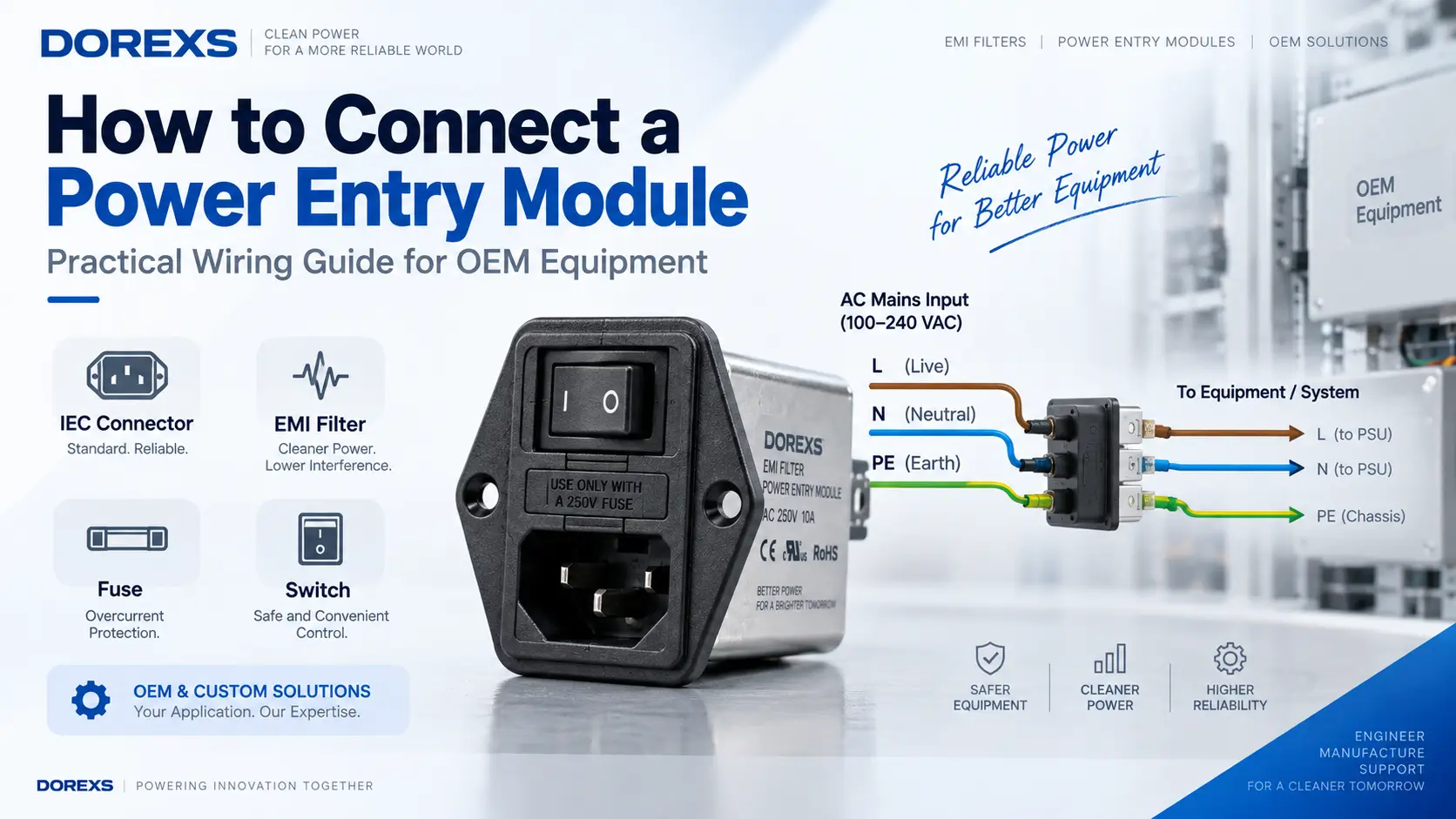
Grounding requirements for optimal noise suppression vary with filter type and application. Many filters require a low-impedance connection to chassis ground or power supply ground to provide a return path for noise currents. Use the largest practical wire gauge for ground connections and minimize the length of ground conductors.
Star grounding techniques, where all ground connections converge at a single point, help prevent ground loops that can compromise filter effectiveness. Avoid daisy-chaining ground connections, as this can create common impedance coupling between different circuits.
Cable diameter compatibility for clip-on ferrite filters ranges from 3.5mm for signal cables to 13mm for heavy power conductors. Multiple turns through ferrite cores increase the suppression effectiveness but may not be practical with thick cables or space constraints. Some ferrite cores feature hinged designs that simplify installation on existing cable runs.
Shielding considerations become important when dealing with high-frequency interference. Maintain the integrity of any shielded enclosures by using feed-through filters at penetration points. The filter should provide both power conditioning and electromagnetic barrier functions in these applications.
Temperature management ensures reliable long-term operation, particularly for high-current filters that may generate heat during normal operation. Provide adequate ventilation around inline filters and avoid installation in locations exposed to excessive ambient temperatures.
Common Problems and Solutions
Understanding typical failure modes and performance limitations helps diagnose problems and implement effective solutions. Many filter-related issues stem from improper specification, poor installation practices, or unrealistic performance expectations.
Inadequate current rating represents the most common cause of filter failure or ineffectiveness. Undersized filters may experience voltage drop under load, component overheating, or complete failure. The symptoms often include reduced system performance, intermittent operation, or visible component damage such as discolored resistors or bulging capacitors.
Solution: Verify the actual current draw of your system using appropriate test equipment, and select filters with at least 25% current capacity margin. Consider both steady-state and transient current requirements, as brief overloads can damage marginal components.
Improper grounding leading to increased noise levels frequently occurs when filter ground connections use inadequate conductor size, excessive length, or poor connection quality. Ground impedance that seems negligible at DC can become significant at radio frequencies, compromising filter effectiveness.
Solution: Use the largest practical wire gauge for all ground connections, minimize connection length, and ensure clean, tight connections. Star grounding techniques help prevent ground loops that can actually increase noise levels in some systems.
Wrong frequency response for specific noise characteristics results when filter selection doesn’t match the actual interference spectrum. A filter optimized for low-frequency ripple may provide minimal suppression against high-frequency switching noise, and vice versa.
Solution: Characterize your noise sources using appropriate test equipment to identify the frequency content of the interference. Spectrum analyzers or oscilloscopes with sufficient bandwidth can reveal the specific frequencies requiring suppression.
Physical placement too far from noise source reduces effectiveness because interference can propagate through power distribution wiring and couple into other circuits before reaching the filter. Long unfiltered cable runs act as antennas that can both radiate and receive electromagnetic interference.
Solution: Position filters as close as possible to noise sources, and consider multiple filter stages for complex systems. Sometimes several smaller filters prove more effective than a single large filter located at the power distribution panel.
Component aging and environmental degradation can reduce filter performance over time. Electrolytic capacitors may lose capacity or develop excessive leakage current, while ferrite cores can crack under thermal cycling. Regular verification of filter performance helps identify degraded components before they cause system problems.
Impedance mismatches between the filter and the power distribution system can limit effectiveness and potentially cause resonance issues. This problem particularly affects systems with long cable runs or multiple parallel loads where transmission line effects become significant.
Conclusion
DC noise filters serve as essential components in modern electronic systems, protecting sensitive equipment from power supply interference while maintaining reliable operation across diverse applications. From simple $5.99 ferrite cores solving basic automotive alternator whine to sophisticated $42.49 industrial filters handling 50-amp loads, the right filter selection can dramatically improve system performance.
The key to successful noise suppression lies in understanding your specific requirements – current capacity, frequency response, physical constraints, and environmental conditions all influence the optimal filter choice. Whether you’re installing a car stereo system, designing industrial control panels, or maintaining military communications equipment, proper filter specification and installation techniques ensure maximum effectiveness.
Remember that effective noise suppression often requires a systematic approach combining multiple filter stages, proper grounding practices, and strategic component placement. The small investment in quality DC noise filters pays significant dividends in improved reliability, reduced troubleshooting time, and enhanced system performance.
Take the time to properly characterize your noise sources, select appropriate filter specifications, and implement proper installation techniques. Your electronic systems – and your ears – will appreciate the difference that clean, filtered power makes in overall performance and reliability.
Switching Power Supply Output Filter-Complete Design Guide for Low-Noise DC Power
Top Techniques to Filter Electrical Noise: Boost Your Circuit Performance