How to Choose Medical EMI Filter: A Complete Guide for the Right Power Equipment

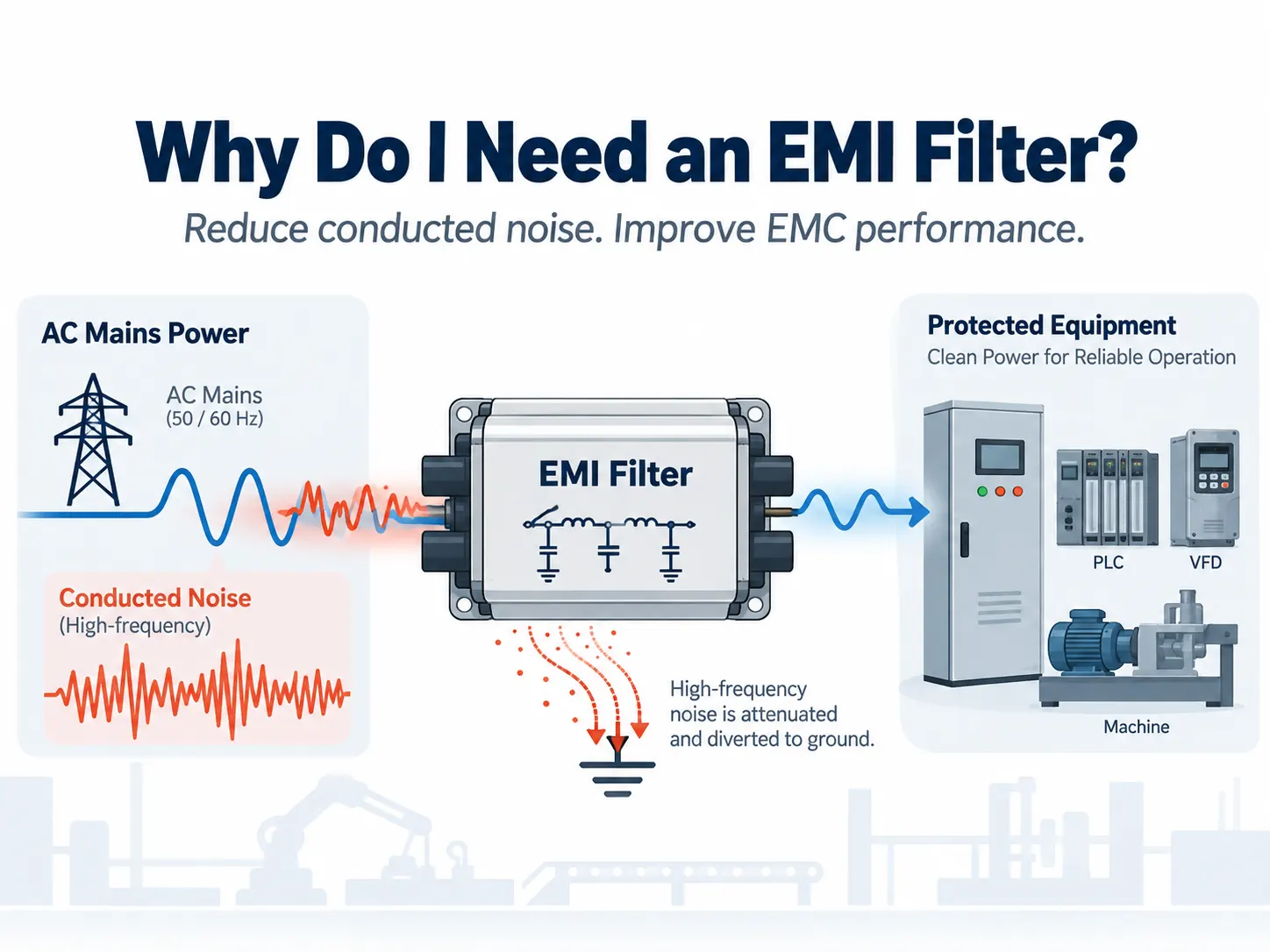
In modern medicine, the stability, accuracy, and reliability of medical devices and other electronic equipment are critical to patient safety. MRI machines, CT scanners, ultrasound systems, patient monitors, life support equipment, and any sensitive electronic equipment require excellent power quality to operate properly. However, electromagnetic interference (EMI) poses a significant threat to medical devices, and this interference can come from both the device itself and from external sources. Natural phenomena such as solar flares can also introduce EMI, affecting signal integrity and device operation. EMI can enter equipment through power lines and affect the performance of medical devices. EMI can cause data distortion, operational malfunctions, and even equipment failure, posing serious risks to patients.
Learn more about selecting the right medical power filter...
Introduction to Electromagnetic Interference in Medical Environments
The Importance of EMI Power Filters in Medical Equipment
1. Ensuring Patient and Operator Safety
Additionally, leakage current is a critical concern. Medical-grade power filters must have low leakage current designs to prevent electric shock hazards for patients and healthcare providers,and these safety requirements must be maintained even when the equipment is operating at full load. For example, patient-connected equipment must comply with the IEC 60601-1 standard, which limits leakage current to ≤0.5mA.
2. Improving Equipment Reliability
3. Meeting Regulatory Compliance and Enhancing EMC
Understanding EMI Filter Types and Key Characteristics

In addition, there are high-pass and band-pass EMI filters, each with unique characteristics that make them suitable for different applications. When selecting an EMI filter for a medical device, it is important to consider key factors such as the filter input, the frequency range covered, and the insertion loss value, which indicates how effectively the filter attenuates interfering noise. The specifications and system requirements provided by the filter manufacturer should be carefully reviewed to ensure that it is compatible with the intended medical application.
EMI filter designs can vary greatly, and in some cases, a custom solution may be required to meet the unique needs of a specific medical device. By understanding the types and characteristics of these filters, design engineers can select the most effective EMI filtering solution for their device, ensuring optimal performance and compliance with industry standards.
Selection Guide: How to Choose the Right EMI Power Filter for Medical Equipment
1. Matching the Filter to the Equipment Type
- Imaging Equipment (MRI, CT, X-ray machine): high-power, high-attenuation filters are required to eliminate grid interference and maintain image clarity. Power input filtering is critical to prevent EMI from entering the device
- Patient Monitoring Devices (ECG, Blood Pressure Monitors): low-noise, low-leakage current filters are required for accurate signal acquisition. For compact or board-level devices, PCB filters are an effective solution for reducing EMI.
- Life Support Equipment (Ventilators, Anesthesia Machines): high-reliability, low-leakage current EMI filters are required to ensure continuous operation safety.
- Laboratory Equipment (Centrifuges, Analyzers): standard EMI filters are required to minimize interference with surrounding instruments.
- Equipment with RF modules: Equipment that contains RF modules, such as wireless communication or telemetry systems, requires specialized EMI filtering to reduce radiation and maintain signal integrity.
2. Key Technical Specifications
- Rated voltage: The rated voltage refers to the maximum line voltage that the filter is designed to handle. The rated voltage of a single-phase EMI filter in AC is generally around 250VAC, and the rated voltage of a three-phase EMI filter is generally 380/440VAC. In DC, it is generally 12V/48V/100V. In addition, special voltage environments require specific voltage standards to be customized. The rated voltage of the selected EMI filter must be greater than or equal to the maximum input line voltage provided to the device.
- Rated current: The rated current refers to the maximum steady-state current that the EMI filter can withstand under standard conditions. Generally speaking, EMI filters are designed to handle surge currents that are higher than the rated current for a short period of time, but if they last too long, the filter will fail.
- Differential mode and common mode suppression capabilities: Evaluate the filter's ability to suppress low-frequency (150kHz-30MHz) and high-frequency (>30MHz) noise.When considering frequency range and noise rejection, it is important to consider the clock and switching frequencies in the system, as they can significantly affect the radiated characteristics and influence the filter selection.
- Ambient temperature: Ambient temperature refers to the operating temperature at which the EMI filter is designed to withstand the full rated current, usually 85°C.
- Leakage current: Medical equipment has very strict requirements for leakage current, usually less than 100μA. When selecting, you should choose a filter with low leakage current to avoid the risk of electric shock to the patient. There are clear specifications for IEC60601 and IEC 60601-1-2 for medical equipment. Choosing a certified filter can ensure product quality while reducing the cost and time of equipment certification.
- Matching power system type: The power system configurations in different countries are different. Common ones include single-phase, three-phase and special power system configurations. When selecting an EMI power filter, you should choose a filter that matches the local power system configuration and ensure compatibility with different power supplies, otherwise the filter will not be able to play its due role.
- Number of stages: The number of stages refers to the number of times the internal circuit of the power filter is connected in series. Usually, a single-stage filter is one circuit, a two-stage filter is two circuits, and so on. Generally speaking, the more stages, the stronger the filtering performance of the filter.
- Filter performance: High-frequency performance is a key parameter when evaluating filter performance, especially for compliance with industry standards and optimal EMI suppression. Insertion loss values are critical, and viewing insertion loss graphs can help you compare filter options and ensure adequate attenuation for your application.
- Safety certification and structure: Power filters in medical devices must pass relevant safety certifications, such as UL, CSA, VDE, etc., to ensure that they meet international standards while enhancing the market competitiveness of medical devices. In addition, the filter chassis should have proper metal-to-metal bonding with the device to ensure safety and optimal high-frequency performance.
3. Additional Considerations
- Size & Mounting: Select filters that fit within the design constraints of your equipment. Mounting options include panel mounting and PCB mounting. A common solution to suppress high-frequency noise is to use a low-pass EMI filter, which allows low-frequency signals to pass while attenuating unwanted interference.
- Capacitor Selection & Performance: Capacitors are key components in the EMI filter structure and directly affect the filter's ability to suppress electromagnetic interference. EMI filters use different types of capacitors, such as ceramic capacitors, tantalum capacitors, and film capacitors, depending on the application's requirements for frequency response, isolation, and space efficiency. Capacitors with ceramic dielectric materials are often selected for their high-frequency and high-voltage performance, making them ideal for demanding EMI suppression tasks.
- Cost & Lead Time: Optimize cost without compromising performance. Choose a supplier that offers competitive pricing and fast delivery.
Evaluating EMI Filter Performance
-
Filter performance can be evaluated using specialized test equipment such as spectrum analyzers and line impedance stabilization networks (LISNs), which measure how well the filter attenuates interfering signals. Key performance indicators include insertion loss values, which reflect the filter's ability to reduce EMI over the frequency range of interest.
-
Also considered are voltage ratings, current ratings, the filter's ability to operate at high DC voltages and switching frequencies, and its performance at varying ambient temperatures.
-
Other characteristics of the filter, such as its construction and materials, also affect its effectiveness and durability.
DOREXS Medical-Grade EMI Power Filters
-
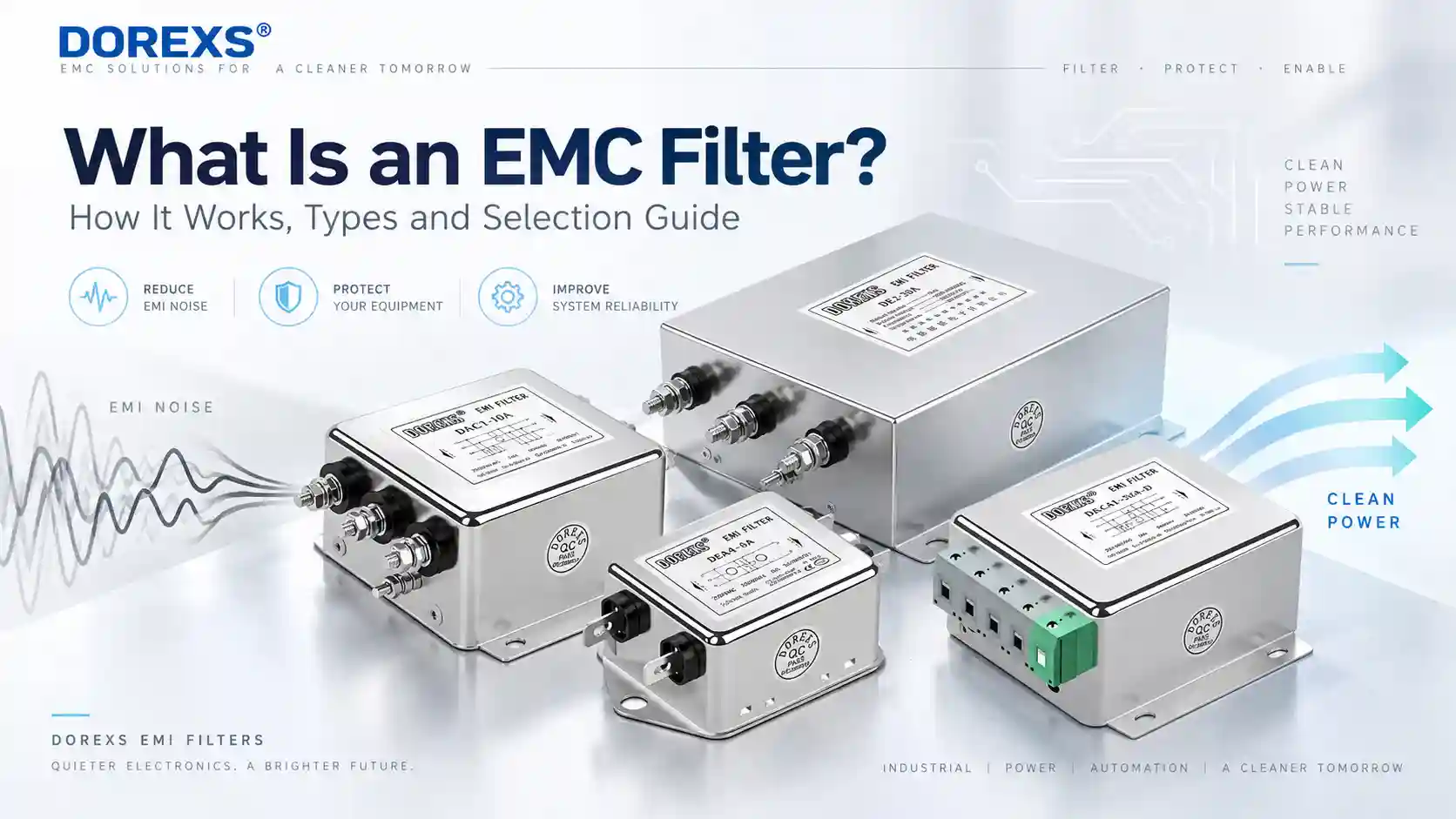
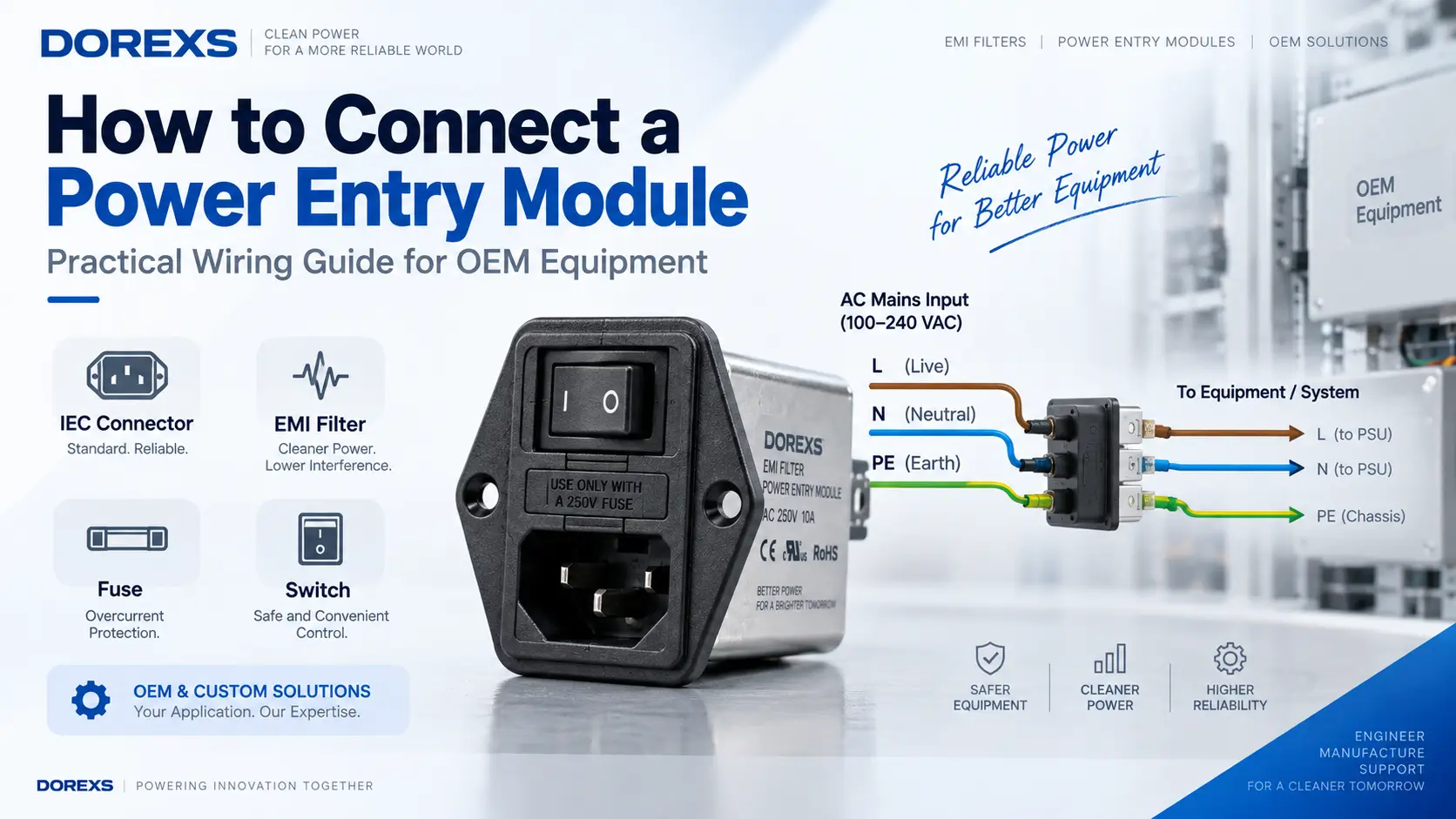
IEC Inlet EMI Filters: Low-leakage current versions ideal for patient-connected medical devices. Available with switch and fuse options for added safety.
-
Single-Phase EMI Filters (Single & Dual-Stage): High-performance filters providing exceptional EMI suppression, with options for low-leakage current models.
-
Custom EMI Solutions: We offer customized filters to meet specific voltage, current, and performance requirements.

For more details on our EMI filtering solutions, visit our EMI filter product page or contact our team. We are committed to providing high-quality, customized solutions for your medical equipment needs.
By integrating advanced EMI filtering solutions, medical equipment manufacturers can enhance device reliability, ensure patient safety, and achieve seamless regulatory compliance. With the growing demand for intelligent and high-precision medical devices, EMI filters will continue to play a vital role in the healthcare industry.
Conclusion and Final Considerations
Top Ten EMI Filter Manufacturers 2025
What is High Pass Filter: Working Principle and Main Classification