How To Make EMI EMC Filter
Making a power filter involves the selection, design, and assembly of electronic components. The main purpose of a power filter is to eliminate or reduce noise and interference in the power supply, thereby providing clean and stable power to electronic devices. This involves managing the input power path to handle input current and voltage disturbances effectively. Through this article, you can learn about:
- What a power filter is
- Classification of EMI filters
- Purpose of power filters
- Structure of filters
- How to make EMI EMC filters
Most devices powered by electricity generate electromagnetic interference (EMI), commonly referred to by engineers as EMC (electromagnetic compatibility) issues. Many countries or regions have strict EMC standards to limit the interference emitted by equipment. To comply with these safety regulations, electronic devices must be equipped with mechanisms to solve electromagnetic interference problems, and EMI power filters are a popular choice among engineers.
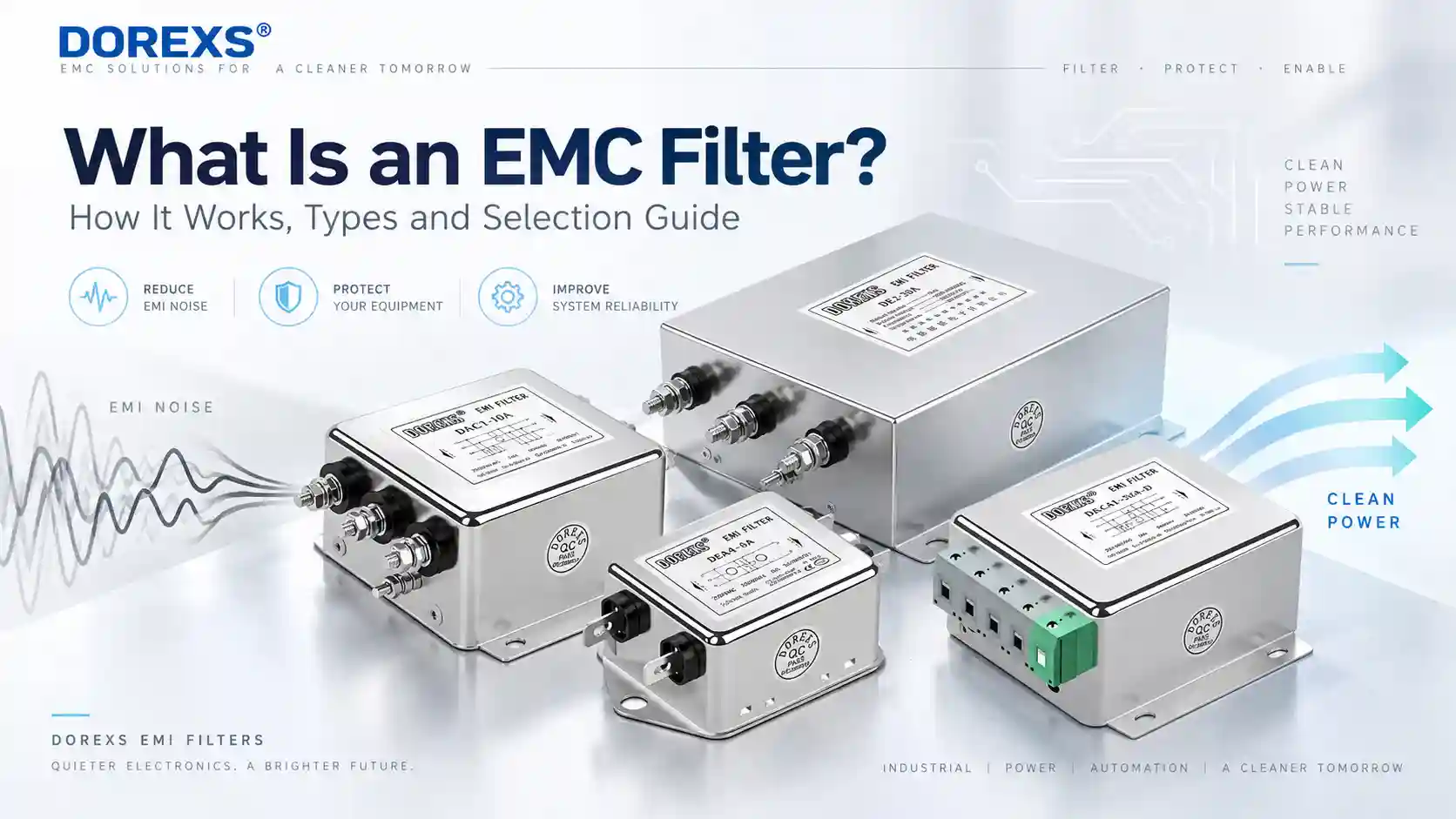
Today, DOREXS will help you understand what EMI filters are, the purpose of power filters, and how to design power filters. This will assist you in complying with EMC regulations, enabling your products to enter the market smoothly and remain competitive.
Introduction to EMI Filters
What is a power filter?

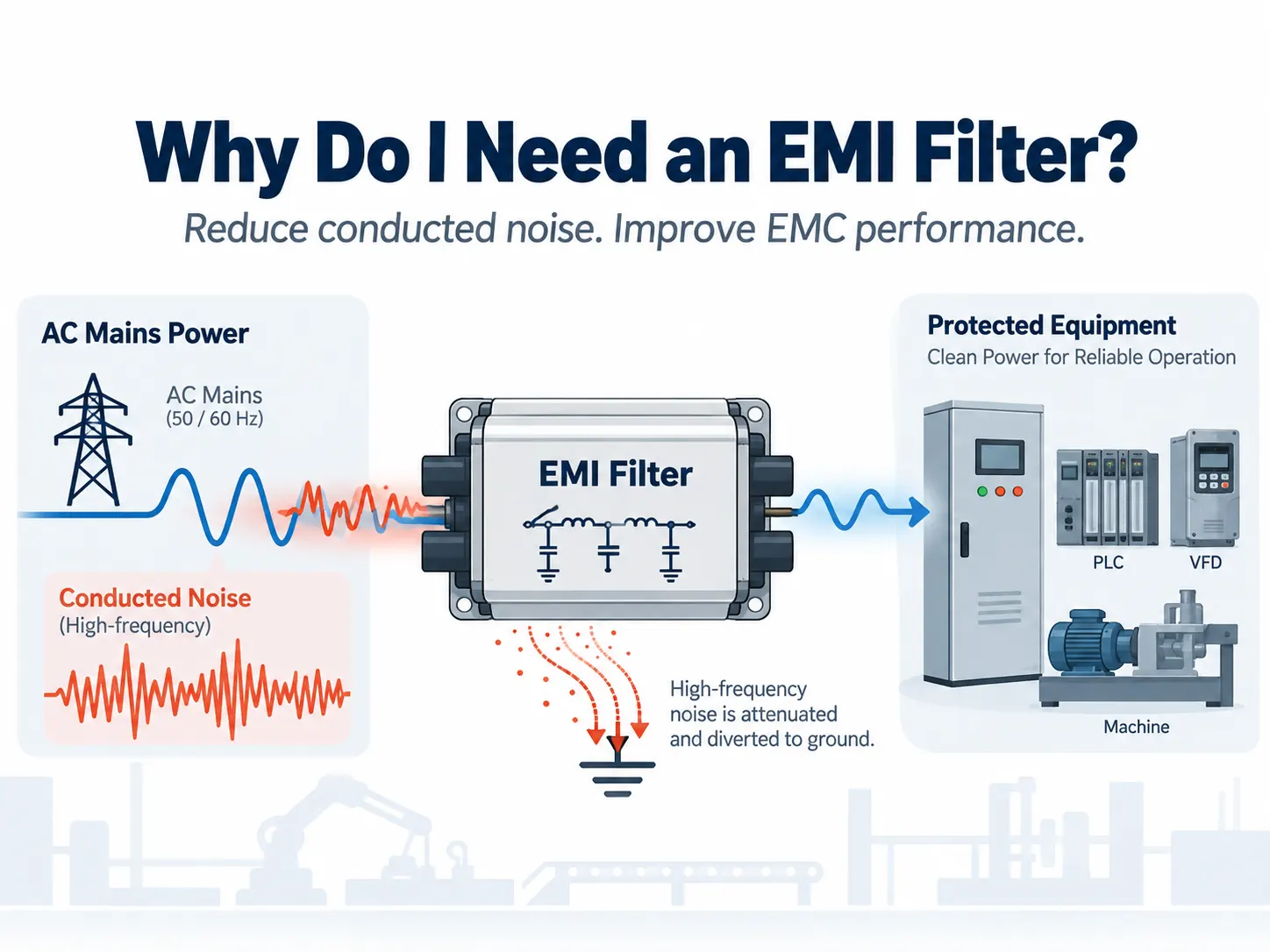
Power filters can be active, passive, digital, or analog. They usually consist of capacitors, inductors, coils, and resistors, and are placed between circuits, networks, or devices/systems. Power filters allow the desired electrical signal to pass through while suppressing or weakening unwanted interference signals, thereby protecting sensitive electronic equipment.
EMI filters can either be embedded into a printed circuit board or function as standalone devices, emphasizing their role in protecting sensitive equipment across various fields such as military, industrial, and medical applications.
Understanding Electromagnetic Interference
Electromagnetic interference (EMI) occurs when electromagnetic noise is emitted, transmitted, conducted, or radiated by electronic equipment and systems. This interference can be caused by various sources, including power lines, power supplies, and other electronic devices, and can be exacerbated by circuit parasitics and near-field coupling effects.
EMI can be categorized into two main types: conducted EMI and radiated EMI, each with its own unique characteristics and effects on electronic systems. Conducted EMI occurs when electromagnetic noise is transmitted through power and signal lines, while radiated EMI occurs when electromagnetic noise is emitted into the air.
EMI can have harmful impacts on electronic devices, causing them to malfunction or fail, and can also interfere with other electronic systems, leading to reduced performance and reliability. To mitigate the effects of EMI, electronic devices and systems must be designed with electromagnetic compatibility (EMC) in mind, using techniques such as shielding, filtering, and grounding to reduce electromagnetic noise.
EMI can be suppressed using various noise suppression techniques, including the use of EMI filters, which can be designed to effectively block electromagnetic interference. The use of EMI filters and other noise suppression techniques is critical to ensuring the reliable operation of electronic devices and systems, particularly in applications where electromagnetic compatibility is critical.
By understanding the causes and effects of electromagnetic interference, electronic device designers and manufacturers can take steps to mitigate its impact and ensure the safe and reliable operation of electronic equipment. Electromagnetic interference is a critical concern in modern electronic systems, and its mitigation is essential to ensuring the performance, reliability, and safety of electronic devices and systems.
EMI can be categorized into two main types: conducted EMI and radiated EMI, each with its own unique characteristics and effects on electronic systems. Conducted EMI occurs when electromagnetic noise is transmitted through power and signal lines, while radiated EMI occurs when electromagnetic noise is emitted into the air.
EMI can have harmful impacts on electronic devices, causing them to malfunction or fail, and can also interfere with other electronic systems, leading to reduced performance and reliability. To mitigate the effects of EMI, electronic devices and systems must be designed with electromagnetic compatibility (EMC) in mind, using techniques such as shielding, filtering, and grounding to reduce electromagnetic noise.
EMI can be suppressed using various noise suppression techniques, including the use of EMI filters, which can be designed to effectively block electromagnetic interference. The use of EMI filters and other noise suppression techniques is critical to ensuring the reliable operation of electronic devices and systems, particularly in applications where electromagnetic compatibility is critical.
By understanding the causes and effects of electromagnetic interference, electronic device designers and manufacturers can take steps to mitigate its impact and ensure the safe and reliable operation of electronic equipment. Electromagnetic interference is a critical concern in modern electronic systems, and its mitigation is essential to ensuring the performance, reliability, and safety of electronic devices and systems.
Classification of EMI Filters
There are four types of commonly used EMI power supply filters:
Low-Pass Filter: A low-pass filter allows signals below the cutoff frequency (fc = 1/2πRC) to pass through and blocks signals above this frequency, with minimal insertion loss. It is usually used for power supply filtering, audio processing, and signal processing.Passive filters, which use only passive components, are effective in reducing emissions in electronic circuits.
High-Pass Filter: In contrast to the low-pass filter, a high-pass filter allows signals above the cutoff frequency to pass through and blocks signals below this frequency, also with minimal insertion loss. It is typically used in audio processing, signal processing, and sensor signal conditioning.
Bandpass Filter: A bandpass filter allows signals within a specific frequency range to pass with very little insertion loss and blocks signals outside this range. It is commonly used in communication systems, audio processing, and signal processing.
Bandstop Filter: A bandstop filter is the opposite of a bandpass filter. It blocks signals within a specific frequency range and allows signals outside this range to pass. Its center frequency is determined by f0=1/(2?√R1*C1).
What is the purpose of the filter?
The purpose of a power filter, also known as an electromagnetic interference filter, is to suppress electromagnetic interference generated by electronic equipment and reduce the impact of electromagnetic interference on sensitive electronic devices.
Structure of an EMI Filter
EMI filters are composed of two basic electronic components—capacitors and inductors. Passive components like capacitors and inductors are used to construct passive EMI filters, which are effective in managing electromagnetic interference. The simplest type of filter, called a first-order filter, consists of a resistor (R) and a capacitor (C) or an inductor (L) for processing low-frequency or high-frequency signals. Their attenuation increases at a rate of only 6dB per octave or 20dB per decade.
 |
| first-order filter |
To achieve greater attenuation, a second-order or higher-order filter composed of two or more reactive elements is usually necessary. The values of the inductors and capacitors are determined by the impedance of the source, load, and the highest frequency (i.e., the cutoff frequency) that needs to pass. This filter, composed of two elements, is sometimes called an "L" filter. During the design process, it is also necessary to consider the resonance and ringing of the filter, and a design characteristic called the damping factor, which describes the gain and time response of the filter.
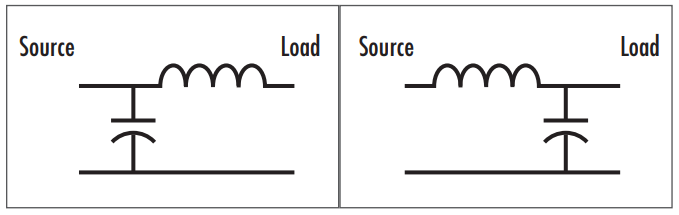 |
| second-order filter |
A third-order filter consists of three or more reactive elements, as shown in Figure 4. This type of filter is sometimes referred to as a "π" (pi) or "T" filter. Although third-order filters have significant advantages in filtering performance, their physical size increases. Despite this, third-order filters are still among the most commonly used filter topologies.
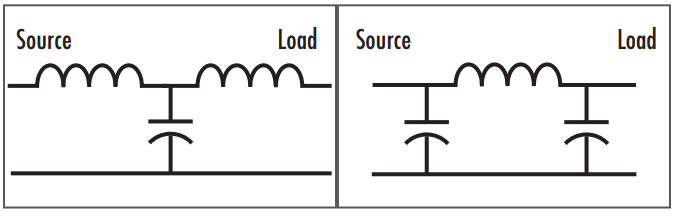 |
| third-order filte |
Power Supply Considerations
Power supplies are a common source of electromagnetic interference (EMI) in electronic systems, and their design and construction can have a significant impact on the overall electromagnetic compatibility (EMC) of a system. Power supplies can generate electromagnetic noise through various mechanisms, including switching, rectification, and filtering, and this noise can be conducted or radiated into the surrounding environment.
To reduce the electromagnetic interference generated by power supplies, designers and manufacturers can use various techniques, including the use of EMI filters, shielding, and grounding. Power supplies can be designed to meet specific electromagnetic compatibility (EMC) standards and regulations, ensuring that they operate within acceptable limits and do not interfere with other electronic systems.
The use of EMI filters in power supplies can help to reduce electromagnetic interference and ensure compliance with regulatory requirements, improving the overall performance and reliability of electronic devices and systems. Power supplies can be categorized into different types, including linear power supplies, switch-mode power supplies, and resonant power supplies, each with its own unique characteristics and applications.
The selection of a power supply depends on various factors, including the type of electronic device or system, the power requirements, and the electromagnetic compatibility (EMC) requirements. Power supplies can be designed to operate in a variety of environments, including industrial, commercial, and residential environments, and must be able to withstand various types of electromagnetic interference and other environmental stresses.
The use of power supplies with built-in EMI filters can help to simplify the design and construction of electronic devices and systems, reducing the need for additional filtering and shielding components. By considering the power supply as a critical component in the overall electromagnetic compatibility (EMC) of a system, designers and manufacturers can ensure that their electronic devices and systems operate reliably and efficiently, meeting the required standards and regulations.
To reduce the electromagnetic interference generated by power supplies, designers and manufacturers can use various techniques, including the use of EMI filters, shielding, and grounding. Power supplies can be designed to meet specific electromagnetic compatibility (EMC) standards and regulations, ensuring that they operate within acceptable limits and do not interfere with other electronic systems.
The use of EMI filters in power supplies can help to reduce electromagnetic interference and ensure compliance with regulatory requirements, improving the overall performance and reliability of electronic devices and systems. Power supplies can be categorized into different types, including linear power supplies, switch-mode power supplies, and resonant power supplies, each with its own unique characteristics and applications.
The selection of a power supply depends on various factors, including the type of electronic device or system, the power requirements, and the electromagnetic compatibility (EMC) requirements. Power supplies can be designed to operate in a variety of environments, including industrial, commercial, and residential environments, and must be able to withstand various types of electromagnetic interference and other environmental stresses.
The use of power supplies with built-in EMI filters can help to simplify the design and construction of electronic devices and systems, reducing the need for additional filtering and shielding components. By considering the power supply as a critical component in the overall electromagnetic compatibility (EMC) of a system, designers and manufacturers can ensure that their electronic devices and systems operate reliably and efficiently, meeting the required standards and regulations.
How to Design EMI Filters Step by Step

When designing an EMI filter, it is crucial to consider various factors to ensure optimal performance and safety. One important aspect to keep in mind is the operating temperature. Along with voltage, current, and response time, the operating temperature plays a significant role in selecting the appropriate components, such as fuses, to ensure the safety and functionality of the electrical system.
Determine the Interference Mode
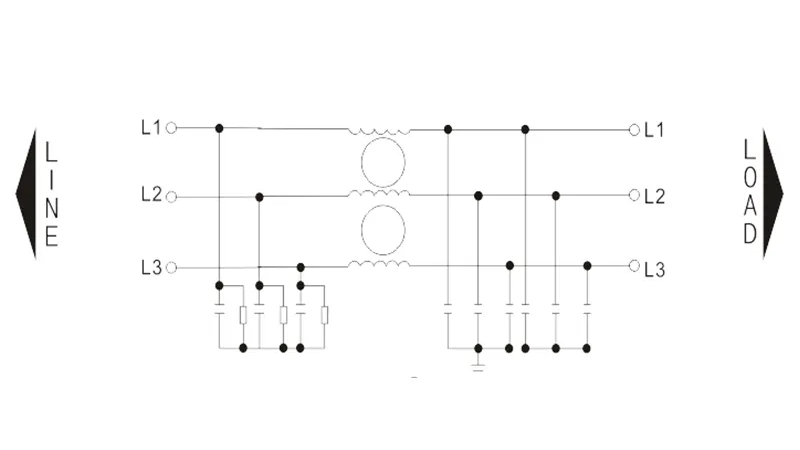
Before designing an EMI filter, you must first determine the type of interference by measuring the modal characteristics of the conducted emissions and the current flowing from the electronic device. For example, if the interference type is differential mode, an X capacitor must be added between the line and neutral lines. If it is common mode interference, the designed EMI filter must contain a common mode choke or a Y capacitor. Generally speaking, electronic devices emit both common mode and differential mode interference, with one typically being the dominant mode.
Determine the Filter Type
Select the appropriate filter type, such as a low-pass filter, high-pass filter, band-pass filter, or band-stop filter, based on the interference mode and the frequency range of the interference signal.
EMI suppression filters are designed to effectively block electromagnetic interference and are selected based on the interference mode and frequency range.
Determine the Circuit Topology
Design a suitable circuit topology, such as π-type, T-type, or L-type, according to the type of interference mode and the interference frequency range. Use computer simulation software to determine the best impedance matching to optimize filtering performance and reduce reflection interference.
The chosen circuit topology should ensure the integrity of signal and power lines while mitigating unwanted disturbances.
Select Manufacturing Materials
- Inductor Materials: Such as ferrite, nanocrystal, or silicon steel sheet
- Capacitor Materials: Such as ceramic capacitors, film capacitors, or electrolytic capacitors. It is crucial to select capacitors based on their rated voltage to ensure effective protection against voltage transients.
- Packaging Materials: Such as plastic shells or metal shells
- Potting Materials: Such as rubber
Manufacturing Process
- Winding Process: Use single-layer winding, multi-layer winding, cross winding, etc., to ensure the stability and consistency of the inductor.
- Component Assembly: Assemble the inductor, capacitor, and other components according to design requirements to ensure good electrical connections and avoid poor soldering.
- Packaging and Shielding: Encapsulate the assembled filter and add necessary electromagnetic shielding to prevent coupling of external electromagnetic interference. Adding a shield at the attachment point of the EMI filter is crucial to prevent all forms of electromagnetic interference, ensuring optimal device protection.
Testing and Verification
- Electrical Performance Test: Test parameters such as insertion loss, return loss, cutoff frequency, bandwidth, and attenuation to ensure the filter performs well within the specified frequency range. Additionally, measuring leakage current is crucial to ensure the filter meets regulatory standards and manages safety risks effectively.
- Environmental Testing: Conduct temperature shock, humidity, and vibration tests to verify the reliability and stability of the filter under different environmental conditions.
- EMC Test: Perform electromagnetic compatibility testing in the actual application environment to ensure that the filter effectively suppresses electromagnetic interference and meets international or industry standards.
Quality Control
- In-Process Quality Control: Strictly follow design regulations and supervise with automated testing equipment to ensure production quality
- Factory Inspection: Sample and test each batch of filters, recording and analyzing the results to ensure the high quality of the products shipped. Ensuring the high quality of filters is crucial for protecting sensitive equipment from electromagnetic interference.

Continuous Optimization
- Feedback and Improvement: Continuously optimize filter design and manufacturing processes based on market feedback and actual usage to improve product performance and reliability. This continuous optimization leads to improved performance and reliability of the products.
- Technology Upgrades: Keep up with the latest EMI technology trends, apply new materials, processes, and technologies, and develop more efficient, smaller, and environmentally friendly EMI filter products.
Making EMI filters is a multidisciplinary process that requires comprehensive consideration of electromagnetic compatibility, circuit design, material science, and manufacturing technology. As a professional EMI filter manufacturer, DOREXS masters these core technologies and combines them with practical application needs to develop a variety of EMI filter products with excellent performance and stable quality, providing reliable electromagnetic interference suppression solutions for the normal operation of electronic equipment.
If you need further in-depth technical support or assistance with specific projects, feel free to contact our team at any time. We are happy to help.
What Is an EMI Filter for Power Amplifiers?
What is EMI Filter in Power Supply