
Typical Application Cases and Solutions of EMI Filters in Servo Drives and Servo Motors
author: DOREXS
2025-11-06
Introduction
EMI filters in servo drives and servo motors provide essential protection against electromagnetic interference generated by high-frequency PWM switching, protecting sensitive electronic components and ensuring reliable operation in industrial automation systems. These specialized filter components address the unique challenges posed by rapid switching in power electronics, where drive pulses create both conducted noise and radiated interference that can damage motor bearings and disrupt surrounding equipment

What This Guide Covers
This comprehensive guide examines real-world application cases where EMI filters are critical for servo system performance, specific solution types including dV/dt and combination filters, and step-by-step implementation strategies for different industrial environments. We focus on practical solutions rather than theoretical concepts, with quantitative data from actual installations.
Who This Is For
This guide is designed for automation engineers, control system designers, and maintenance technicians working with servo systems in industrial facilities. Whether you’re troubleshooting EMI issues in existing installations or designing new automation systems, you’ll find specific guidance for filter selection and implementation.
Why This Matters
Electromagnetic interference from servo drives can cause bearing current damage, reduce motor lifespan by up to 50%, and create electrical overstress in sensitive devices throughout industrial automation equipment. Poor EMI control leads to production downtime, increased maintenance costs, and potential non-compliance with electromagnetic compatibility standards like IEC 61800-3.
What You’ll Learn:
-
Critical application cases where EMI filters prevent system failures
-
How to select appropriate filter types for different servo motor configurations
-
Step-by-step implementation strategies for maximum EMI suppression
-
Solutions to common challenges including bearing damage and encoder interference
Understanding EMI Challenges in Servo Drive Systems
Electromagnetic interference in servo systems originates from the rapid switching of PWM motors operating at frequencies between 4-20 kHz, creating high frequency harmonics that propagate through power cables and generate both conducted emissions and radiated emi.
Unlike variable frequency drives that can use sinewave filters, servo systems require specialized approaches because their precise positioning demands maintain the sharp edges of drive pulses while controlling electromagnetic noise. The high frequency switching creates voltage spikes and current flow patterns that couple noise into sensitive equipment throughout industrial environments.
Common Mode vs Differential Mode EMI in Servo Applications
Common mode noise occurs when high frequency currents flow between the motor’s bearings and equipment ground, creating a low impedance path that can damage bearing surfaces over time. This noise coupling mechanism is particularly problematic in servo applications where precise positioning requires minimal electrical noise interference with encoder feedback systems.
Differential mode interference affects power lines directly, where rapid switching creates high frequency interference between conductors that can propagate to other electronic devices sharing the same electrical distribution system.
High-Frequency Switching Effects
The 4-20 kHz PWM frequencies typical in servo drives generate electromagnetic noise across a broad spectrum, with peak current levels reaching several amperes without proper filtering. Building on the common mode challenges, these high frequencies create sharp edges in drive pulses that accelerate bearing wear and can cause electrical overstress in communication devices and sensitive electronic components within the surrounding environment.
Transition: Understanding these EMI generation mechanisms leads directly to examining where these problems create the most significant operational challenges in real-world applications.
Critical Application Cases for EMI Filters in Servo Systems
Industrial automation systems face varying EMI challenges depending on the application environment, power levels, and proximity to sensitive equipment. The following cases represent the most critical applications where installing EMI filters becomes essential for reliable operation.
CNC Machine Tool Applications
CNC machining centers operate multiple servo motors simultaneously for axis control and spindle drives, typically ranging from 5-50 kW in industrial facilities. The electromagnetic environment in these systems is particularly challenging because precision feedback devices must function alongside high-power servo drives within shared electrical enclosures.
High frequency noise from servo drives can interfere with encoder signals, causing positioning errors that affect machined part quality. The continuous operation requirements and harsh environments of production machining make EMI control critical for both system performance and equipment longevity.
Robotic Assembly Lines
Multi-axis servo systems in automotive and electronics manufacturing create complex electromagnetic environments where radiated interference from one servo can affect neighboring axes or assembly station controllers. Unlike CNC applications, robotic systems often require wireless communication equipment integration, making them more susceptible to radiated emi issues.
The rapid switching patterns from multiple servo drives operating simultaneously can create noise propagation through power supplies and ground loops, affecting production processes that depend on precise coordination between robots and peripheral equipment like vision systems and PLCs.
Packaging and Material Handling Equipment
High-speed servo applications in food, pharmaceutical, and logistics industries operate in electromagnetic environments with extensive automation systems and communication devices. These applications typically involve lower power servo motors (1-10 kW) but higher switching frequencies to achieve rapid acceleration profiles.
Key Points:
-
Servo drives in packaging equipment must maintain signal quality for product tracking systems
-
Material handling applications require stable operation around conveyor controls and RFID readers
-
Food and pharmaceutical environments demand reliable operation with minimal maintenance downtime
Transition: These application challenges require specific filter solutions tailored to the unique operating characteristics of servo drive systems.
EMI Filter Solutions and Implementation Strategies
Effective EMI suppression in servo systems requires understanding how different filter types address the specific noise characteristics of PWM motors while maintaining the fast response needed for precision control applications.
Step-by-Step: Motor Filter Selection for Servo Drives
When to use this approach: For any servo motor installation where electromagnetic interference could affect system functionality or component reliability.
-
Calculate Drive Power Rating: Determine the peak current and voltage requirements of your servo drive, including any overload capacity needed for high-acceleration applications.
-
Assess Cable Configuration: Measure total cable length from drive to motor and identify any parallel runs with signal cables or other power circuits that could create noise coupling.
-
Select Filter Type: Choose dV/dt filters for servo applications rather than sinewave filters, as they maintain compatibility with servo motor electrical characteristics while providing effective high frequency noise attenuation.
-
Verify Installation Requirements: Confirm that the selected EMI filter can be mounted close to the drive controller output terminals and that adequate ambient temperature ratings exist for your industrial environment.
Comparison: dV/dt Filters vs Sinewave Filters for Servo Applications
Feature |
dV/dt Filters |
Sinewave Filters |
|
Servo Compatibility
|
Excellent - maintains PWM characteristics
|
Poor - electrical incompatibility issues
|
|
Size/Weight
|
Compact design suitable for cabinet mounting
|
Large, heavy units requiring significant space
|
|
EMI Reduction
|
Effective for high frequency harmonics
|
Superior low frequency noise reduction
|
|
Cost
|
Moderate investment with good ROI
|
Higher cost due to size and complexity
|
dV/dt filters represent the optimal choice for servo applications because they slow the rise time of drive pulses from under 100 nanoseconds to approximately 2 microseconds, dramatically reducing electromagnetic noise while preserving the control characteristics essential for precise positioning.
Transition: Even with proper filter selection, specific implementation challenges require targeted solutions for optimal performance.
Common Challenges and Solutions
Successfully implementing EMI filters in servo systems requires addressing installation and operational challenges that can compromise filter effectiveness or system performance.
Challenge 1: Bearing Current Damage in High-Speed Servo Motors
Solution: Install three phase emi filters with dV/dt characteristics close to drive outputs, combined with proper grounding techniques that provide a low impedance path for high frequency currents.
Documented installations show ground current reduction from 0.452A peak to 0.037A with proper filtering, significantly extending motor bearing life and reducing maintenance requirements in continuous operation applications.
Challenge 2: EMI Interference with Encoder Feedback Signals
Solution: Implement combined power line filtering with shielded cables for encoder connections, maintaining physical separation between power cables and signal wiring throughout the installation.
High quality emi filters specifically designed for servo applications can reduce drive signal peak current from 28mA to less than 1mA, ensuring reliable encoder operation even in noisy electromagnetic environments.
High quality emi filters specifically designed for servo applications can reduce drive signal peak current from 28mA to less than 1mA, ensuring reliable encoder operation even in noisy electromagnetic environments.
Challenge 3: Compliance with IEC 61800-3 EMC Standards
Solution: Use a staged filter approach incorporating both conducted and radiated emission control measures, with customized emi filters selected based on specific category C2 and C3 drive system requirements.
Pi filter configurations and proper installation techniques ensure that industrial automation equipment meets electromagnetic compatibility standards while maintaining the performance characteristics needed for production processes.
Transition: These solutions provide the foundation for implementing effective EMI control in any servo drive application.
DOREXS Servo Driver EMI Filter Application Case Study
With the continuous expansion of data center scale and the sustained increase in computing density and power consumption, electromagnetic interference (EMI) issues for servers have become particularly prominent. In a real-world project, a customer encountered problems such as difficulty passing EMC certification on the first attempt, system instability, and power ripple deviation when deploying a new generation of high-density AI server racks, severely impacting delivery time and operational quality.
Based on its extensive engineering experience, DOREXS provided a customized EMI filtering solution for this project, including the DEA4 series (single-phase server power input) and the DAC1 series (three-phase rectifier cabinets and high-power server power systems). This solution significantly improved several key electromagnetic parameters, helping the customer successfully pass international EMC regulatory certifications.
Project Electromagnetic Interference Challenges
In high-speed AI server systems, the following factors can cause EMI exceedances:
1. High-frequency PWM switching noise
2. Stacking of multiple high-performance VRM modules
3. Increased density of high-speed communication interfaces
4. Fan speed control drive within the rack
5. Fluctuations in data center power supply load
Third-party laboratory testing revealed:
- Differential-mode interference significantly exceeded limits in the 150kHz~5MHz range
- Common-mode interference exhibited prominent spikes in the 10MHz~30MHz range
resulting in failure to meet CISPR 32 / EN55032 Class A standards.
Project Pain Points:
- Delayed product launch cycle
- Increased EMC rectification costs
- Local network anomalies in the data center
- CRC errors on some hard drives
- Transient noise causing system restarts
The customer urgently needs a professional EMI suppression solution.
DOREXS EMI Solution Overview
After a comprehensive analysis of the power architecture, the DOREXS engineering team has proposed differentiated filtering solutions for single-phase server power supplies and three-phase rectifier modules.
- The DEA4 series is for 1U/2U single-phase server hosts.
- The DAC1 series is for three-phase server rack rectifier cabinets.
The solutions feature:
- Multi-stage common-mode suppression
- Differential-mode enhancement and topology optimization
- High-frequency loss compensation
- Space-constrained structural optimization
Also providing customers with:
- EMI remediation reports
- PCB routing optimization suggestions
- Y-capacitor leakage current control strategies
Solution Implementation Details
1. Single-phase Server Input Filtering – DEA4 Series
This series effectively suppresses high-frequency noise through a two-stage LC structure and optimized common-mode impedance.
Advantages:
- Supports 1A~30A current capability
- Low leakage current design
- Suitable for 1U/2U narrow chassis
- Low temperature rise construction
Improvement Effects:
- Differential-mode interference reduced by 22%~35%
- Significant common-mode spike elimination
- VRM ripple reduced by approximately 18%
Ideal for:
- Single-node servers
- AI inference servers
- Edge computing servers
2. Three-phase High-Power Server Rectifier System Filtering – DAC1 Series
In data center three-phase power distribution systems:
-
Wideer noise reduction bandwidth requirements
-
Higher system power density
DAC1 Advantages:
-
Enhanced broadband common-mode rejection
-
Meets 10~100A design requirements
-
Industrial-grade insulation safety
Improvements:
-
Average 40% reduction in three-phase common-mode interference
-
Stable thermal management even under high power conditions
-
Effective suppression of high-frequency harmonics
Suitable for:
-
GPU server racks
-
AI training cluster setups
-
Large data center power systems
Test Comparison Data
Indicator |
Before Optimization |
After Optimization |
Improvement Amount |
|
Common-Mode Interference Spike
|
Exceeds Limit by 9~12dB
|
Fully Meets Limit
|
✅
|
|
Differential-Mode Interference Ripple
|
Significantly Exceeds Limit
|
Falls Back to Safe Range
|
✅
|
|
CPU VRM Bit Error Rate
|
Occasional Anomaly
|
0
|
✅
|
|
CRC Disk Error
|
Recorded
|
Disappeared
|
✅
|
|
System Restart
|
Low Probability Trigger
|
Did Not Occur Again
|
✅
|
Conclusion and Next Steps
Systematic EMI filter selection and implementation protects servo drive investments while ensuring reliable operation of sensitive devices throughout industrial automation systems. The documented benefits include dramatic reductions in ground current, extended motor bearing life, and improved power quality that supports stable operation of electronic equipment.
To get started:
To get started:
-
Assess Current EMI Levels: Measure ground current and drive signal characteristics in your existing servo installations to establish baseline performance
-
Select Appropriate Filters: Choose dV/dt type EMI filters sized for your specific drive power ratings and cable configurations
-
Plan Implementation: Schedule filter installation during planned maintenance windows, ensuring proper mounting locations near drive controllers
Related Topics: Advanced grounding techniques for industrial systems, shielded cable design for servo applications, and comprehensive EMC compliance strategies for automation systems operating in harsh environments.
EMI Issues in Industrial Robots and How DOREXS EMI Filters Deliver Reliable Solutions
Complete Guide to EMI Filters in Industrial Automation (2025): Applications, Selection, Installation Best Practices, and ROI Impact
Related Article
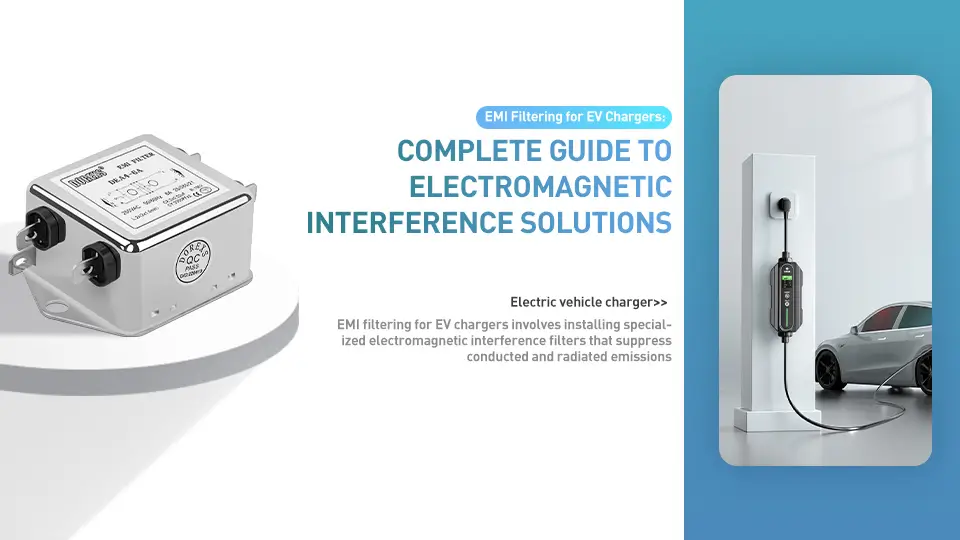
This guide covers DC and AC EMI filtering solutions, regulatory compliance requirements, and practical implementation strategies for charging station operators, OEMs, and facility managers.
EMI Filtering for EV Chargers: Complete Guide to Electromagnetic Interference Solutions
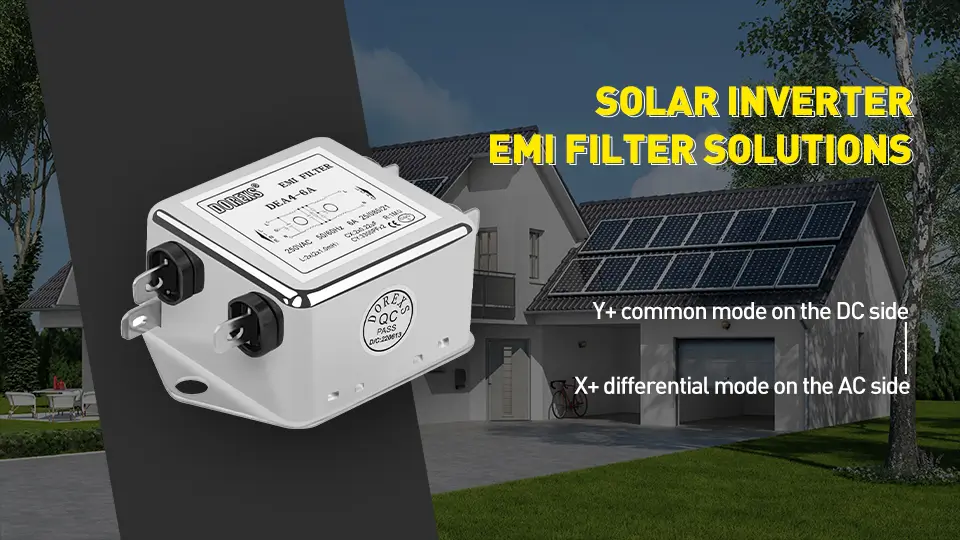
EMI from solar power systems can affect the performance of sensitive electronic devices, such as computers, medical devices, appliances, electrical devices, and other devices.
Solar Inverter EMI Filter Solutions: Professional EMC Solutions for Grid-Tied and PV Inverter Systems

In today’s fast-growing smart manufacturing era, CNC machines are expected to deliver not only machining capability but consistent precision, long-term stability, and zero-downtime reliability.However, as machine power increases and electronic components operate at higher speeds, EMI (Electromagnetic Interference) has become one of the most serious hidden threats in CNC systems.
EMI Interference in CNC Equipment & DOREXS Industrial Filter Solutions
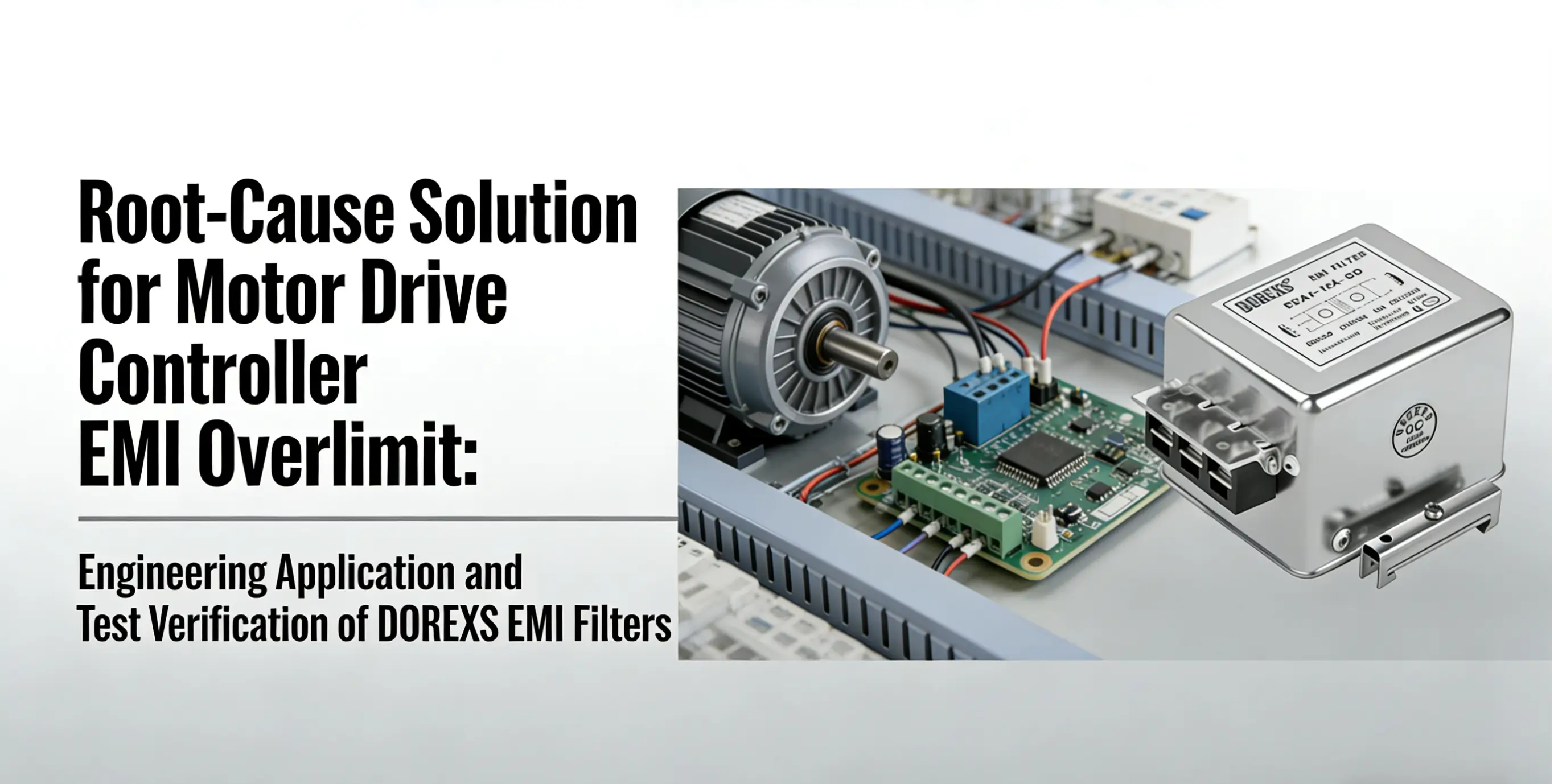
Based on an actual mitigation case, this article systematically explains the EMI generation mechanisms in motor drive controllers, the functional role of DOREXS EMI power filters, and an engineering-proven combination of filters + PCB design + grounding measures.
EMI Over-Limit Mitigation for Motor Drive Controllers: Engineering Application and Field Verification of DOREXS EMI Power Filters