Understanding How Motor and Filter Work Together

Motors that run on AC require specialized power supplies to ensure smooth startups and shutdowns. For instance, in an HVAC system, if a motor driving a large fan abruptly switches from being off to full speed, it can strain mechanical components, leading to wear or damage. To prevent this, the power supply must gradually increase or decrease the voltage, allowing the motor to start and stop smoothly.
Additionally, many applications require adjustable motor speed and torque to accommodate varying mechanical loads. Power supplies capable of providing gradual start/stop functions and variable speed control are known as variable frequency drives (VFDs). These devices regulate motor speed by adjusting the frequency of the supplied current, enabling precise control based on demand.Just as a car engine serves as the essential power source that drives a vehicle, the motor in systems like pool pumps or HVAC units is the critical component that powers the entire operation. VFDs and sine wave filters are essential components in this process.
To ensure optimal performance and longevity, it is crucial to determine the appropriate maintenance schedules for both the motor and filter system by consulting manuals or experts.
Learn more about selecting the right power filter...
Motor Control Systems and EMI Filter Systems
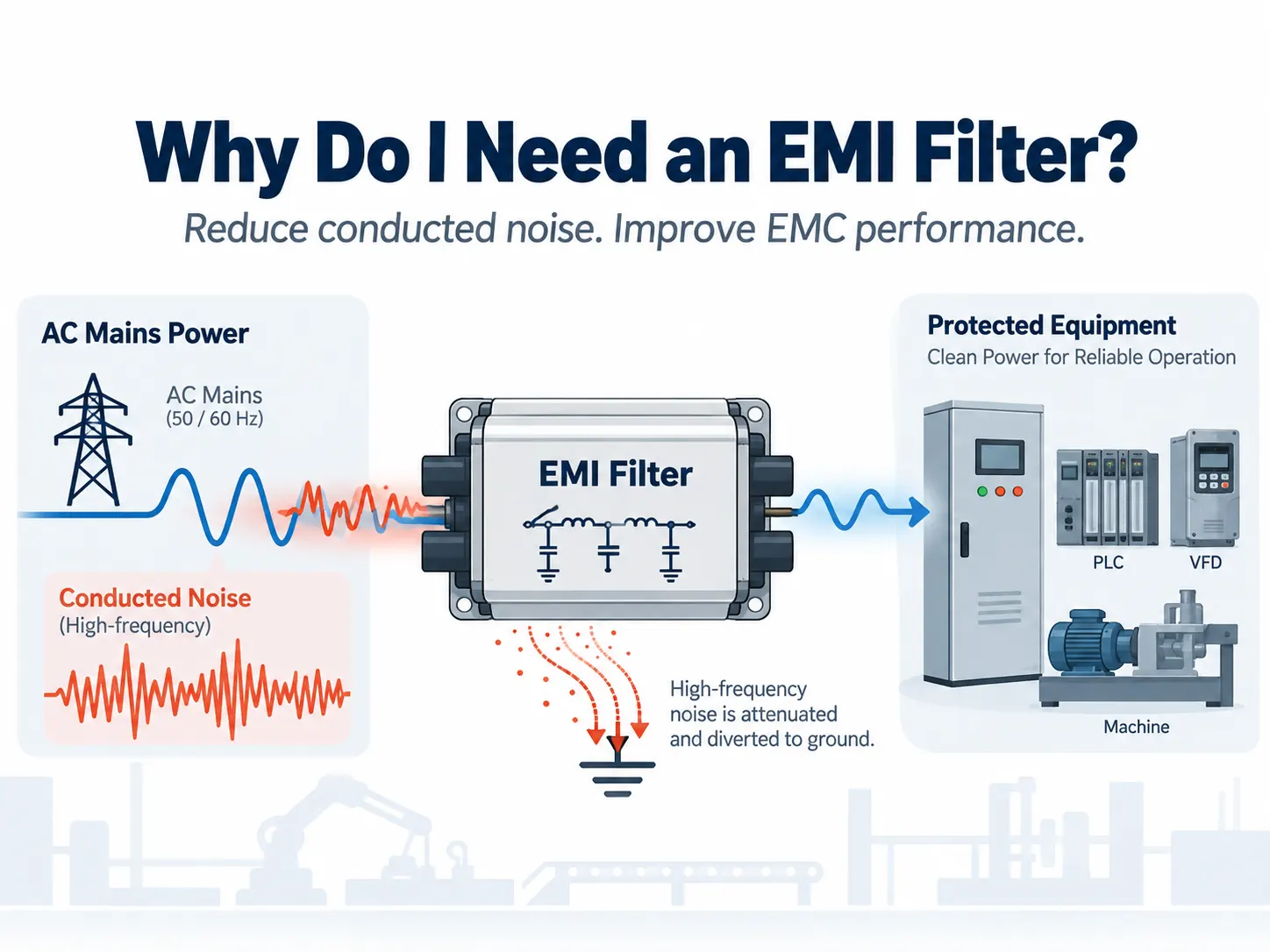
Motor and EMI filter systems are designed to work together to ensure reliable performance, electrical safety, and regulatory compliance. EMI filters are typically installed between the power supply and the motor drive system. It works by attenuating conducted EMI on the power line and improving electromagnetic compatibility (EMC) with surrounding equipment.

The Role of Sine Wave EMI Filters
- Decreases electrical stress on motor windings and bearings.
- Minimizes overheating caused by harmonics.
- Ensures the motor runs efficiently at adjustable speeds while adapting to changing load demands.
The Role of Variable Frequency Drives (VFDs) in Motor Systems
For example, in an HVAC system, a VFD can automatically control the speed of a fan motor based on temperature and humidity changes, optimizing energy efficiency.
Combining VFDs with Sine Wave Filters
- Enhanced speed control – Enables precise motor operation.
- Lower energy consumption – Improves system efficiency.
- Reduced maintenance costs – Minimizes wear and tear.
The Role of EMI Filters in Motor Systems
How EMI Filters Improve Motor Performance
Input EMI Filters
- Suppress conducted interference from VFDs, preventing harmonics from affecting the power grid.
- Enhance power quality and reduce high-frequency noise.
Output EMI Filters
- Minimize common-mode voltage issues in motors, reducing bearing current and insulation damage risks.
- Decrease high-frequency noise radiation, preventing interference with nearby sensitive equipment (e.g., sensors, communication systems).
Key Benefits of EMI Filters
✅ Extended Equipment Lifespan – Protects motor bearings and insulation from high-frequency damage.
✅ Enhanced System Reliability – Prevents VFD malfunctions and control failures due to EMI.
✅ Regulatory Compliance – Helps meet EMC standards (IEC, CISPR, FCC) and avoid compliance issues.
In modern motor drive systems, VFDs provide flexible speed and torque control, while filters (including sine wave filters and EMI filters) play a key role in optimizing power quality and protecting motors and systems from interference. Sine wave filters can smooth VFD output and improve motor operation quality, while EMI filters can reduce electromagnetic interference and improve the electromagnetic compatibility of the system. Reasonable selection and installation of these filters can not only improve the reliability of the motor system, but also extend the service life of the equipment, improve overall energy efficiency, and make the entire electrical system more stable and efficient.
PLC Filter Usage Precautions and Optimization Guide
EMI Power Filter Explained: Principle, Function, and Applications