Understand What Does an EMI Filter Do
Through this article - Understand What Does an EMI Filter Do, you will learn:
What is EMI filter
What is the function of EMIl filter
The application of EMI filter
The development trend of EMI filter technology
Before discussing the role of electromagnetic interference filters, let us first understand what EMI is, what EMI filters are, and why EMI filters are needed.
Introduction to Electromagnetic Interference
Electromagnetic interference (EMI) is a common challenge in today's electronic systems, often causing interfering currents that interfere with the normal operation of electronic equipment. EMI can be roughly divided into two categories: conducted EMI and radiated EMI. Conducted EMI refers to electromagnetic noise that propagates along power lines, signal lines, or other conductive paths, which can affect sensitive components within the equipment. Radiated EMI, on the other hand, propagates through the air as electromagnetic waves, which can interfere with nearby electronic equipment even without a direct electrical connection. High-frequency noise is a common culprit for both forms, especially as devices operate at higher speeds and frequencies. To address these issues and ensure electromagnetic compatibility (EMC), engineers rely on electromagnetic interference filters (EMI filters). These filters are specifically designed to suppress high-frequency noise and electromagnetic interference, helping electronic systems maintain stable and reliable performance in environments filled with electromagnetic noise.
What is EMI filter

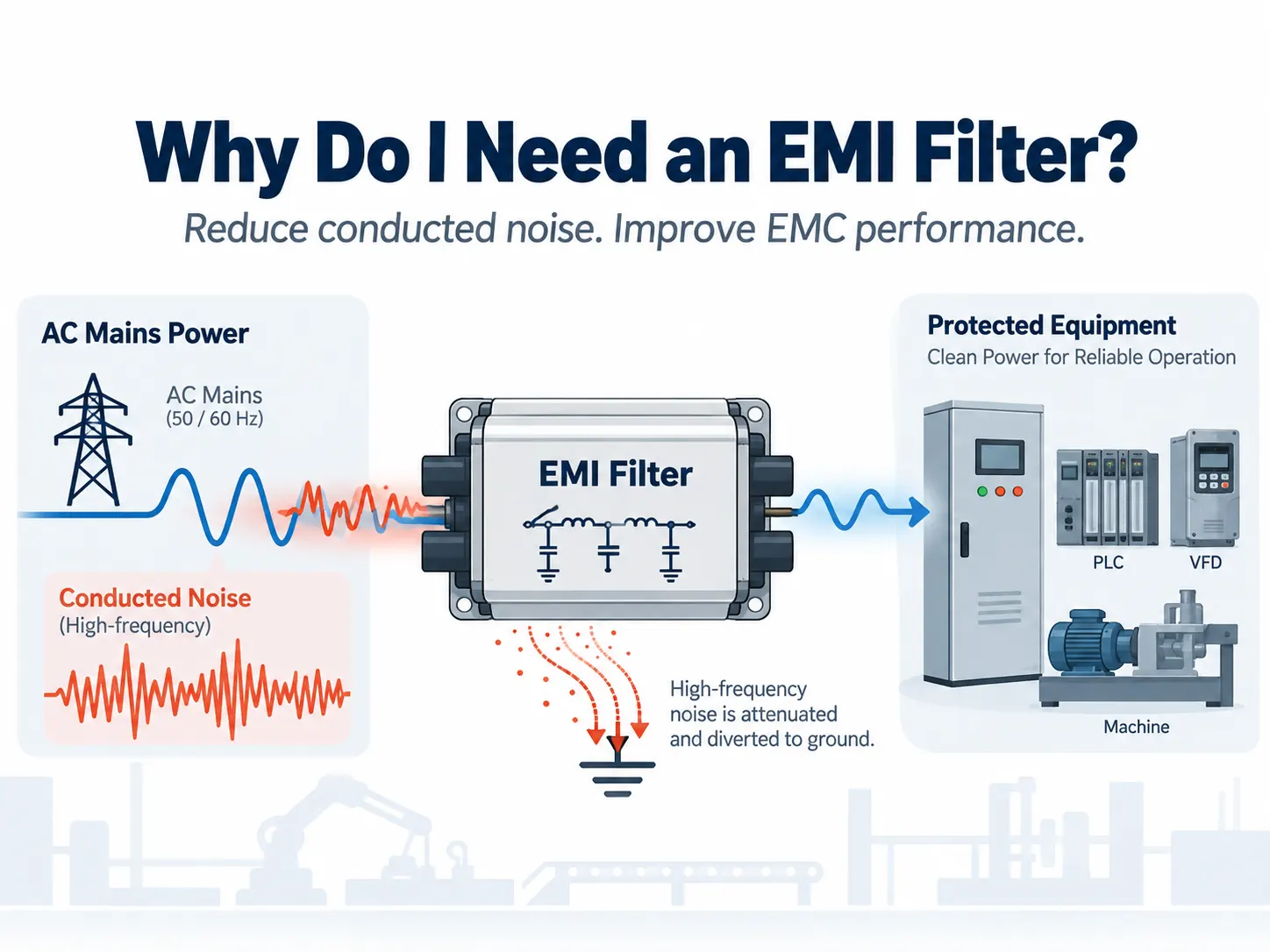
EMI filter is a device specially designed to suppress electromagnetic interference; it is an electrical device. It allows the required electromagnetic signal to pass through the filter circuit composed of capacitors and inductors, weakens or suppresses the interference electromagnetic signal. EMI filters are commonly integrated into electrical circuits to ensure the safe and stable operation of electronic equipment.
Types of Interference
Electronic devices are susceptible to several types of interference that can affect their performance. One common type of interference is electromagnetic noise interference, where external electromagnetic waves induce unwanted currents inside a device, causing it to behave erratically or malfunction. Another common type of interference is radio frequency interference (RFI), which specifically affects devices operating within the radio frequency spectrum and can cause disruptions in wireless communications and data transmission. Additionally, electrical noise refers to any unwanted electrical signal that can interfere with the normal operation of an electronic device, regardless of its source. This noise can come from power lines, switching circuits, or even nearby electronic devices. Understanding these different types of noise interference is critical to selecting the appropriate EMI filter, as each type of noise interference may require a different approach to achieve effective electromagnetic noise suppression and ensure reliable operation of sensitive electronic devices.
Why EMI suppression filter is needed
An important reason why electrical engineering designers need EMI suppression filter is that the regulatory agencies of RF/wireless devices in the United States (FCC), Canada (IC), Europe (CE) and many other countries/regions require that radiation and conducted emissions must be limited to the specified limits. These agencies set strict noise regulations to control both radiated emissions and conducted emissions, ensuring devices comply with established standards.
Secondly, the use of EMI filter is an efficient solution to protect electronic equipment from interference radiation from the equipment itself or the surrounding environment. EMI filters help devices meet noise tolerance requirements and are selected based on the input voltage of the system.
Secondly, the use of EMI filter is an efficient solution to protect electronic equipment from interference radiation from the equipment itself or the surrounding environment. EMI filters help devices meet noise tolerance requirements and are selected based on the input voltage of the system.

What Does an EMI Filter Do
1. Suppress electromagnetic interference
The sources of electromagnetic interference suffered by electronic equipment are mainly divided into two categories: internal interference and external interference. Internal interference refers to the interference generated by the internal circuit when the electronic equipment is working, such as the transient high-frequency noise generated when the power is turned on, as well as noise from switching power supplies, dc dc converters, and power electronics. External interference refers to the radiation interference that electronic devices receive from the surrounding environment or other electronic devices, such as solar storms and industrial equipment. In modern environments, industrial emi and broadband emi have become significant challenges, originating from heavy machinery, power grids, and multiple wireless sources.
EMI filters use filter components such as capacitors and inductors to form filter circuits, selectively attenuating electromagnetic noise in a specific frequency range. For example, low-pass filters can block high-frequency noise and allow low-frequency signals to pass; high-pass filters allow high-frequency signals to pass and block low-frequency noise; band-pass filters can effectively block noise signals in a specific frequency band. With the increasing use of higher frequencies and high frequencies in electronic devices, the complexity of EMI suppression has grown. In these ways, EMI filters can effectively reduce the impact of electromagnetic interference on electronic devices.
EMI filters use filter components such as capacitors and inductors to form filter circuits, selectively attenuating electromagnetic noise in a specific frequency range. For example, low-pass filters can block high-frequency noise and allow low-frequency signals to pass; high-pass filters allow high-frequency signals to pass and block low-frequency noise; band-pass filters can effectively block noise signals in a specific frequency band. With the increasing use of higher frequencies and high frequencies in electronic devices, the complexity of EMI suppression has grown. In these ways, EMI filters can effectively reduce the impact of electromagnetic interference on electronic devices.
2. Protect electronic devices
EMI/EMC filters can not only prevent mutual interference between electronic devices, but also effectively improve the stability and reliability of equipment, playing a vital role in protecting electronic devices. EMI filters are essential for protecting sensitive equipment from interference, ensuring proper functioning and compliance with standards. They also protect against electromagnetic noise transmitted through both signal and power lines.
In automated control systems, electromagnetic interference signals may cause erroneous instructions, resulting in incorrect equipment actions or even safety accidents; in communication systems, EMI interference signals may cause data to be lost or distorted during transmission, affecting the integrity and correctness of the data; in medical equipment and medical devices, electromagnetic interference may cause errors in medical test data results, thereby endangering the safety and health of patients. By using corresponding EMI filters, these devices can be ensured to operate stably and reliably in an interfering environment.
In automated control systems, electromagnetic interference signals may cause erroneous instructions, resulting in incorrect equipment actions or even safety accidents; in communication systems, EMI interference signals may cause data to be lost or distorted during transmission, affecting the integrity and correctness of the data; in medical equipment and medical devices, electromagnetic interference may cause errors in medical test data results, thereby endangering the safety and health of patients. By using corresponding EMI filters, these devices can be ensured to operate stably and reliably in an interfering environment.
3. Ensure compliance with electromagnetic compatibility (EMC) standards
Electromagnetic compatibility (EMC), abbreviated as EMC, means that electronic equipment neither interferes with other equipment nor is affected by other equipment. It is one of the most important indicators of product quality. In order to ensure that electronic equipment meets EMC standards, many international organizations have formulated relevant strict regulations and standards, such as the International Electrotechnical Commission (IEC) standards, CISPR (International Special Committee on Radio Interference) standards, 2014/30/EU Directive and Federal Communications Commission (FCC) regulations. EMI filter applications span a wide range of industries, including residential, industrial, healthcare, and military sectors, where compliance with EMC standards is critical.
When engineers design electronic equipment, reasonable design and use of different EMI filters can effectively reduce the electromagnetic radiation and anti-interference ability of electronic equipment, so as to meet these relevant EMC standards. EMI suppression filters are often used to meet strict standards and prevent interference in electronic systems. EMI filters play a vital role in meeting these standards by minimizing noise current and providing a low impedance path for unwanted signals, thereby enhancing overall EMI suppression.
4. Improve signal quality
During data transmission, electromagnetic interference may cause signal distortion or loss, thereby reducing the accuracy of data transmission. In some specific industries, such as communications, medical and military fields, the signal quality of data transmission is particularly important.
EMI filters can significantly improve signal quality by reducing noise interference, maintaining the integrity and stability of signal transmission, and preserving signal power to minimize loss across specific frequencies. Active EMI filters may use an internal power supply to generate counteracting currents that cancel out electromagnetic noise, further enhancing noise suppression and system performance. EMI filters play a very important role in ensuring the accuracy and reliability of signal quality.
Types of EMI Filters
There are several types of EMI filters, each tailored for specific noise suppression needs and applications. Passive EMI filters, the most common type, utilize passive components such as inductors, capacitors, and resistors to attenuate unwanted electromagnetic noise. These filters are widely used in power supplies and other electronic systems that need to effectively reduce high-frequency noise. Active EMI filters, on the other hand, employ active electronic components such as operational amplifiers and feedback circuits to detect and eliminate noise, making them suitable for applications that require dynamic noise suppression. Hybrid filters combine passive and active components to provide enhanced performance over a wider frequency range. The choice between a passive EMI filter, an active EMI filter, or a hybrid design depends on the specific requirements of the application, such as the type of EMI present, the level of noise suppression required, and the characteristics of the power supply or electronic device being protected.
EMI Filter Components
At the heart of every EMI filter are carefully selected passive components—primarily inductors, capacitors, and resistors—arranged in a specific configuration to suppress and attenuate unwanted electromagnetic noise. The design of an EMI filter depends on factors such as the frequency range of the noise, the level of attenuation required, and the requirements of the application. For example, low-pass filters are often used in power supplies to remove high-frequency noise while allowing the desired low-frequency signals to pass. Conversely, high-pass filters are used to remove low-frequency noise from signal lines. The combination and arrangement of these passive components determines the effectiveness of the filter in removing high-frequency noise and ensuring clean power and signal transmission. Understanding the role of each component and how they work together is critical to designing EMI filters that meet the specific needs of modern electronic devices.
Selecting the Right EMI Filter
Choosing the right EMI filter for your application requires evaluating several key factors to ensure optimal performance and compliance. First, consider the type of noise (high-frequency noise, conducted EMI, or radiated EMI) and the frequency range that needs to be suppressed. The required attenuation level and the filter's compatibility with the device's power, signal lines, and ground connections will also influence your selection. It is important to evaluate the filter's input and output configuration, physical size, and mounting style to ensure it can be seamlessly integrated into your electronic device. In addition, the selected EMI filter must comply with relevant electromagnetic compatibility (EMC) standards and regulations, such as those established by the FCC or the European Union's EMC Directive. By carefully considering these factors, engineers and designers can select EMI filters that not only protect electronic devices from electromagnetic interference, but also ensure reliable operation and compliance.
Specific application areas of EMI filters

EMI/EMC filters have a wide range of applications. These filters are essential for protecting electrical systems and electronic systems in various industries from electromagnetic interference. Here are some typical application cases:
- Industrial automation: In industrial automation systems, electromagnetic interference may cause control system failure, sensor malfunction and other problems. EMI filters can effectively suppress these interferences, especially those transmitted through power supply lines and power line noise, ensuring stable operation of the system.
- Military and aerospace: Military and aerospace equipment have very low tolerance for electromagnetic interference, and any slight interference may lead to serious consequences. Military-grade EMI filters play a vital protective role in these devices.
- Communication facilities: Communication equipment needs to process a large number of high-frequency signals and is susceptible to interference. By using EMI filters, the quality of communication signals and the reliability of transmission can be ensured.
- Modern building facilities: In modern buildings, elevators, lighting systems and power systems have clear requirements for electromagnetic interference. Electromagnetic interference, often generated by electrical devices, can cause elevator failure and lighting system disorder. EMI filters can ensure the normal operation of modern buildings and ensure people’s normal life and work.
- Medical industry: The requirements for electromagnetic interference in the medical industry are very strict. Medical-grade EMI filters can ensure that these devices work normally in complex electromagnetic environments and ensure the safety of patients.
EMI filter technology development trend
With the continuous emergence of new materials and technologies, the performance and application areas of EMI filters are also expanding. For example, the application of new magnetic materials can significantly improve the efficiency and bandwidth of the filter, while advanced packaging technology can further reduce the size of the filter to adapt to more miniaturized and high-density integrated electronic devices. In the future, EMI filters will play a more important role in 5G communications, smart manufacturing, the Internet of Things and other fields, while also facing higher technical challenges and requirements.
The role of EMI filters is becoming more and more important in modern equipment. They provide guarantee for the stable operation of various electronic equipment by suppressing electromagnetic interference, protecting equipment, ensuring electromagnetic compatibility, and improving signal quality. With the continuous development of technology, the application of EMI filters will become more extensive and in-depth, further promoting the performance improvement and reliability of electronic equipment.
About DOREXS EMI Filters
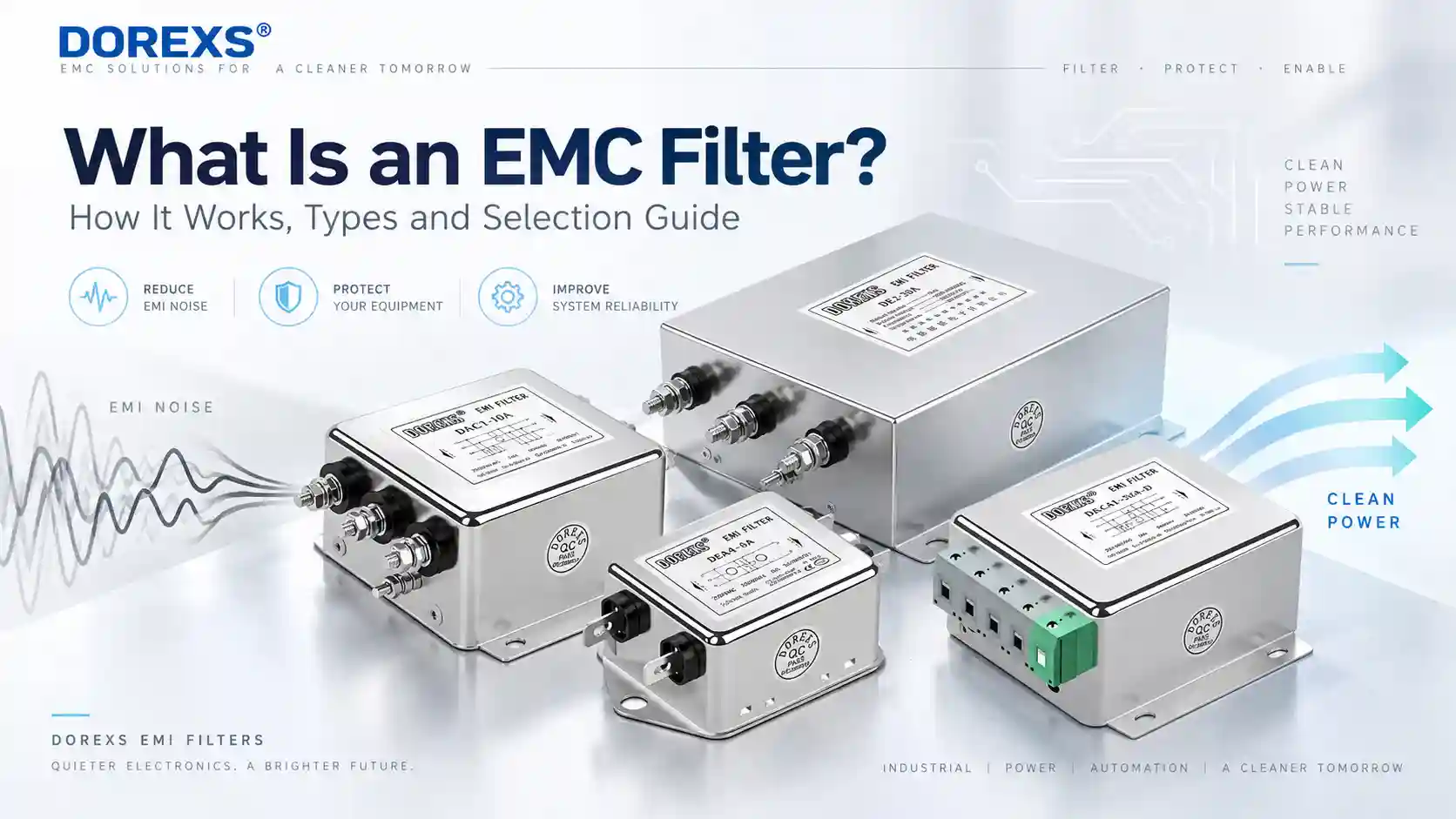
As a key component for electromagnetic interference suppression, EMI filters play a vital role in modern electronic equipment. By effectively suppressing common-mode and differential-mode interference, EMI filters not only improve the electromagnetic compatibility of equipment, but also enhance the stability and reliability of the system. As a professional manufacturer of EMI filters, DOREXS has been committed to designing and optimizing these filters to meet the growing needs for electromagnetic compatibility and promote the continuous advancement of electronic technology.
Contact our team to get EMI solutions that fit your industry!
FAQ
What types of EMI filters are there?
There are many types of EMI filters, including passive EMI filters, active EMI filters, and hybrid EMI filters. They are designed according to application requirements and frequency ranges to effectively reduce electromagnetic interference.
How do EMI filters improve EMC compliance?
EMI filters help devices comply with EMC regulations by suppressing conducted and radiated interference, ensuring that electronic devices do not emit excessive interference and are not affected by external noise.
What are EMI filters used for?
EMI filters are widely used in industrial automation, medical equipment, communication systems, military and aerospace applications, and modern building facilities to protect systems from electromagnetic noise.
Can EMI filters be customized?
Yes, EMI filters can be customized to specific voltage, current, and environmental requirements. DOREXS provides tailor-made EMI filtering solutions for different industries and applications.
How Does an EMI Filter Work
How to Select EMI Filter