What Causes Power Line Noise in Industrial Systems
Introduction
Power line noise in industrial systems stems from electromagnetic interference generated by switching equipment, environmental factors like corona discharge, and coupling mechanisms that transmit electrical noise throughout facility power networks. This electrical noise affects sensitive electronic devices, disrupts control signals, and creates significant operational challenges for modern industrial facilities.

Industrial environments generate substantially more radio frequency interference and electrical disturbances compared to residential or commercial settings due to high-power switching equipment, variable frequency drives, and high voltage power lines operating in close proximity to sensitive control systems.
What This Guide Covers
This comprehensive analysis examines the primary noise sources affecting industrial power lines, the coupling mechanisms that transmit interference, and proven mitigation strategies including DOREXS EMI power filters. We focus specifically on industrial-scale power quality issues rather than residential electrical problems or basic power supply design.
Who This Is For
This guide is designed for industrial maintenance engineers, facility managers, and electrical technicians responsible for power quality and equipment reliability. Whether you’re troubleshooting intermittent control system failures or implementing preventive measures against electrical noise, you’ll find actionable solutions for your industrial facility.
Why This Matters
Power line noise costs industrial facilities millions of dollars annually through unplanned downtime, equipment damage, and production losses. A single noise-induced shutdown in heavy manufacturing can cost tens of thousands of dollars per hour, making proactive noise management essential for operational reliability and safety.
What You’ll Learn:
-
Primary electromagnetic interference sources in industrial power systems
-
How environmental conditions amplify power line noise through corona discharge and static discharge
-
Coupling mechanisms that transmit electrical noise between circuits and equipment
-
Proven solutions including DOREXS EMI power filters for comprehensive noise suppression
Understanding Power Line Noise in Industrial Environments
Power line noise encompasses electromagnetic interference and radio frequency interference that affects both power and signal circuits in industrial facilities. This electrical noise typically spans frequency ranges from the fundamental 60Hz power frequency up to radio frequencies above 10 kHz, with some switching equipment generating interference well into the MHz range.
Industrial systems are particularly vulnerable to power line noise because they operate high-power switching devices, motor drives, and control systems in close proximity. The combination of high voltage lines, sensitive electronic devices, and extensive conductor networks creates multiple pathways for noise transmission and coupling.
Electromagnetic Interference (EMI) Fundamentals
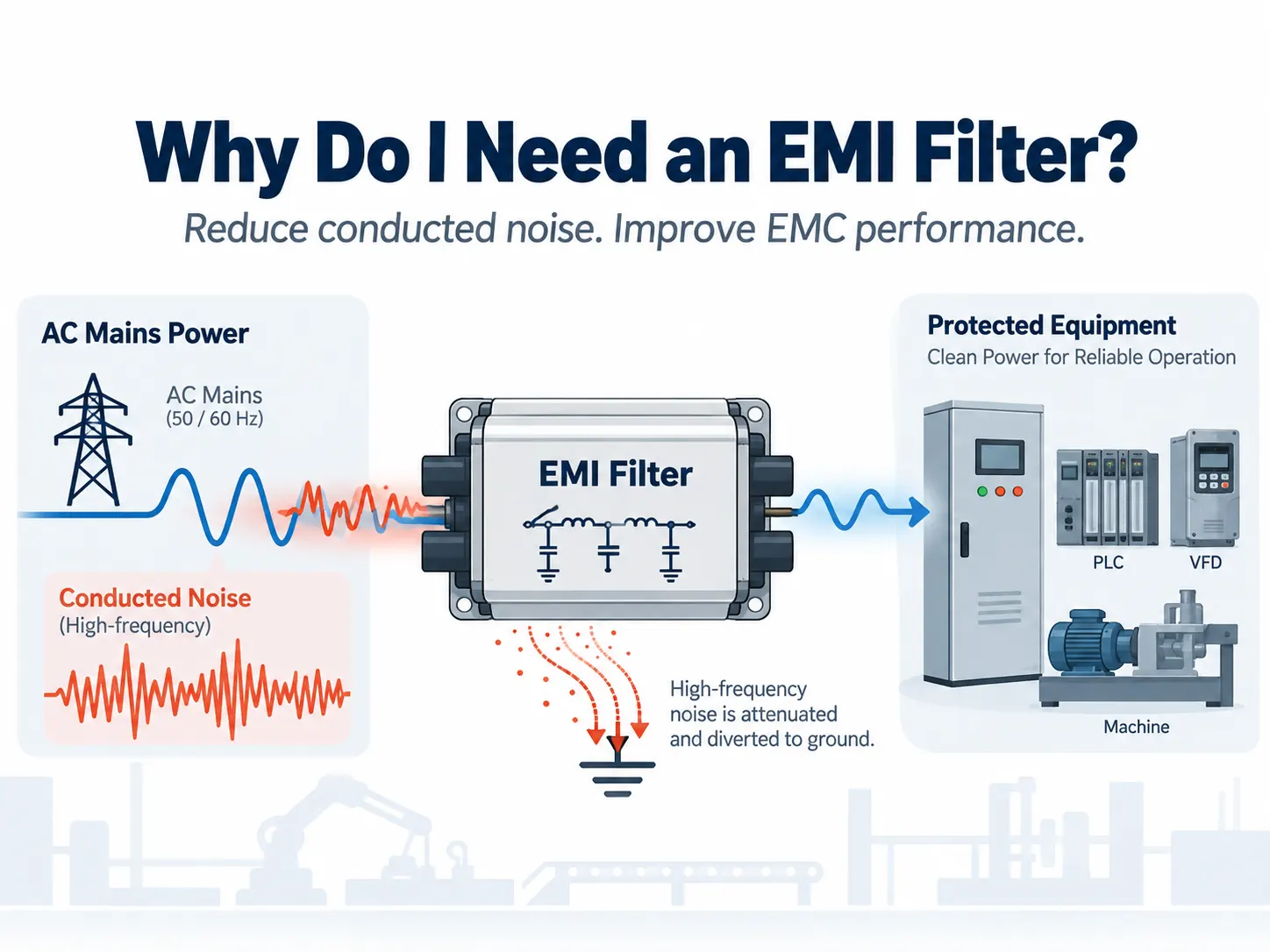
Electromagnetic interference represents unwanted electrical energy that interferes with the normal operation of electronic devices and control systems. In industrial settings, EMI typically occurs when switching power supplies, motor drives, or other switching equipment create rapid voltage and current changes that generate broadband electrical noise.To mitigate these effects, devices such as EMI filters are commonly used.
This connects to power line noise because EMI propagates through power lines via conduction and couples into nearby circuits through capacitive and inductive mechanisms, affecting equipment throughout the facility.
Radio Frequency Interference (RFI) in Industrial Settings
Radio frequency interference differs from lower frequency EMI by operating at frequencies typically above 1 MHz, often generated by arc welding, corona discharge, and high-frequency switching circuits. Modern transmission lines and facility wiring can act as antennas, radiating and receiving RFI that interferes with wireless communication systems and sensitive measurement equipment.
Building on EMI fundamentals, RFI represents the higher frequency component of electrical noise that requires specialized filtering and shielding techniques for effective mitigation.
Transition: Understanding these basic interference types provides the foundation for examining specific noise sources that generate power line disturbances in industrial environments.
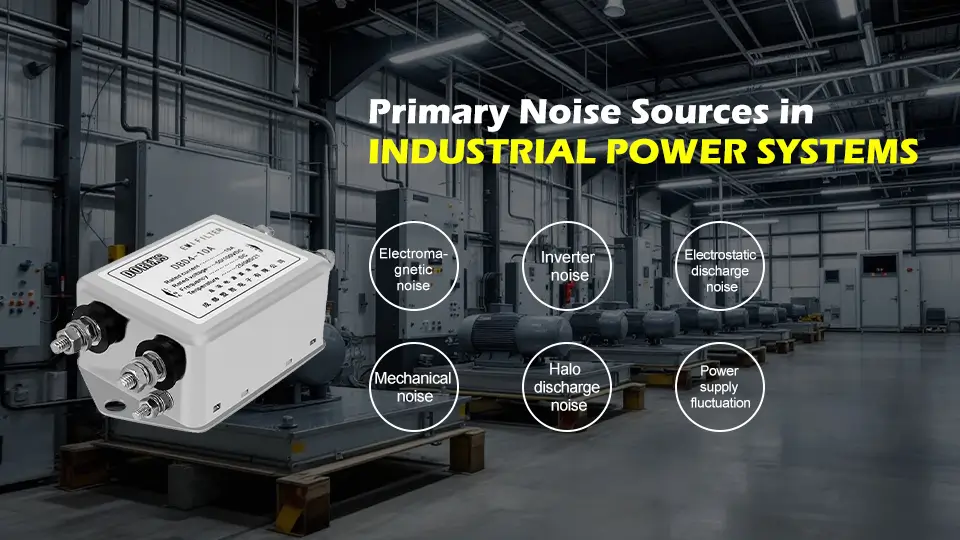
Primary Noise Sources in Industrial Power Systems
Industrial environments generate significantly more electrical noise than other applications due to the concentrated operation of high-power switching equipment, arc-producing processes, and variable-speed motor drives that create complex interference patterns across wide frequency ranges.
Variable Frequency Drives and Motor Control Systems
Variable frequency drives create high-frequency switching noise through their pulse-width modulation (PWM) control techniques, generating harmonics and electromagnetic interference that propagates through power lines to affect nearby electronic devices. These switching patterns typically operate at frequencies between 2-20 kHz, creating both common mode and differential mode noise that can interfere with sensitive control circuits.
The rapid switching of power semiconductors in VFDs generates sharp voltage transitions that couple into facility wiring, creating radio frequency interference that extends well beyond the fundamental switching frequency.
Welding Equipment and Arc Furnaces
Arc discharge in welding equipment and industrial furnaces generates broadband electrical noise across frequencies from audio ranges up to several MHz. The random nature of arc formation creates unpredictable interference patterns that can affect radio communications, process control signals, and measurement equipment throughout the facility.
Unlike VFD noise which follows predictable switching patterns, welding operations create repetitive transient disturbances with varying intensity based on welding current, arc length, and material characteristics.
Switching Power Supplies and UPS Systems
Switching power supplies in industrial equipment generate high-frequency noise through rectifier switching and power conversion circuits. These devices create both common mode currents that flow through grounding systems and differential mode interference that appears directly on power lines.
Uninterruptible power supplies add complexity by introducing battery charging circuits, inverter switching, and transfer switching that can create additional noise sources, particularly during power transfer operations or battery equalization cycles.
Corona Discharge from High-Voltage Equipment
Corona discharge occurs when air density around sharp points or damaged conductors becomes ionized due to high electric field strength exceeding the corona inception voltage. Environmental factors including humidity, air density, and airborne contaminants significantly affect corona activity, with dry conditions typically increasing discharge intensity.
This phenomenon generates both audible noise and radio frequency interference that can propagate through facility grounding systems and couple into nearby conductors, creating power line noise that affects sensitive electronic equipment.
Key Points:
-
VFDs generate predictable switching noise at specific frequencies
-
Arc processes create broadband interference with random characteristics
-
Environmental conditions directly affect corona discharge intensity
Transition: These noise sources transmit their interference through specific coupling mechanisms that determine how electrical noise spreads throughout industrial facilities.
Noise Coupling Mechanisms and Transmission Paths
Electrical noise travels from sources to sensitive equipment through three primary coupling mechanisms: galvanic connection through shared conductors, capacitive coupling between adjacent wires, and inductive coupling through magnetic field interaction.
Step-by-Step: Identifying Dominant Coupling Mechanisms
When to use this: Apply this analysis when troubleshooting power line noise complaints affecting specific equipment or circuits in your facility.
-
Measure common mode vs differential mode currents: Use current clamps around both power conductors to identify common mode flow, then around individual conductors to measure differential currents
-
Analyze frequency spectrum: Deploy spectrum analyzer to identify whether capacitive coupling (increasing with frequency) or inductive coupling (varying with current switching rate) dominates
-
Check galvanic connections: Examine shared neutrals, equipment grounds, and control circuit connections that create direct conductive paths
-
Assess radiated coupling: Use directional antennas above 10 kHz to measure electromagnetic field strength and identify radiation sources
Comparison: Capacitive vs Inductive Coupling
Feature |
Capacitive Coupling |
Inductive Coupling |
| Frequency dependence | Increases with frequency | Varies with current rate of change |
| Physical mechanism | Voltage-based interaction between conductors | Current-based magnetic field interaction |
| Mitigation strategy | Electrostatic shielding, grounding | Magnetic isolation, twisted pairs |
Unlike capacitive coupling which becomes more problematic at higher frequencies, inductive coupling intensity depends on the rate of current change in the source circuit, making it particularly troublesome with fast-switching equipment like modern motor drives.
Transition: Understanding these coupling mechanisms enables targeted solutions for the most common power line noise problems encountered in industrial facilities.
Common Power Line Noise Problems and Solutions
Industrial facilities typically encounter recurring noise problems that stem from the interaction between high-power equipment and sensitive control systems, requiring systematic approaches to identify sources and implement effective countermeasures.
Problem: VFD Harmonics Affecting Nearby Control Circuits
Solution: Install DOREXS three-phase EMI power line filters at VFD input terminals to attenuate switching harmonics before they propagate through facility power distribution systems.
DOREXS EMI filters specifically designed for industrial applications provide attenuation across the frequency range where VFD switching noise occurs, protecting downstream equipment while maintaining motor drive performance and efficiency.
Problem: Ground Loop Currents from Multiple Equipment Grounds
Solution: Implement single-point grounding system with dedicated instrument ground separate from equipment safety grounds.
Proper grounding design eliminates the multiple current paths that create circulating currents, reducing common mode noise that affects measurement accuracy and control system reliability. Regular maintenance of grounding connections ensures continued effectiveness.
Problem: RFI from Wireless Communication Interfering with Process Control
Solution: Deploy DOREXS RFI suppression filters on affected signal circuits to block radio frequency interference while preserving control signal integrity.
These specialized filters target the specific frequency ranges where industrial wireless systems operate, preventing interference with process control signals while maintaining communication system functionality essential for modern automated operations.
Transition: These targeted solutions address the most common noise scenarios, but successful implementation requires systematic planning and monitoring.
Conclusion and Next Steps
Power line noise in industrial systems originates from switching equipment like VFDs and welding systems, environmental factors including corona discharge at high voltages, and coupling mechanisms that transmit interference through facility power and grounding networks. Understanding these sources enables targeted mitigation strategies that protect sensitive equipment and maintain operational reliability.
To get started:
-
Conduct baseline EMI measurements using spectrum analyzer during peak production to identify dominant noise sources and frequencies
-
Systematically isolate equipment to identify primary noise generators affecting critical control circuits
-
Implement DOREXS EMI filters on circuits showing highest noise levels, prioritizing protection for mission-critical control systems
Related Topics: Consider exploring power quality monitoring techniques, harmonic analysis procedures, and comprehensive industrial grounding design for complete noise management strategies that address both immediate problems and long-term facility reliability.
Differential Mode vs Common Mode Noise Explained : A Complete EMC Guide
Medical Device EMC Requirements Explained Complete Guide to IEC 60601-1-2 Compliance