Top Power Supply Noise Filter Solutions for Cleaner Electrical Signals
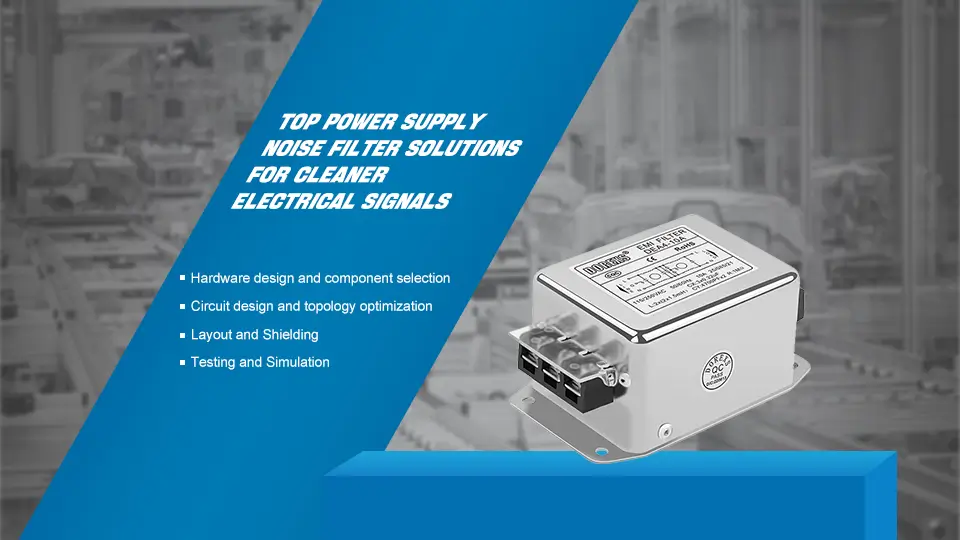
Struggling with noisy power supplies? A power supply noise filter can help. This article explores how to filter out unwanted noise for cleaner electrical signals.
Key Takeaways
- Power supply noise arises from switching actions and electromagnetic interference, categorized as common mode and differential mode, with effective management crucial for electronic circuit performance.
- Bypassing with low-ESR ceramic capacitors and employing post-regulation techniques like LDOs significantly reduce noise and improve power quality in various applications.
- DOREXS EMI filters, designed for high efficiency and compliance with international standards, provide tailored solutions for minimizing power supply noise across diverse industries.
Understanding Power Supply Noise

Power supply noise originates primarily from the switching actions of power supply circuits and external electromagnetic interference. These noises can be categorized into common mode and differential mode. Common mode noise affects both conductors in a transmission line, while differential mode noise impacts the signals between the conductors.
Output ripple is another form of noise that stems from incomplete filtering of AC components during the conversion process from AC to DC. This ripple voltage is typically measured in peak-to-peak values, indicating the range of voltage fluctuations. The frequency of noise generated by switching power supplies is usually higher than the switching frequency itself, making it essential to manage these disturbances effectively.
Maintaining power integrity involves managing power supply noise to ensure the optimal performance of electronic circuits. Whether you’re dealing with industrial electronics or consumer devices, understanding these noise sources and their characteristics is the first step in designing robust power systems.
Effective Bypassing Techniques
Bypassing effectively reduces noise, primarily through the use of ceramic capacitors. Surface-mount types, with their low Equivalent Series Resistance (ESR) and Equivalent Series Inductance (ESL), are particularly effective at filtering high-frequency noise.
Capacitor dimensions greatly affect performance, especially at high frequencies. One thing to consider is that various designs, such as flip-type and three-terminal feed-through types, enhance noise filtering. In high-frequency applications, a single low-ESL capacitor often outperforms multiple conventional ones.
Key points about capacitors and noise reduction include:
Capacitor dimensions greatly affect performance, especially at high frequencies. One thing to consider is that various designs, such as flip-type and three-terminal feed-through types, enhance noise filtering. In high-frequency applications, a single low-ESL capacitor often outperforms multiple conventional ones.
Key points about capacitors and noise reduction include:
- Placing bypass capacitors near the power pins of chips reduces noise, although it doesn’t eliminate it at the power supply.
- Output capacitors are crucial in filter design.
- Choosing capacitors with low ESR (Equivalent Series Resistance) and ESL (Equivalent Series Inductance) improves noise filtering, leading to cleaner outputs.
Post-Regulation Strategies
Low-dropout (LDO) regulators enhance power quality by filtering noise from the power source. Their design and parameters, such as Power Supply Rejection Ratio (PSRR), can significantly reduce output ripple and manage noise more effectively.
Adding a secondary low-noise regulator, like an LDO, improves noise management. However, the PSRR of linear regulators typically declines at higher frequencies, complicating high-frequency noise removal. Incorporating a filter circuit with resistive or capacitive components after a linear regulator can help further reduce power supply noise. You can also add a filter to enhance performance.
Noise reduction in power supplies often requires a combination of filtering, bypassing, and post-regulation techniques. Implementing these strategies together leads to significant noise reduction, ensuring cleaner and more reliable power supply outputs, including the use of a noise filter.
Adding a secondary low-noise regulator, like an LDO, improves noise management. However, the PSRR of linear regulators typically declines at higher frequencies, complicating high-frequency noise removal. Incorporating a filter circuit with resistive or capacitive components after a linear regulator can help further reduce power supply noise. You can also add a filter to enhance performance.
Noise reduction in power supplies often requires a combination of filtering, bypassing, and post-regulation techniques. Implementing these strategies together leads to significant noise reduction, ensuring cleaner and more reliable power supply outputs, including the use of a noise filter.
DOREXS Power Supply Filter Solutions

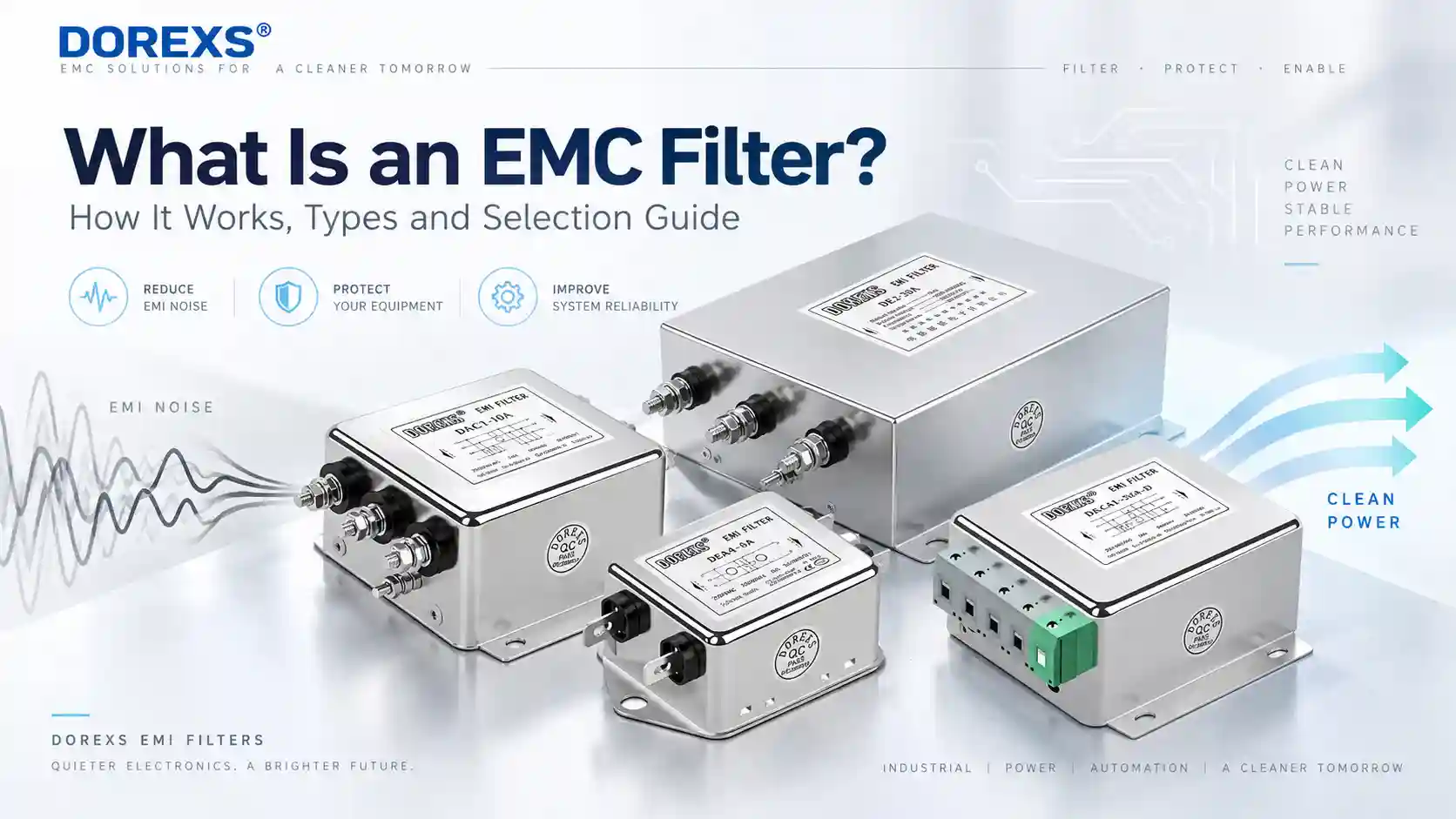
DOREXS EMI filters minimize conducted and radiated interference in power supplies with high efficiency. Incorporating advanced materials like amorphous metal, these filters enhance efficiency and reduce size without compromising performance.
High-quality components in DOREXS filters ensure low insertion loss and effective suppression of electrical noise. Suitable for various applications, including industrial automation, medical devices, and communication systems.
Complying with international EMC standards like UL, CE, and RoHS, DOREXS filters meet global compatibility requirements. Options include:
- Single-phase filters
- Three-phase filters
- PCB-mounted filters
- DC filters These provide tailored solutions for diverse applications.
DOREXS Power Supply Filter solutions are a robust option for those serious about managing power supply noise.
Implementing EMI Filters

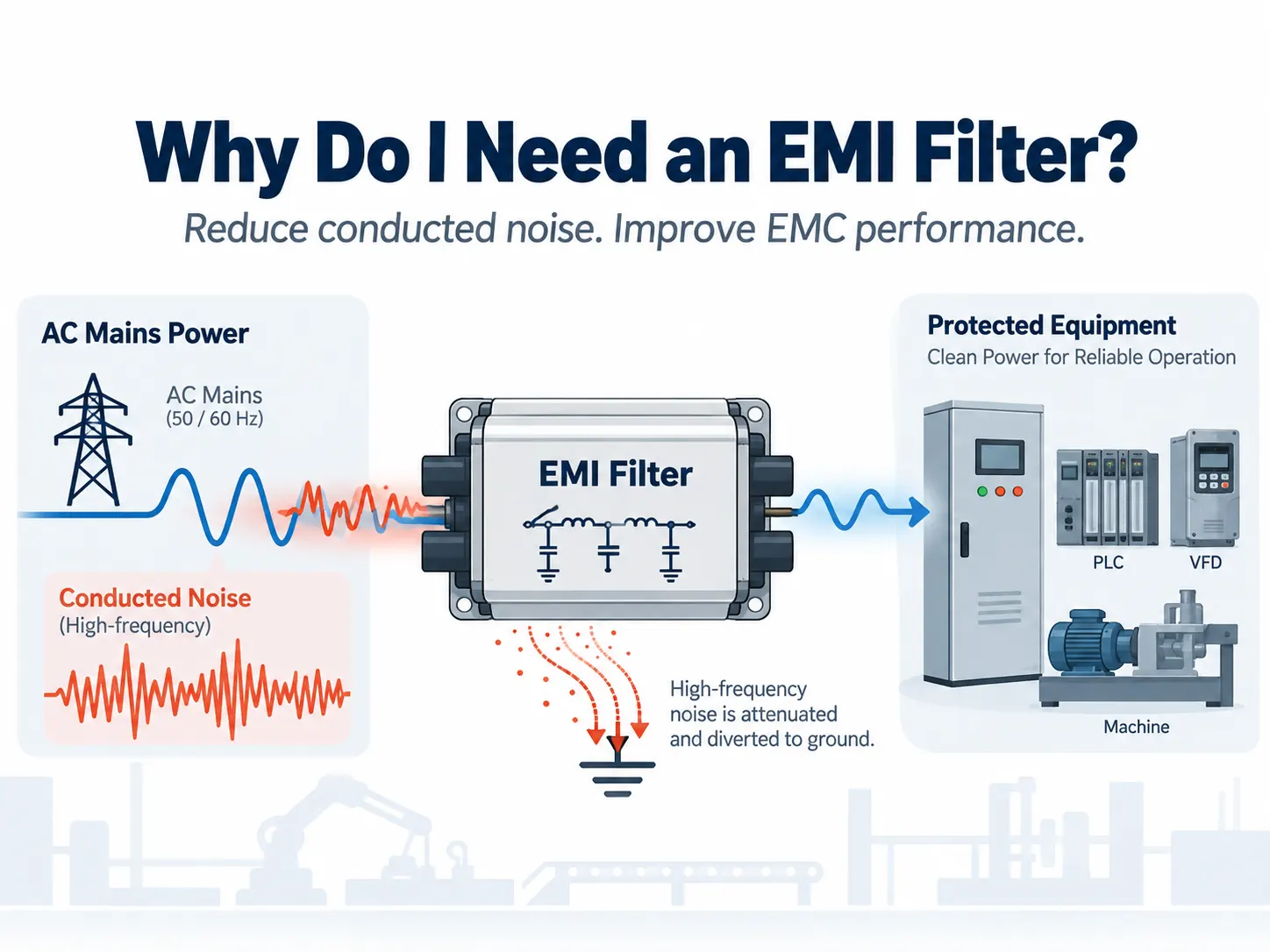
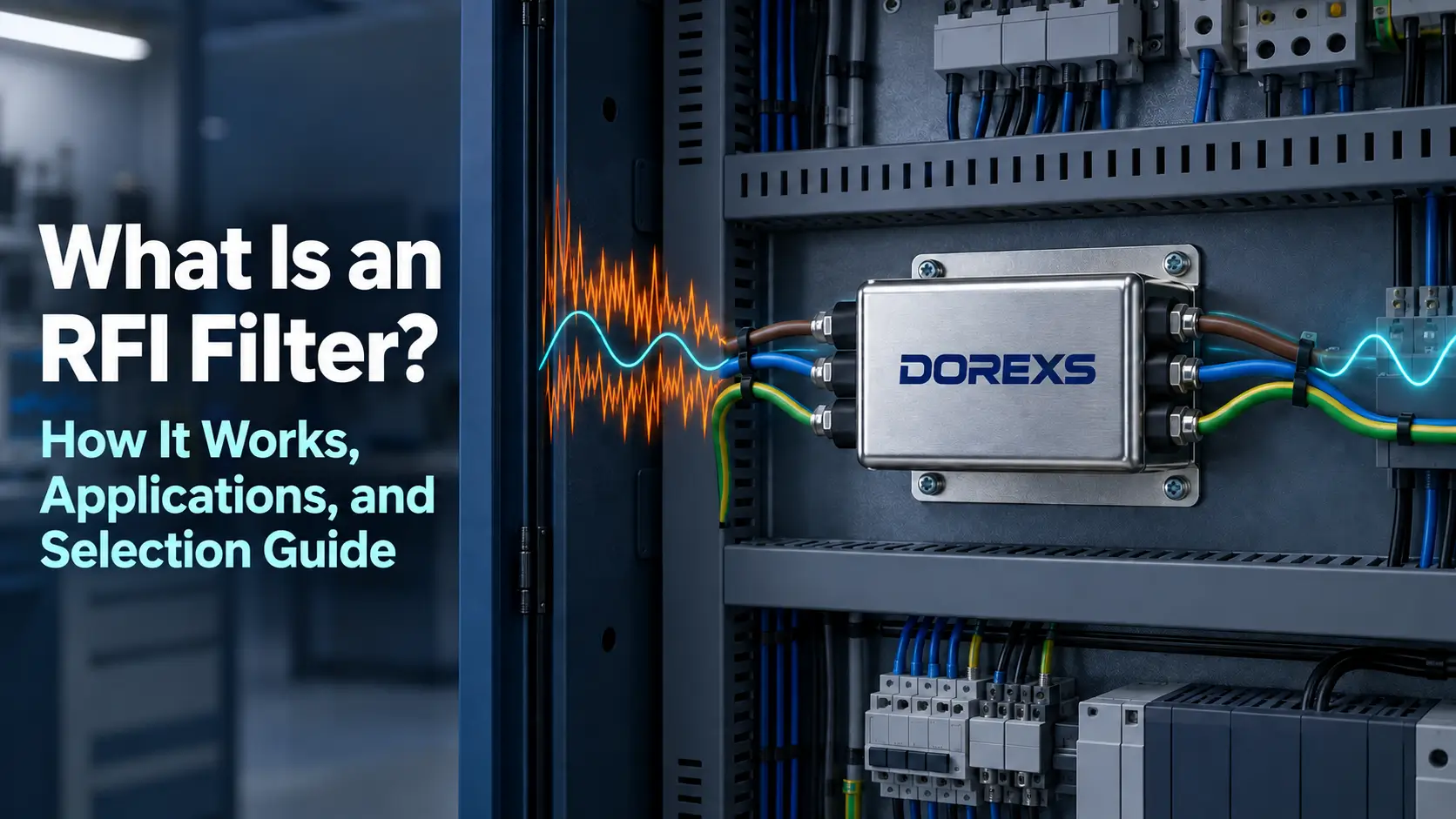
EMI filters reduce unwanted electromagnetic noise while allowing useful signals to pass through. Essential at power input points, they limit high-frequency noise from affecting overall power supply integrity.
Various EMI filters, such as Pi, T, LC, and Ferrite Bead filters, are tailored for different noise reduction applications. A typical EMI filter includes an inductor and capacitor working together to reduce electromagnetic interference. Depending on your needs, choose between active EMI filters, which require electronic components like amplifiers, or passive filters that rely on resistors, capacitors, and inductors.
Ferrite beads help attenuate switching spikes and high-frequency noise in power supply outputs. Carefully selecting and implementing these filters significantly enhances power supply cleanliness.
Measuring and Verifying Noise Reduction
Accurate measurement of power supply noise ensures clean electrical signals in electronic devices. FFT (Fast Fourier Transform) analysis provides valuable insights to verify the frequency components of noise, aiding in source identification.
Averaging multiple FFT captures isolates and highlights specific noise frequencies while reducing unrelated random noise. This approach allows for more precise analysis of noise characteristics and facilitates targeted mitigation strategies.
Measuring noise contribution from both the oscilloscope and the probe ensures accurate readings of power supply noise. Combining these measurement techniques verifies the effectiveness of noise reduction efforts and helps make necessary adjustments for optimal performance.
Averaging multiple FFT captures isolates and highlights specific noise frequencies while reducing unrelated random noise. This approach allows for more precise analysis of noise characteristics and facilitates targeted mitigation strategies.
Measuring noise contribution from both the oscilloscope and the probe ensures accurate readings of power supply noise. Combining these measurement techniques verifies the effectiveness of noise reduction efforts and helps make necessary adjustments for optimal performance.
Common Challenges and Solutions
Noise in power supplies can stem from internal and external sources, including other sources, complicating diagnosis and resolution. These issues are often unpredictable, leading to inconsistent performance or device failures. Troubleshooting can be challenging due to the intermittent nature of noise-related issues.
DOREXS filter performance can be affected by component aging or improper design, leading to voltage drops that could be reduced and worse. Regular maintenance is crucial to prevent power losses due to aging or damaged components, as these issues matter significantly to increase action efficiency over the days.
Prioritize addressing noise at the circuit level, as power supply performance greatly influences overall system functionality. Proceeding to stay proactive and regularly review noise management strategies helps minimize the impact of these common work challenges.
DOREXS filter performance can be affected by component aging or improper design, leading to voltage drops that could be reduced and worse. Regular maintenance is crucial to prevent power losses due to aging or damaged components, as these issues matter significantly to increase action efficiency over the days.
Prioritize addressing noise at the circuit level, as power supply performance greatly influences overall system functionality. Proceeding to stay proactive and regularly review noise management strategies helps minimize the impact of these common work challenges.
Best Practices for Clean Power Supply Design

Achieving a clean power supply design requires addressing power supply ripple, the variation in DC voltage output caused by the AC source before rectification. Increased ripple can cause inefficiencies and damage connected devices due to inrush currents.
Positioning bypass capacitors close to power pins significantly enhances their effectiveness in reducing noise. These capacitors shunt noise from power lines to ground, stabilizing power supply voltage for integrated circuits (ICs). Placing them close to ICs minimizes interference from circuit wiring, which can act as an antenna for noise.
To improve power supply designs:
- Choose the appropriate voltage regulator to minimize heat dissipation and noise.
- Implement thermal management techniques, such as heat sinks or cooling fans, to enhance power supply efficiency.
- Use dedicated ground and power planes to reduce EMI and ensure stable power distribution across the PCB.
Summary
In summary, understanding and managing power supply noise is critical for the optimal performance of electronic devices. By employing effective bypassing techniques, integrating advanced post-regulation strategies, and utilizing high-quality filters like those from DOREXS, you can achieve significant noise reduction.
Remember, clean power supply design involves a combination of strategies, including proper capacitor placement, voltage regulation, and thermal management. Stay proactive in your approach, and you’ll ensure the reliability and efficiency of your power supplies.
Remember, clean power supply design involves a combination of strategies, including proper capacitor placement, voltage regulation, and thermal management. Stay proactive in your approach, and you’ll ensure the reliability and efficiency of your power supplies.
Frequently Asked Questions
What is power supply noise?
Power supply noise, primarily caused by switching actions in power supply circuits and external electromagnetic interference, can adversely affect the performance of electronic devices. It is crucial to minimize this noise to ensure reliable operation and signal integrity.
How do ceramic capacitors help in noise reduction?
Ceramic capacitors are effective in filtering out high-frequency noise due to their low equivalent series resistance (ESR) and equivalent series inductance (ESL), making them essential for improving signal integrity in power supply applications. This capability significantly enhances overall circuit performance.
What are DOREXS Power Supply Filters used for?
DOREXS Power Supply Filters are crucial for minimizing conducted and radiated interference, which ensures cleaner power supply outputs. This enhancement is essential for optimal performance of electronic devices.
Why is measuring power supply noise important?
Measuring power supply noise is vital for maintaining clean electrical signals, directly affecting the performance and reliability of electronic devices. Neglecting this can lead to malfunctions and reduced efficiency.
What are some best practices for designing a clean power supply?
To design a clean power supply, ensure to use bypass capacitors close to power pins and select suitable voltage regulators while incorporating effective thermal management strategies. These practices will enhance the stability and efficiency of your power supply.
Understanding What is the Difference Between EMI and RFI Filter
The Working Principle of EMI Filters-A Comprehensive Guide