
What is an EMI Filter
author: DOREXS
2023-11-02
To understand what EMI filters are and what their specific functions or advantages are, we should first know what EMI is? What are the causes of EMI? What harm can it cause? Why do you need to filter it out?
EMI filters are essential electronic components used to reduce electromagnetic noise interference in a wide range of electrical systems, including power electronics and automation systems.
EMI filters are essential electronic components used to reduce electromagnetic noise interference in a wide range of electrical systems, including power electronics and automation systems.

What is EMI and its causes
Electromagnetic interference (EMI) is a type of electrical noise that interferes with the normal operation of electronic devices and systems. This interference is caused by external electromagnetic waves inducing unwanted currents in sensitive circuits.
EMI is generally divided into two categories: radiated EMI and conducted EMI.
Radiated EMI refers to electromagnetic waves that propagate through the air and affect nearby electronic systems; while conducted EMI propagates along physical paths such as power lines and can affect devices connected to the same network. To address these issues, electromagnetic interference filters (commonly referred to as EMI filters) are used to suppress EMI and protect electronic devices from malfunctioning. These filters are critical in a variety of electronic systems, including power supplies, communication networks, and medical devices, ensuring stable and reliable system operation even in high electromagnetic noise environments. Natural EMI, such as static electricity and environmental phenomena, can also be a significant source of noise that affects sensitive equipment and military communication systems.
EMI is generally divided into two categories: radiated EMI and conducted EMI.
Radiated EMI refers to electromagnetic waves that propagate through the air and affect nearby electronic systems; while conducted EMI propagates along physical paths such as power lines and can affect devices connected to the same network. To address these issues, electromagnetic interference filters (commonly referred to as EMI filters) are used to suppress EMI and protect electronic devices from malfunctioning. These filters are critical in a variety of electronic systems, including power supplies, communication networks, and medical devices, ensuring stable and reliable system operation even in high electromagnetic noise environments. Natural EMI, such as static electricity and environmental phenomena, can also be a significant source of noise that affects sensitive equipment and military communication systems.
Types of Noise
Electronic devices are susceptible to many types of noise that can affect their performance. Electromagnetic noise, for example, is caused by external electromagnetic waves intruding into a circuit and interfering with its normal function. Radio frequency interference (RFI) is a specific type of electromagnetic noise that occurs within the radio frequency spectrum and often affects wireless communications and signal integrity. Electrical noise, on the other hand, often originates from within the device, such as switching power supplies or complex circuits. To address these challenges, EMI filters are designed to suppress many types of noise. Passive filters use components such as capacitors and inductors and are suitable for many standard applications. Active filters combine amplifiers and other active components to deal with more complex noise patterns. Power line filters are specifically designed to suppress noise that propagates along power lines, making them an integral part of industrial equipment and medical devices, where clean power is critical to the safe and precise operation of these devices.
Hazards of EMI
- Performance degradation: Electromagnetic interference may negatively affect the performance of the device, causing unstable operation or errors.
- Failure risk: Electromagnetic interference may cause device failure and even data loss or corruption.
- Security issues: Electromagnetic interference may interfere with signal transmission, leading to data leakage or information security issues.
EMI causes voltage distortion, conducted emissions, and radiated emissions, which may disrupt the operation of electrical and other electronic devices.
EMI Filter Basics
The core design objective of EMI filters is to block unwanted electromagnetic noise while allowing the desired signals to pass. They achieve this goal by using a combination of passive components, primarily capacitors and inductors, to form a low-pass filter to attenuate high-frequency noise. The specific configuration of these components determines the effectiveness of the filter over different frequency ranges. For example, low-pass filters are often used to suppress high-frequency noise, ensuring that only necessary low-frequency signals reach the device. The choice of EMI filter depends on the type of noise present, the frequency range that needs to be filtered, and the specific requirements of the application. EMI filters are widely used in power supplies, communication systems, and medical equipment to maintain signal integrity and protect sensitive electronic equipment from interference.
How EMI filters work
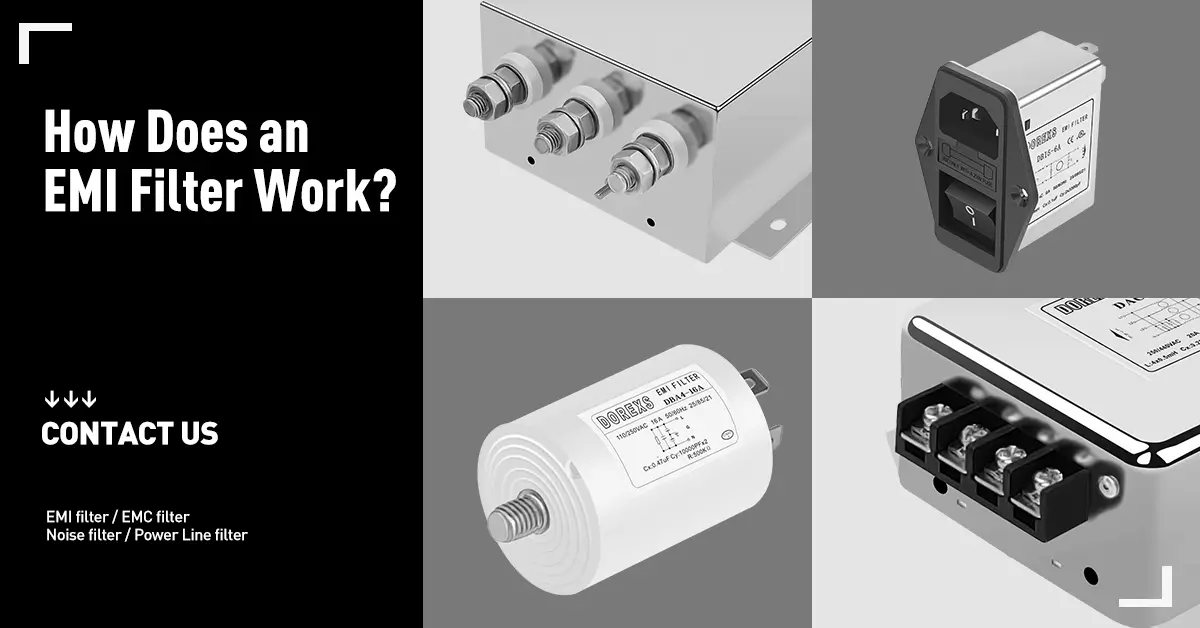
EMI filters suppress unwanted electromagnetic noise by strategically combining passive components such as capacitors and inductors. These components are configured to block high-frequency noise while allowing necessary low-frequency signals to pass unimpeded. The filter is usually installed at the input or output of the power line or signal line, where it intercepts and attenuates the noise before it enters or leaves the equipment.
EMI filters are able to handle both common-mode noise and differential-mode noise. Common-mode noise appears on both the power line and the ground line, while differential-mode noise only appears on the power line. EMI filters are able to handle both types of noise at the same time, providing comprehensive protection for industrial equipment, medical equipment, and other sensitive applications, ensuring reliable performance even in environments with severe high-frequency interference.
EMI filters mainly achieve filtering through two common circuit topologies: C-type and L-type topologies.
EMI filters are able to handle both common-mode noise and differential-mode noise. Common-mode noise appears on both the power line and the ground line, while differential-mode noise only appears on the power line. EMI filters are able to handle both types of noise at the same time, providing comprehensive protection for industrial equipment, medical equipment, and other sensitive applications, ensuring reliable performance even in environments with severe high-frequency interference.
EMI filters mainly achieve filtering through two common circuit topologies: C-type and L-type topologies.
-
C-type topology: contains a group of capacitors to attenuate high-frequency interference voltages in the circuit, thereby suppressing EMI.
-
L-type topology: contains inductors and capacitors to filter out high-frequency noise signals and reduce electromagnetic radiation interference.
Passive EMI filters, such as low-pass filters, are typically used to attenuate high-frequency and broadband EMI, while active EMI filters utilize advanced circuitry and internal power supplies to provide effective EMI mitigation at higher frequency ranges.
Benefits of using EMI filters

Installing EMI filters in electronic devices offers a range of significant benefits. EMI filters can effectively suppress electromagnetic noise, thereby enhancing the reliability and stability of electronic systems and reducing the risk of failures and unexpected downtime. In addition, it helps to minimize electromagnetic interference emissions, improve the overall electromagnetic compatibility of equipment, and ensure compliance with regulatory standards. For critical applications such as medical devices and automotive systems, EMI filters help prevent noise from interfering with basic operations, thereby improving safety. In summary, the use of EMI filters is a proven strategy to achieve strong electromagnetic noise suppression and ensure reliable performance of modern electronic devices.
Classification of EMI filters
- Single-phase EMI filters: Suitable for single-phase power supplies and information communication equipment.
- Three-phase EMI filters: Suitable for three-phase power systems, such as industrial equipment and machinery.
- DC EMI filters: Suitable for various DC power systems, such as electric vehicles and solar energy systems.
Different EMI filters are designed for specific EMI filter applications, such as filtering AC signals, DC signals, and signal and power lines in industrial EMI environments.
Applications of EMI Filters
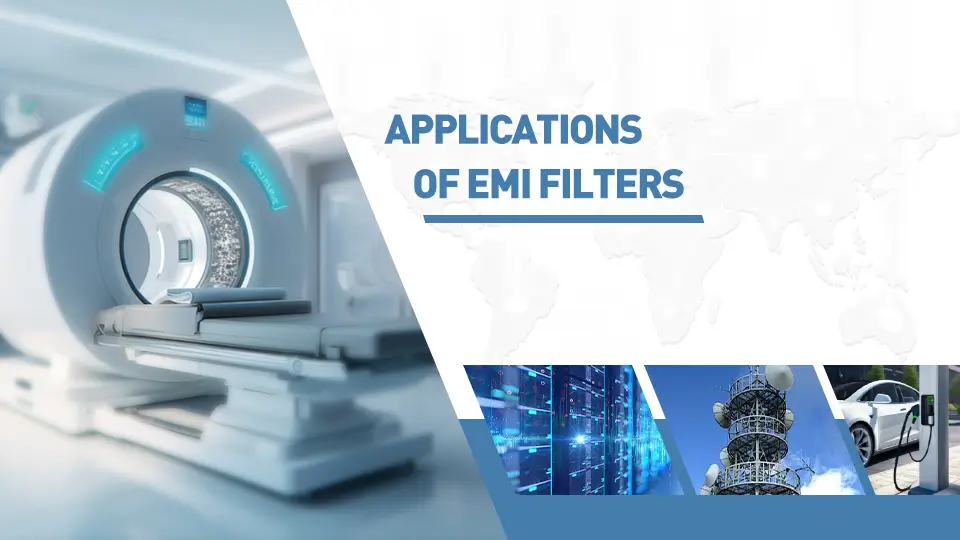
EMI filters are essential in a variety of applications where electromagnetic noise could affect performance or safety. In power supplies and industrial equipment, EMI filters help suppress noise that could disrupt machine operation or interfere with other devices on the same network. Medical devices such as defibrillators and pacemakers rely on EMI filters to maintain accurate and reliable function, free from external interference. Communication systems, including radio transmitters and receivers, use EMI filters to ensure clear signal transmission by minimizing noise and interference. In addition to this, EMI filters are widely used in automotive electronics, aerospace systems, and consumer electronics, providing essential noise suppression in areas where electronic reliability is critical.
Compliance
EMI filters used in electronic devices must comply with relevant standards and regulations of various countries for electromagnetic compatibility (EMC) to ensure that the equipment does not cause excessive electromagnetic interference to the surrounding environment and other equipment. Meeting noise regulations usually requires the use of EMI filtering techniques, such as ensuring low-impedance grounding and low-impedance paths to effectively suppress noise.
The filter input is the key point for blocking conducted noise and EMI noise. The correct selection of EMI filters depends on the type of EMI, noise source, signal power, and specific needs of electrical equipment or electronic systems.
The filter input is the key point for blocking conducted noise and EMI noise. The correct selection of EMI filters depends on the type of EMI, noise source, signal power, and specific needs of electrical equipment or electronic systems.
Helping you choose the right EMI filter solution
When electronic or power systems require EMI filters to play a critical role, it is crucial to consult a professional engineer to provide the most suitable EMI filter size and model. As a specialty component manufacturer with unrivaled EMI filters, DOREXS can help. We produce various high-reliability line filters, intel filters, PCB filters and other filters with various installation methods. We provide the right filters to help you meet regulatory requirements.
Contact us for more details.
Contact us for more details.
Details on EMI Filtering: Source and Classification
DOREXS EMI Filters – Professional EMI Solutions
Related Article
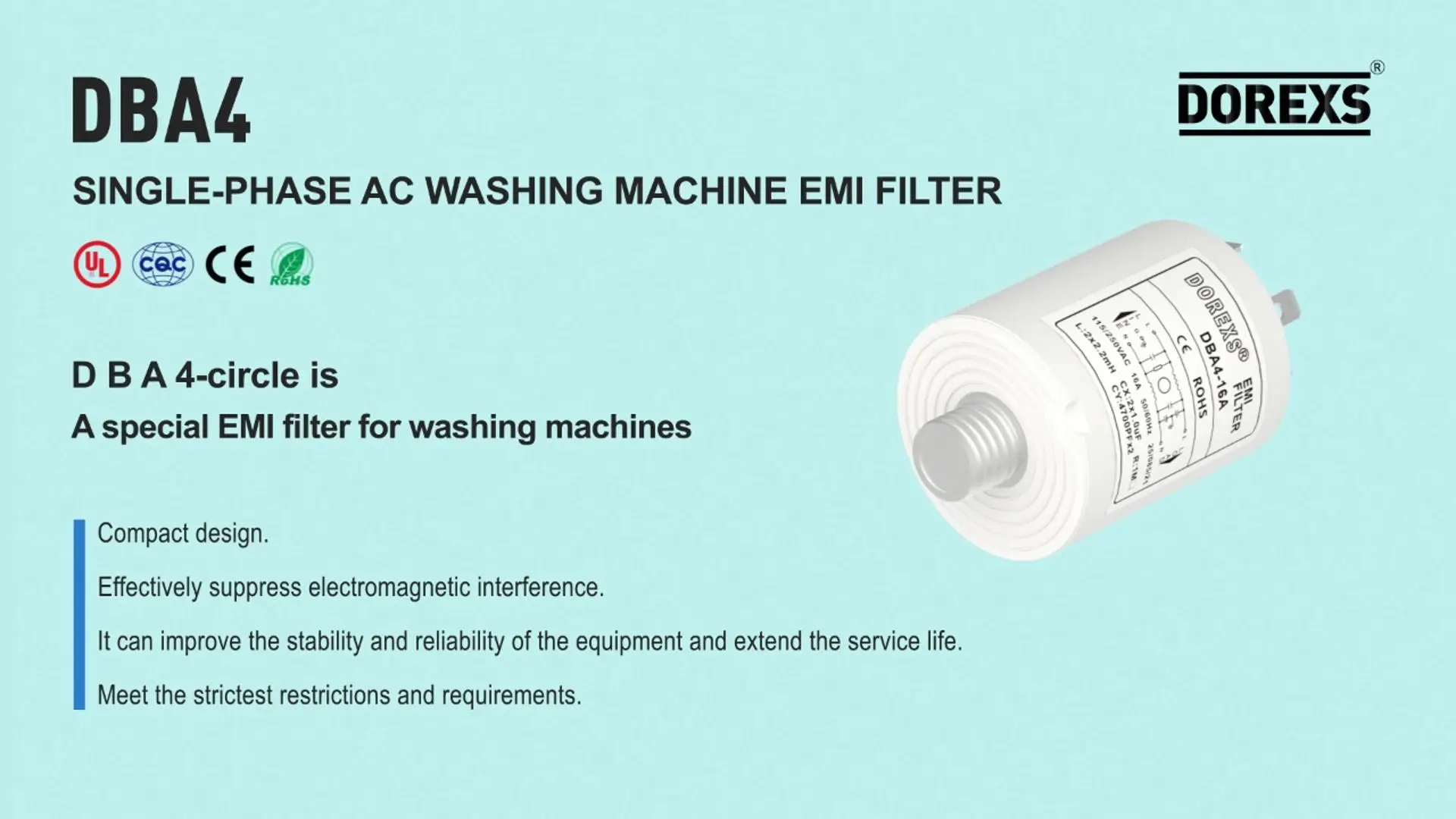
EMI power filters play a key role in ensuring your washing machine meets EMC standards and keeps the appliance running smoothly.
DBA4 Washing Machine EMI Power Filter
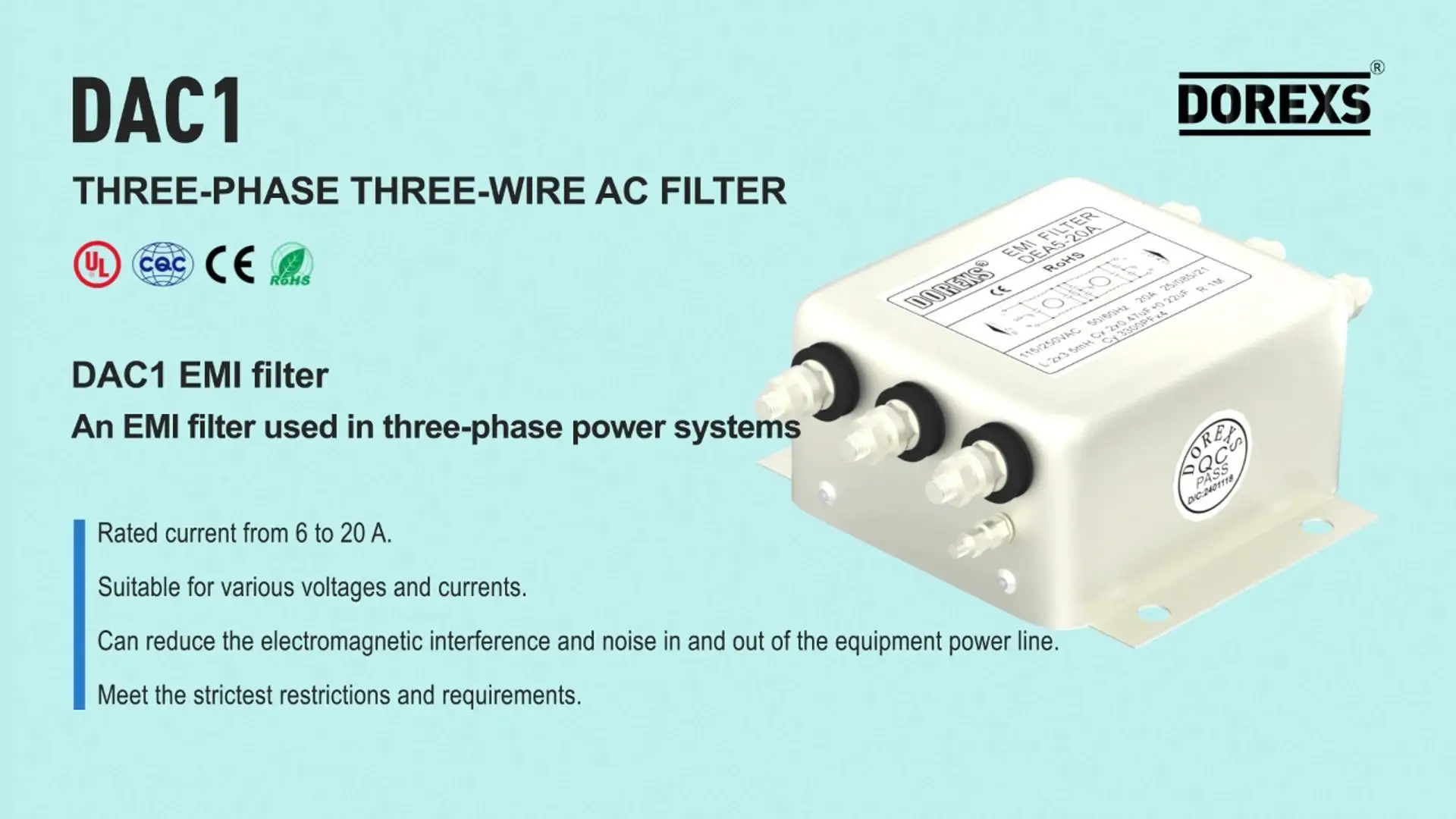
The DAC1 series three-phase EMI filter is a high-performance electromagnetic interference suppression device designed for industrial environments, especially for inverters and motor drives, which have strict requirements on electromagnetic compatibility (EMC).
DAC1 Three Phase EMI Filter-An Efficient EMI Suppression Solution in Industry
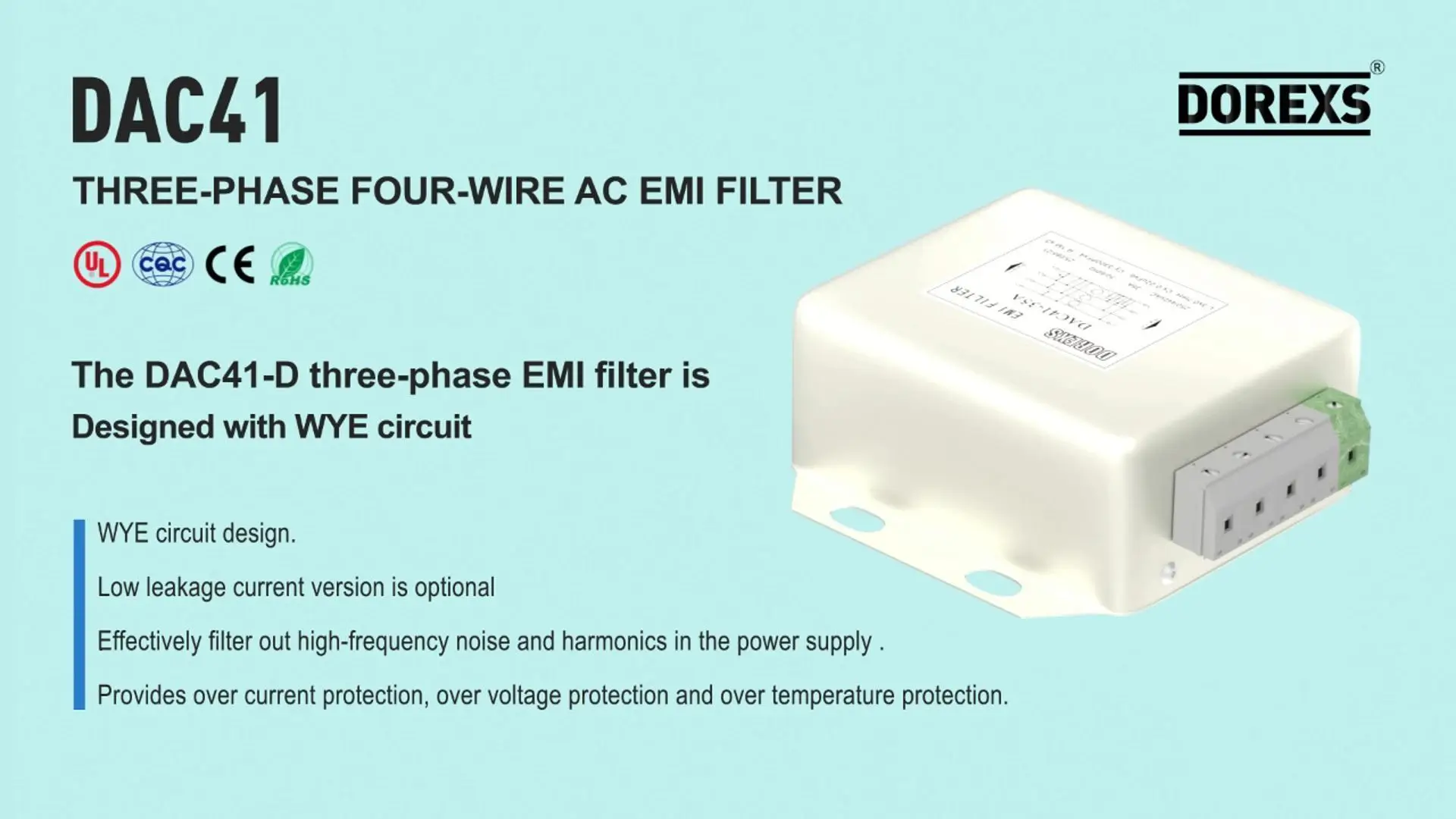
DOREXS DAC41 three-phase EMI filter has become an ideal EMI solution in industrial and power supply systems with its excellent anti-interference ability, stable and reliable performance and wide application fields.
DAC41 Three Phase EMI Filter Terminal Block

DEA5 EMI filter is a high-performance dual-stage EMI filter designed for power supply systems. It can effectively suppress conducted interference and provide excellent electromagnetic compatibility (EMC) solutions, making it an ideal choice for medical and industrial equipment.
DEA5 EMI Power Filter: Two Stage Filtering for Medical and Industrial