What is the Purpose of EMI Filters
Through this article - What is the purpose of EMI filter, you can learn
- What is EMI filter
- The working principle of EMI filter
- Classification of EMI filter
- Main purpose of EMI filter
- Main application of EMI filter
Electronic equipment plays an increasingly important role in contemporary society. With the popularity and complexity of electronic equipment increasing, the problem of electromagnetic compatibility (EMC) has become more and more prominent in the design and manufacturing of products. EMI filters are widely applied not only in electronic equipment but also across various electrical systems, providing essential protection for the broader infrastructure. Electromagnetic interference (EMI) can originate from or affect electrical devices, making them both sources and victims of EMI, which impacts system performance and safety. In order to ensure the normal operation of electronic equipment, improve system performance and extend the service life of electronic equipment, EMI filters have become an indispensable component in the field of electronic engineering. This article will take us to understand what the purpose of EMI filters is.
Electronic equipment, as well as any electronic device or electronic system, can be affected by electromagnetic interference.
Electronic equipment, as well as any electronic device or electronic system, can be affected by electromagnetic interference.
Dangers of Electromagnetic Interference
Electromagnetic interference (a type of electromagnetic disturbances) can cause irreversible damage to electronic equipment, communication systems, and other electrical equipment.
EMI can originate from various sources, including industrial EMI generated by high-power equipment in manufacturing and processing environments, and natural EMI caused by environmental phenomena such as lightning strikes and solar flares. These sources of interference can lead to problems such as communication interruptions, data loss, equipment damage, and even security risks. Radio interference is a common consequence in communication systems, affecting device performance and reception quality. For some critical equipment, electromagnetic interference may cause serious safety risks and economic losses.
EMI can originate from various sources, including industrial EMI generated by high-power equipment in manufacturing and processing environments, and natural EMI caused by environmental phenomena such as lightning strikes and solar flares. These sources of interference can lead to problems such as communication interruptions, data loss, equipment damage, and even security risks. Radio interference is a common consequence in communication systems, affecting device performance and reception quality. For some critical equipment, electromagnetic interference may cause serious safety risks and economic losses.
Types of Electromagnetic Noise Interference
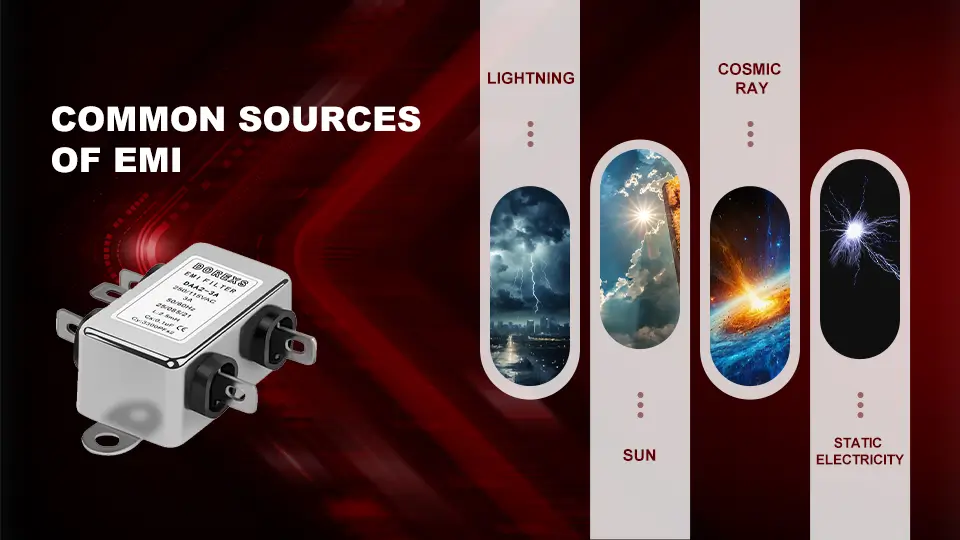
Electromagnetic noise interference can significantly affect the performance and reliability of electronic devices and systems. This type of interference is usually classified according to its propagation mode and source. There are two main types: conducted EMI and radiated EMI. Conducted EMI refers to electromagnetic noise that propagates along power lines, cables, and other conductive paths, which directly enter electronic devices through these connections. Radiated EMI, on the other hand, propagates in the air in the form of electromagnetic waves and can affect electronic devices even without direct electrical connections. Both types of electromagnetic noise interference can disrupt the normal operation of electronic devices, cause failures, and degrade the performance of sensitive electronic devices. In addition, electromagnetic noise can be further classified according to its propagation mode, such as common mode noise and differential mode noise, which are key considerations in EMI filtering and will be discussed in the next section.
The Role of EMI Filters
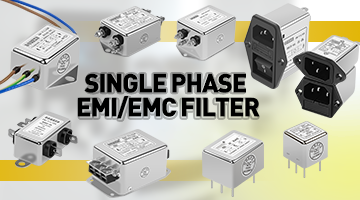
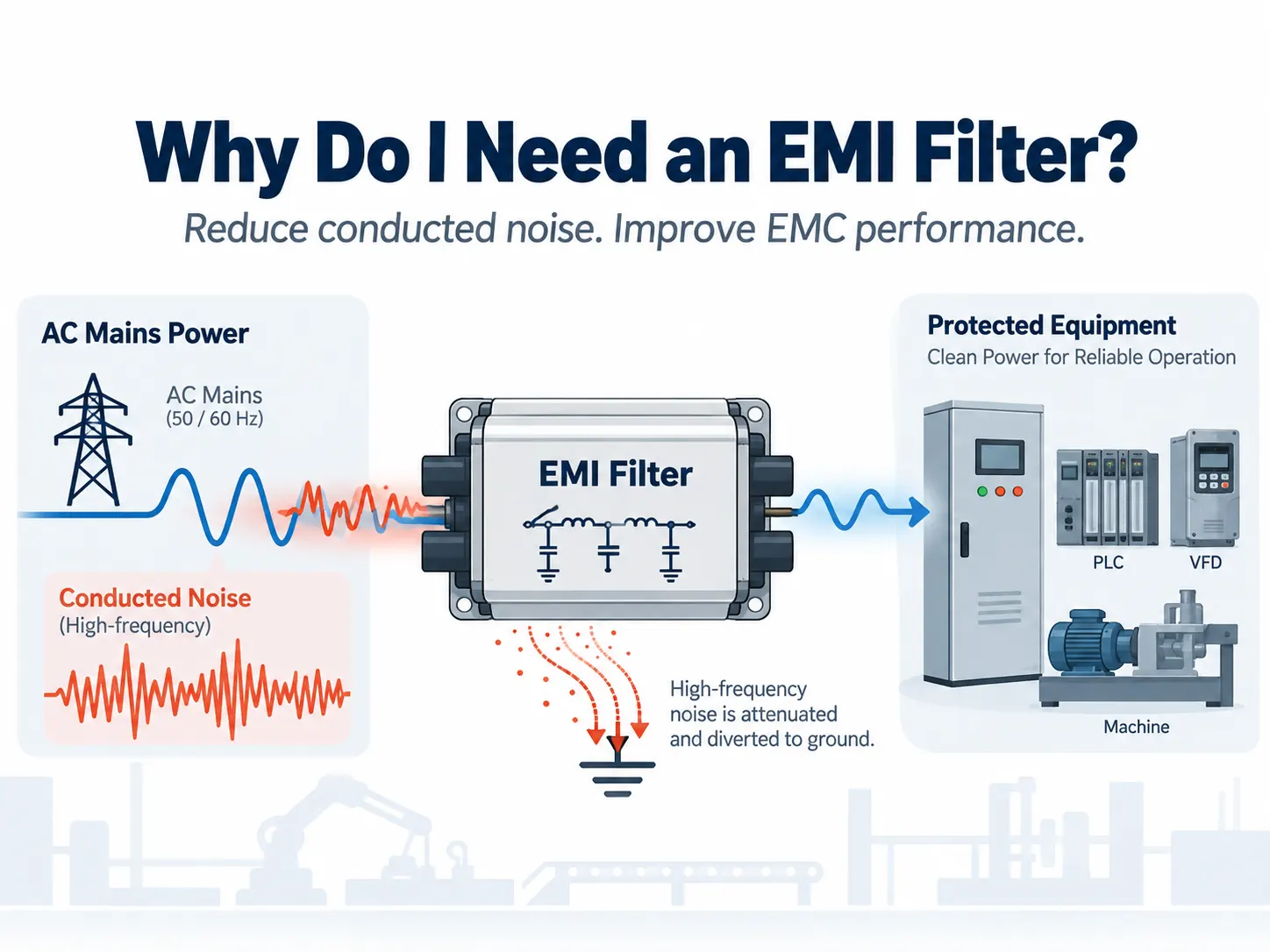
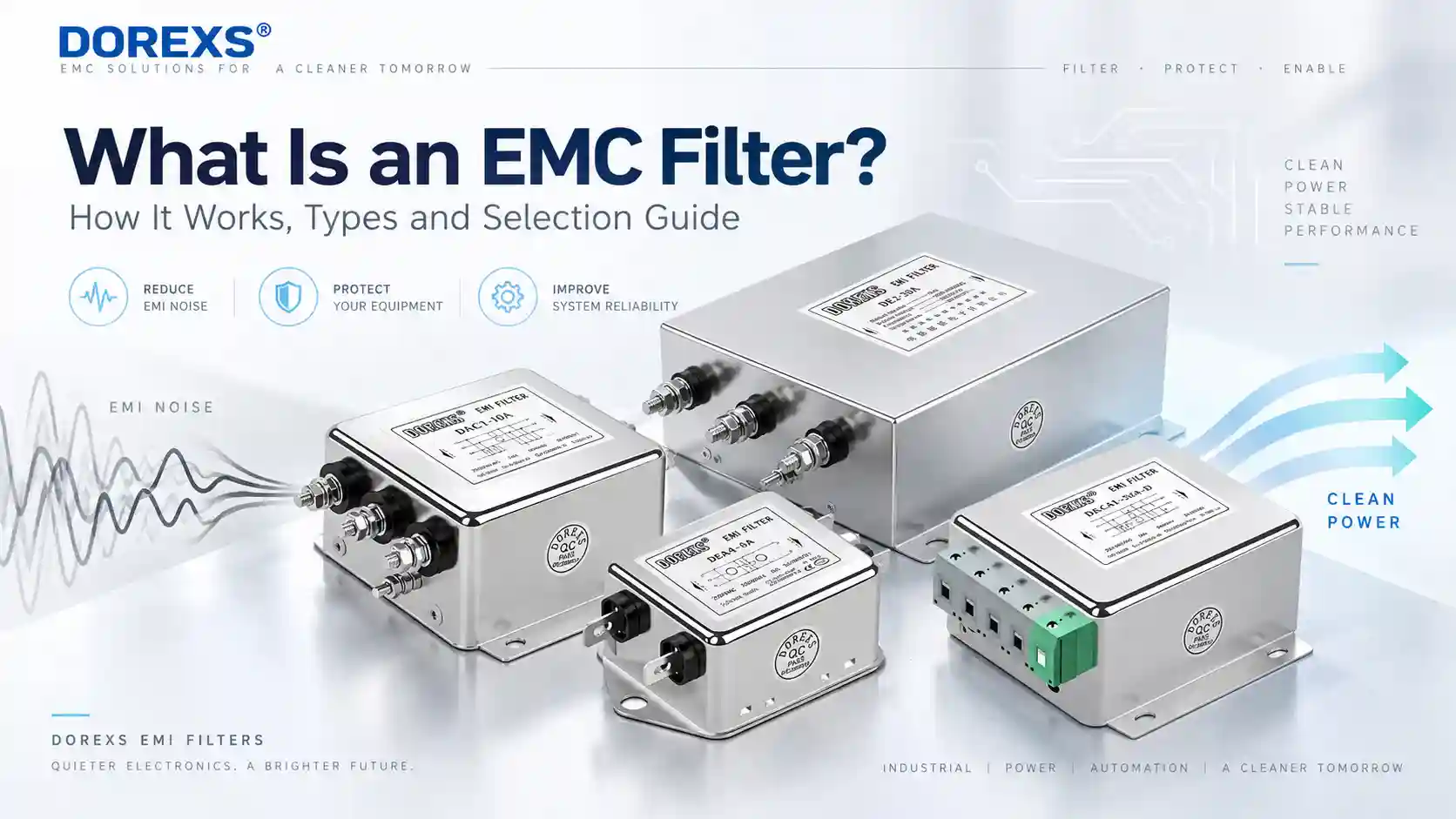
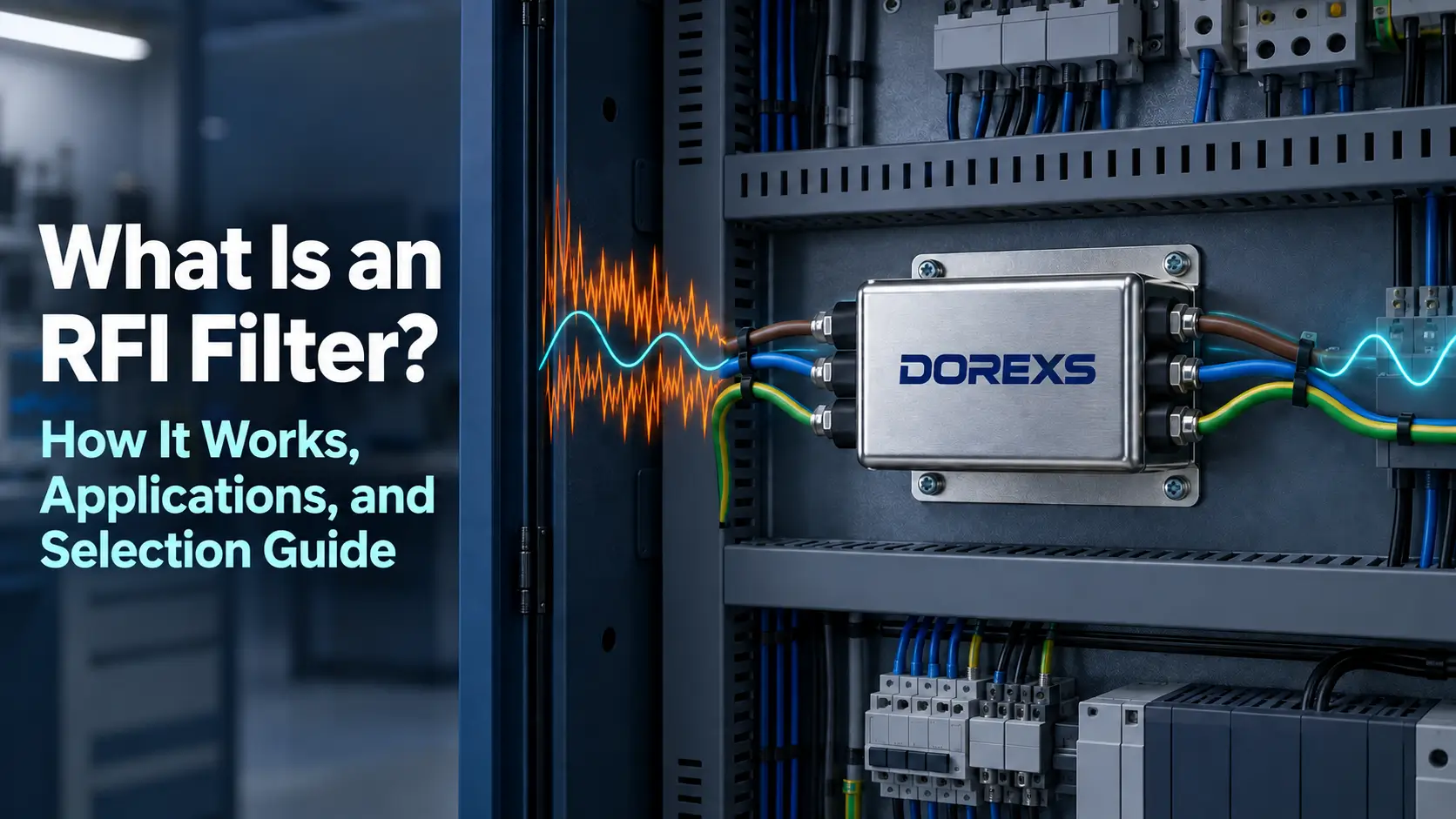
EMI filters are devices used to suppress electromagnetic interference in electronic circuits. They play a vital role in reducing conducted EMI and radiated EMI in electronic systems. It is mainly used to filter out high-frequency noise in power lines and signal lines, thereby protecting equipment from electromagnetic interference. It can effectively eliminate electromagnetic radiation and conducted noise generated by power lines and signal lines, ensure the normal operation of equipment, and improve its overall performance and reliability.
There are many types of EMI filters, including passive EMI filters (using components such as capacitors and inductors to absorb unwanted noise) and active EMI filters (dynamically sensing and canceling interference). EMI suppression filters are a class of filters specifically designed to block high-frequency noise and provide effective EMI protection. Panel mount filters are a special type of EMI filter that is installed at the system entry point to manage radiated interference. Meeting EMI filter requirements and selecting the right filter is critical to effectively mitigate EMI and meet EMC standards, as the filter must handle both conducted and radiated interference modes.
There are many types of EMI filters, including passive EMI filters (using components such as capacitors and inductors to absorb unwanted noise) and active EMI filters (dynamically sensing and canceling interference). EMI suppression filters are a class of filters specifically designed to block high-frequency noise and provide effective EMI protection. Panel mount filters are a special type of EMI filter that is installed at the system entry point to manage radiated interference. Meeting EMI filter requirements and selecting the right filter is critical to effectively mitigate EMI and meet EMC standards, as the filter must handle both conducted and radiated interference modes.
How EMI Filters Work

The working principle of the EMI filter is mainly based on the impedance matching network, which effectively filters out interference signals of specific frequencies by forming a low-impedance path between the power line and the signal line. This filter can reduce high-frequency electromagnetic noise on power lines and signal lines and improve electromagnetic compatibility. Passive filters use capacitors, inductors, and resistors to create electrical resonance at specific frequencies, reducing voltage distortion and absorbing unwanted energy, which is crucial for maintaining system reliability.
Specifically, EMI filters use components such as capacitors and inductors, often as discrete components, to work in the following ways and can be integrated directly into the printed circuit board (PCB) for enhanced EMI suppression:
- The capacitor uses the characteristic of passing high frequency and isolating low frequency to introduce high-frequency interference current into the ground wire (common mode) or live wire (differential mode). Ceramic capacitors, especially multilayer types, provide high impedance at high frequencies, making them effective for filtering out EMI noise in the high frequency range.
- The impedance characteristics of the inductor coil are used to reflect high-frequency interference current back to the interference source, targeting both the higher frequency range and the overall frequency range of concern.
- Interference suppression ferrite is used to absorb and convert interference signals in specific frequency bands into heat, helping to dissipate unwanted energy and suppress broadband emi.
EMI filters also prevent unwanted electric currents from disrupting device operation by blocking or attenuating these currents before they can cause signal degradation or damage. In active EMI filters, current flow is managed by generating an opposing current to neutralize interference, often relying on an internal power supply for this function.
Proper input and output configuration, along with a reliable ground connection to a low impedance ground or ground plane, is essential for effective noise suppression and maintaining signal integrity. The input voltage rating of the filter must be compatible with the system to ensure safe and effective operation across both single-phase and three-phase systems.
EMI filters can be classified into conductive and radiated types. The conductive type is mainly used to suppress interference on the conduction path, while the radiation type is used to reduce the radiation interference of the device to the external environment. In addition, EMI filters are also divided into common mode mode and differential mode mode. The common mode mode means that the interference signal acts on the power line and the ground line at the same time, while the differential mode mode means that the interference signal produces a differential signal between the power line and the ground line. When designing EMI mitigation strategies, it is important not to completely ignore the possibility of spatial conduction problems, as both conductor and spatial conduction can interact.
A standard EMI filter usually consists of a series reactor and a parallel capacitor to form a low-pass filter circuit, which allows frequency signals to pass when the equipment is operating normally, and at the same time has a greater blocking effect on high-frequency interference signals. These filters are widely used in power or electronic engineering, especially in power electronics, to comply with electromagnetic compatibility standards and effectively suppress interference from harmful electromagnetic waves to their own working circuits or other sensitive equipment. Managing broadband emi and signal power is also critical at the system level to ensure optimal performance and compliance.
Sources of interference, or noise sources, can originate from both signal and power lines, and addressing these is key to effective EMI suppression.
Proper input and output configuration, along with a reliable ground connection to a low impedance ground or ground plane, is essential for effective noise suppression and maintaining signal integrity. The input voltage rating of the filter must be compatible with the system to ensure safe and effective operation across both single-phase and three-phase systems.
EMI filters can be classified into conductive and radiated types. The conductive type is mainly used to suppress interference on the conduction path, while the radiation type is used to reduce the radiation interference of the device to the external environment. In addition, EMI filters are also divided into common mode mode and differential mode mode. The common mode mode means that the interference signal acts on the power line and the ground line at the same time, while the differential mode mode means that the interference signal produces a differential signal between the power line and the ground line. When designing EMI mitigation strategies, it is important not to completely ignore the possibility of spatial conduction problems, as both conductor and spatial conduction can interact.
A standard EMI filter usually consists of a series reactor and a parallel capacitor to form a low-pass filter circuit, which allows frequency signals to pass when the equipment is operating normally, and at the same time has a greater blocking effect on high-frequency interference signals. These filters are widely used in power or electronic engineering, especially in power electronics, to comply with electromagnetic compatibility standards and effectively suppress interference from harmful electromagnetic waves to their own working circuits or other sensitive equipment. Managing broadband emi and signal power is also critical at the system level to ensure optimal performance and compliance.
Sources of interference, or noise sources, can originate from both signal and power lines, and addressing these is key to effective EMI suppression.
Types of EMI Filters

There are different EMI filters available for various applications, each designed to address specific frequencies, noise types, and system requirements. EMI filters can be divided into several types based on their working principles and filtering effects. Common ones include:
- Linear filter: composed of inductors and capacitors, mainly used to filter out high-frequency noise. These are examples of passive EMI filters, which use passive components to absorb and dissipate unwanted electrical energy.
- Ceramic filter: Made of ceramic materials, the filtering effect on specific frequencies can be achieved by adjusting the properties and structure of the material. Ceramic filters often utilize discrete components such as multilayer ceramic capacitors, which can be integrated directly into the printed circuit board to enhance EMI suppression.
- Bandpass filter: has a specified frequency band range and only allows signals within this range to pass, thereby filtering out interfering signals in other frequency ranges.
- Stopband filter: On the contrary, it only allows signals outside the specified frequency band to pass, thereby effectively blocking interfering signals within the selected frequency band.
In addition to passive EMI filters, there are also active EMI filters, which use advanced circuit topologies to dynamically sense and counteract noise, offering benefits like compact size and high efficiency.
Common Mode and Differential Mode
When dealing with electromagnetic noise interference in electronic devices, it is important to understand the difference between common mode noise and differential mode noise. Common mode noise occurs when the same noise voltage appears on both the signal line and the return line (relative to ground). This interference is usually introduced by external sources, such as power lines, radio frequency interference, or even lightning strikes, and can easily couple into electronic systems. Differential mode noise, on the other hand, occurs when the noise voltage between the signal line and the return line is different, and this noise is usually generated by internal sources such as switching power supplies or circuits operating at high frequencies. Both common mode noise and differential mode noise can interfere with the operation of electronic devices, especially in environments with significant high frequency noise. EMI filters are specifically designed to suppress both types of noise, ensuring that electronic systems are protected from electromagnetic noise interference, whether the interference source is external or internal.
Components of an EMI Filter
An effective EMI filter is made up of a combination of carefully selected components, each of which plays a vital role in suppressing electromagnetic noise. The main components include capacitors, inductors, and resistors, which are arranged to form a low-pass filter that blocks high-frequency noise while allowing the desired signal to pass. Capacitors are used to divert high-frequency noise to ground, while inductors block high-frequency currents from flowing along the power line. In addition, passive components such as ferrite beads and common-mode inductors are often added to enhance the filter's ability to suppress common-mode and differential-mode noise. These components work together to ensure that electromagnetic noise does not interfere with the operation of electronic equipment, providing powerful EMI filtering for a variety of applications.
The key purpose of EMI filters
The key purpose of EMI filters is to safeguard electronic devices and systems from the disruptive effects of electromagnetic interference (EMI). By filtering out high frequency noise and unwanted electromagnetic noise from power supply lines, signal lines, and other conductors, EMI filters help maintain the reliable operation of sensitive electronics. This is especially important in environments where electromagnetic interference EMI is prevalent, such as industrial facilities, commercial buildings, and military installations. EMI filters are essential for ensuring that power supply systems deliver clean, stable power, free from high frequency disturbances that could otherwise cause malfunctions or degrade performance. Ultimately, EMI filters play a critical role in protecting electronic devices from electromagnetic noise, supporting the overall stability and efficiency of modern electronic systems.
1. Ensure electromagnetic compatibility (EMC)
One of the main purposes of EMI filters is to ensure the electromagnetic compatibility (EMC) of a product. Only products that comply with EMC regulations can operate safely in various environments and have absolute competitiveness in the market. For example, the EMC directive 2014/30/EU and EN standards in Europe, the FCC regulations and MIL-STD-461 in the United States, etc. When designing electronic systems, it is essential to consider EMI filter requirements to ensure that the selected filters meet these regulatory standards and effectively suppress electromagnetic interference.
2. Protect sensitive electronic components
Electronic equipment often contains sensitive components (sensors, processors, etc.) that are susceptible to EMI interference, especially precision equipment. In particular, signal and power lines require protection from electromagnetic interference to maintain system integrity. When these sensitive components receive EMI interference, it will affect the stability of the equipment and even cause equipment damage. EMI filters protect these sensitive components by filtering out electromagnetic interference signals, thereby ensuring safe and stable operation of the equipment.
3. Improve signal integrity
In signal transmission equipment, it is very important to maintain signal integrity and signal power, preventing degradation due to EMI. If EMI is interfered with during signal transmission, signal integrity may be reduced, lost, etc. By using EMI filters, the occurrence of this situation can be greatly reduced, signal integrity is ensured, and reliable signal transmission is achieved.
4. Enhance device performance
Using EMI filters can help reduce common electronic equipment problems such as audio distortion, connection errors, and voltage distortion, thereby improving equipment performance and service life.
Benefits of Using an EMI Filter
Incorporating EMI filters into electronic devices and systems offers a range of significant benefits. By effectively suppressing electromagnetic interference, EMI filters enhance the reliability and longevity of electronic equipment, reducing the risk of unexpected failures and minimizing downtime. This leads to lower maintenance costs and improved operational efficiency. EMI filters also help ensure compliance with stringent electromagnetic compatibility (EMC) standards, which is crucial for industries such as aerospace, automotive, and medical devices, where sensitive electronics must operate without disruption. Additionally, by minimizing the impact of electromagnetic noise, EMI filters contribute to better overall performance and signal integrity in electronic systems. Whether in consumer electronics, industrial automation, or mission-critical applications, the use of EMI filters is a proven strategy for achieving robust EMI suppression and maintaining the dependable operation of electronic devices.
Application of EMI filters
Application of EMI filters in consumer electronics products
- Power supply and adapter
- Household appliances
- Computers and peripherals
- Audio and video equipment
- Communication equipment
- Internal power supply
Application of EMI filters in industrial automation
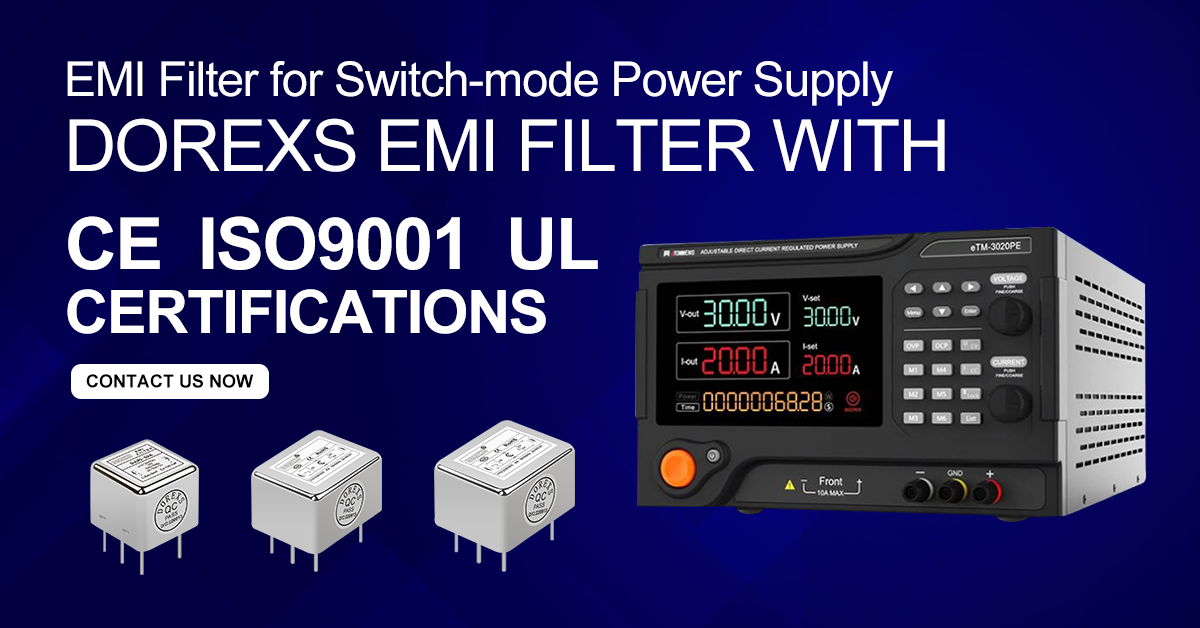
There are a large number of large electronic equipment in industrial automation. The EMI in these equipment interferes with each other and seriously affects the operation of automation equipment. Industrial EMI, originating from high-power sources like transformers, inverters, and F/V drives, is a significant source of interference in manufacturing and processing environments. There are also EMC emission standards in industry (IEC 61000-6-4, IEC 61000-6-2, CISPR wait). Using EMI filters can reduce EMI interference in industry, making equipment safe and stable while complying with EMC regulations. Here are some common
EMI filter applications in industry:
- Motor and frequency converter
- Programmable Logic Controller (PLC)
- Industrial communication network
- Human-machine interface (HMI) and display equipment
- Sensors and actuators
- Power electronics
Application of EMI filters in medical equipment
Medical equipment is usually high-precision equipment. These equipment are directly related to the health and safety of patients, so the management of EMI interference in medical equipment is particularly important, and must meet strict EMC regulations in medical equipment (IEC 60601-1-2, EMC Directive 2014/30/EU, FDA, etc.). When selecting EMI filters for medical equipment, it is important to consider the ambient temperature, as it affects the filter's ability to operate safely at its full rated current without derating. Using EMI filters in medical equipment is one of the most effective ways to reduce EMI. The following are the specific
Applications of EMI filters in medical equipment:
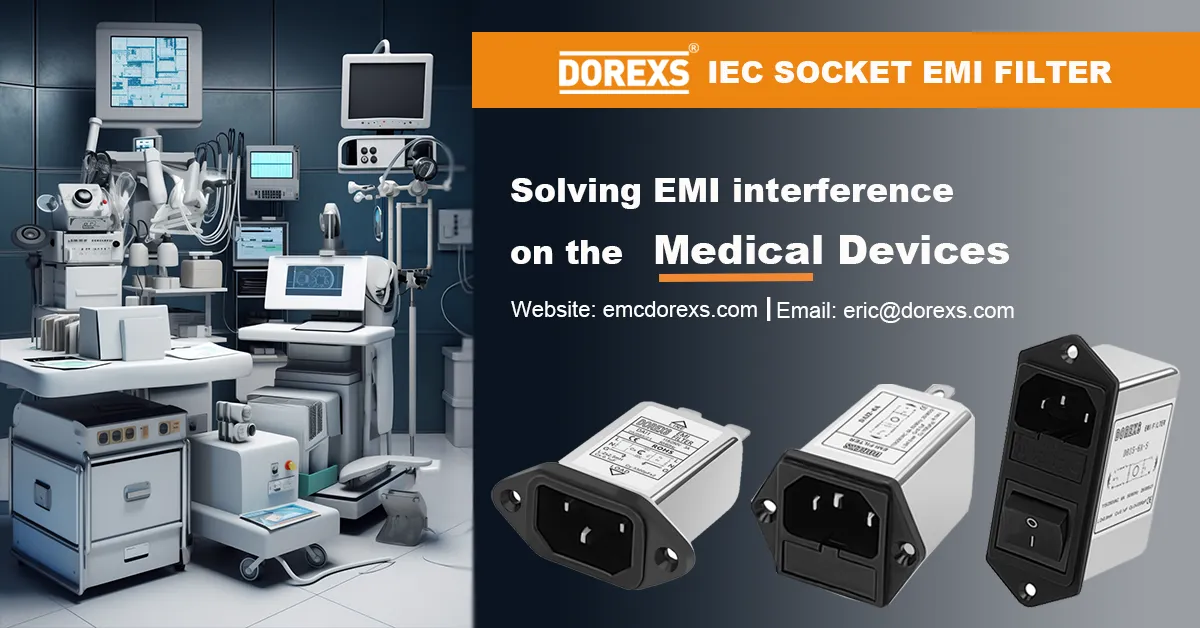
1. Diagnostic equipment: magnetic resonance imaging (MRI), ultrasound equipment, X-ray machines, CT scanners.
2. Treatment equipment: pacemaker, defibrillator, infusion pump, laser surgery equipment.
3. Monitoring equipment: electrocardiogram (ECG) monitor, blood oxygen monitor, blood pressure monitor, multi-parameter monitor.
4. Medical information system: Hospital Information Management System (HIS), Radiology Information System (RIS), Laboratory Information Management System (LIMS).
5. Surgical equipment: operating light, electric operating table, endoscope, equipment and electrosurgery.
Application of EMI filters in the military field
In the military field, military equipment is usually used in extremely complex environments and faces various forms of electromagnetic interference. In this case, the choice of EMI filter is crucial. In order to ensure the stable operation of military equipment, it is a very effective method to choose military standard (MIL-STD-461, DEF STAN 59-411, GJB 151A) EMI filters. The following are the specific applications of EMI filters in the military field:

- Communication equipment: radio communication systems, satellite communication systems, tactical communication networks, military communication systems.
- Radar systems: early warning radar, fire control radar, ground, sea and air radar.
- Navigation and positioning systems: Global Positioning System (GPS) inertial navigation system, tactical navigation system.
- Electronic warfare equipment: electronic jamming (ECM), electronic countermeasures (ECCM), electronic support measures (ESM).
- Weapon system: missile guidance system, artillery control system, UAV control system.
- Vehicles and ships: armored vehicles, battleships, submarines.
DOREXS EMI Filter Manufacturing
DOREXS has many years of experience in EMI filter manufacturing and is proficient in the application of EMI filters in medical, commercial, industrial, military and other fields.
Moreover, DOREXS has multiple product certifications, including UL, CE, ISO9001, ROHS and other certifications, which meet the technical requirements of European and American countries.
Contact us for more EMI filter information
What is EMI Suppression Filter
Research and Application of an Active Common-mode EMI Filter for Switch-mode Power Supply