EMI in Fire Protection Alarm Systems: Complete Guide to Electromagnetic Interference Management
Introduction
Electromagnetic interference (EMI) in fire protection alarm systems represents one of the most critical yet often overlooked vulnerabilities in life-safety infrastructure. When electrical noise from outside sources disrupts the sensitive detection circuits, control panels, and communication networks that fire alarm systems depend on, the consequences range from nuisance false alarms to catastrophic system failure during actual emergencies.
This guide covers the complete spectrum of EMI sources, their impact on fire alarm systems, and proven mitigation strategies for industrial facilities and commercial environments. Whether you’re a facility manager troubleshooting recurring false alarms, a fire safety engineer designing robust installations, or a system integrator seeking reliable solutions for challenging environments, this content addresses the practical realities of electromagnetic compatibility in fire protection applications.
Direct answer: EMI can compromise fire safety by causing false alarms, delayed responses, communication failures, or complete system silence during actual fires—problems that require specialized filtering solutions like the DOREXS fireproof filter series to ensure reliable protection.
By reading this guide, you will gain:
-
Clear understanding of how electromagnetic interference affects fire alarm system components
-
Ability to identify and assess EMI sources in your facility
-
Knowledge of filter selection criteria and protection methods
-
Practical implementation guidelines for optimal performance
-
Compliance insights for NFPA and UL requirements

Understanding Electromagnetic Interference in Fire Protection Systems
Electromagnetic interference (EMI), also called radio-frequency interference in the RF spectrum, encompasses any unwanted electromagnetic disturbance that impacts electrical circuits through induction, electrostatic coupling, or conduction. Electromagnetic compatibility (EMC) represents the broader discipline ensuring electronic devices can operate without generating harmful interference while maintaining immunity to external noise.
Fire alarm systems integrate uniquely sensitive electronic equipment: low-voltage signaling circuits (typically 24V DC loops for smoke detectors and pull stations) operating alongside high-current notification circuits (horns and strobes up to 120V AC). This combination creates fertile ground for interference, where even minor disruptions can degrade circuit performance or cause complete system failure precisely when reliable operation is most crucial.
Types of EMI Affecting Fire Alarm Systems
Conducted EMI travels through physical conductor contact, particularly through power lines feeding alarm panels. Switching power supplies in control panels generate broadband noise and harmonics that propagate along cables to detector loops, while voltage transients from the electrical grid introduce spikes that can trigger false signals.
Radiated EMI propagates wirelessly, with fire alarm cabling acting as unintended antennas. Sources include cell phones, Wi-Fi routers, radar systems, and nearby radio transmitters. The frequency range from 10 kHz to 10 GHz presents a broad range of potential interference patterns.
Magnetically coupled EMI occurs when inductive loads—elevator motors, transformers, and generators—induce hums at 50/60 Hz fundamentals and harmonics into unshielded alarm cables. This mechanism causes a significant challenge in high-rise buildings where these components share infrastructure paths with fire protection wiring.

Critical Components Vulnerable to EMI
Fire alarm control panels (FACP) serve as the system brain, processing signals from hundreds of devices simultaneously. Their microprocessor-based circuits are particularly susceptible to electrical noise that can corrupt data processing, cause false alarm activation, or block legitimate signals entirely.
Smoke detectors employ ionization or photoelectric sensing with detection thresholds as sensitive as 0.2%/min obscuration. This sensitivity, while essential for early fire detection, makes these detectors vulnerable to EMI-induced voltage fluctuations that mimic smoke conditions.
Notification appliances including horns and strobes draw significant current during activation. The switching transients generated during normal operation can feed back into detection circuits, while external EMI can prevent proper activation signals from reaching these devices.
Communication circuits connecting to monitoring stations and emergency services must maintain signal integrity across extended cable runs and wireless links. Interference here directly affects the ability to summon first responders during emergencies.
Understanding which system components face the greatest exposure leads directly to identifying the EMI sources most likely to affect them.
EMI Sources in Fire Protection Environments
Recognizing EMI sources is essential for developing targeted protection strategies. Industrial facilities and commercial buildings present unique electromagnetic environments where multiple interference generators operate simultaneously with fire safety systems.

Industrial Equipment and Machinery
Variable frequency drives (VFDs) controlling motors generate significant harmonic content across a broad range of frequencies. Their pulse-width modulation creates conducted and radiated emissions that propagate through power distribution systems and air simultaneously.
Welding equipment produces intense broadband EMI during arc formation. Facilities with active welding operations frequently report fire alarm reliability issues when detectors share electrical infrastructure with welding circuits.
HVAC systems incorporate large motors, compressors, and electronic controls that generate electromagnetic signatures affecting nearby fire protection equipment. The continuous operation of these systems creates persistent interference backgrounds that can mask legitimate alarm signals or cause gradual performance degradation.
Communication and Electronic Systems
Wireless networks and cellular infrastructure saturate modern buildings with RF energy in the 2.4 GHz and 5 GHz bands. While individually benign, dense deployments create aggregate field strengths that affect fire alarm communication modules—particularly in IP-based systems where data integrity is crucial.
LED lighting systems with switching power supplies emit conducted EMI through shared power lines. The high-frequency switching components (often 48 kHz) generate harmonics that can exceed regulatory limits without proper filtering, directly affecting fire alarm panels sharing the same electrical circuits.
Computer equipment and servers in data centers present concentrated EMI sources. Fire suppression systems protecting these facilities must maintain immunity to electromagnetic environments substantially harsher than typical commercial installations.
Power Distribution Infrastructure
Transformers and switchgear create magnetic fields that couple into fire alarm cabling routed nearby. Proper separation distances often conflict with building constraints, making filtering essential rather than optional.
Uninterruptible power supplies (UPS) ironically introduce electrical noise while protecting against power failures. The inverter switching in UPS systems generates harmonics that propagate to connected fire alarm equipment.
Backup generators during transfer operations create transients and harmonics that stress fire alarm systems precisely when buildings are most vulnerable—during power events that could indicate actual emergency conditions.
Having identified the sources threatening fire protection systems, the logical progression is examining their specific impacts and developing effective protection strategies.
Impact Assessment and Protection Strategies
The practical consequences of EMI in fire alarm systems range from operational nuisances to life-threatening failures. Industry audits indicate that approximately 30% of fire panel failures connect to electrical noise, with EMI contributing to 12% of NFPA 72 non-compliance findings. Addressing these impacts requires layered protection approaches combining filtering, shielding, and proper installation methods.

EMI Filter Solutions for Fire Protection Systems
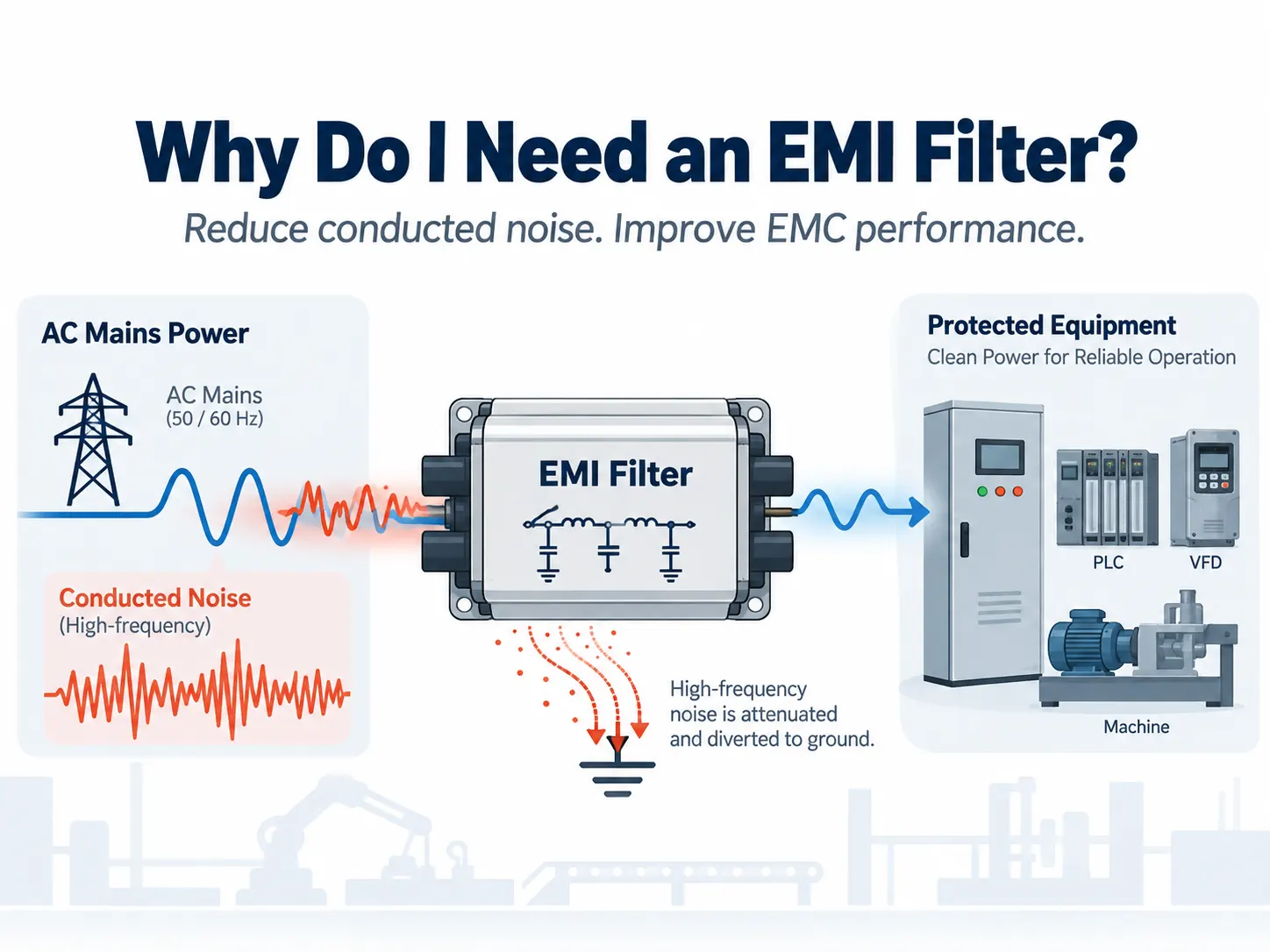
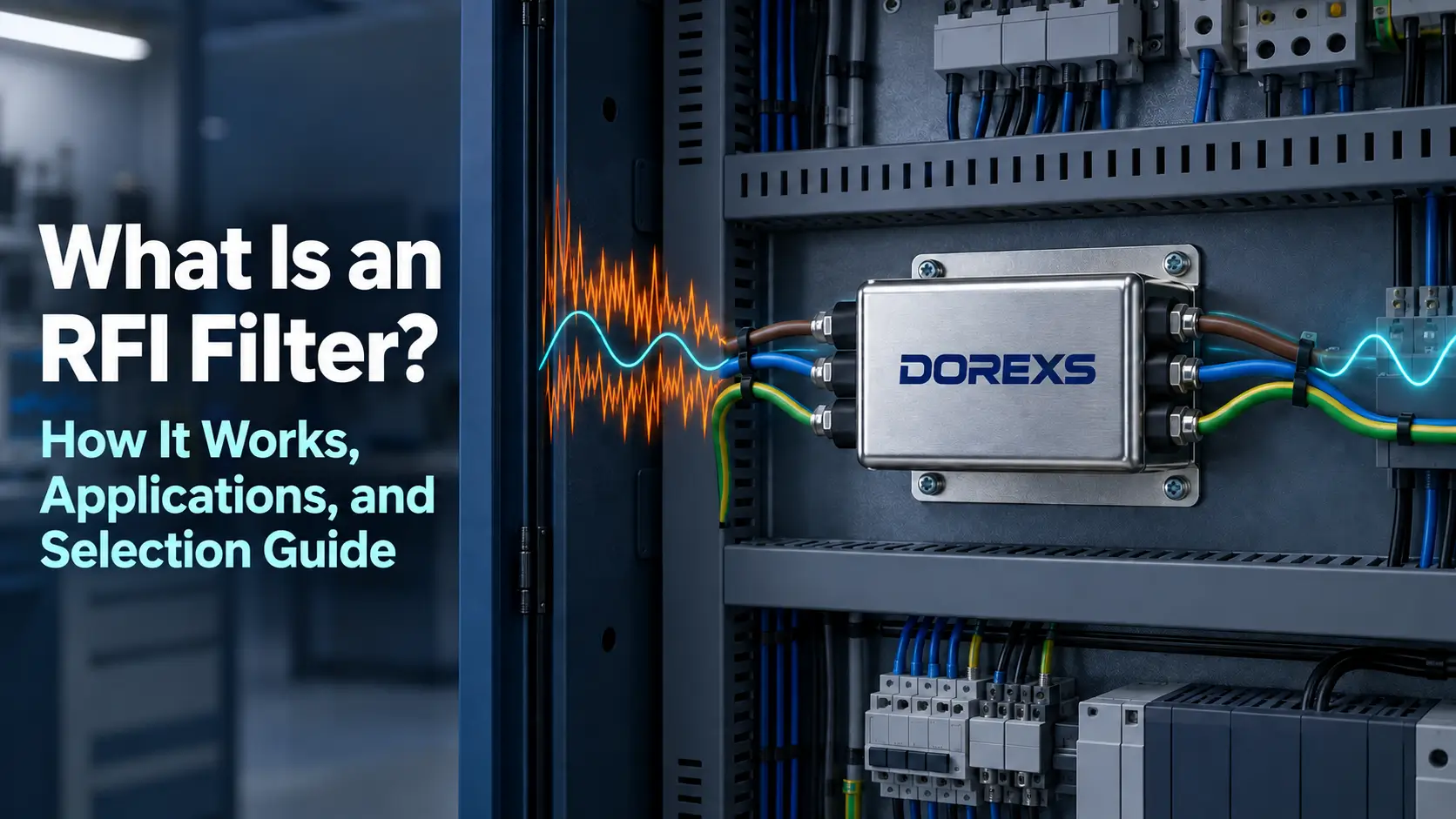
Specialized filters represent the primary defense against conducted EMI affecting fire alarm systems. Leveraging a broad portfolio of EMI/EMC power filters allows designers to match specific noise profiles and regulatory requirements. These solutions must meet dual requirements: effective noise suppression and fire-rated construction appropriate for life-safety applications.
AC line EMI filters for fire alarm control panels employ low-pass filter networks (typically pi-configurations with capacitors and inductors) that attenuate high-frequency noise while passing power frequencies. Effective implementations achieve 40-60 dB attenuation from 150 kHz to 30 MHz, blocking interference from switching power supplies, VFDs, and lighting systems.
DC filters protect detector circuits and communication lines where even modest noise can compromise the ability to distinguish legitimate signals from interference. Ferrite-based solutions provide 30-50 dB attenuation across 1 MHz to 1 GHz ranges.
Power supply EMI power filters address noise generated within fire alarm equipment itself, preventing internal sources from affecting other system components or external electronic devices sharing the same infrastructure.
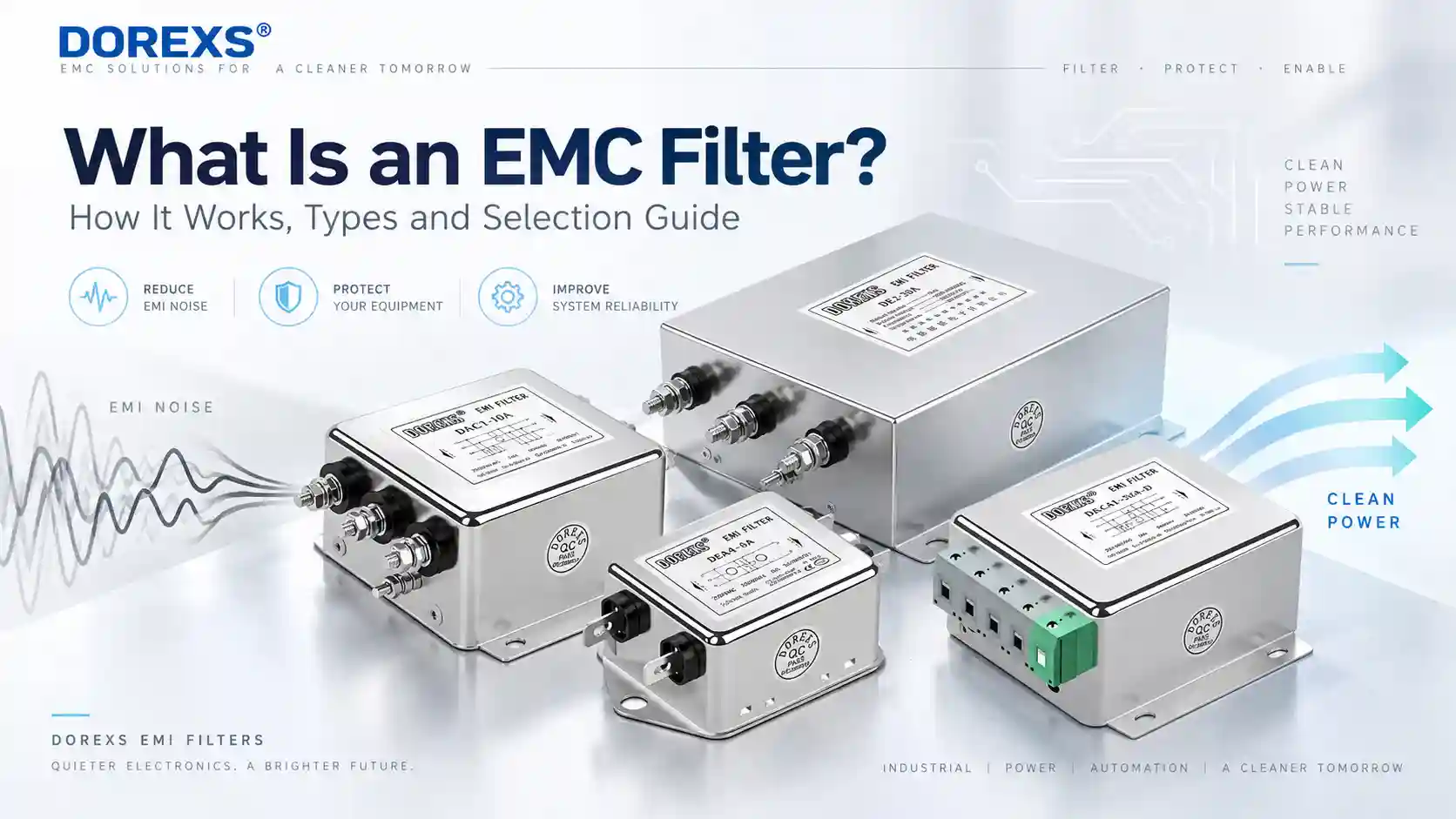
DOREXS fire protection system EMI filters represents an engineered solution specifically developed for fire protection applications. These filters combine dual-stage EMI/RFI suppression with flame-retardant housings (UL 94 V-0 rated), achieving 50 dB attenuation at 1 MHz and 80 dB at 100 MHz while maintaining low insertion loss below 0.5 dB. Their construction withstands 850°C exposure per IEC 60331, making them suitable for protecting addressable loops and sensitive monitoring equipment in challenging environments.
Filter Performance Comparison
Selecting appropriate filters requires matching specifications to application requirements:
|
Filter Type |
Frequency Range |
Attenuation |
Fire Rating |
Application |
|---|---|---|---|---|
|
AC Line Filters |
150 kHz - 30 MHz |
40-60 dB |
UL94 V-0 |
Control Panels |
|
DC Filters |
1 MHz - 1 GHz |
30-50 dB |
UL94 V-0 |
Detector Circuits |
|
Three-Phase Filters |
150 kHz - 30 MHz |
50-70 dB |
UL94 V-0 |
Industrial Systems |
|
DOREXS Fireproof Series |
Dual-stage |
50-80 dB |
850°C IEC 60331 |
Critical Life-Safety |
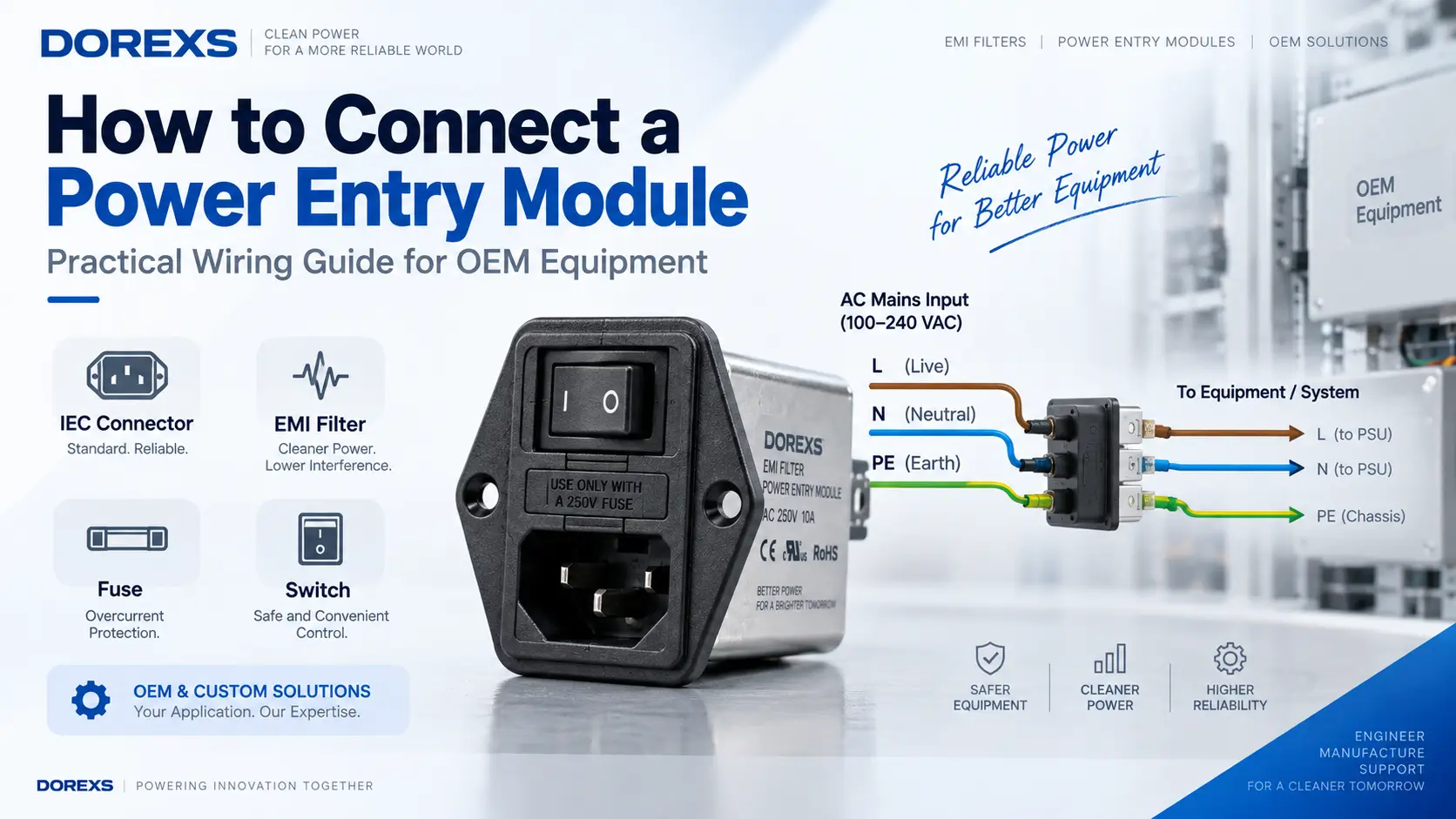
Installation considerations including grounding methods, cable routing, and shield termination significantly affect achieved performance, especially when applying AC line EMI filters for power noise reduction.
Common Challenges and Solutions
Practical EMI problems in fire protection systems manifest as specific operational failures. Understanding these patterns enables targeted solutions that restore reliable system operation.

False Alarm Issues from EMI
False alarms represent the most visible EMI impact, with Australian warehouse studies documenting LED driver interference causing intermittent notification failures resolved only through proper filtering. A UK hospital retrofit found UPS harmonics triggering 15% of detectors weekly until shielded cabling and appropriate filters eliminated the problem completely.
Solution approach: Implement proper grounding following single-point equipotential bonding to avoid ground loops that amplify common-mode noise. Install DOREXS filters on affected circuits to block conducted interference. Maintain cable separation of at least 12 inches from power lines and route fire alarm wiring perpendicular to potential interference sources where crossing is necessary.
System Communication Failures
Communication circuit failures compromise the ability to alert monitoring stations and emergency services. These failures often trace to RF interference affecting wireless modules or conducted noise corrupting digital signals on wired connections.
Solution approach: Select filters specifically rated for communication circuit frequencies and data rates. Consider fiber optic alternatives for high-EMI environments where metallic conductors cannot achieve reliable signal transmission. The inherent immunity of optical signals to electromagnetic interference provides complete isolation from electrical noise sources.
Compliance with Fire Safety Standards
NFPA 72 requirements mandate that fire alarm systems maintain reliability regardless of environmental conditions, including electromagnetic exposure. Section 29.8 specifically addresses surge protection with requirements for transient voltage surge suppressors rated for 6 kV/3 kA impulses. UL certification requirements for components used in fire protection applications include EMI immunity testing.
Solution approach: Select filters and protective devices with appropriate UL certifications documenting compliance with fire protection standards. The DOREXS fireproof filter series meets both EMI suppression and fire rating requirements, simplifying compliance documentation while providing effective protection.
These challenges resolve through systematic implementation following established guidelines.
Implementation Guidelines and Best Practices
Effective EMI protection for fire alarm systems requires comprehensive assessment, appropriate product selection, and proper installation techniques using certified IEC-compliant EMI filters. The following approach ensures optimal performance and regulatory compliance.
Immediate assessment steps:
-
Survey the facility to identify EMI sources within 50 feet of fire alarm equipment and cabling
-
Review false alarm and maintenance records for patterns suggesting interference
-
Use test equipment (spectrum analyzer or EMI detector) to characterize the electromagnetic environment
-
Document cable routing relative to power distribution and industrial equipment
Filter sizing and selection:
-
Match filter current ratings to actual load requirements with 25% margin
-
For AC-powered equipment, apply EMI filter selection guidelines for AC power supplies to choose appropriate topologies and components
-
Select attenuation specifications based on identified interference frequencies
-
Verify fire ratings meet installation location requirements
-
Confirm physical dimensions fit available panel space
Installation best practices:
-
Ground filter housings directly to the equipment ground point
-
Maintain minimum conductor length between filter and protected equipment
-
Separate input and output wiring to prevent coupling around the filter
-
Verify shield continuity for shielded cables with appropriate test equipment
Maintenance requirements:
-
Include filter inspection in annual fire alarm system maintenance
-
Test filter performance after any significant facility electrical changes
-
Replace filters showing signs of thermal stress or physical damage
-
Document maintenance activities for compliance records

Additional Resources
DOREXS EMI filter manufacturer technical support provides custom filter design services for applications where standard products cannot meet specific requirements. Their engineering team can specify solutions for unique electromagnetic environments or unusual fire protection system configurations.
Relevant standards:
-
NFPA 72 National Fire Alarm and Signaling Code (Chapters 12, 29)
-
EN 61000-6-4 EMC emissions for industrial environments
-
FCC Part 15 Subpart B for unintentional radiators
-
MIL-STD-461G for secure facility applications
Industry guidelines:
-
IEC 60331 fire resistance testing for cables and components
-
UL 94 V-0 flammability classification requirements
-
ITU Radio Regulations Article 1.169 harmful interference definitions
The development of effective EMI protection strategies benefits from early pre-compliance testing—industry data indicates catching 80% of issues at the prototype stage costs 10% of post-installation remediation. For projects needing detailed application support or quotations, facilities teams should coordinate directly with DOREXS EMI filter and power quality contact offices. For facilities experiencing EMI-related fire alarm problems, systematic assessment followed by appropriate filter installation provides the most direct path to reliable operation.
EMI Considerations in Medical Imaging Devices: Essential Guide for Equipment Designers
EMI Issues in 5G Telecom Power