The Ultimate Guide to Choosing an Electromagnetic Interference Filter
Struggling with unwanted electrical noise in your devices? An electromagnetic interference filter (EMI filter) can help. EMI filters block high-frequency interference, ensuring your electronics work flawlessly. This guide will delve into what EMI filters are, their importance, and how to pick the right one for your needs.
Key Takeaways
- EMI filters are essential for protecting electronic devices from electromagnetic noise, ensuring signal integrity and system reliability.
- There are two main types of EMI filters: passive filters, which utilize components like capacitors and inductors, and active filters, which use electronic components to enhance noise suppression.
- Proper selection and installation of EMI filters, considering specifications and environmental factors, are critical for optimal performance and compliance with electromagnetic compatibility standards.
What is an Electromagnetic Interference Filter?

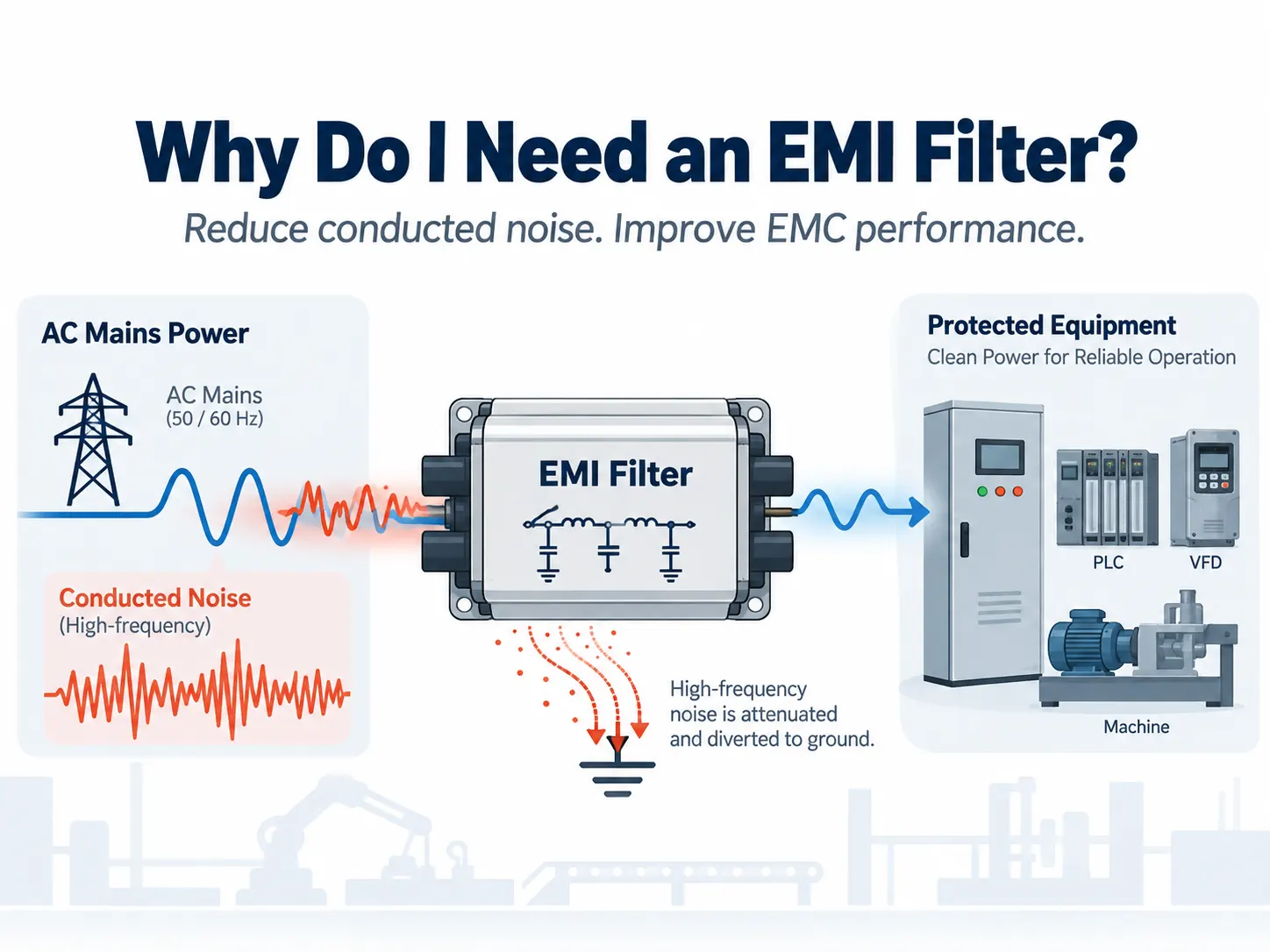
An EMI suppression filter, or simply an emi filter, is a pivotal element created to shield electronic devices from intrusive electromagnetic noise. These filters are integral in curbing electromagnetic interference (EMI), allowing circuits within an apparatus to function without the disturbance caused by external electromagnetic waves. To visualize their importance, think of how noise-canceling headphones enable clear communication amid a loud environment. Similarly, EMI filters ensure that only wanted communications prevail in your electronic devices.
The chief role of these EMI filters is to eliminate undesirable high-frequency noise while permitting essential signals to pass through unhindered. This action becomes critical as electromagnetic noise can lead to substantial disturbances within electronic circuits—compromising signal quality, disrupting operations and possibly causing harm to delicate components. Filtering out such disruptive factors is key for preserving the operational integrity and dependability of our various electronics systems.
For securing both performance and durability of electrical equipment, the presence of EMI filters cannot be understated. In their absence, our gadgets would face numerous interruptions ranging from trivial annoyances to extensive malfunctions potentially leading them into catastrophic failure states. Recognizing how these Electromagnetic Interference Filters operate and appreciating their significance in safeguarding digital infrastructures remains fundamental for those engaged with developing production lines or employing any form such equipment.
The chief role of these EMI filters is to eliminate undesirable high-frequency noise while permitting essential signals to pass through unhindered. This action becomes critical as electromagnetic noise can lead to substantial disturbances within electronic circuits—compromising signal quality, disrupting operations and possibly causing harm to delicate components. Filtering out such disruptive factors is key for preserving the operational integrity and dependability of our various electronics systems.
For securing both performance and durability of electrical equipment, the presence of EMI filters cannot be understated. In their absence, our gadgets would face numerous interruptions ranging from trivial annoyances to extensive malfunctions potentially leading them into catastrophic failure states. Recognizing how these Electromagnetic Interference Filters operate and appreciating their significance in safeguarding digital infrastructures remains fundamental for those engaged with developing production lines or employing any form such equipment.
Types of EMI Filters

EMI filters are engineered in various forms to cater to distinct requirements and usage scenarios. These filters can be grouped into two primary classes: active and passive EMI filters. Recognizing the differences between them is crucial for choosing an appropriate filter for a given application.
Active EMI filters utilize active electronic components that bolster their capability of attenuating high frequency noise, which makes them an optimal choice for space-conscious power electronics where effective filtering is essential. In contrast, passive EMI filters depend on passive elements such as capacitors and inductors to mitigate electromagnetic interference (EMI), providing a simple yet reliable option suitable for numerous applications. Each variety brings its own benefits and restrictions tailored to diverse settings involving electronic components.
Customization of these filters facilitates precise alignment with the specialized demands of assorted electronic systems. Regardless if it’s related to managing power supplies, ensuring functionality within medical equipment or addressing needs in military hardware, there exists an EMI filter deliberately designed to handle your specific electromagnetic interference challenges.
Active EMI filters utilize active electronic components that bolster their capability of attenuating high frequency noise, which makes them an optimal choice for space-conscious power electronics where effective filtering is essential. In contrast, passive EMI filters depend on passive elements such as capacitors and inductors to mitigate electromagnetic interference (EMI), providing a simple yet reliable option suitable for numerous applications. Each variety brings its own benefits and restrictions tailored to diverse settings involving electronic components.
Customization of these filters facilitates precise alignment with the specialized demands of assorted electronic systems. Regardless if it’s related to managing power supplies, ensuring functionality within medical equipment or addressing needs in military hardware, there exists an EMI filter deliberately designed to handle your specific electromagnetic interference challenges.
Passive EMI Filters
Passive EMI filters are engineered to absorb and neutralize undesirable energy, thus bolstering the dependability of electronic devices. By incorporating elements such as capacitors and inductors, these filters effectively block high-frequency noise from penetrating. Available in a variety of forms, including single-phase and three-phase EMI filters, they provide flexibility for assorted uses.
The appeal of passive EMI filters stems from their uncomplicated yet potent performance. They establish a low impedance pathway that deflects unwanted high-frequency signals away from the critical components within electronic devices. This direct method renders passive emi filter an attractive solution across numerous scenarios where steadfastness is crucial, particularly when employing low pass filters.
The appeal of passive EMI filters stems from their uncomplicated yet potent performance. They establish a low impedance pathway that deflects unwanted high-frequency signals away from the critical components within electronic devices. This direct method renders passive emi filter an attractive solution across numerous scenarios where steadfastness is crucial, particularly when employing low pass filters.
Active EMI Filters
Active EMI filters employ a dynamic strategy for noise suppression, utilizing counteracting currents to neutralize interference. This technique results in greater efficiency in mitigating noise, an essential feature for small-sized power electronics where space constraints and performance are paramount considerations. The incorporation of active EMI filters into systems necessitates careful evaluation of aspects like compatibility with existing systems, thermal regulation needs, and adherence to certification standards.
These filters have the capability to automatically adjust their response based on fluctuations within the electromagnetic disturbance spectrum, thus preserving the integrity of electronic systems from such disruptions. Their application is especially valuable when traditional passive filters might be inadequate. Offering a potent remedy for controlling electromagnetic noise and EMI noise across various scenarios.
These filters have the capability to automatically adjust their response based on fluctuations within the electromagnetic disturbance spectrum, thus preserving the integrity of electronic systems from such disruptions. Their application is especially valuable when traditional passive filters might be inadequate. Offering a potent remedy for controlling electromagnetic noise and EMI noise across various scenarios.
How Do EMI Filters Work?

EMI filters play a vital role in preserving the integrity of signals by preventing undesirable currents from impacting power lines. The fundamental concept of EMI filtering is to permit only the intended lower frequency currents through while intercepting higher frequency electromagnetic noise. This selective process is essential for enabling electronic devices to operate correctly without being disrupted by external electromagnetic waves.
The filtration method encompasses either absorbing or reflecting these unwanted currents, with the aim that only the desired signal arrives at the device. By dissipating extraneous energy, EMI filters are adept at purifying the path of transmission, thus safeguarding signal clarity.
Grounding also contributes significantly to an EMI filter’s performance. It functions as a conduit for diverting unwelcome electromagnetic disturbances away from circuits and toward earth ground, which assists in ensuring that unpolluted signals reach their destinations within devices. Reinforcing this setup with shielding can augment protection against radiated interference and create an even more robust system for suppressing noise.
Recognizing how EMI filters function illuminates their indispensable contribution to contemporary electronics. Far from mere passive elements, they serve actively as sentinels that shield our gadgets from invisible perils posed by electromagnetic interference—guarantying dependable functionality amid an environment replete with electrical commotion.
The filtration method encompasses either absorbing or reflecting these unwanted currents, with the aim that only the desired signal arrives at the device. By dissipating extraneous energy, EMI filters are adept at purifying the path of transmission, thus safeguarding signal clarity.
Grounding also contributes significantly to an EMI filter’s performance. It functions as a conduit for diverting unwelcome electromagnetic disturbances away from circuits and toward earth ground, which assists in ensuring that unpolluted signals reach their destinations within devices. Reinforcing this setup with shielding can augment protection against radiated interference and create an even more robust system for suppressing noise.
Recognizing how EMI filters function illuminates their indispensable contribution to contemporary electronics. Far from mere passive elements, they serve actively as sentinels that shield our gadgets from invisible perils posed by electromagnetic interference—guarantying dependable functionality amid an environment replete with electrical commotion.
Common EMI Sources and Their Impact
A range of factors can cause electromagnetic interference (EMI), which exists in two primary forms: conducted EMI and radiated EMI. Conducted EMI is transferred via physical contacts, while radiated EMI spreads through the air and impacts devices from a distance.
EMI sources include:
EMI sources include:
-
Lightning and other natural events
-
Man-made entities such as vehicle ignition systems and cell phones
-
Domestic spaces often experience electromagnetic noise from electronic household items, wireless communications adding to overall electromagnetic noise interference along with noise current generated by various electrical circuits.
-
Industrial locations face similar issues due to heavy-duty equipment like transmitters, transformers, inverters, or microprocessors. Non-electronic elements such as sunlight or snowstorms might interfere with signal integrity too.
Electromagnetic interferences may have devastating effects on electronic gadgets ranging from suboptimal performance to total failure. In both residential settings where interruptions could be merely irritating affecting device efficiency, industrial contexts endure more critical stakes potentially disturbing significant operations within healthcare facilities or military applications. Thus ensuring that electronics are shielded against these disturbances has become increasingly vital for their reliable operation.
Conducted EMI
Conducted EMI typically affects electronic systems through direct physical contacts, such as signal and power lines along with ground connections. This form of electromagnetic interference can inject undesired high-frequency noise into a printed circuit board, which may interfere with the standard functioning of devices that are connected to it.
Radiated EMI
Radiated EMI, which encompasses radio frequency interference as well as radiated emissions and the broader spectrum of radio frequency, can propagate through the air and disrupt electronic equipment from a distance. This form of EMI is especially difficult to control because it affects devices without needing physical contact and has the capability to block radiated EMI itself.
Importance of EMI Filtering in Electronic Devices

EMI filters are essential for shielding delicate electronic devices from the detrimental effects of high electromagnetic noise levels. In their absence, such devices would be susceptible to disruptions that might culminate in operational malfunctions or irreversible harm. The suppression of electromagnetic interference is crucial for the consistent and accurate performance of electronic systems.
The capability to attenuate both common mode and differential mode noise across a spectrum of frequencies stands as one of the prime benefits offered by EMI filters. Active EMI filters take this step. By actively modifying their response based on fluctuating noise conditions, enhancing signal clarity through dynamic adaptation.
For certain sectors like medical technology and defense electronics, EMI filtering plays an indispensable role. With regards to medical apparatuses, these filters safeguard sensitive instruments including life-preserving mechanisms and diagnostic imaging machines against disruption ensuring they function dependably. Within military applications, effective filtration guards critical operations against potential failure due to external electrical disturbances or electromagnetic pulses.
In essence, employing appropriate EMI filtering techniques serves not only to extend the service life, but also reinforces uninterrupted functionality within electronic gear—precluding interference-led inaccuracies or breakdowns within complex electronics setups. Thereby securing optimal efficiency and trustworthiness in today’s sophisticated gadgets reliant on sound electromechanical operation.
Key Components of EMI Filters
The efficacy of an EMI filter is heavily dependent on the makeup of its elements. Utilizing components like resistors, capacitors, and inductors that do not require external power sources—known as passive components—a passive EMI filter can be constructed to block intrusive high-frequency noise while allowing desired signals to continue unhindered.
Within these filters, capacitors are linked to ground with the purpose of diverting undesired high-frequency signals away from the load they may affect. Inductors serve a complementary function: they obstruct high-frequency interference but permit frequencies at lower spectrums to traverse through them unimpeded. This strategic arrangement yields a low-pass filter configuration integral for effective EMI filtering.
Ferrite chokes are instrumental in absorbing excess high-frequency disturbance. These devices are composed of ferrite materials adept at offering a path with minimal impedance specifically targeted toward such unwanted noise frequencies. Thus enabling their filtration out of circuits or systems needing protection against this form of disturbances. The collective use of these varied parts facilitates excellent suppression capabilities within EMI filters and aids in maintaining dependable functionality across various electronic apparatuses.
Within these filters, capacitors are linked to ground with the purpose of diverting undesired high-frequency signals away from the load they may affect. Inductors serve a complementary function: they obstruct high-frequency interference but permit frequencies at lower spectrums to traverse through them unimpeded. This strategic arrangement yields a low-pass filter configuration integral for effective EMI filtering.
Ferrite chokes are instrumental in absorbing excess high-frequency disturbance. These devices are composed of ferrite materials adept at offering a path with minimal impedance specifically targeted toward such unwanted noise frequencies. Thus enabling their filtration out of circuits or systems needing protection against this form of disturbances. The collective use of these varied parts facilitates excellent suppression capabilities within EMI filters and aids in maintaining dependable functionality across various electronic apparatuses.
Applications of EMI Filters

A variety of devices and applications incorporate EMI filters, serving an essential purpose in numerous sectors. These filters are key components within electronic systems used in areas ranging from military to medical fields, as well as industrial automation. In the context of military use, they safeguard delicate electronics against electromagnetic noise and guarantee reliability during critical operations.
EMI filters also play a fundamental role within industrial settings by maintaining the smooth operation of automated machinery which could otherwise suffer from interference-induced malfunctions. Beyond operational integrity, these filters enhance energy efficiency by preventing electromagnetic noise from causing excess power usage across different types of electronic equipment. The utility and efficacy of EMI filters underscore their indispensable nature across diverse implementation scenarios.
EMI filters also play a fundamental role within industrial settings by maintaining the smooth operation of automated machinery which could otherwise suffer from interference-induced malfunctions. Beyond operational integrity, these filters enhance energy efficiency by preventing electromagnetic noise from causing excess power usage across different types of electronic equipment. The utility and efficacy of EMI filters underscore their indispensable nature across diverse implementation scenarios.
Power Supplies
EMI filters accommodate a variety of configurations for switching power supplies, including those with single-phase, 3-phase delta, and 3-phase wye setups. These filters are versatile enough to be modified for DC circuits as well, thereby extending their utility across different electrical systems. It’s imperative when choosing an EMI filter for any power system that the type of input power supply is correctly aligned with the chosen filter to guarantee it functions effectively.
At the output terminal close to where loads reside, filtering components are positioned carefully so as to diminish ripple voltage down to levels deemed tolerable by the load itself. To address electromagnetic noise in a targeted manner, power chokes with notable high inductance yet low DC resistance take up their position between mains electricity and either an inverter or a DC bus. Inside these EMI filters lie line chokes which serve multiple purposes: they not only help limit surge currents but also mitigate high-frequency transients while offering protective measures against surges on AC power lines, all contributing towards preserving stability within these lines.
Three-phase EMI filters have found roles across diverse applications such as frequency converters driving motors forward or CNC machinery carving precision parts. Other uses extend into sectors like automation systems orchestrating complex workflows efficiently.
At the output terminal close to where loads reside, filtering components are positioned carefully so as to diminish ripple voltage down to levels deemed tolerable by the load itself. To address electromagnetic noise in a targeted manner, power chokes with notable high inductance yet low DC resistance take up their position between mains electricity and either an inverter or a DC bus. Inside these EMI filters lie line chokes which serve multiple purposes: they not only help limit surge currents but also mitigate high-frequency transients while offering protective measures against surges on AC power lines, all contributing towards preserving stability within these lines.
Three-phase EMI filters have found roles across diverse applications such as frequency converters driving motors forward or CNC machinery carving precision parts. Other uses extend into sectors like automation systems orchestrating complex workflows efficiently.
Medical Equipment
EMI filtering plays a critical role in the medical industry by safeguarding delicate electronic components and guaranteeing consistent, safe performance within clinical settings. A broad array of medical devices rely on EMI filters for their operation, spanning from diagnostic apparatus to imaging machines and life-sustaining systems, where both performance and safety are paramount.
The fundamental elements that constitute EMI filters—including capacitors, inductors, and resistors—are instrumental in successfully suppressing noise interference. This suppression is indispensable for the seamless functioning of various medical devices. By preventing operational disturbances, EMI filters enhance both the dependability and security associated with medical equipment.
The fundamental elements that constitute EMI filters—including capacitors, inductors, and resistors—are instrumental in successfully suppressing noise interference. This suppression is indispensable for the seamless functioning of various medical devices. By preventing operational disturbances, EMI filters enhance both the dependability and security associated with medical equipment.
Military Equipment
In the realm of military electronics, EMI filtering plays a pivotal role in shielding delicate components and securing performance that is vital to mission success under demanding conditions. EMI filters are indispensable within military gadgets for preserving the dependability of communication systems and avionics, which face significant risks from electromagnetic interference.
Adhering to global electromagnetic compatibility (EMC) norms is imperative for military applications to prevent operational failures and guarantee safety throughout missions. The incorporation of EMI filters into military hardware is crucial in reducing electromagnetic noise, thereby enhancing the functional prowess of sophisticated military technologies.
Adhering to global electromagnetic compatibility (EMC) norms is imperative for military applications to prevent operational failures and guarantee safety throughout missions. The incorporation of EMI filters into military hardware is crucial in reducing electromagnetic noise, thereby enhancing the functional prowess of sophisticated military technologies.
Choosing the Right EMI Filter
Selecting an appropriate EMI filter requires careful evaluation of numerous essential elements, including electrical specifications such as voltage and current capacity. It’s imperative that the chosen EMI filter has a current rating that is equal to or surpasses the highest load it will encounter to guarantee its proper function and dependability. Different power supplies and AC loads may necessitate varying ratings.
The nature of the equipment along with its individual components significantly influences which filter is suitable. Considerations must be given to aspects like impedance, current capacity, insertion loss, resonance frequency, and overall dependability of operation. For accurate determination of a device’s current rating requirement, consulting safety certifications such as UL reports is recommended.
A comprehensive understanding of these parameters will aid in making a well-informed choice for an EMI filter tailored to your specific requirements. This ensures both superior functionality and adherence to mandatory EMI filter standards and criteria.
The nature of the equipment along with its individual components significantly influences which filter is suitable. Considerations must be given to aspects like impedance, current capacity, insertion loss, resonance frequency, and overall dependability of operation. For accurate determination of a device’s current rating requirement, consulting safety certifications such as UL reports is recommended.
A comprehensive understanding of these parameters will aid in making a well-informed choice for an EMI filter tailored to your specific requirements. This ensures both superior functionality and adherence to mandatory EMI filter standards and criteria.
Input Voltage and Current Rating
An EMI filter’s current rating represents the highest level of continuous current it is designed to manage. These ratings span a broad range, with some filters capable of handling under 1 amp while others can accommodate upwards of 1000 amps based on their intended use. For systems that operate on a single phase, the maximum voltage capacity for an EMI filter typically stands at 250 VAC.
It is essential to align the specifications of the EMI filter with the voltage and current demands of your electrical circuit system in order to achieve peak performance and dependability. Making informed choices regarding these specifications will aid in averting problems associated with excessive load and contribute to preserving both the longevity of the filter itself as well as any connected apparatuses.
It is essential to align the specifications of the EMI filter with the voltage and current demands of your electrical circuit system in order to achieve peak performance and dependability. Making informed choices regarding these specifications will aid in averting problems associated with excessive load and contribute to preserving both the longevity of the filter itself as well as any connected apparatuses.
Environmental Considerations
It is crucial to take into account the operating environment, such as temperature and various conditions, when choosing an EMI filter. Typically, EMI filters are capable of functioning reliably within a safe temperature range from -25°C up to 85°C, ensuring dependable performance in the particular situations they will be utilized.
Installation Tips for Optimal Performance
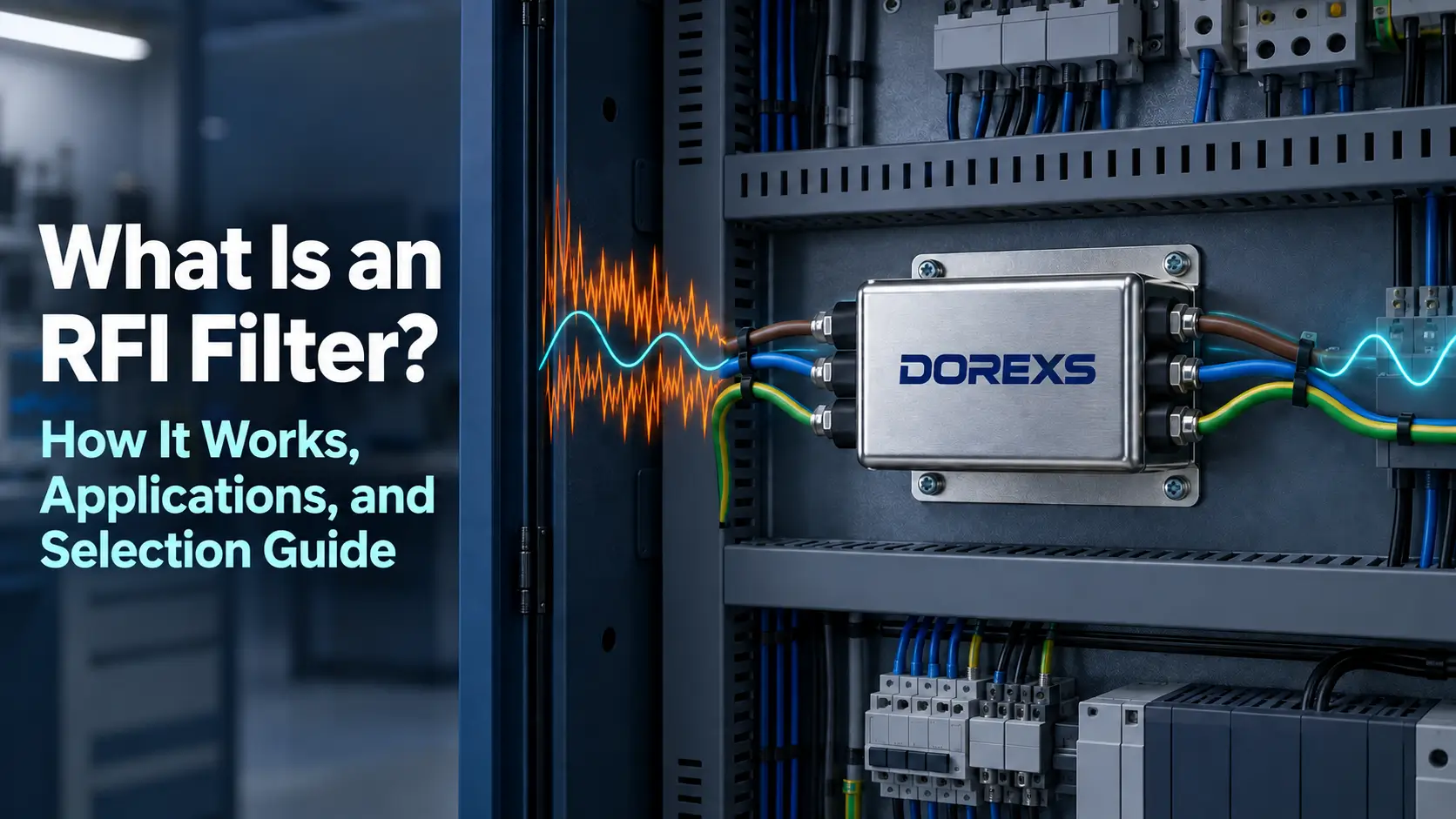
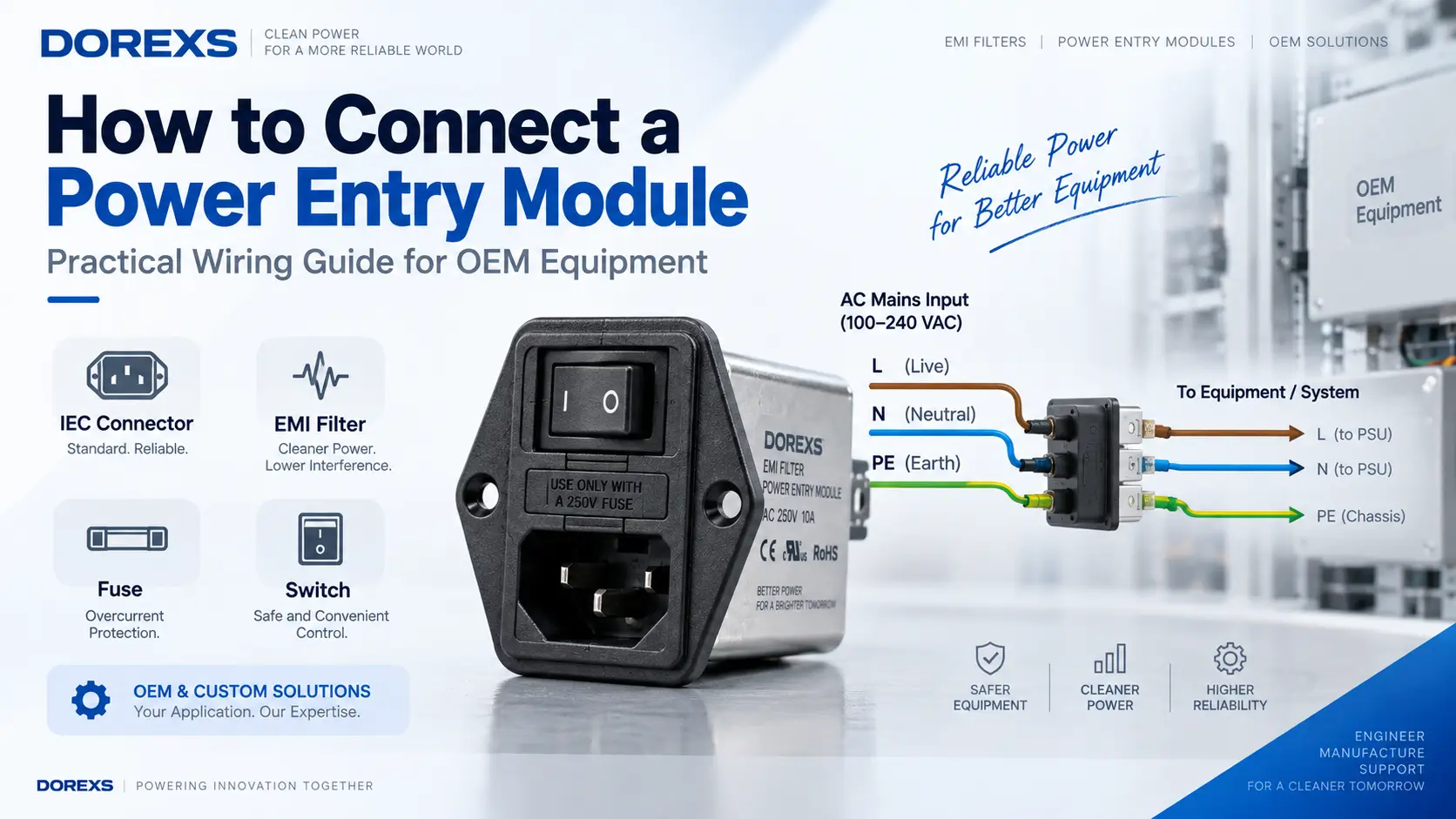
It is essential to correctly install EMI filters to ensure they perform at their best. Effective EMI filtering hinges on having a system with low impedance ground, which allows for the swift diversion of undesirable noise to the ground. To substantially cut down on EMI problems, it’s beneficial to keep wiring for control and power circuits distinct from one another.
To guard against radiated noise, employing shielded wiring and securing the shield at both ends is key. Placing an EMI filter in proximity to where power enters can greatly improve its ability to reduce noise interference.
By adhering to these guidelines during installation, you enhance your EMI filters’ efficiency and contribute to the dependable functioning of your electronic systems.
To guard against radiated noise, employing shielded wiring and securing the shield at both ends is key. Placing an EMI filter in proximity to where power enters can greatly improve its ability to reduce noise interference.
By adhering to these guidelines during installation, you enhance your EMI filters’ efficiency and contribute to the dependable functioning of your electronic systems.
Compliance with EMI Regulations
EMI filters are pivotal in aligning electronic designs with the necessary electromagnetic compatibility (EMC) standards. Such standards play a key role in guaranteeing that electronic devices function safely without causing mutual interference. To preserve the integrity and dependability of electronic systems, regulatory authorities rigorously enforce these EMC norms.
Within the European Union, adherence to the EMC Directive is obligatory for manufacturers aiming to achieve compliance for their electronics. It’s imperative for manufacturers to grasp regional EMC regulations thoroughly so they can ensure their products conform to locale-specific criteria. Often, achieving certification from recognized external entities is mandatory as proof of alignment with these stipulations.
Failing to meet EMI regulations may lead to serious legal consequences such as product recalls or harm one’s brand image. Employing best practices during setup contributes significantly towards meeting relevant standards and cutting down on expenses associated with reiterative testing processes. Conducting comprehensive EMI tests – crucial for CE marking certification, FCC authorization, or alternative endorsements – paves the way toward accessing markets and sustaining product trustworthiness.
Within the European Union, adherence to the EMC Directive is obligatory for manufacturers aiming to achieve compliance for their electronics. It’s imperative for manufacturers to grasp regional EMC regulations thoroughly so they can ensure their products conform to locale-specific criteria. Often, achieving certification from recognized external entities is mandatory as proof of alignment with these stipulations.
Failing to meet EMI regulations may lead to serious legal consequences such as product recalls or harm one’s brand image. Employing best practices during setup contributes significantly towards meeting relevant standards and cutting down on expenses associated with reiterative testing processes. Conducting comprehensive EMI tests – crucial for CE marking certification, FCC authorization, or alternative endorsements – paves the way toward accessing markets and sustaining product trustworthiness.
DOREXS EMI Filter
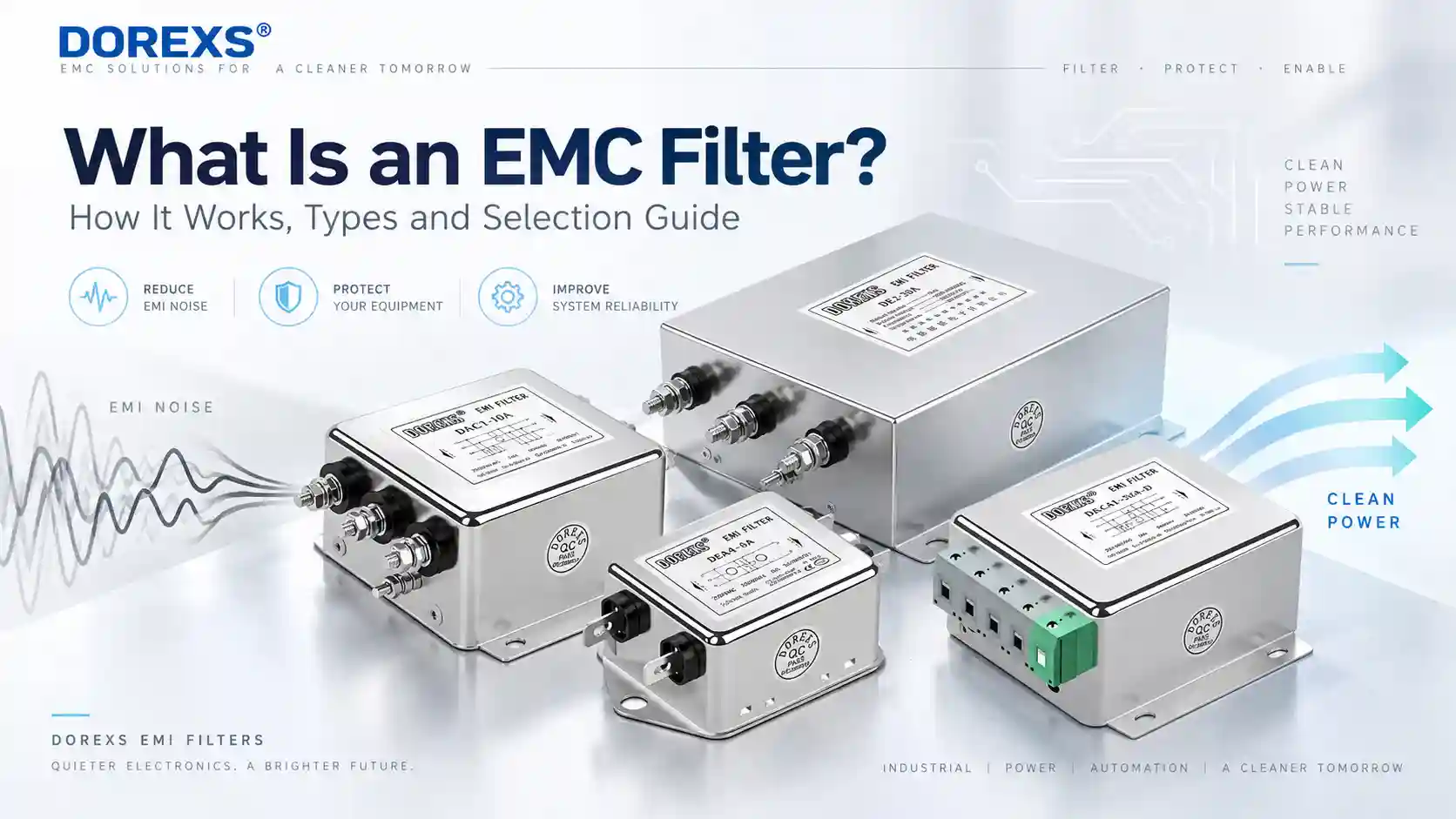
DOREXS stands at the forefront of EMI filter production, delivering an extensive array of options tailored to address a multitude of electromagnetic noise suppression requirements. Their offerings are crafted for optimal effectiveness in mitigating electromagnetic interference, thereby safeguarding the consistent performance of electronic devices utilized across diverse sectors.
Renowned for their superior quality and efficacy, DOREXS’s EMI filters are highly regarded among industries that demand stringent EMI suppression measures. The company provides both passive and active emi filter solutions designed to fulfill distinct needs while adhering to EMC regulations—contributing significantly to the enhanced dependability of various electronic systems.
Renowned for their superior quality and efficacy, DOREXS’s EMI filters are highly regarded among industries that demand stringent EMI suppression measures. The company provides both passive and active emi filter solutions designed to fulfill distinct needs while adhering to EMC regulations—contributing significantly to the enhanced dependability of various electronic systems.
Summary
In essence, EMI filters serve as critical elements in contemporary electronic environments. They shield delicate electronic devices from the detrimental impacts of electromagnetic interference, thereby promoting dependable functionality and extended service life. Comprehension of the various EMI filter types, their individual components, and their operational principles is essential for making educated choices regarding the most appropriate filters for your specific requirements.
Selecting an apt EMI filter necessitates a thorough evaluation of several aspects such as electrical specifications, environmental conditions, and adherence to regulatory standards. Correct installation is vital to optimize these filters’ efficacy. By adhering to recommended practices and opting for premium offerings like those provided by DOREXS company, you can enhance seamless operation within your electronic systems.
The significance of EMI filtering simply cannot be overemphasized—our increasing dependence on electronic gadgets simultaneously escalates our need for proficient EMI suppression strategies. With insights obtained from this guide at hand, you have the capability to defend your apparatuses against electromagnetic noise ensuring that they maintain uninterrupted operations.
Selecting an apt EMI filter necessitates a thorough evaluation of several aspects such as electrical specifications, environmental conditions, and adherence to regulatory standards. Correct installation is vital to optimize these filters’ efficacy. By adhering to recommended practices and opting for premium offerings like those provided by DOREXS company, you can enhance seamless operation within your electronic systems.
The significance of EMI filtering simply cannot be overemphasized—our increasing dependence on electronic gadgets simultaneously escalates our need for proficient EMI suppression strategies. With insights obtained from this guide at hand, you have the capability to defend your apparatuses against electromagnetic noise ensuring that they maintain uninterrupted operations.
Frequently Asked Questions
What is an EMI filter?
An EMI filter is a device that suppresses electromagnetic interference, ensuring the protection of electronic devices from unwanted electromagnetic noise. Its primary function is to maintain the integrity of electronic signals by reducing interference.
What are the main types of EMI filters?
The main types of EMI filters are active and passive; active filters utilize components to enhance noise suppression, while passive filters rely on capacitors and inductors to block high-frequency noise.
Understanding these types is crucial for effective electromagnetic interference mitigation.
Understanding these types is crucial for effective electromagnetic interference mitigation.
How do EMI filters work?
EMI filters operate by allowing only the desired lower frequency currents to flow through, while blocking higher frequency noise. This ensures that the device receives only the intended signal.
The result is a reduction in interference and an improvement in overall device performance.
The result is a reduction in interference and an improvement in overall device performance.
Why is EMI filtering important in medical devices?
EMI filtering is essential in medical devices as it safeguards sensitive equipment from electromagnetic interference, thereby ensuring reliable operation and enhancing patient safety.
What factors should I consider when choosing an EMI filter?
It is essential to consider electrical specifications, including voltage and current ratings, the type of equipment and its components, environmental conditions, and compliance with relevant EMC standards when selecting an EMI filter.
These factors will ensure optimal performance and regulatory adherence.
These factors will ensure optimal performance and regulatory adherence.
Top Strategies on How to Reduce Electromagnetic Interference (EMI)
Top AC Line EMI Filter Options for Effective Protection