How Does an EMI Filter Work
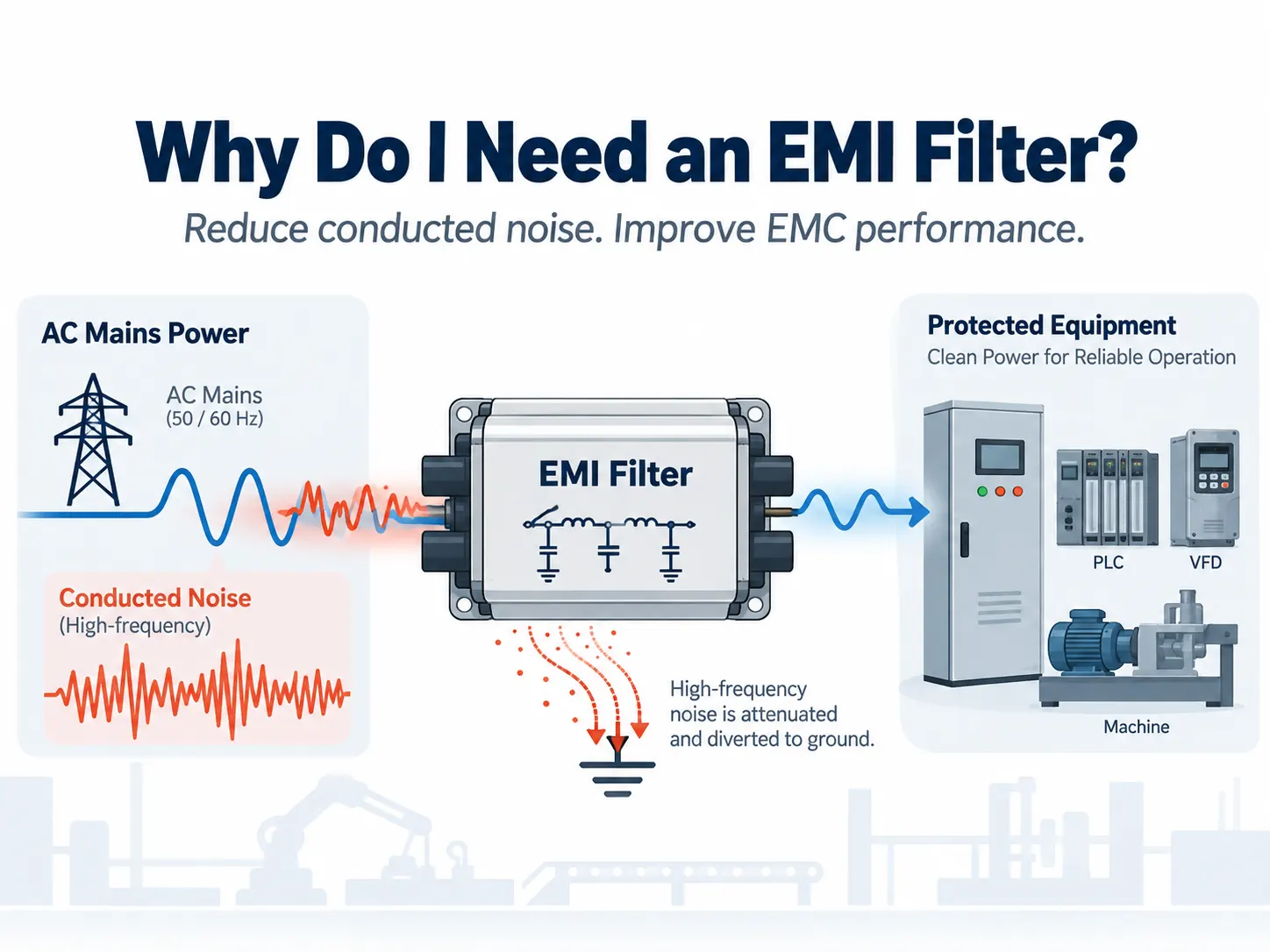
To understand how EMI filters work, we first need to know what EMI is and why we need filtering. EMI is electromagnetic radiation interference generated in electronic equipment or the natural environment. Its presence may cause the electronic equipment itself or other surrounding electronic equipment to operate normally.
EMI filters are essential for protecting electrical systems and electronic systems from electromagnetic noise. They are commonly used in a wide range of electrical devices to ensure stable operation.
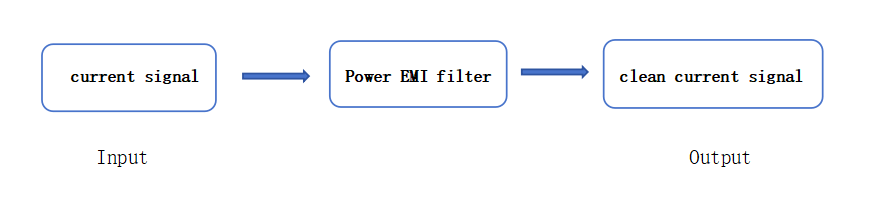
Common EMI filters include active filters, passive filters, analog filters and digital filters. These are apparatuses made up of various distinct parts and are typically positioned between circuits or numerous systems via impedance matching. The network can filter out specific frequencies in the power line, allowing equipment to operate safely and stably. It can isolate or eliminate unwanted frequencies, ensuring a reliable power signal for the equipment. In this article we focus on how power supply EMI filters work. A block diagram is often used to illustrate the placement of EMI filters within an electronic system.
Introduction to Electromagnetic Interference
Electromagnetic interference (EMI) is a widespread challenge in the world of electronic devices, often leading to unwanted disturbances that can degrade performance or even cause system failures. EMI can originate from a variety of sources, including power supplies, electronic controls, and other electronic devices operating nearby. There are two main types of EMI: conducted EMI and radiated EMI. Conducted EMI travels along conductors such as power lines or signal wires, while radiated EMI is transmitted through the air as electromagnetic waves, independent of any physical conductor. Both forms of EMI can introduce high frequency electromagnetic noise into sensitive circuits, disrupting normal operation and affecting signal quality. To combat these issues, electromagnetic interference filters (EMI filters) are employed to suppress high-frequency noise and ensure reliable operation of electronic equipment.
What is an EMI Filter
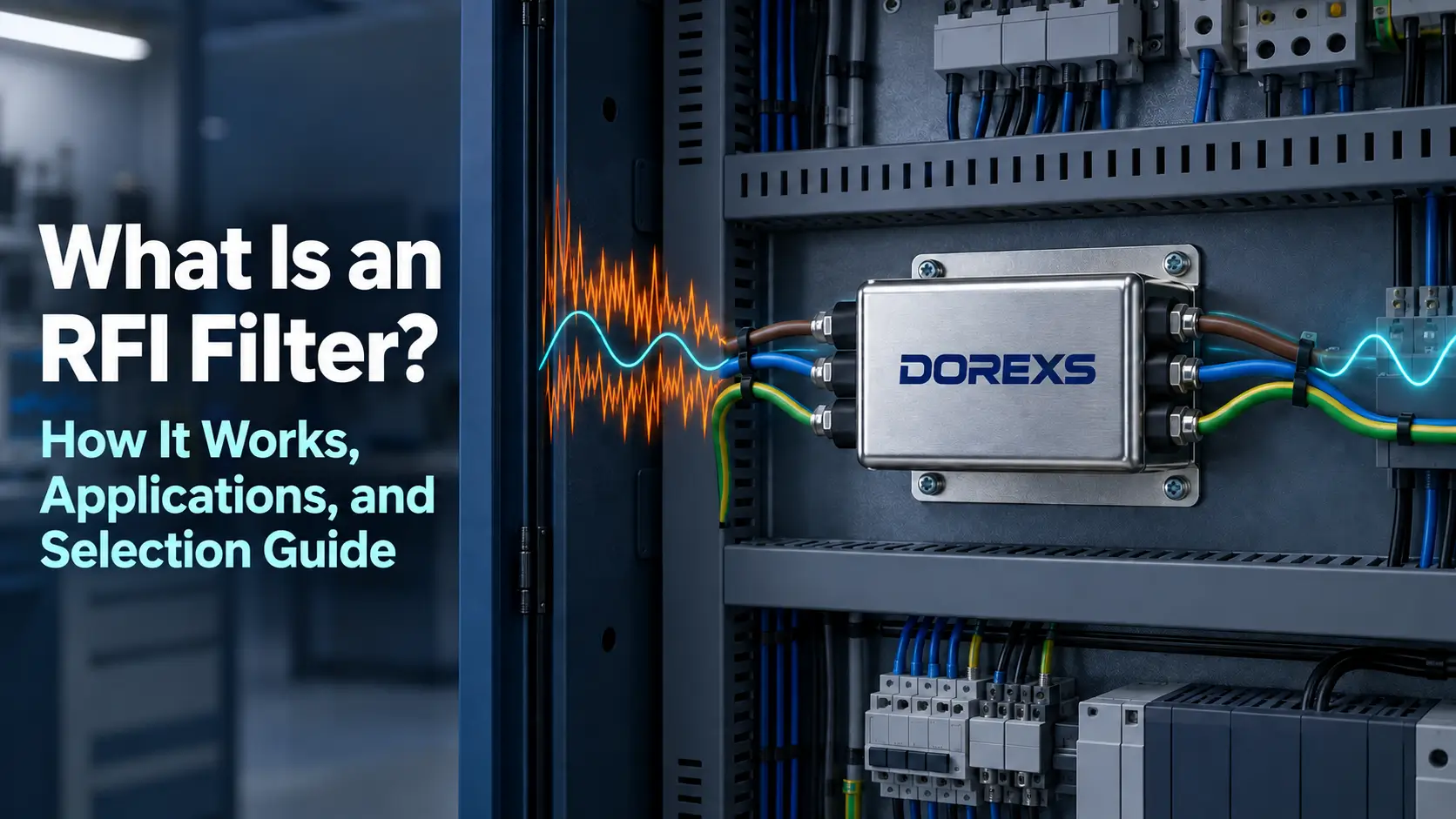
An EMI filter is a specialized electronic device designed to suppress electromagnetic interference within electrical circuits. By reducing unwanted noise and interference, EMI filters play a crucial role in enhancing the electromagnetic compatibility (EMC) of electronic equipment. These filters are commonly found in power supplies, communication systems, and industrial machinery, where they help prevent electromagnetic interference from impacting device performance. Typically constructed from passive components such as inductors, capacitors, and sometimes resistors, EMI filters are engineered to block or attenuate high-frequency signals associated with radiated EMI and conducted EMI. The primary function of an EMI filter is to allow the desired electrical signals to pass through while effectively reducing or eliminating electromagnetic interference EMI, ensuring stable and reliable operation of electronic devices.
EMI filter composition
EMI filters usually consist of capacitors, inductors and resistors. Each component has its own unique role.
Capacitors include X capacitors and Y capacitors. It is a component that stores electrical energy and can change the voltage through changes in current. Capacitors provide a low impedance path for high-frequency noise to ground, which is essential for effective noise filtering.
1.X capacitor: connected between the neutral line and the live line, its function is to filter out differential mode interference noise
2.Y capacitor: connected between the live line/neutral line and ground, its function is to filter out common mode interference noise
2.Y capacitor: connected between the live line/neutral line and ground, its function is to filter out common mode interference noise
Inductors include common mode chokes and differential mode inductors, which are components that store magnetic energy and can change the size of the magnetic field through changes in current. Inductors provide a low impedance path for low-frequency or DC signals, allowing them to pass through while blocking high-frequency noise.
1. Common mode choke: installed between the live wire and the neutral wire, sharing the magnetic core and filtering out common mode noise.
2. Differential mode inductor: connected in series between the live wire and the neutral wire, its function is to increase the impedance to differential mode noise.
2. Differential mode inductor: connected in series between the live wire and the neutral wire, its function is to increase the impedance to differential mode noise.
The resistor usually uses a damping resistor, whose function is to suppress the resonance phenomenon in the filter.
EMI filters are typically positioned at the point where the power or signal line enters the device; this entry point is known as the filter input. Identifying the noise source is crucial for effective EMI filtering, as it allows the filter to be properly designed and positioned to suppress interference.
Types of Filters
There are several types of EMI filters available to address different interference challenges. The most common are passive EMI filters, which utilize passive components like inductors and capacitors to suppress electromagnetic interference. These passive EMI filters are widely used in power supplies and electronic devices due to their simplicity and effectiveness in blocking high frequency noise. In contrast, active EMI filters employ active electronic components to detect and dynamically cancel EMI signals, making them suitable for applications where advanced suppression of high frequency or radio frequency noise is required, such as in RF systems. The choice between passive and active EMI filters depends on the specific types of EMI present and the frequency range that needs to be filtered.
Common and Differential Mode Interference
EMI can be further categorized based on how the interference appears on the power line: common mode and differential mode. Common mode interference occurs when the same noise signal is present on both the positive and negative conductors relative to ground, while differential mode interference is present only between the two conductors. EMI filters are designed to address both types of interference. Common mode chokes are used to attenuate noise that appears equally on both lines, while differential mode chokes target noise that exists between the lines. Selecting the right filter configuration is essential for effective suppression of both common mode and differential mode noise, ensuring optimal performance in a wide range of EMI filter applications.
How EMI filtering works
The working principle of the EMI filter is mainly based on filtering out differential mode interference signals and common mode interference signals.
1. Differential mode noise suppression
Capacitors utilize their characteristics to pass high frequency and isolate low frequency, introducing the high frequency interference current of the live wire into the neutral wire.
2. Common mode noise suppression
Utilizing the characteristics of capacitors to pass high frequencies and isolate low frequencies, the high-frequency interference current of the live wire is connected to the ground.
1. Differential mode noise suppression
Capacitors utilize their characteristics to pass high frequency and isolate low frequency, introducing the high frequency interference current of the live wire into the neutral wire.
2. Common mode noise suppression
Utilizing the characteristics of capacitors to pass high frequencies and isolate low frequencies, the high-frequency interference current of the live wire is connected to the ground.
In addition, the high-impedance characteristics of the inductor coil can be used to reflect the high-frequency interference current back to the interference source. A passive EMI filter relies on these passive components, such as capacitors and inductors, to suppress unwanted noise. Interference suppression ferrite can also be used to convert a certain amount of high-frequency interference signals into heat. Through the collaborative work of each component, interference signals can be effectively suppressed or filtered. EMI filters are particularly effective at reducing conducted noise that travels along power lines.
Besides passive EMI filters, an active EMI filter uses active components like op-amps to detect, amplify, and inject compensation currents for enhanced noise cancellation, especially for low-frequency noise in sensitive circuits. Some active EMI filters employ current sensing voltage cancellation techniques to improve low-frequency noise attenuation by cancelling noise signals through compensation currents. Another advanced method, voltage sensing current cancellation, uses voltage sensing to counteract noise currents in low-level and sensitive circuits, further mitigating low-frequency EMI.
 |
| Basic working principle |
Filter Design Considerations
Designing an effective EMI filter involves careful consideration of several key factors. The frequency range of the unwanted noise, the specific type of EMI (common mode or differential mode), and the intended application all influence the filter design. The selection of components—such as inductors and capacitors—directly impacts the filter’s ability to block or attenuate high frequency signals while allowing desired signals to pass. Additionally, the filter’s configuration, including the use of common mode and differential mode chokes, must be tailored to the application for maximum EMI suppression. Other important considerations include the filter’s operating temperature, power handling capabilities, and protection against electrical shock, all of which contribute to the safe and reliable operation of electronic devices. By addressing these factors, engineers can design EMI filters that effectively mitigate electromagnetic interference and enhance the performance and longevity of sensitive electronic equipment.
Practical applications of EMI filters
Power Supply EMI Filters: EMI filters used in power supplies for electronic equipment
 |
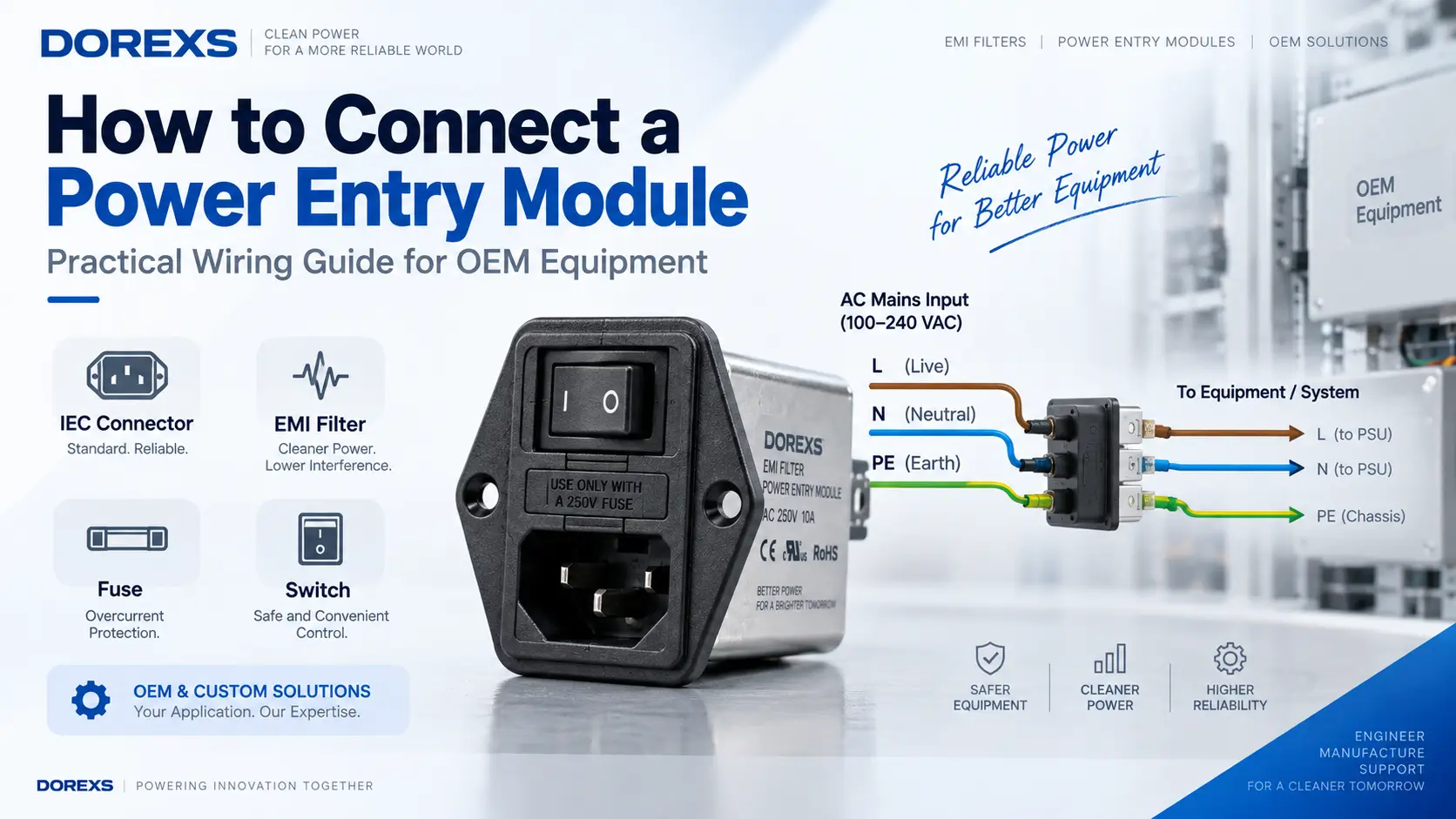
EMI filters are critical components in electronic power supplies, including both dc-dc power supplies and ac-dc power supply designs, to minimize electromagnetic interference and maintain the performance of electronic systems. In medical equipment, EMI filters are essential to prevent malfunctions or failures caused by electromagnetic interference, which can have serious consequences. EMI suppression filters and EMC filters are required to meet regulatory standards and ensure reliable operation in various electronic devices. In demanding environments, external EMI filters can be added alongside internal filtering to provide enhanced EMI suppression.
Why you need EMI filters
The reasons for using EMI filters are usually as follows:
- First, from the perspective of EMI principles, using EMI filters can suppress electromagnetic interference signals and reduce or eliminate mutual interference between electronic devices. EMI suppression filters are electronic components specifically designed to reduce electromagnetic noise in various devices and systems, helping to meet regulatory requirements.
- Secondly, in terms of usage effects, when electronic equipment is equipped with EMI filters, the electronic signals it presents will be more accurate and complete than electronic equipment without EMI filters. Improved performance in electronic devices often leads to increased EMI, making effective filtering essential to maintain device functionality. EMI filters reduce transmit noise and EMI noise, ensuring signal integrity and system reliability.
- EMI filters also protect against voltage surges and fluctuations in input voltage, safeguarding sensitive components and ensuring stable operation. EMI/EMC compliance is a key reason for using EMI filters, as they help equipment comply with specified limits for radiated emissions set by regulatory agencies such as FCC, IC, and CE.
- Finally, in terms of laws and regulations, most countries and regions have clear standards for electromagnetic signal conduction and radiation. Using EMI filters allows your equipment to easily meet EMC specifications. The above descriptions are all power supply filters. In essence, the AC power EMI filter is a low-pass filter. Its operating frequency range is 50/60Hz power frequency. Filtering requirements may be met under general power supply conditions, but there are often more complex electromagnetic environments that require EMI filters. At this time, we need EMI filters with better filtering performance.
It is important to note that shielding is necessary to block radiated EMI, as an unshielded EMI filter may still allow noise to escape and cause radiated emissions.
Distinguish EMI filters from the essence of their working performance
Level 1 EMI filter
First-order EMI filters usually consist of a basic filter consisting of a capacitor and an inductor. They filter out high-frequency noise on the power line through a combination of capacitors and inductors.
First-order EMI filters usually consist of a basic filter consisting of a capacitor and an inductor. They filter out high-frequency noise on the power line through a combination of capacitors and inductors.
Secondary EMI filter
A secondary EMI filter consists of two or more capacitors and inductors that can be filtered on the premise of a primary filter. This two-component filter is sometimes called an "L" filter.
A secondary EMI filter consists of two or more capacitors and inductors that can be filtered on the premise of a primary filter. This two-component filter is sometimes called an "L" filter.
Three-stage EMI filter
Three-stage EMI filter Three-stage or multi-stage EMI filters use a combination of three or more filter elements to maximize the filtering of high-frequency noise on power lines or signal lines. They are suitable for applications with extremely high requirements for electromagnetic compatibility (EMC). These multi-stage filters are often used in systems with sensitive components like clock circuits, which are particularly susceptible to high-frequency noise. These types of filters are sometimes called “pi (π)” or “T” filters.
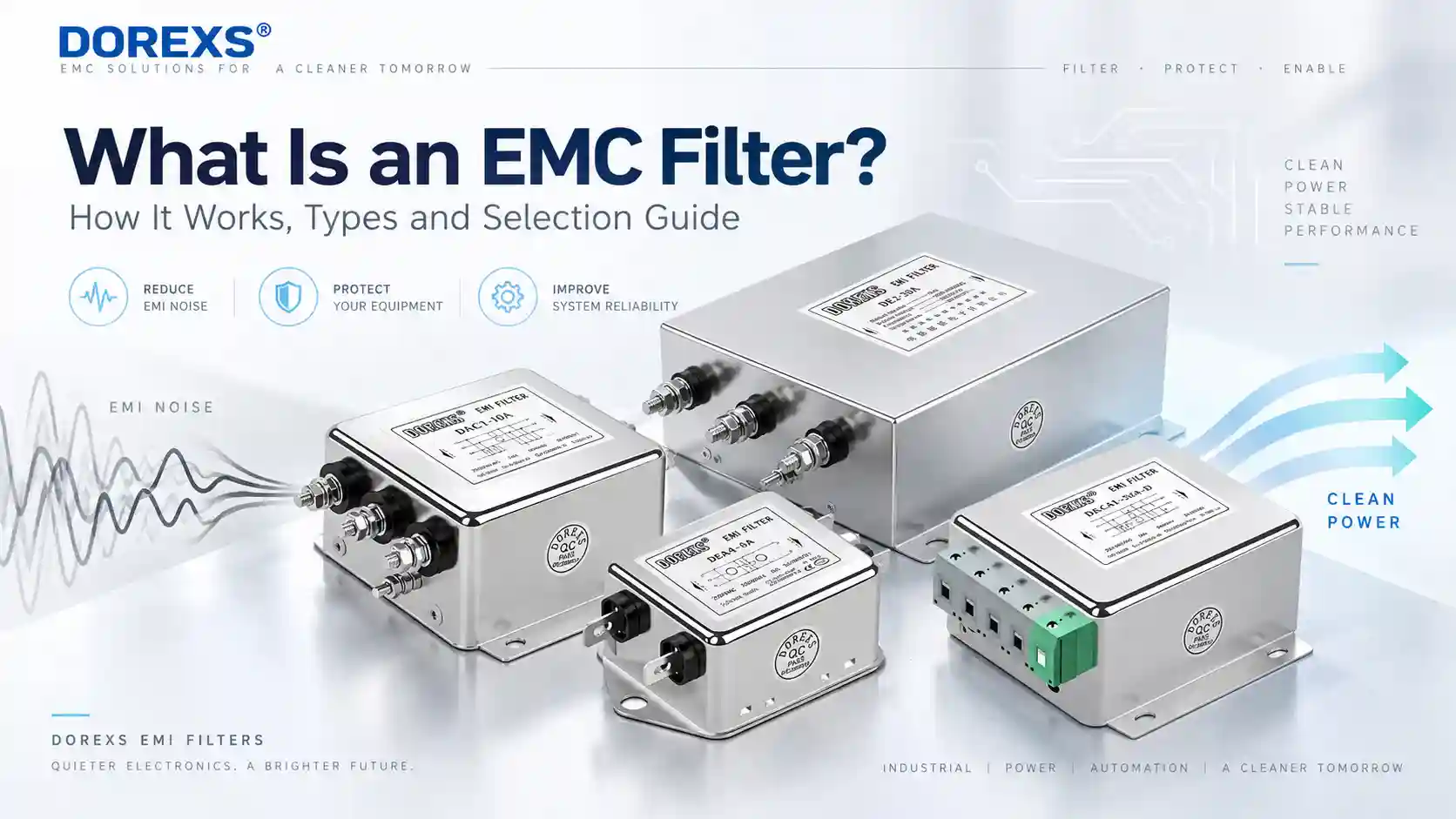
DOREXS EMI filters
As a key component for electromagnetic interference suppression, EMI filters play a vital role in modern electronic equipment. By effectively suppressing common-mode and differential-mode interference, EMI filters not only improve the electromagnetic compatibility of equipment, but also enhance the stability and reliability of the system. As a professional manufacturer of EMI filters, DOREXS has been committed to designing and optimizing these filters to meet the growing needs for electromagnetic compatibility and promote the continuous advancement of electronic technology.
Three Phase EMI Filter Design
Understand What Does an EMI Filter Do