Top Power Supply Filter Design Techniques for Reliable Performance
Effective power supply filter design is essential to reduce noise and ensure stable power delivery in electronic systems. This article will guide you through the core techniques, components, and best practices needed to create robust power supply filters, helping you maintain clean and reliable power in your devices.

Key Takeaways
- Power supply filters are essential for eliminating noise and ensuring clean, stable power delivery to sensitive electronic devices.
- Effective design incorporates key components like capacitors, inductors, and resistors, each playing a critical role in noise suppression and stability.
- Simulation tools and proper placement of filters are crucial in designing power supplies that comply with EMI standards and optimize performance.
Understanding Power Supply Filter Design
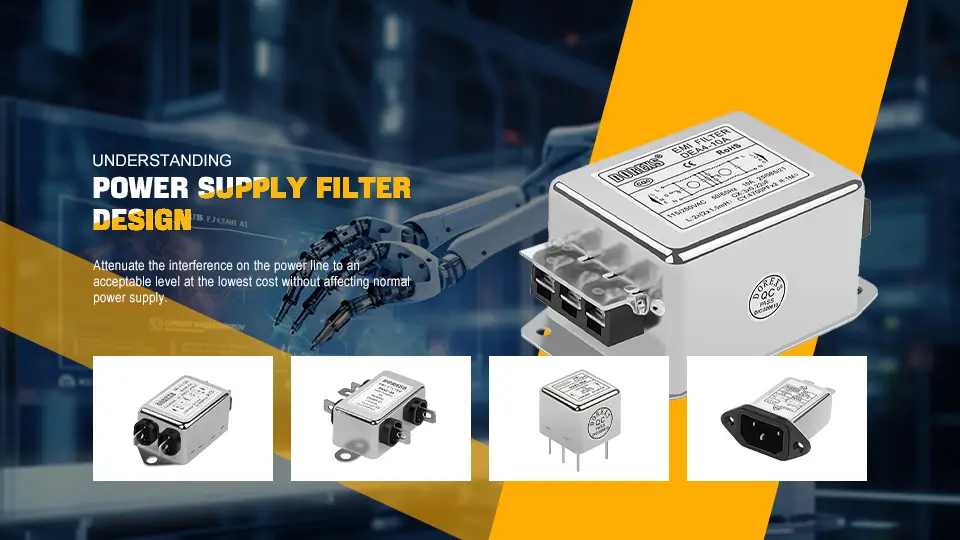
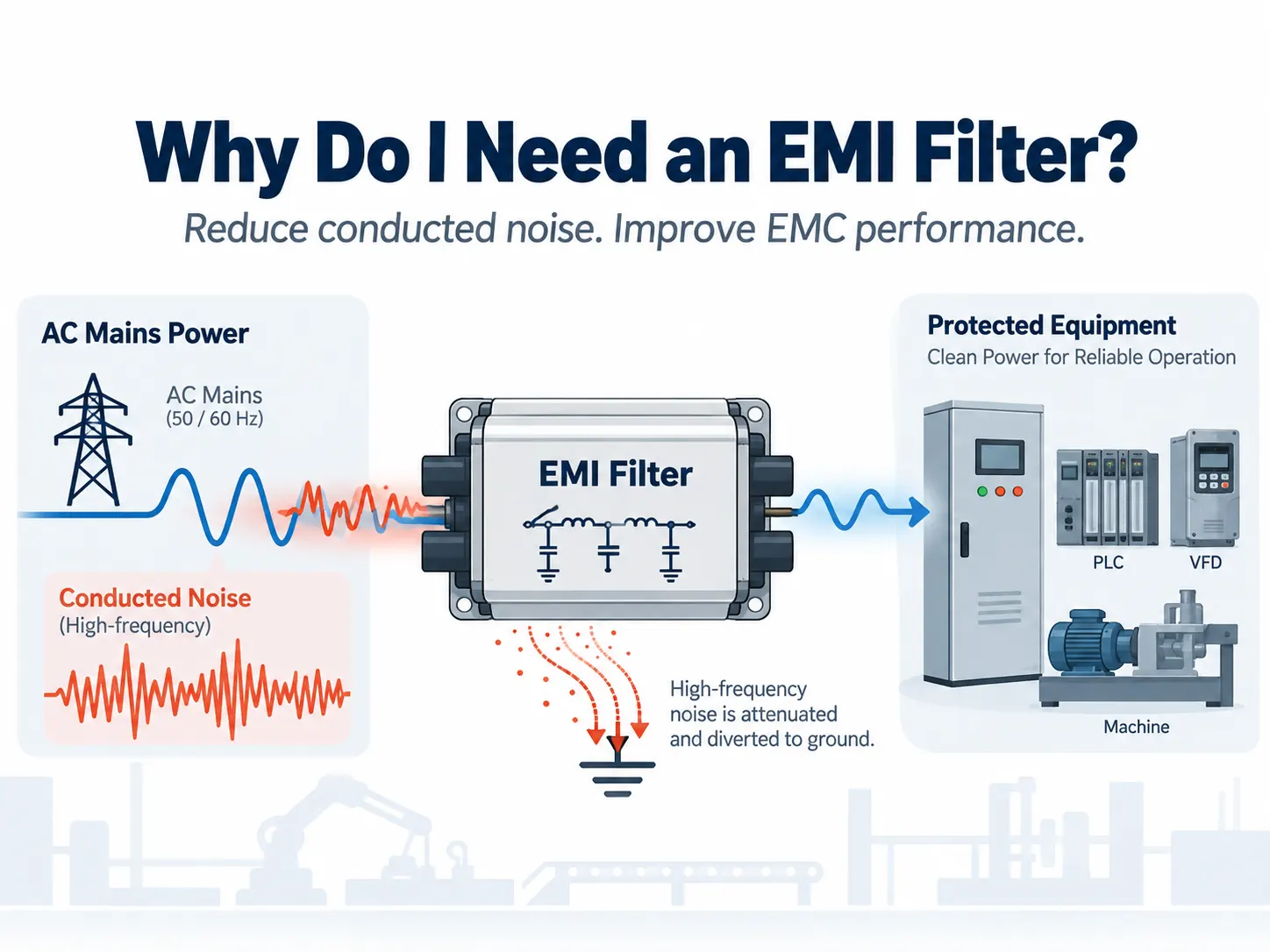
Power supply filters are vital for system reliability, eliminating noise that can disrupt performance. They ensure electronic devices receive clean, stable power by removing unwanted frequency content from electrical signals, maintaining the integrity of the power supply.
Switch-mode power supplies (SMPS) require effective filtering to prevent excessive noise on supply voltage rails, which can affect sensitive equipment. Key noise types include broadband conducted EMI, switching noise, differential mode noise, radiated EMI, and switch mode supplies.
Such noises can cause output voltage drops and compromise accuracy in sensitive modules. Poor noise management may result in voltage ripple exceeding 10% of DC output, which destabilizes operations. Proper power supply filter design is thus crucial for reliable performance.
Key Components for Effective Filtering
Effective power supply filter design hinges on key components:
- Capacitors
- Inductors
- Resistors These elements filter unwanted noise and ensure clean, stable voltage delivery. Each component has a unique role, and their proper selection and integration are vital for optimal performance.
In the following sections, we will delve deeper into the specifics of each component and how they contribute to the overall filter design.
Choosing the Right Capacitors
Choosing capacitors with low equivalent series resistance (ESR) and equivalent series inductance (ESL) is crucial for effective power supply filtering. Electrolytic capacitors, with their low ESR and ESL, are particularly effective for high-frequency noise suppression, enhancing filter efficiency and response time.
Capacitance value and quality significantly impact filter performance. High-quality capacitors ensure efficiency and longevity, though capacitance can drop with DC bias voltage, potentially affecting performance.
X- and Y-capacitors effectively filter differential mode and common-mode noise, respectively. Informed component selection based on these factors enhances power supply filter effectiveness.
Selecting Inductors
Inductors play a critical role in power supply filter design. Their inductance value determines energy storage and release, vital for smoothing current flow and reducing noise. Selecting inductors with an appropriate current rating prevents saturation or overheating.
Core material, size, and operational frequency also significantly impact inductor performance. The core material influences efficiency and heat dissipation, while size and operational frequency determine suitability for specific applications. Careful selection of inductors meeting these criteria enhances filter performance and reliability.
The Role of Resistors
Resistors are key for managing damping and stability in filtering circuits. They control voltage change rates, contributing to overall stability, preventing oscillations, and ensuring steady operation by maintaining a stable transfer function, dc resistance, and load resistance.
Thus, the use of resistors is critical for optimizing the performance of power supply filters, making them indispensable in the design process.
Designing Low Pass Filters for Power Supplies
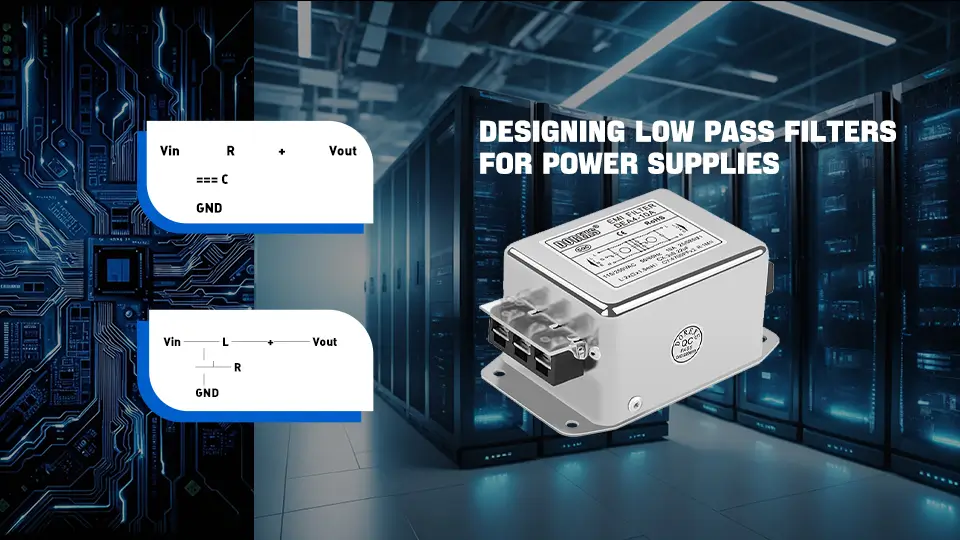
Low pass filters are fundamental in power supply design, often used with a reservoir capacitor to smooth output voltage and reduce noise. LC low pass filters are recommended for their superior noise reduction efficiency. However, careful consideration of parasitic elements is necessary for optimal performance and signal integrity.
Following the reservoir capacitor, a low pass filter or regulator stage further smooths the output. Maintaining a margin of 3 dB to 6 dB above EMI standard limits ensures compliance.
Evaluating power supply filters involves frequency sweeps and transfer function analysis to ensure optimal operation. Simulation tools like LTpowerCAD provide accurate performance matches for lower frequency noise peaks, essential for designing effective low pass filters.
LC Low Pass Filters
LC filters, composed of an inductor and a capacitor, are particularly effective in power supply design. They reduce AC ripple and noise by allowing high-frequency components to pass through the capacitor, while the inductor blocks these components at higher frequencies.
Key points about LC filters and noise suppression in switching power supplies:
Key points about LC filters and noise suppression in switching power supplies:
-
The ratio of capacitive reactance (XC) to inductive reactance (XL) in LC filters is more favorable than in RC filters, making LC filters more efficient.
-
LC filters at the input of buck regulators achieve greater noise suppression.
-
Positioning LC filters at the input stage is recommended for optimal noise reduction.
-
Switching power supplies often use a pi-filter configuration to minimize high-frequency noise.
When designing LC filters, ensure the inductor’s value is greater than the series inductance to prevent an underdamped response. Adding a parallel damping RC element can help mitigate this issue. These considerations are crucial for effective LC low pass filters in power supplies.
RC Low Pass Filters
RC filters are simpler and cheaper than LC filters, popular for low-frequency applications. Their roll-off rate is typically -20 dB per decade, indicating how quickly signals are attenuated beyond the cutoff frequency.
A capacitive filter smooths output voltage to provide constant DC, enhancing RC filter effectiveness in power supplies. RC filters, despite their simplicity, are valuable for their cost-effectiveness, making them practical for many applications.
Positioning Your Filters
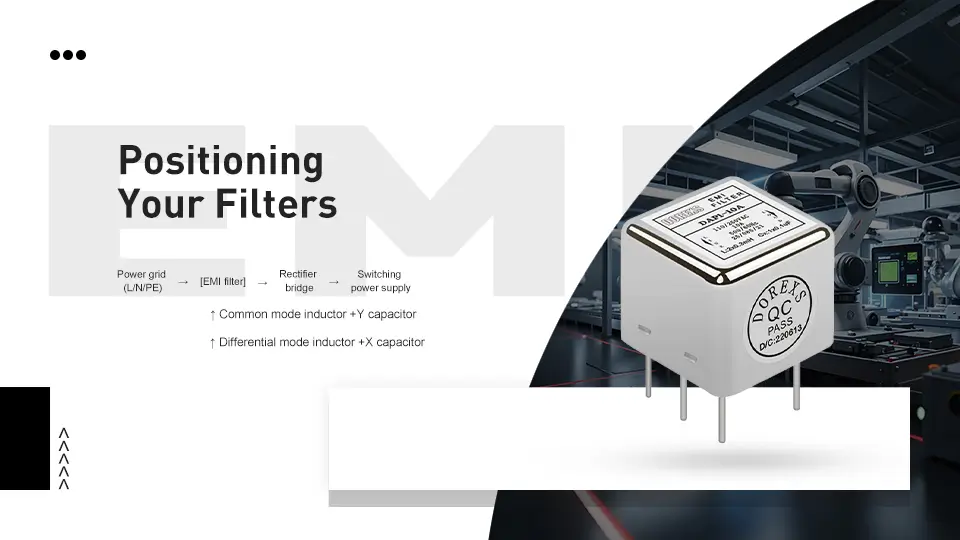
Filter effectiveness in a power supply circuit depends largely on strategic placement. Proper positioning enhances performance and manages conducted emissions and radiated emissions from switch-mode power supplies. EMI filters prevent noise from affecting connected equipment, ensuring overall power supply reliability.
Proper EMI capacitor placement isolates the power line from common-mode noise, enhancing input emi filter effectiveness. Knowing where to position filters is crucial for maximizing their effectiveness and ensuring clean power delivery.
Input Filter Placement
Filters at the input stage minimize noise and voltage spikes, enhancing circuit reliability. Input voltage filters effectively manage noise from switching transitions in a buck regulator.
Adding damping components attenuates the resonant peak in the input filter, improving performance. The following factors affect filter gain at higher frequencies, making component selection critical:
Adding damping components attenuates the resonant peak in the input filter, improving performance. The following factors affect filter gain at higher frequencies, making component selection critical:
-
ESR (Equivalent Series Resistance) of the filter capacitor
-
ESL (Equivalent Series Inductance) of the filter capacitor
-
Parallel capacitance of the filter inductor
Inductance of an input filter inductor may decrease under high impedance load currents due to saturation, which must be considered during design. The magnitude of the first few low-frequency noise harmonics and their harmonic content primarily determines the EMI filter size, guiding the design process.
Output Filter Placement
Output filters stabilize DC voltage and reduce noise from the power supply’s operation. Properly designed output filters effectively mitigate EMI from both the power supply and the load, ensuring smooth and reliable performance.
LC filters are particularly effective at the output stage due to the combined properties of inductors and capacitors, providing high attenuation of unwanted signals in an lc circuit. The quality factor (Q) defines an LC filter’s selectivity and bandwidth, influencing its effectiveness.
These considerations are essential for designing output filters that ensure clean and stable power delivery.
Simulating Power Supply Filter Designs
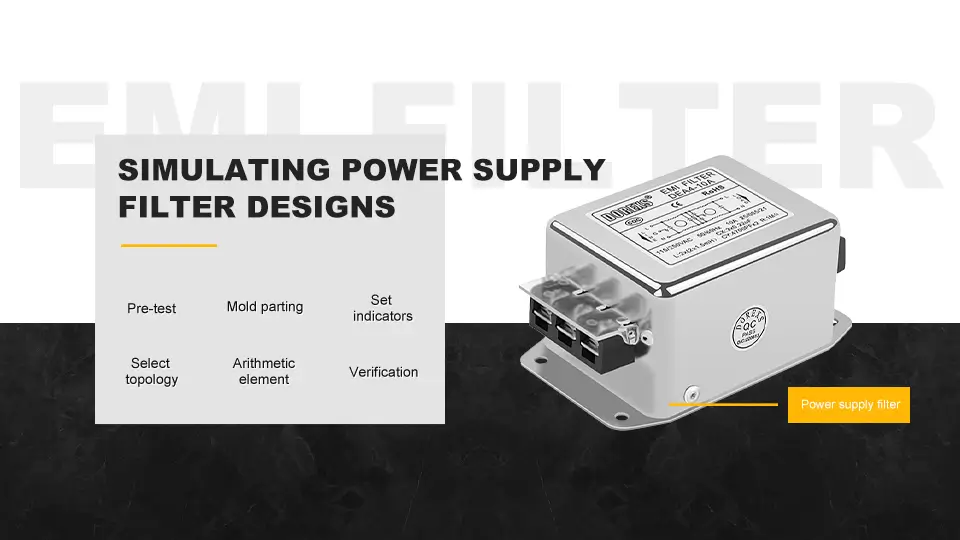
Simulation and layout tools are essential for effective power supply filter design. Predictive tools like LTpowerCAD aid in developing EMI filters, reducing the need for extensive real-world testing by providing accurate simulations of filter behavior under different conditions.
Lab test results remain critical to confirm the accuracy of predictive models and ensure filters perform as expected in real-world applications, highlighting their functionality. Optional damping networks may also be necessary to minimize EMI and ensure a stable power supply.
Using these simulation tools can significantly enhance the efficiency and effectiveness of the power supply design process.
SPICE Simulations
SPICE simulations are crucial in designing power supply filters, helping identify potential performance issues by modeling circuit behavior and predicting responses to various inputs and conditions.
Using SPICE simulations, designers can optimize filter designs before physical implementation, saving time and resources while ensuring effective noise suppression and stable power delivery.
Integrated Design Tools
Integrated design tools like Altium Designer enhance collaboration and efficiency in power supply design. Altium Designer, used for various electronic systems, offers:
-
A rules-driven engine
-
Real-time collaboration
-
Access to electronics supply chains
-
SPICE simulations
These tools ensure compliance with industry standards, helping users design filters that meet regulatory requirements. Leveraging integrated design tools, designers can streamline workflow, ensure design accuracy, and produce high-quality power supply filters meeting modern demands.
Practical Tips for Power Supply Filter Design
Designing power supply filters requires balancing safety and performance. High-quality capacitors are key for effective filtering, influencing both performance and longevity. Successful designs significantly improve performance, reduce noise, and ensure signal integrity.
Tools like WEBENCH® Circuit Designer allow for customized design and simulation of power supply and active filter circuits, providing valuable insights and guidance. Balancing safety and performance is essential to mitigate risks associated with power supply noise in the pcb layout.
Following practical tips and best practices, designers can create robust and reliable power supply filters tailored to their applications.
Component Selection
Careful selection of power supply components ensures electrical function and reliability. Before designing an EMI filter, consider the following crucial elements:
-
Selecting the switching frequency
-
Choosing the power stage inductor
-
Selecting capacitors
-
Choosing FETs
By carefully choosing these components, designers can optimize the performance and reliability of their power supply filters, ensuring effective noise suppression and stable operation.
Managing Parasitic Elements
Parasitic elements, including capacitance and inductance, can significantly affect the performance and reliability of power supply filters. Parasitic capacitance can introduce unwanted coupling between circuit elements, leading to instability and noise issues. Parasitic inductance can create resonances that degrade filter response and increase output ripple.
Mitigating parasitic effects involves careful layout design and component selection to minimize unintended paths. By addressing these parasitic components, designers can improve the performance and reliability of their power supply filters, ensuring clean and stable power delivery.
Ensuring Compliance
Compliance with EMI standards such as CISPR 22, CISPR 25, and MIL-STD-461G is essential in filter design to ensure the reliable operation of power supplies. High-frequency switch-mode power supplies commonly generate noise that can interfere with performance, necessitating effective filtering solutions. RC filters can achieve a typical reduction ratio of ripple amplitude of 25:1, making them a valuable component for meeting design compliance.
When EMI spikes exceed specified limits, a red warning is displayed on the EMI vs. Specification schematic, indicating the need for design adjustments. Ensuring compliance with industry standards is crucial for achieving reliable and effective power supply filter designs.
Real-World Examples of Power Supply Filter Design
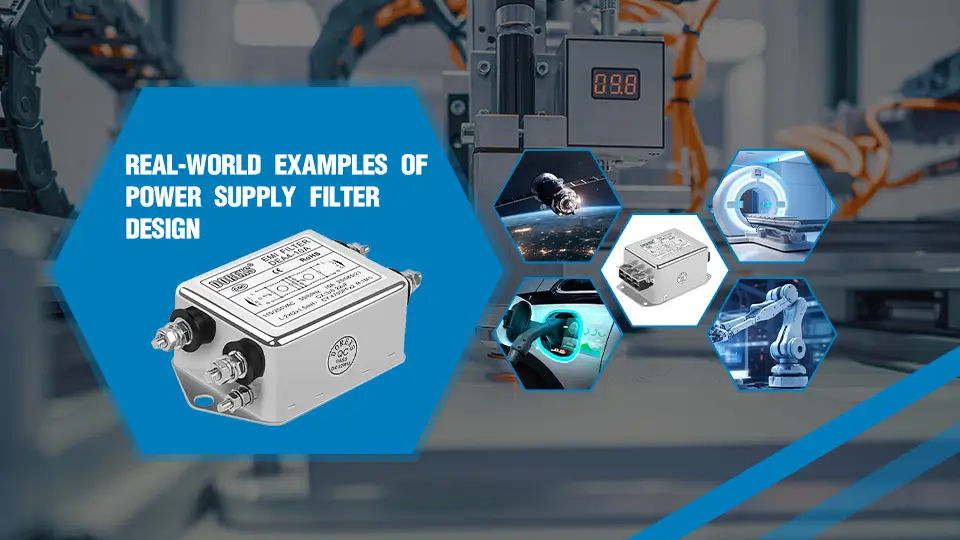
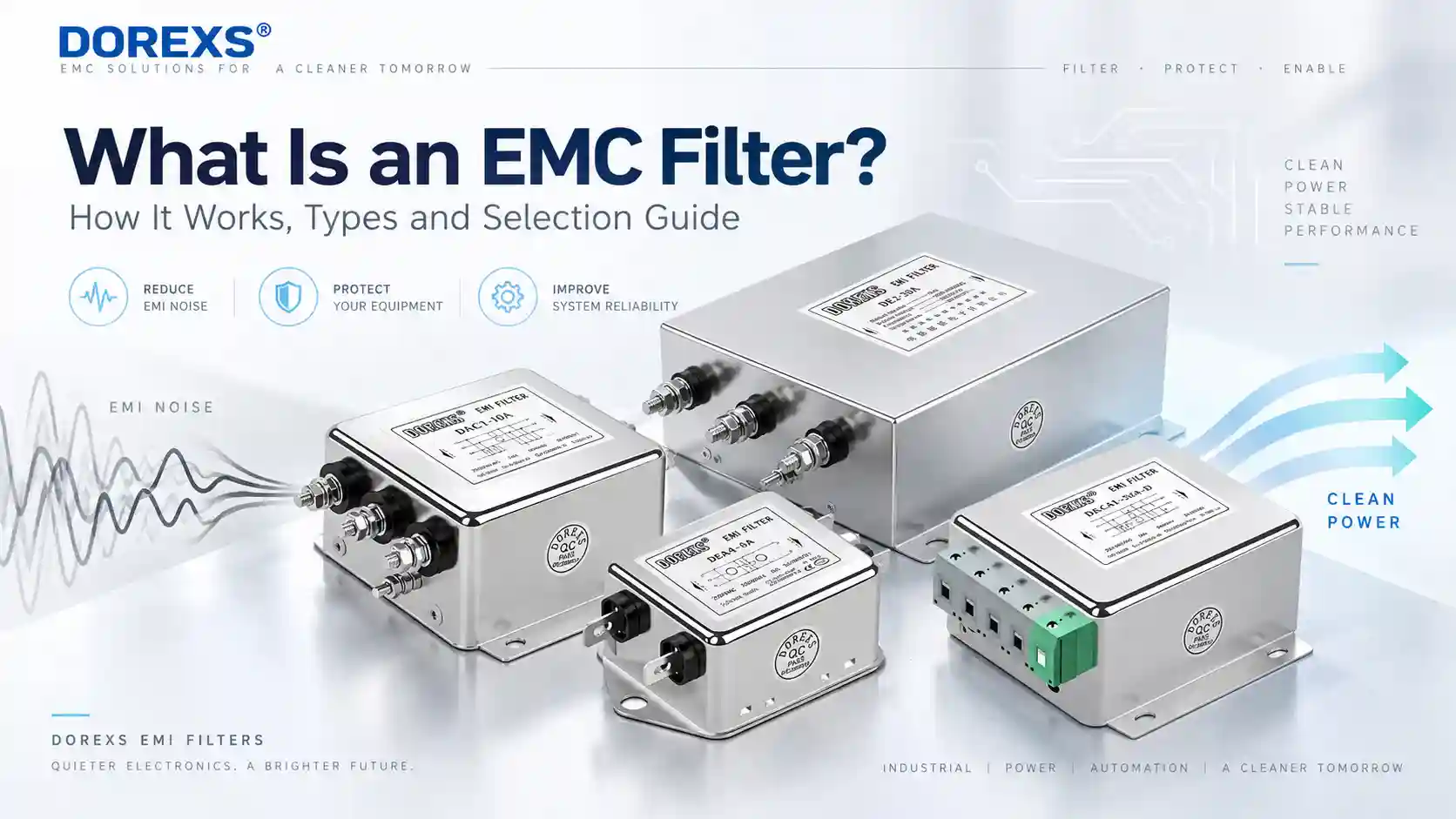
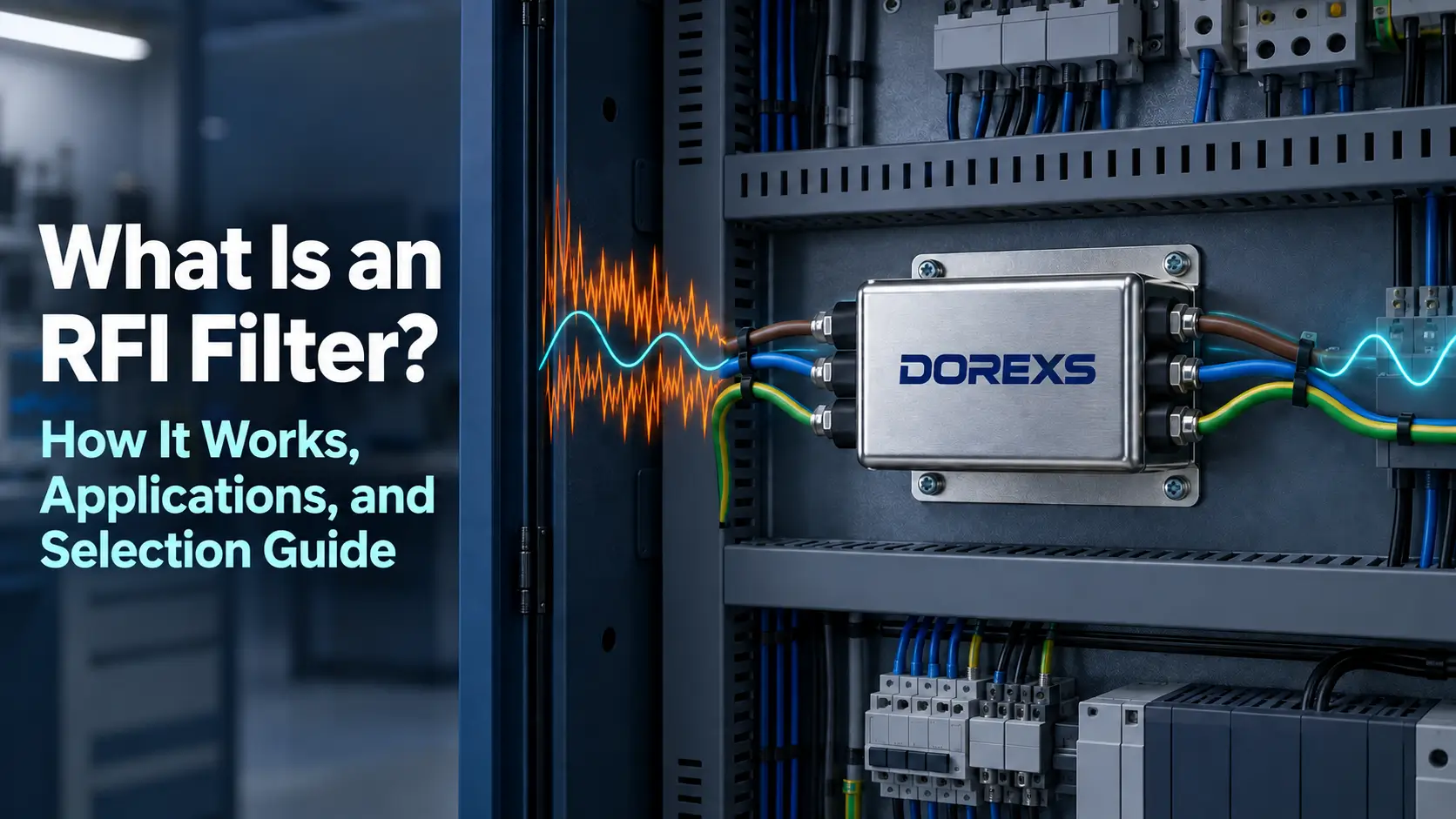
Case studies provide valuable insights into the success of various filter designs in achieving desired performance levels. Studying examples like the DOREXS Power Supply EMI Filter can guide engineers in developing robust and compliant filter solutions for various applications. DOREXS filters help in the reduction of electromagnetic interference, enhancing overall reliability and performance.
High-Frequency Switching Supplies
Designing high-frequency switching supplies requires careful consideration of filter performance to mitigate noise and ensure reliable operation. Power supply noise can significantly reduce the clock frequency of high-speed microprocessors by 6.7%, highlighting the importance of effective filtering.
To address these challenges, engineers must select appropriate filter components and design configurations that effectively suppress high-frequency noise. By studying successful examples of high-frequency switching supplies, designers can learn valuable lessons and apply them to their own projects, ensuring optimal performance and reliability.
Sensitive Analog Circuits
For sensitive analog circuits, implementing proper filtering is crucial to prevent distortion and ensure accurate signal transmission. Proper filtering can significantly enhance the accuracy of signal measurements by reducing interference, making it essential for maintaining signal clarity.
Sensitive analog circuits often require specialized filters to prevent noise from compromising their operation. By studying real-world examples, designers can gain insights into effective filtering strategies that ensure the reliable performance of sensitive analog devices.
Sensitive analog circuits often require specialized filters to prevent noise from compromising their operation. By studying real-world examples, designers can gain insights into effective filtering strategies that ensure the reliable performance of sensitive analog devices.
Summary
In the intricate world of power supply filter design, understanding the role and selection of key components, strategic filter placement, and the importance of simulations and compliance are crucial. By following the guidelines and insights provided in this blog post, designers can create robust power supply filters that ensure clean and stable power delivery. Embrace these techniques and transform your power supply designs into paragons of reliability and performance.
Frequently Asked Questions
Why are power supply filters important for system reliability?
Power supply filters are crucial for system reliability as they eliminate noise and provide clean, stable power delivery, thereby enhancing overall performance. Their role in maintaining consistent voltage is essential for preventing system malfunctions and ensuring longevity.
What are the key components used in power supply filters?
The key components used in power supply filters are capacitors, inductors, and resistors, each fulfilling a distinct function in the filtering process. These components work together to ensure stable and clean power delivery.
How do LC low pass filters work in power supplies?
LC low pass filters work in power supplies by utilizing an inductor and a capacitor to effectively reduce AC ripple and noise, thereby improving the overall performance of the system. This filtration is crucial for achieving cleaner and more stable power output.
What role do SPICE simulations play in filter design?
SPICE simulations are crucial in filter design as they model circuit behavior and predict responses, enabling the identification of potential performance issues effectively. This predictive capability ensures more reliable and optimized filter performance.
Why is compliance with EMI standards important in filter design?
Compliance with EMI standards is crucial in filter design as it guarantees reliable operation of power supplies by adhering to industry benchmarks for noise suppression and overall performance.
Top Techniques to Filter Electrical Noise: Boost Your Circuit Performance
Best Plug in EMI Filter Solutions for Reliable Performance