What is 3 Phase EMI Filter: A Solid Guardian of the Power System

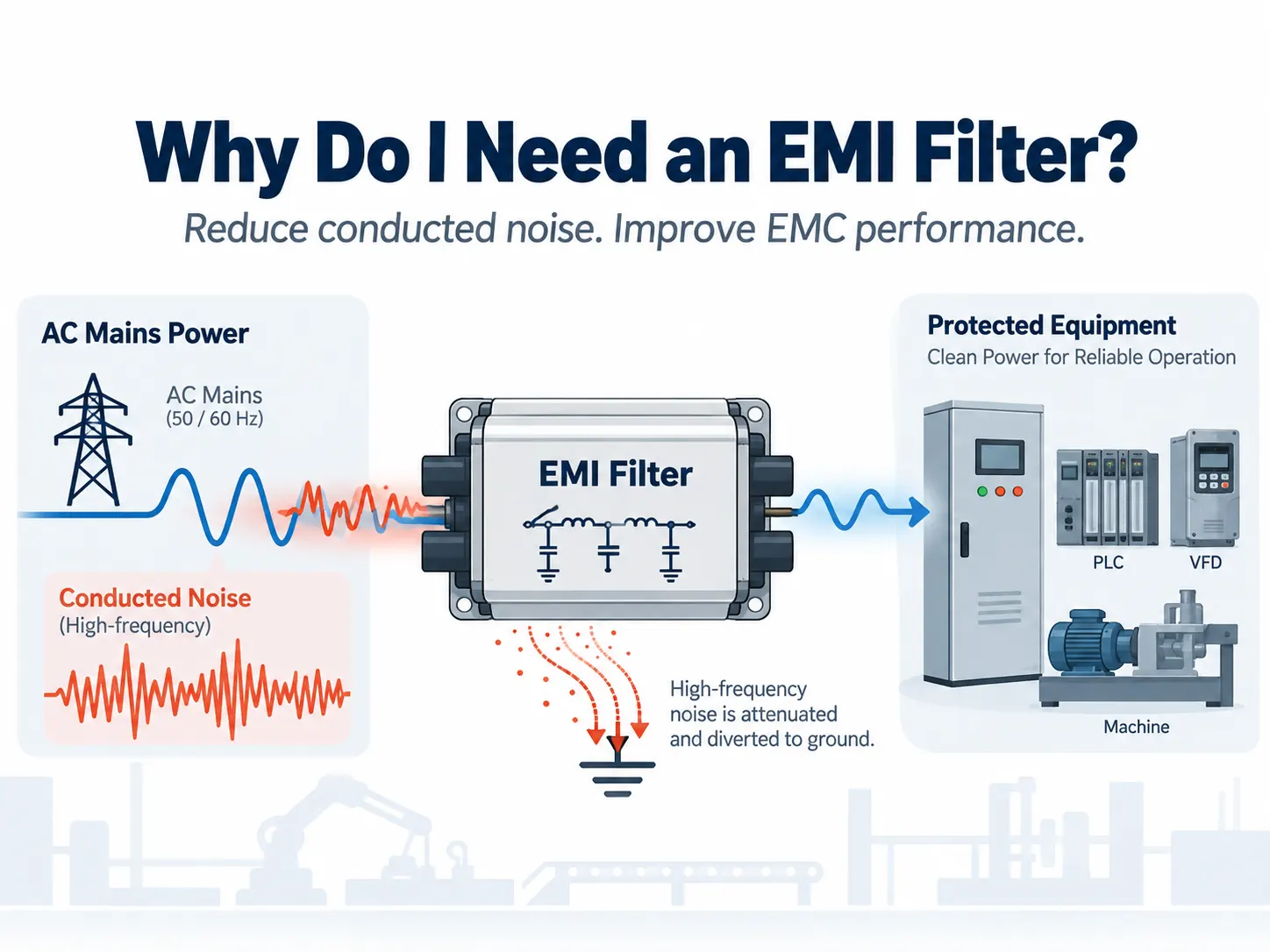
In modern 3 phase power systems, EMI has become a safety hazard that cannot be ignored. EMI can travel through power lines as conducted emi or be emitted as radiated emi, affecting the performance of electronic devices and other devices in the system. It not only disrupts the normal operation of sensitive equipment, but also may cause system failures and reduce overall efficiency. In order to solve this problem, engineers have designed 3 phase EMI filters, which can not only ensure the safe operation of equipment, but also transmit clean and clean electrical energy. Therefore, it is particularly important to choose a three-phase filter. This article focuses on the working principle, application and maintenance of 3 phase EMI filters.
Learn more about 3 phase emi filter...

Introduction to Electromagnetic Interference
Electromagnetic interference (EMI) is a significant challenge across industries, from manufacturing plants to commercial facilities and even residential environments. EMI occurs when unwanted electrical currents interfere with the normal operation of electronic equipment, causing equipment failure, performance degradation, or even permanent damage. In three-phase power systems, the risk of EMI is higher due to the presence of high-power equipment such as motors, power supplies, and industrial machinery. These systems are particularly sensitive to EMI, which can affect the reliability and efficiency of critical operations. This is where three-phase EMI filters come in handy. By reducing EMI, these filters ensure that electrical equipment and systems operate smoothly and safely, playing a vital role in maintaining the performance and lifespan of high-power equipment in a variety of industries.
Understanding Three-Phase Systems
The three-phase system is the backbone of modern industrial applications and is well known for its efficient and stable delivery of electrical power. It consists of three current-carrying conductors, each called a phase, that operate at the same voltage and frequency but are 120 degrees out of phase. This unique layout allows for load balancing and efficient power distribution, making it ideal for powering equipment such as power supplies, inverters, and heating systems. There are two main configurations for three-phase systems: delta and star. In the delta configuration, the three phases are connected in a closed loop to form a triangle; in the star configuration, each phase is connected to a common neutral point. Understanding these configurations is critical to selecting and designing effective three-phase EMI filters, as the connection type affects the interaction of the filter with the system voltage and current. Whether in industrial automation or other high-demand environments, the right filter ensures that phase EMI is minimized to support stable and reliable operation.
Working principle of 3 Phase EMI Filter
- Low-frequency current: The filter allows low-frequency current to pass smoothly to maintain the normal transmission of power.
- High-frequency interference: Through clever design, the filter can effectively block high-frequency interference and unwanted frequencies present on the phase line and other lines to prevent them from causing adverse effects on equipment and systems.
This unique design ensures that the equipment can still operate stably in complex electromagnetic environments, building a solid barrier for the power system.
Design and Implementation of Three-Phase EMI Filters
DOREXS Power Filters Manufacturer, can help you tailor a three-phase power filter for your industry.
Application fields of 3 Phase EMI Filter
- Industrial automation: In industrial environments, electromagnetic interference may seriously affect the operation of key equipment such as PLC, sensors, actuators, and other industrial equipment, including induction circuits used in large motors and heating systems. 3 Phase EMI Filter can significantly improve the reliability of the system and ensure the efficient operation of the production process.
- Power electronic equipment: In inverters, rectifiers and other equipment, phase filters and multi stage designs are essential for advanced EMI suppression. These filters can optimize energy efficiency, improve stability, and reduce the negative impact of interference on equipment performance.
- Medical equipment: Medical scenarios have extremely high requirements for the accuracy and stability of equipment. 3 Phase EMI Filter can ensure the safe operation of high-end medical equipment such as CT machines and MRI in complex electromagnetic environments.
- Communication systems and data centers: In communication equipment and data centers, reliable connections and robust equipment design are necessary to handle total power distribution and ensure a stable power supply. Filters can significantly reduce the interference of high-frequency noise on signal transmission, ensuring the stability of the network and the security of data.
Key points for selecting 3 phase EMI filter
1. Clear requirements:
- Determine system parameters such as rated voltage, current, frequency range and specific requirements for interference suppression.
- Consider the rated currents and, for Delta configurations, the need for higher current ratings when selecting a filter.
- Understand the electromagnetic environment of the equipment and select filters for the corresponding frequency band.
2. Adapt to the environment:
- Pay attention to environmental factors such as temperature, humidity and vibration in the installation scene, and choose filters with stronger durability.
- Ensure proper ground and ground wire connections for safety and optimal filter performance.
3. Performance and safety:
- Choose products with high filtering efficiency and compliance with international safety standards (such as UL, CE).
- Give priority to models that are easy to install and have low maintenance costs to reduce long-term operating costs.
- Consider the key role of the neutral line and neutral conductor in filter operation, especially in WYE configurations.
3 Phase EMI Filter Maintenance Guide
1. Regular inspection:
-
Ensure that the electrical connection of the filter is firm and intact.
- Regularly check the ground wire and neutral conductor connections to maintain safety and effective operation.
- Check whether the inductor, capacitor and other components are aged or damaged, and replace the damaged parts in time.
2. Performance monitoring:
- Record the system operation status and observe whether the filter’s filtering efficiency decreases.
- Adjust or replace the filter in time according to the system change requirements to maintain the best performance.
3. Cleaning and environmental protection:
- Keep the environment around the filter clean to avoid dust accumulation that has adverse effects on heat dissipation and performance.
- Regularly check and clean the filter housing and heat sink to ensure good heat dissipation.
Advantages of using three-phase EMI filters
Summary
As a leading manufacturer of EMI filtering solutions, DOREXS has extensive R&D experience and advanced production equipment. We are committed to providing customers with high-quality EMI filtering products and services to meet the needs of multiple fields from industrial to consumer electronics.
EMI Power Filter Explained: Principle, Function, and Applications
Basic Knowledge of EMI and EMI Filters