Understanding the EMI Noise Filter: How It Works and Why You Need It
In today’s electronics-driven world, electromagnetic interference (EMI) is an unavoidable issue that affects everything from consumer electronics to industrial systems. To address this problem, engineers often turn to EMI noise filters as one of the most effective solutions when designing electronic devices. EMI noise filters effectively suppress interference signals that could impact the safe and stable operation of electronic equipment. In this article, we’ll explore:
- What an EMI noise filter is
- How EMI noise filters work
- Why EMI power filters are essential in various applications
Introduction to Electromagnetic Interference (EMI)
Electromagnetic interference (EMI) refers to interference caused by unwanted electromagnetic noise that can disrupt the normal operation of electronic devices and systems. As our reliance on electronic devices and power sources grows, so does the prevalence of EMI in our everyday environment. EMI can come from a variety of sources, including other electronic devices, power line fluctuations, and even natural events such as lightning strikes. These interferences can propagate along power lines or radiate through the air, affecting the performance and reliability of sensitive equipment.
To address these challenges, engineers use EMI filters and power line filters to block or reduce the effects of electromagnetic noise. By filtering out interference at the power entry point or on signal lines, these filters help maintain the integrity of electronic devices and ensure compliance with electromagnetic compatibility (EMC) standards. Understanding the causes and effects of EMI is critical for anyone involved in the design, installation, or maintenance of electronic equipment, as effective EMI filtering is key to preventing interference and ensuring reliable operation.
To address these challenges, engineers use EMI filters and power line filters to block or reduce the effects of electromagnetic noise. By filtering out interference at the power entry point or on signal lines, these filters help maintain the integrity of electronic devices and ensure compliance with electromagnetic compatibility (EMC) standards. Understanding the causes and effects of EMI is critical for anyone involved in the design, installation, or maintenance of electronic equipment, as effective EMI filtering is key to preventing interference and ensuring reliable operation.
Effects of Electrical Noise
Electrical noise, commonly referred to as electromagnetic noise interference, can have a significant impact on the performance and reliability of electronic devices and systems. This noise can cause a range of problems, from minor interruptions in communication signals to complete equipment failure. In some cases, electrical noise can cause unexpected operation, such as false triggering of circuits or interruption of video and audio signals, which is particularly serious in critical applications.
Electrical noise is generally divided into two major categories: common-mode noise and differential-mode noise. Common-mode noise appears on both the signal path and the return path, while differential-mode noise affects only one of the paths. Both types of noise can interfere with the normal operation of electronic devices, but they require different filtering strategies. EMI suppression filters, such as low-pass filters, are specifically designed to suppress and attenuate these interfering signals, helping to protect equipment from damage and ensuring compliance with electromagnetic compatibility (EMC) requirements. For design engineers, understanding the effects of electrical noise is critical to developing robust systems that can withstand interference and operate reliably in a variety of environments.
Electrical noise is generally divided into two major categories: common-mode noise and differential-mode noise. Common-mode noise appears on both the signal path and the return path, while differential-mode noise affects only one of the paths. Both types of noise can interfere with the normal operation of electronic devices, but they require different filtering strategies. EMI suppression filters, such as low-pass filters, are specifically designed to suppress and attenuate these interfering signals, helping to protect equipment from damage and ensuring compliance with electromagnetic compatibility (EMC) requirements. For design engineers, understanding the effects of electrical noise is critical to developing robust systems that can withstand interference and operate reliably in a variety of environments.
What is an EMI Noise Filter?
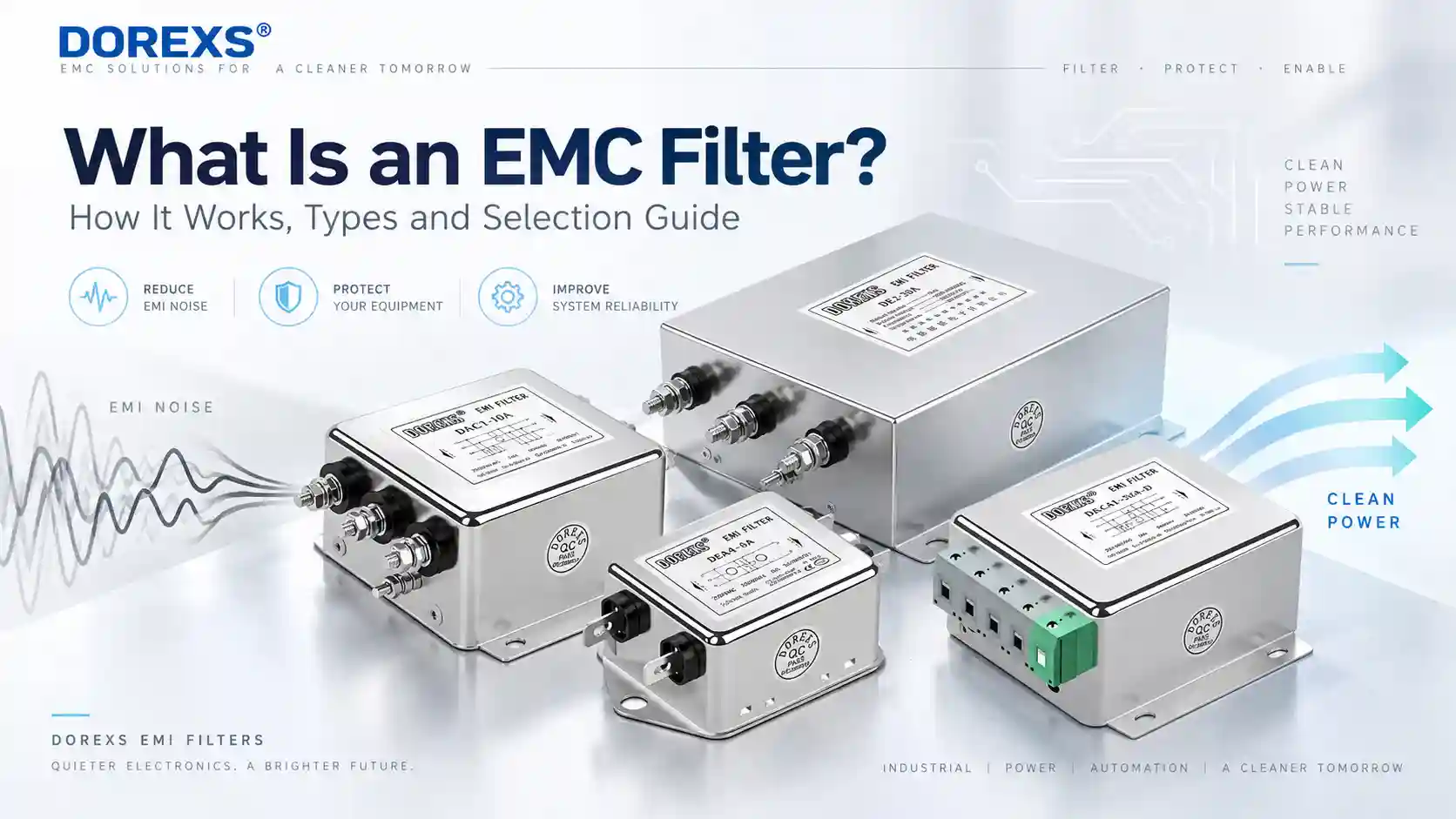
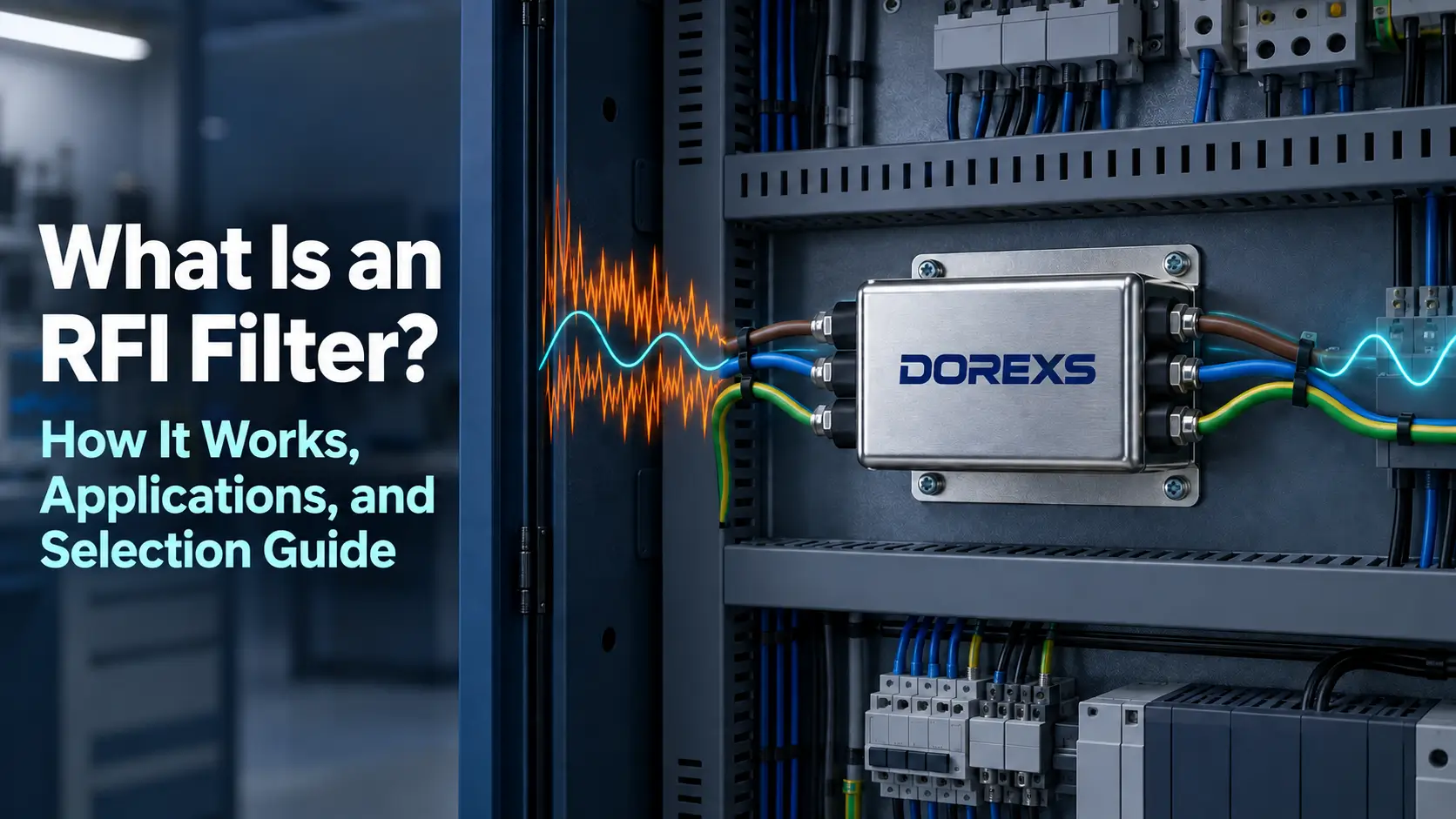
An EMI noise filter is a component designed to eliminate or reduce high-frequency noise or electromagnetic interference that affects electronic equipment. The interference may originate from the electronic device itself, such as power switches, or from other surrounding electronic devices, and even natural phenomena like solar storms or lightning. EMI filters prevent these unwanted interference signals from affecting electronic equipment, ensuring safe and stable operation while meeting electromagnetic compatibility (EMC) standards.
There are a few types of EMI noise filters, each suited for different applications.
There are a few types of EMI noise filters, each suited for different applications.
How Does an EMI Noise Filter Work?
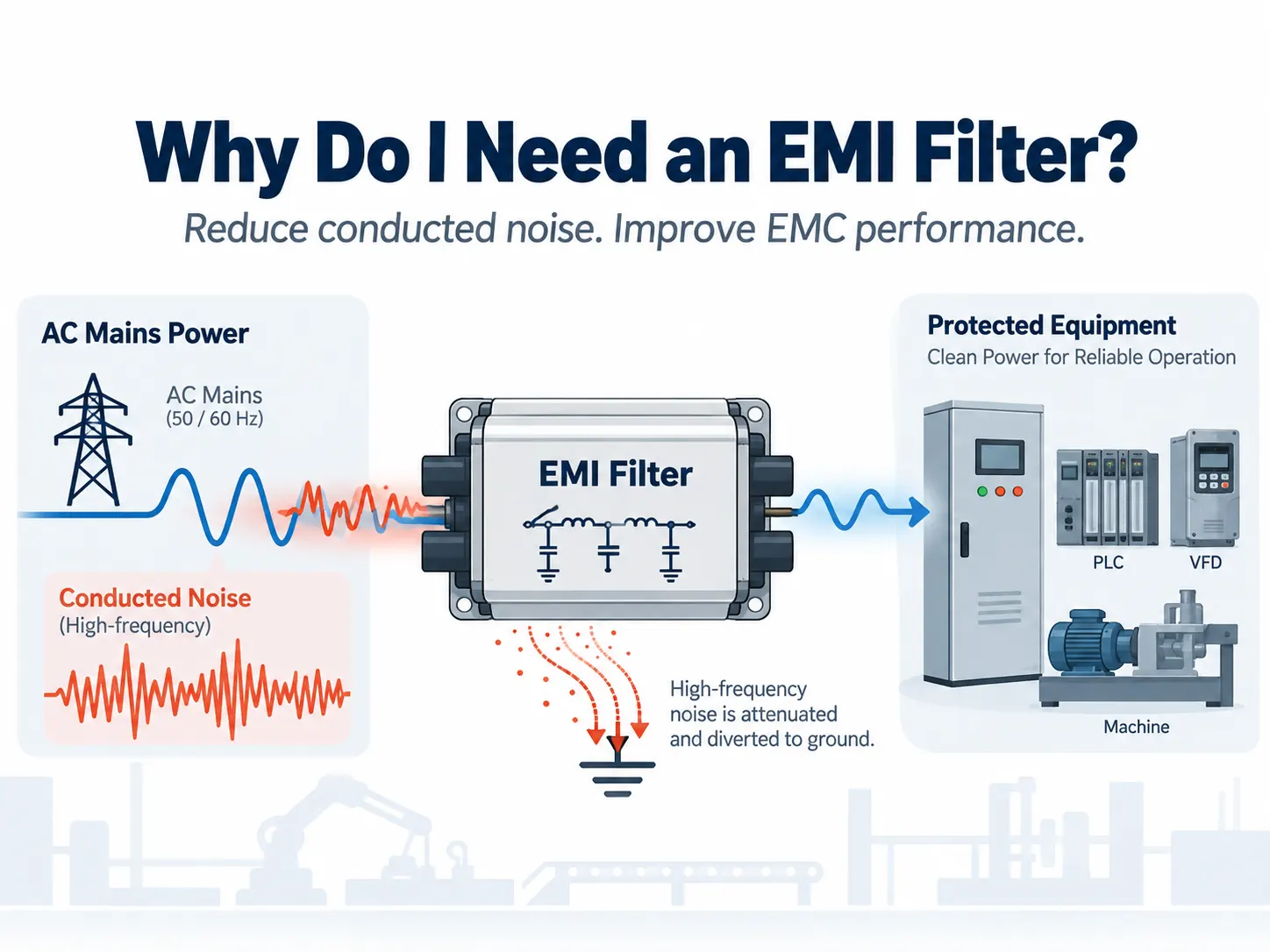
EMI noise filters block unwanted high-frequency noise while allowing the necessary signals to pass through. These filters are often constructed using discrete components such as capacitors and inductors, which work together to form a low pass filter that effectively attenuates unwanted interference signals. Here’s how they work:
- Capacitors: These divert high-frequency noise to the ground, effectively removing it from the circuit. For optimal noise suppression, it is important to use a low impedance ground.
- Inductors:Inductors block high-frequency noise by presenting high impedance, preventing it from passing through the circuit.
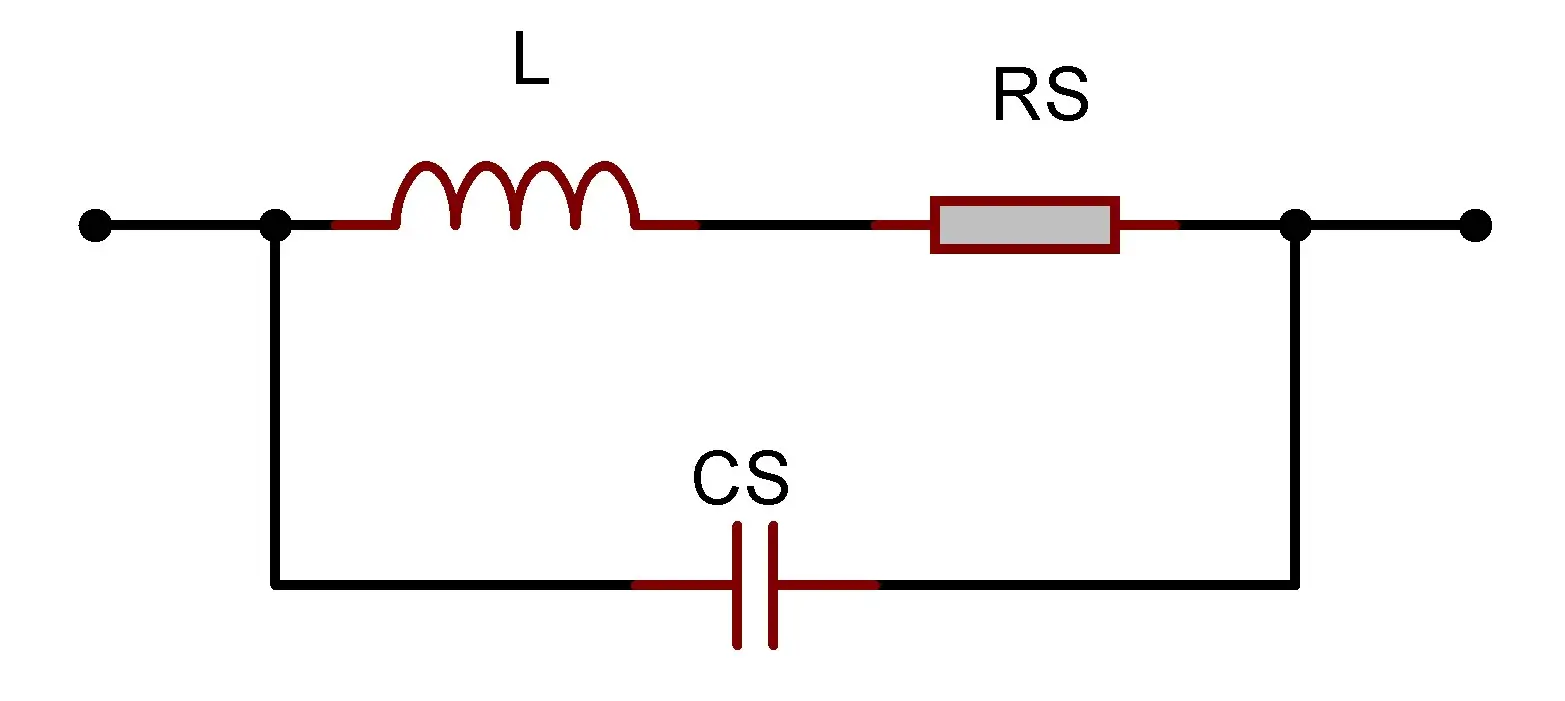
Through the combination of these components, EMI noise filters ensure that only the required signals (such as power or communication signals) are transmitted, while unwanted high-frequency noise is eliminated.
Common-Mode Noise and EMI Filters
Common-mode noise is a challenging type of electromagnetic noise that can affect the performance of electronic systems. This noise is generated when unwanted currents are present on both the signal path and the return path, often due to noise coupling from power lines or other sources. Because common-mode noise affects multiple paths simultaneously, it is difficult to eliminate without the right filtering techniques.
EMI filters are specifically designed to address both common-mode and differential-mode noise, combining passive components such as inductors and capacitors. These components work together to create a low-impedance path for the noise, effectively blocking it from entering sensitive equipment. By implementing low-pass filtering, EMI filters can significantly reduce electromagnetic noise levels, protecting industrial equipment, medical devices, test equipment, and other sensitive electronic systems from interference.
For design engineers, understanding how EMI filters work and how to select the right filter for a specific application is critical to meeting EMC compliance and ensuring long-term reliability of electronic equipment. Whether used in industrial automation, healthcare, or laboratory environments, EMI filters play a vital role in preventing noise-related issues and maintaining the performance of modern electronic systems.
EMI filters are specifically designed to address both common-mode and differential-mode noise, combining passive components such as inductors and capacitors. These components work together to create a low-impedance path for the noise, effectively blocking it from entering sensitive equipment. By implementing low-pass filtering, EMI filters can significantly reduce electromagnetic noise levels, protecting industrial equipment, medical devices, test equipment, and other sensitive electronic systems from interference.
For design engineers, understanding how EMI filters work and how to select the right filter for a specific application is critical to meeting EMC compliance and ensuring long-term reliability of electronic equipment. Whether used in industrial automation, healthcare, or laboratory environments, EMI filters play a vital role in preventing noise-related issues and maintaining the performance of modern electronic systems.
Types of EMI Noise Filters
There are various types of EMI noise filters, each designed for specific applications to achieve optimal filtering results. EMI noise filters are effective against both radio frequency and conducted noise. The most common types include:
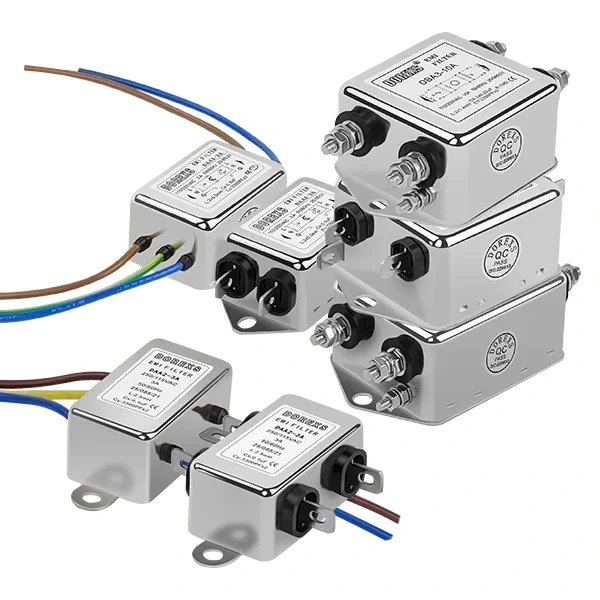
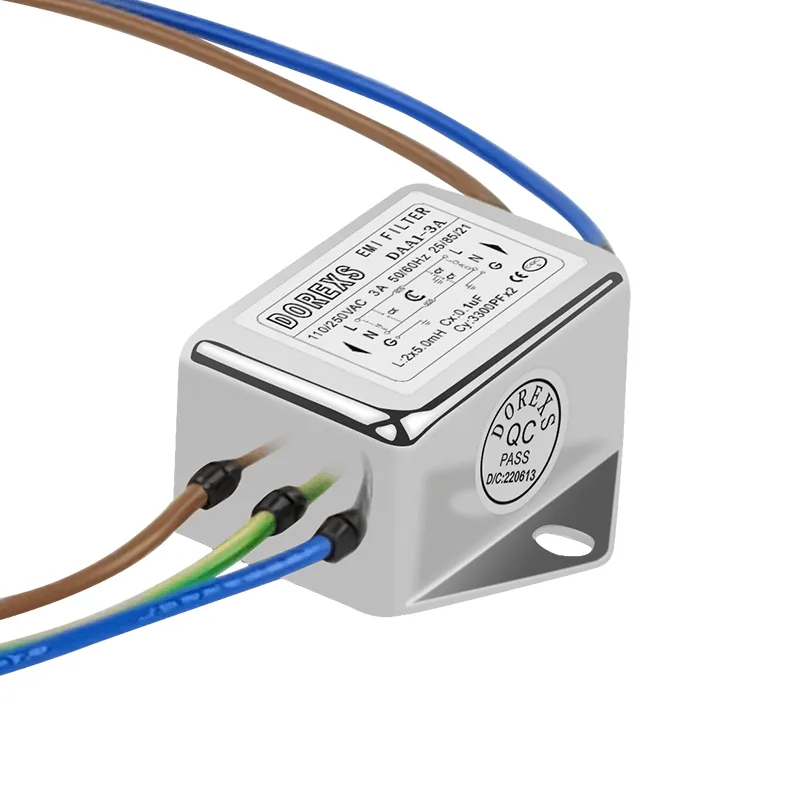
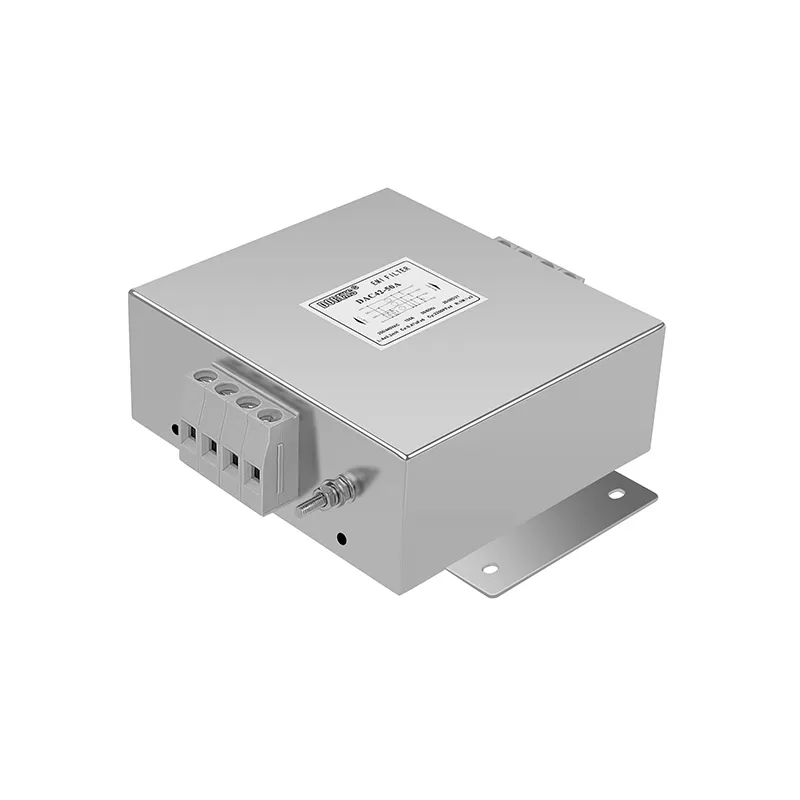
- Power Line Filters: These filters are used to filter high-frequency noise signals from AC or DC power lines, protecting the electronic equipment connected to the power line. Power line filters are particularly effective at attenuating conducted noise and are available in configurations for single-phase and three phase systems, making them suitable for industrial and motor applications.
- Signal Line Filters: Often used in communication lines, these filters effectively prevent noise from affecting signal transmission, avoiding signal loss or distortion. Signal line filters are commonly mounted on printed circuit boards and circuit boards, where they help manage noise on transmission lines and maintain signal integrity.
- Feedthrough Filters: These compact filters are designed for high-frequency applications where space is limited. Some feedthrough filters specifically target a higher frequency range to suppress electromagnetic interference more effectively.
- Shielded Filters: Enclosed in a shield, these filters prevent radiated EMI from entering or leaving the enclosure. Certain shielded filters are also optimized for higher frequency range noise suppression.
- Panel Mount Filters: These high-reliability EMI filters are designed for mounting on panels and are essential for protecting electronic systems from electromagnetic interference in demanding applications.
 |
 |
 |
 |
 |
| Power Line Filters | Signal Line Filters | Feedthrough Filters | Shielded Filters | Panel Mount Filters |
Choosing the Right EMI Noise Filter
When selecting an EMI noise filter, many factors must be considered to maximize filtering effectiveness. Different filters are applied to different electronic devices, and the right choice can lead to improved performance by reducing electromagnetic interference.
- Application Type: Determine whether the filter is for power lines, signal lines, or specific equipment. It is important to match the filter to the power supply, especially for switching power supplies, which are common sources of electromagnetic noise. Devices operating at lower voltage are often more susceptible to EMI and may require more careful filter selection.
- Frequency Range: Identify the frequency range of the noise to select a filter that effectively attenuates those frequencies.
- Insertion Loss: Consider the insertion loss, which indicates how much signal loss occurs when the filter is inserted into the circuit.
- Environmental Conditions: For harsh environments (such as military-grade filters), choose filters that are resistant to high temperatures, corrosion, and have high structural performance.
Some filters, especially those with built-in capacitors, are highly susceptible to the conditions of the connected ground, which can significantly affect their effectiveness. For best results, place the filter at one location near the noise source or point of entry. EMI filters are designed to allow desirable currents to pass through while blocking unwanted current, thus suppressing electromagnetic noise.
Applications of EMI Noise Filters

EMI noise filters are widely used across various industries, with numerous emi filter applications designed to protect electronic equipment and ensure compliance with electromagnetic compatibility (EMC) standards. Common applications include:
- Consumer Electronics: EMI noise filters effectively prevent interference from affecting the performance of devices like TVs, computers, and other smart gadgets, as well as other devices and electrical devices that may emit or be affected by EMI.
- Home Appliances: In appliances like refrigerators, washing machines, microwaves, and other electrical devices, EMI noise filters ensure safe and stable operation free from interference.
- Medical Equipment: EMI noise filters and EMI suppression filters guarantee reliable operation of medical devices in environments with high electromagnetic interference, especially where power supply lines and switching power supplies are present.
- Industrial Automation: EMI filters protect sensitive electronic equipment in manufacturing environments from electrical noise, including noise originating from switching power supplies and power supply lines, ensuring smooth and reliable operation.
- Military-Grade: Filters used in military applications ensure reliable operation of facilities in high-standard, harsh environments, where EMI suppression filters are critical for mission success.
- Automotive: Noise filters prevent interference between various electronic systems within modern vehicles.
In all these applications, identifying the noise source and understanding the mutual transformation between spatial conduction and conductor conduction noise is essential, as a wire can act as an antenna, allowing different types of noise to influence each other. Engineers cannot completely ignore even minor sources of EMI, since they can impact EMC performance. Effective EMI filtering is also necessary to control conducted emissions and address challenges posed by higher frequencies and high frequencies in modern electronics. This leads to improved performance in sensitive equipment.
Installation Tips for EMI Noise Filters
Proper installation is crucial for maximizing the effectiveness of EMI noise filters. Here are some tips:
- Placement: Position the filter as close as possible to the EMI source or the equipment being protected.
- Grounding: Ensure proper grounding of the filter, using a low impedance ground to provide an effective path for noise dissipation and optimal filter performance.
- Shielding: Use shielded cables or enclosures to further reduce the risk of interference.
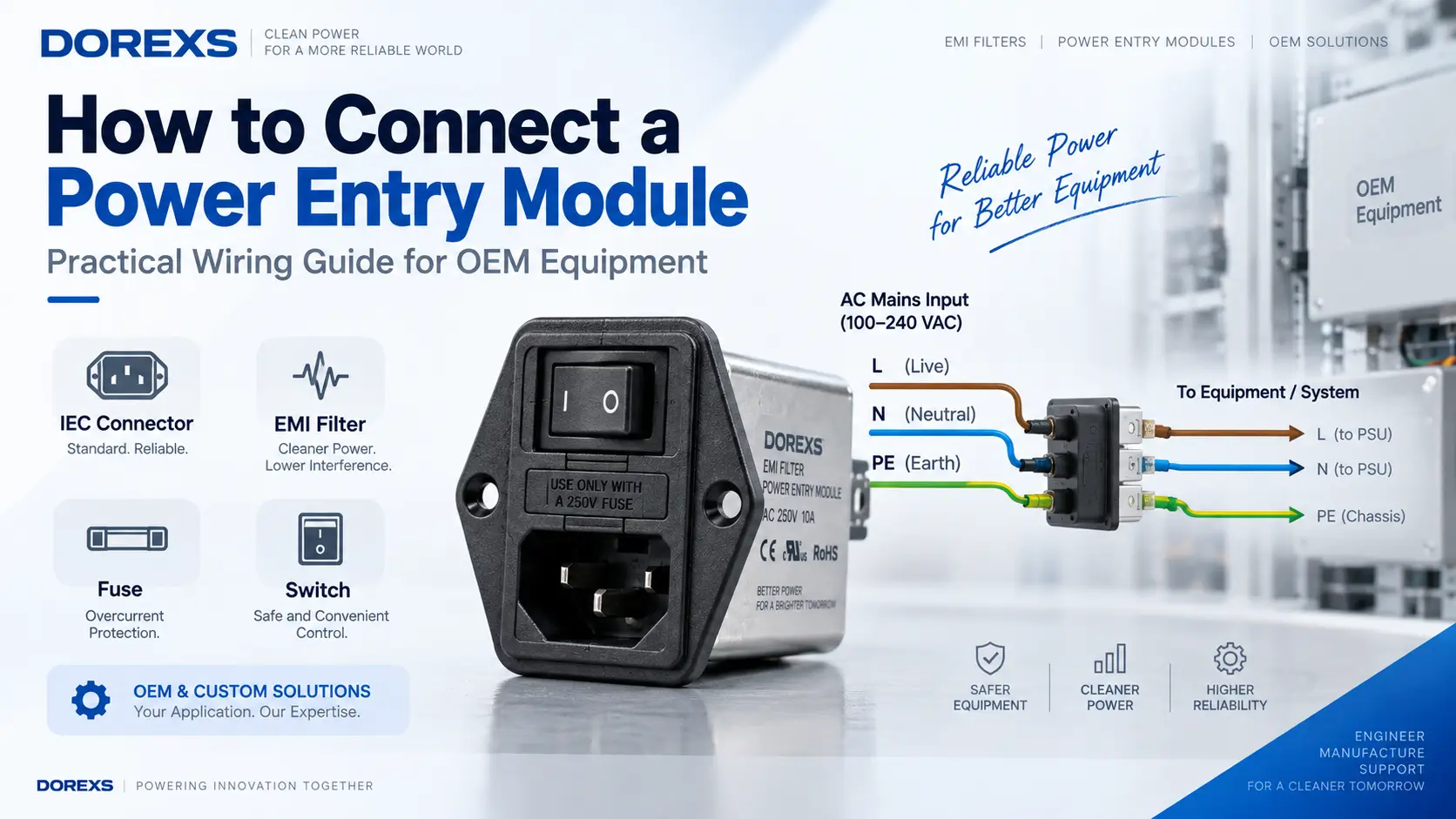
- Compliance: Follow the manufacturer’s installation guidelines to achieve optimal filtering results.
Conclusion
EMI noise filters are indispensable in today’s electronic world, where the risk of electromagnetic interference is everywhere. By understanding how these filters work, the types available, and their applications, you can select the right EMI noise filter for your needs and ensure the reliable operation of your electronic systems.
If you're not familiar with EMI noise filters, please contact us. DOREXS is a professional filter manufacturer with extensive industry experience, offering high-quality EMI filters and EMI solutions.
Low Pass Filter: Principles, Types, Applications & Design Guide
What Is an EMI Filter for Power Amplifiers?