What Does a Power Entry Module Do? (Engineer-Focused Guide by DOREXS)
Power entry modules act as the first stage of power management in electrical systems, handling everything from mains connection to noise suppression in a single assembly. If you design or source equipment that plugs into the wall, understanding what a PEM does—and how to specify one—will save you time, panel space, and compliance headaches.
Key Takeaways
-
A power entry module combines a power inlet, switch, fuse holder or circuit breaker, EMI filter, and sometimes a voltage selector into one compact unit, managing mains power where it enters your equipment.
-
PEMs reduce panel space, wiring complexity, and component management effort compared with using individual components such as separate inlets, switches, fuse holders, and stand-alone EMI filters.
-
Integrated EMI filters in power entry modules are critical for EMC compliance and noise suppression across industrial, medical, and consumer devices.
-
DOREXS designs and manufactures IEC inlet filters and power entry modules that can be customized for current ratings, leakage current, and filtering performance.
-
Sections below cover how to choose the right module and show example use cases for medical and industrial applications.
What Is a Power Entry Module?
A power entry module is a compact unit that performs all power entry functions—inlet, protection, switching, filtering, and voltage selection—at the point where mains power enters a device. Instead of cutting four or five separate holes in your rear panel and wiring each component by hand, a PEM gives you a single cut-out and a single unit to install, improving reliability and assembly speed. Modules can include a power inlet, outlet connection, switch, and circuit protection in one housing.
The IEC 60320 inlet is the most common power connection on PEMs, with C14 connectors handling up to 10 A and C20 connectors suited for 16–20 A at 250 VAC. Power entry modules combine multiple functions into one unit, which is why equipment manufacturers across industrial automation, medical devices, and consumer electronics rely on them. DOREXS focuses on PEMs with integrated EMI filters for single-phase 50/60 Hz applications, typically 1–20 A at up to 250 VAC.
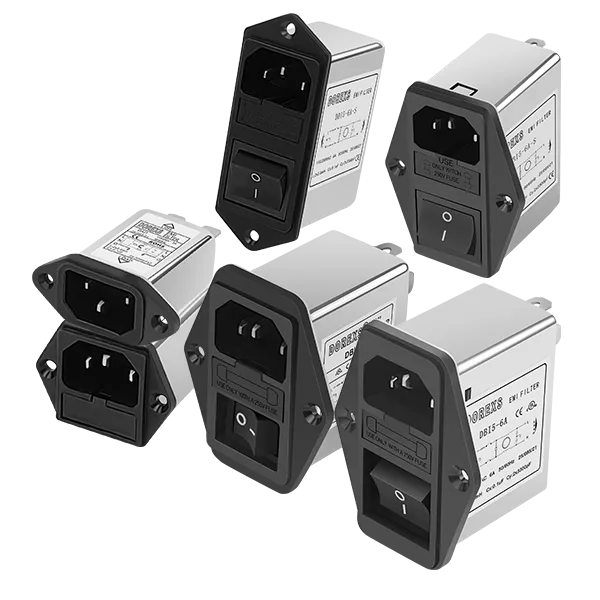
Core Functions of a Power Entry Module
A PEM typically integrates two to five core functions—power inlet, switch, circuit protection, EMI/RFI filter, and optionally a voltage selector—inside one housing. Below is what each function does and why it matters.
Power Inlet (IEC Appliance Inlet)
The power inlet is the visible connector where the detachable mains cord plugs into equipment. Using standardized IEC connectors supports global compatibility and easy cord replacement, which is important for products sold into international markets. V-Lock cord sets can also be used with compatible inlets to prevent unintended disconnection of power during operation, and a proper power cord assembly simply clicks in and locks.
On/Off Switch
Many power entry modules integrate a rocker switch beside the inlet, providing a convenient mains disconnect. Switches may be single-pole or double-pole. Double-pole is often required in medical equipment and critical industrial environments to disconnect both line and neutral. Illuminated variants offer quick status indication. Modules interlock power connectors to enhance user safety, ensuring the fuse drawer cannot be opened while energized.
Circuit Protection (Fuse Holder or Circuit Breaker)
PEMs usually include a built-in fuse holder for 5×20 mm or 6.3×32 mm fuses, or a resettable circuit breaker. Fuses in modules provide circuit protection against surges and current protection against overloads. The fuse rating must match the input current and regional safety standards (UL, CSA, VDE). User-serviceable fuse drawers that can be accessed only when the power cord is removed reduce the risk of electric shocks during maintenance.
EMI / RFI Filter
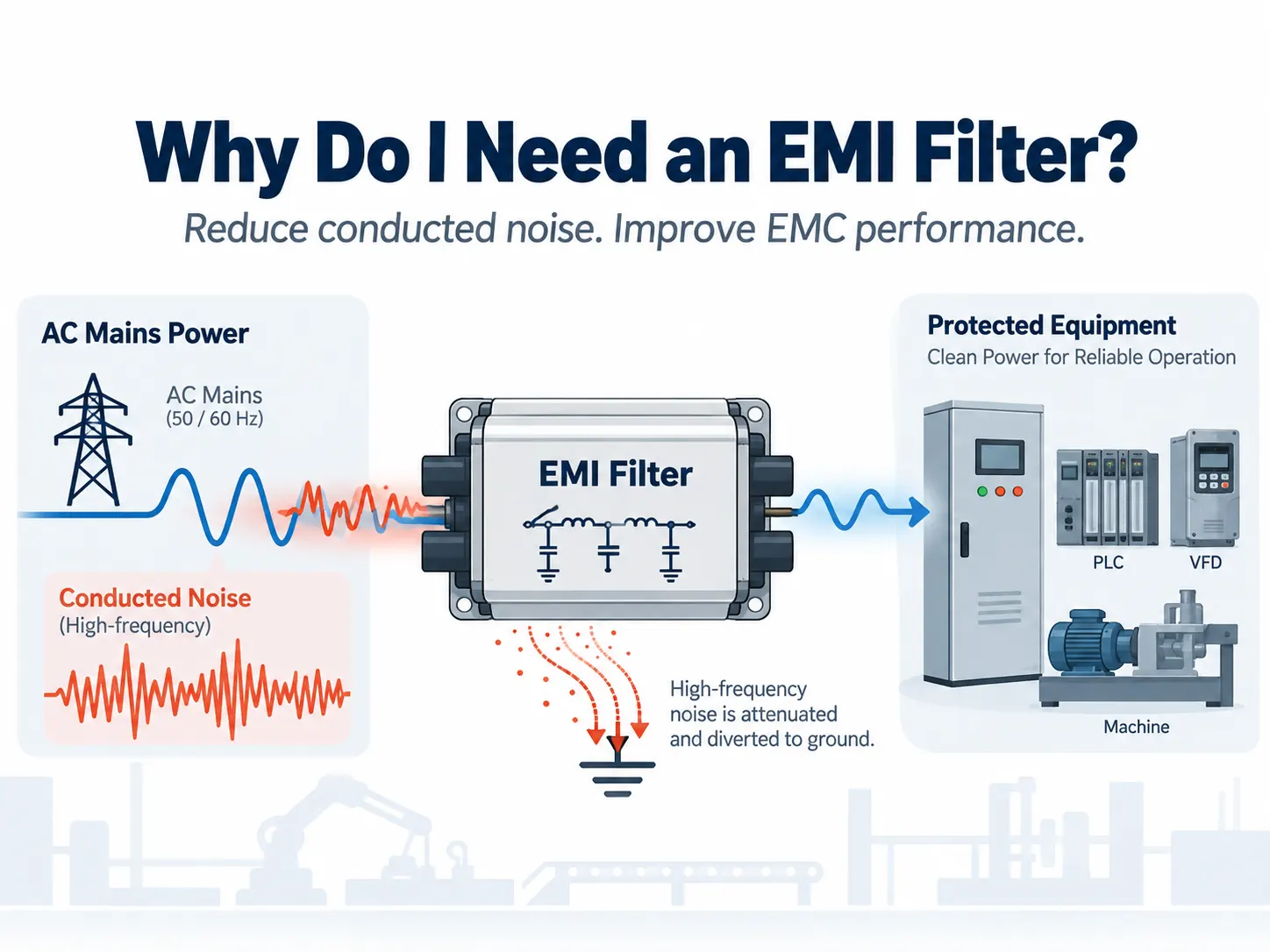
The EMI filter is the engineering heart of most power entry modules. Many PEMs have built-in passive components to suppress electrical noise, and filters remove RFI/EMI to ensure clean electricity reaches the power supply downstream. Inductors and capacitors are key components of filters, forming common-mode and differential-mode attenuation stages that address conducted noise from roughly 150 kHz to 30 MHz. Noise filtering is essential in sensitive electronics to prevent interference, and EMI filters are crucial for maintaining electromagnetic compatibility. Without proper filtering, electromagnetic interference can cause equipment malfunctions. Modules can include filters to enhance equipment design without adding separate enclosures.
Voltage Selector (Dual-Voltage Operation)
Some PEMs feature a voltage selector switch for different international power standards, allowing equipment to operate on 115 or 230 VAC by changing transformer connections via a rotary or slide selector. This is mainly relevant for transformer-based supplies; wide-range switch-mode power supplies (90–264 VAC) typically do not need one. For example, an audio amplifier sold worldwide might use a C14 inlet PEM with a fuse drawer and 115/230 V voltage selector to simplify global deployment.
Why Use a Power Entry Module Instead of Separate Components?
Combining functions in one module simplifies mechanical design, wiring, and procurement while improving safety and EMC compliance. Here are the measurable benefits.
Panel Space and Mechanical Simplification
Using modules can save valuable panel space in designs—a single rectangular cut-out replaces multiple circular and rectangular openings for other components sold separately. Snap-in or screw mount variants let designers choose between rapid assembly and maximum retention strength. This is especially critical in portable medical devices or compact automation controllers where space is limited.
Reduced Wiring and Assembly Labor
Using a PEM can reduce assembly time and wiring errors in manufacturing because internal connections between the inlet, switch, fuse, and filter are pre-wired. Shorter wire leads and fewer crimp terminals improve reliability. Power entry modules reduce assembly labor costs significantly—factories report fewer lines on BOMs and simpler work instructions.
Lower Component Management and Cost
One qualified entry module replaces the need to manage separate inlets, switches, fuse holders, and EMI filters. Modules lower component management and handling costs, and reducing components simplifies testing and documentation processes. For mid-volume production (1,000–20,000 units/year), integrated PEMs often reduce total costs even if the unit price exceeds a bare inlet.
Improved Safety and EMC Compliance
PEMs are tested as a single unit for creepage, clearance, and temperature rise, which simplifies system-level safety assessments. Power entry modules reduce the risk of accidental shock through features like cord-removal interlocks and double-pole switching. Many PEMs simplify safety certifications due to their integrated components, and using a DOREXS EMI-filtered PEM with documented insertion-loss data and approvals can shorten EMC debugging cycles.

Power Entry Modules in Medical and Industrial Applications
Common applications of PEMs include medical devices and industrial controls, but the specifications differ sharply between sectors.
Medical Devices and Low-Leakage Requirements
Low-leakage filters are crucial for patient safety in medical devices. Hospital-grade PEMs must limit leakage current to less than 0.5 mA (often below 0.1 mA for patient-contact equipment under IEC 60601-1). Medical-grade filters reduce leakage current to 5 µA at 250 VAC by adjusting Y-capacitor values and topology. DOREXS offers low-leakage medical PEMs suited for patient monitors, infusion pumps, and imaging systems that must meet strict safety standards.
Industrial Automation, Test, and IT Equipment
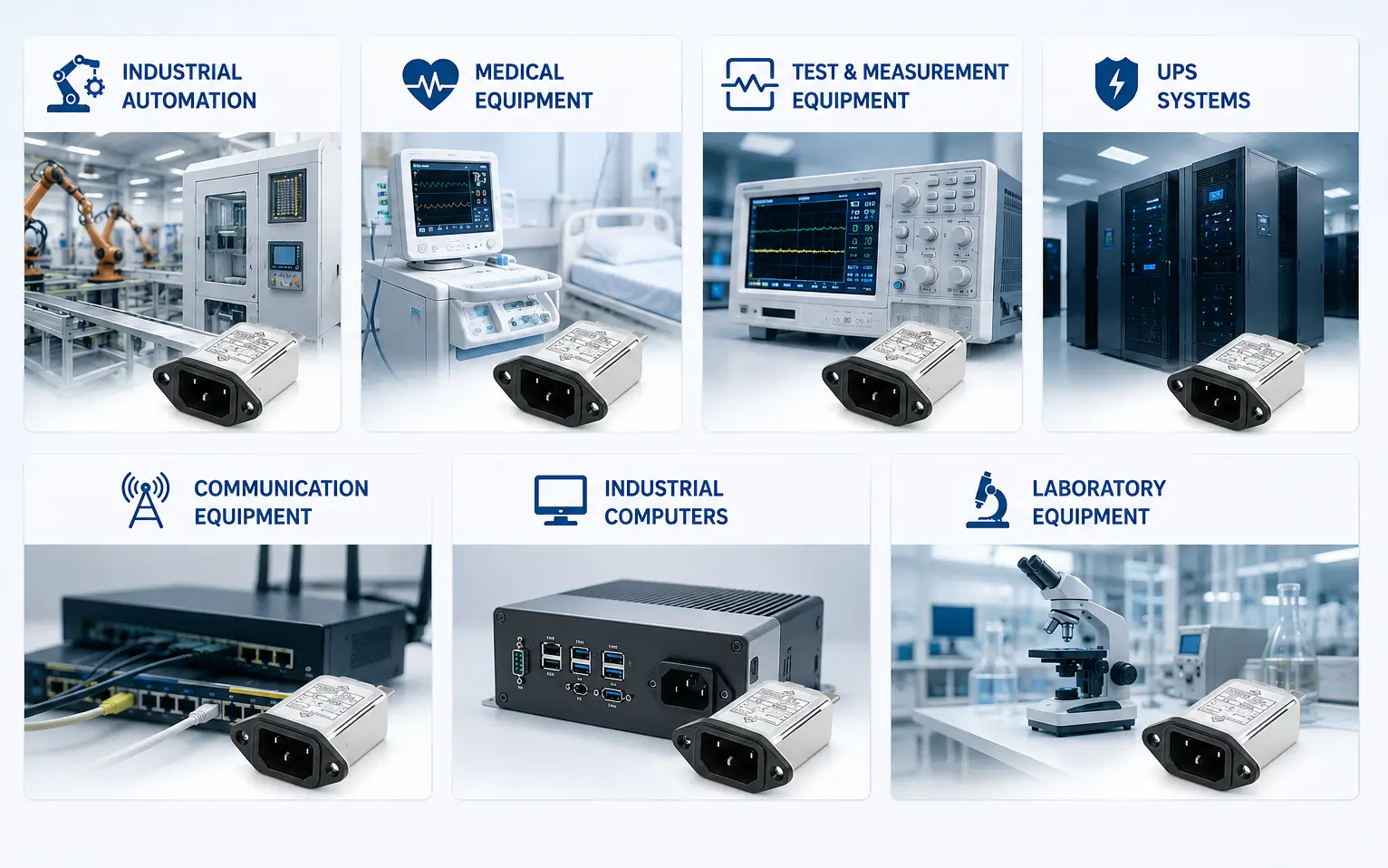
Industrial and IT devices face demanding noise environments from motors, inverters, and switching supplies. Designers may prefer higher-attenuation PEMs with robust common-mode chokes. Filters prevent equipment malfunctions due to electromagnetic interference in these settings. DOREXS PEMs are typically used in PLCs, motor drive interface units, lab instruments, and industrial automation systems where high current and robust filtering matter more than ultra-low leakage.
How to Choose the Right Power Entry Module
Treat this section as a checklist. Early collaboration with a PEM manufacturer like DOREXS can prevent late-stage EMC and safety problems.
Electrical Ratings and Safety Approvals
Size the current rating by adding a 20–30% margin over the maximum steady-state input current. Verify voltage range for global mains (100–240 VAC, 50/60 Hz). Look for recognized approvals—UL, cUL, VDE, ENEC, and CCC—to speed your own compliance process. Specifications should clearly state the form factor and circuit protection level.
EMC Performance and Filter Selection
Match the filter type to your noise profile. For SMPS-dominated loads, a standard differential-mode filter may suffice. For motor loads or environments with variable-frequency drives, consider a two-stage filter with higher attenuation. In very noisy systems, an upstream three-phase filter plus a local PEM filter may be necessary. DOREXS can provide insertion-loss curves and sample parts for pre-compliance test validation.
Mechanical Constraints and Panel Space
Key mechanical choices include snap-in versus screw mount, vertical versus horizontal orientation, and depth behind panel. Limited panel space may require a 2-in-1 (inlet plus filter) rather than a 4-in-1 module—the difference is a trade-off between features and footprint. Connector options range from faston quick-connect tabs to PCB pins or wire leads, so confirm what is compatible with your wiring harness.
Component Management and Lifecycle
Assess availability, lead times, and lifecycle status before committing. DOREXS supports long-term supply commitments and engineering documentation, which is important for medical and industrial product lifecycles of 7–10 years. Document preferred fuse ratings, voltage selector settings, and internal part numbers in your BoM to prevent line errors and control field-service outcomes.
DOREXS Power Entry Modules and EMI Filter Solutions
DOREXS is a manufacturer of EMI filters, IEC inlet filters, and custom power entry modules serving industrial, medical, and consumer OEMs. Product categories range from basic filtered inlets like the DBI6 series to fully integrated units with switch, dual fuse, and medical-grade low-leakage options such as the DBI5-S. Supporting services include custom EMI filter design, application engineering, installation guidance, and post-sale technical assistance. Contact DOREXS with your load type, target standards, and preferred panel layout to receive a recommended PEM shortlist or custom design proposal.
FAQ: Power Entry Modules and Practical Design Questions
Can I replace a discrete inlet and separate EMI filter with a single power entry module?
In most cases, yes. A filtered power entry module with equivalent or better current rating and attenuation can replace a separate inlet plus line filter. However, you must verify that mechanical fit, leakage current specifications, and safety approvals all match your system requirements before making the switch. A mismatch in any of these factors can trigger recertification costs.
Do I always need a voltage selector in my entry module?
No. If your device uses a wide-range switch-mode power supply (typically 90–264 VAC input), a voltage selector is unnecessary. Selectors are mainly needed for transformer-based or fixed-range supplies that must support both approximately 115 V and 230 V mains in different regions.
What tests should I run after choosing a new power entry module?
Run basic safety checks, including insulation resistance, earth continuity, and temperature rise under load. Follow up with EMC pre-compliance tests for conducted emissions with the real load connected. Then verify that the fuse or breaker rating is appropriate under worst-case operating conditions (low voltage, high current).
Can DOREXS customize a power entry module for my specific EMC problem?
Yes. DOREXS can adjust filter topology, component values, and mechanical housing to target problematic frequency ranges. Customers can share oscilloscope or spectrum-analyzer data to accelerate an optimized design, and the engineering team provides application support throughout the process.
How much panel space can I realistically save by switching to an integrated PEM?
Typical savings range from 20 to 50% of the rear-panel area previously used for discrete power components. One rectangular PEM cut-out often replaces three or four separate openings and reduces internal wiring length by several tens of centimeters, which also benefits the overall system assembly advantage.
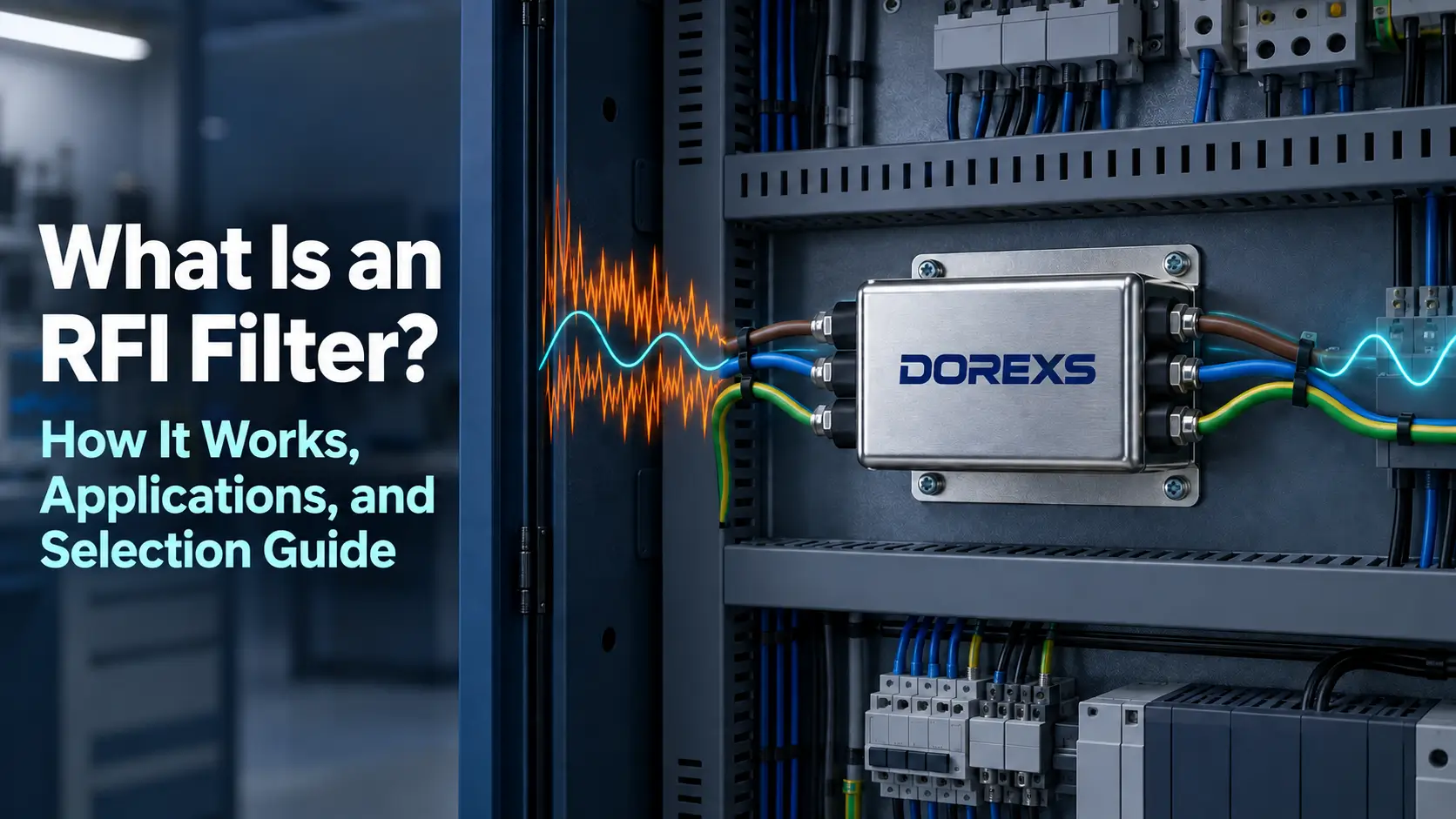
What Is an RFI Filter? How It Works, Applications, and Selection Guide
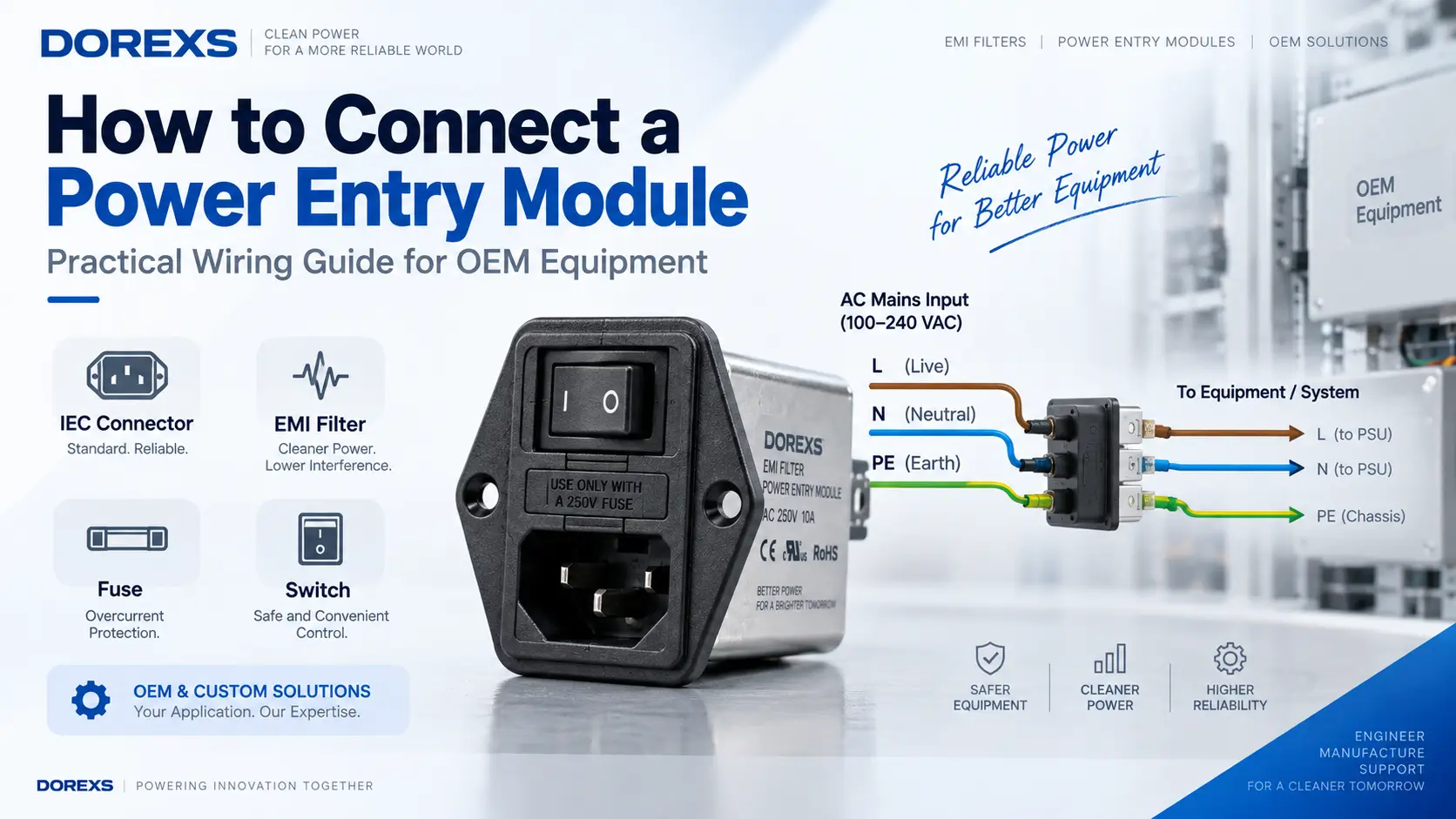
How to Connect a Power Entry Module: Practical Wiring Guide for OEM Equipment