Optimizing Your Switch Mode Power Supply Filter for Minimal Noise
Dealing with noise in your switch mode power supply? This article covers everything you need to know about choosing and implementing the right filters. From understanding different types of noise to practical tips on component selection, we’ve got you covered. Dive in to optimize your switch mode power supply filter for minimal interference.
Key Takeaways
- Know your noise types: Differential mode and common mode noise impact your SMPS performance; use X- and Y-capacitors to tackle them effectively.
- Select the right components: Choosing capacitors and inductors based on their ratings and characteristics is key for optimal filtering in SMPS.
- Implement practical design techniques: Minimize current loop areas in PCB design and layer your construction properly to reduce EMI and enhance filtering performance.
Understanding Differential and Common Mode Noise
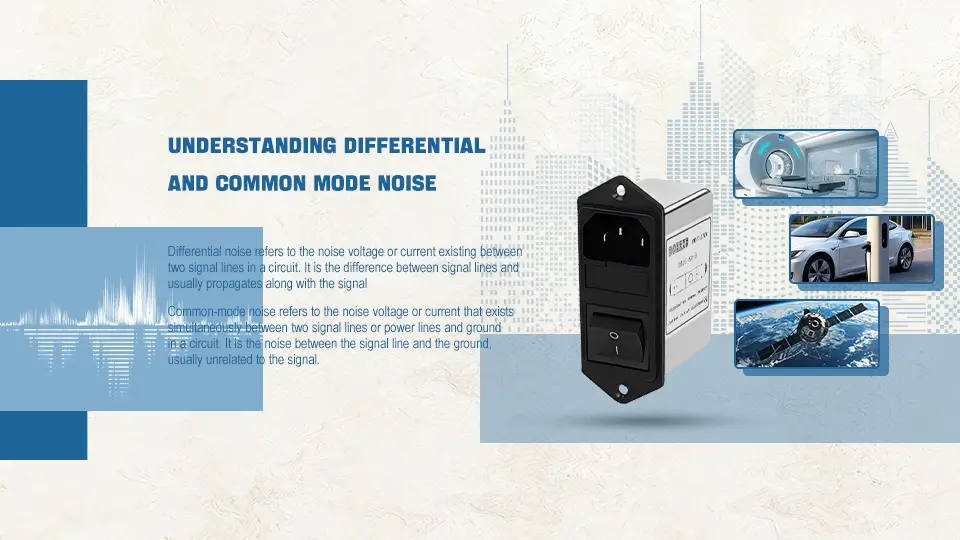
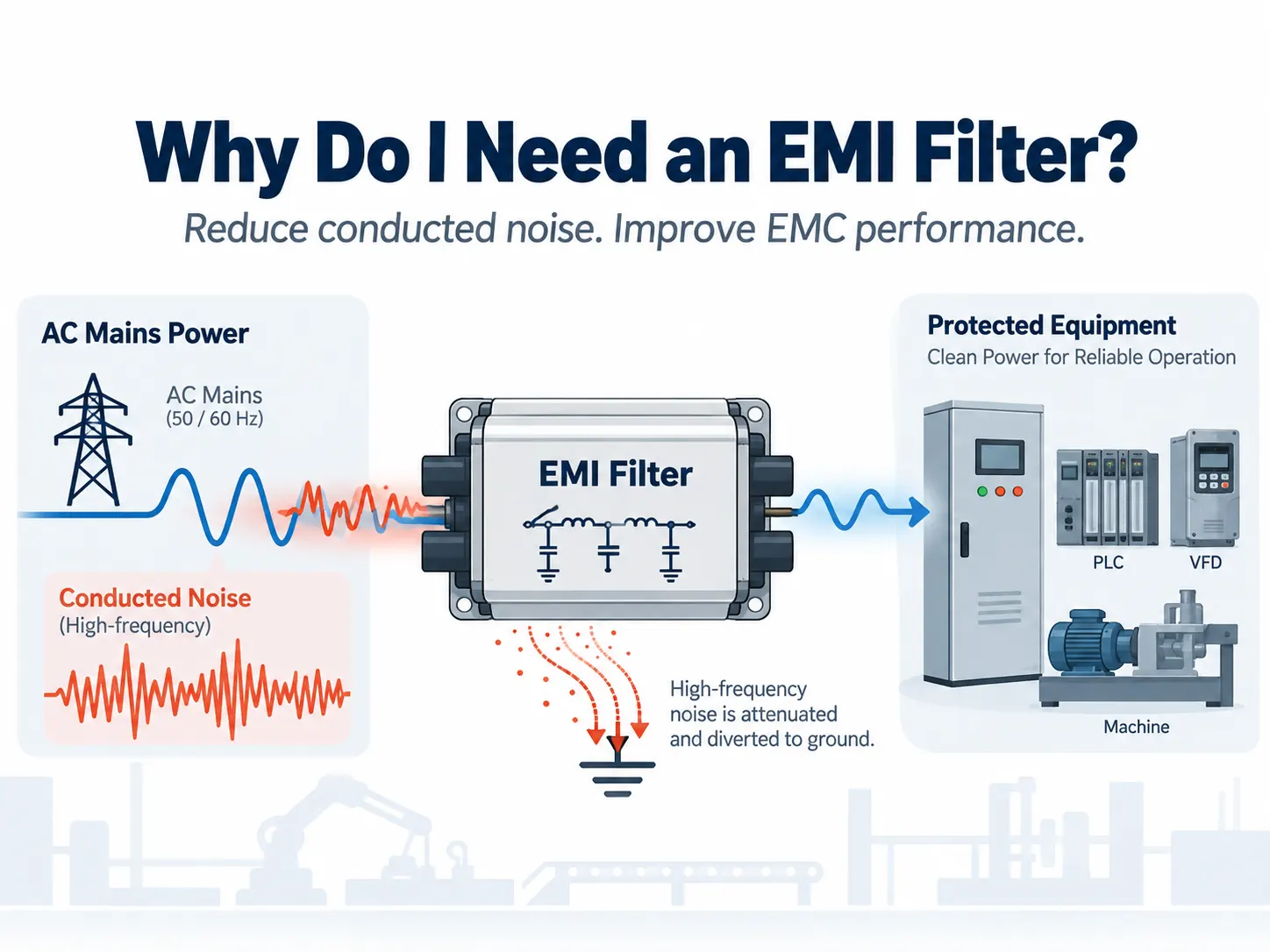
Understanding the two main types of noise—differential mode interference and common mode noise—is crucial when working with switch mode power SMPS. Differential mode noise occurs when noise travels through two conductors in opposite directions, creating a loop that can interfere with your equipment’s performance. On the other hand, common mode noise flows in the same direction through both conductors, affecting a much larger area despite typically having lower voltage levels.
Why is this important? Modern integrated circuits operate at lower voltages, making them more susceptible to noise. Therefore, implementing measures to combat common mode noise is essential. Here, X- and Y-capacitors are particularly significant. Class Y capacitors, for instance, help mitigate common mode noise by connecting to the earth, while Class X capacitors address differential mode noise between line and neutral.
Grasping these noise types and their propagation can greatly improve your design of effective filtering solutions. Whether developing a new device or enhancing an existing one, it’s important to monitor differential and common mode noise closely.
The Role of X- and Y-Capacitors in Filtering
In the fight against noise in SMPS, X- and Y-capacitors are unsung heroes. Placed at both ends of a common mode filter, Class X capacitors are especially effective at addressing differential mode noise. They work by creating a low-impedance path for noise, allowing it to be filtered out before it can cause any harm.
On the flip side, Class Y capacitors have a different role. These capacitors, typically with lower AC voltage ratings than Class X, are designed to ground common mode noise. Class Y capacitors prevent noise from propagating through your system by connecting it directly to the earth. Effective use of these capacitors demands careful placement within your power supply circuits to maximize their noise filtering capabilities.
Unpolarized capacitors are preferred for EMI filtering since they avoid damage from incorrect voltage directions, particularly in AC applications. Additionally, ensuring that the self-resonance frequency of the capacitors is higher than the operational frequency is crucial for maintaining effective filtering.
External Filtering Techniques for SMPS

Enhancing the stability and quality of outputs in SMPS requires indispensable external filtering techniques. An effective method involves LC filters, which:
-
Combine inductors and capacitors
-
Ensure that noise is attenuated before it interferes with other components.
Another crucial tool is a common mode choke filter, typically using a ferrite core. Common mode chokes:
-
Generate high impedance to block common mode noise
-
Are particularly beneficial in SMPS applications
-
Isolate both output
-
Help suppress interference, ensuring smoother operation of your switch mode power supply.
Pairing a larger inductor with a smaller capacitor in some configurations can achieve better filtering at lower frequencies in parallel. These techniques are essential for enhancing the performance and reliability of SMPS, ensuring efficient operation without unwanted noise disturbances.
Choosing the Right Components: Capacitors and Inductors

Choosing the right capacitors and inductors is crucial for effective filtering in SMPS. Successful filter design hinges on selecting components that meet specific requirements without exceeding your power supply’s maximum capacitance or current limits.
Capacitors require careful consideration of several parameters:
-
Material type
-
Voltage rating
-
Parasitic capacitance values
-
Temperature coefficient
The equivalent series resistance (ESR) and equivalent series inductance (ESL) of a capacitor are particularly important as they directly affect the filter’s performance. Furthermore, capacitors with a self-resonance frequency higher than the operational frequency are ideal for maintaining effective filtering.
Inductors should be selected based on their size and inductance value. Ensure that the inductors can handle the current without saturating and contribute effectively to the desired filtering outcome. With DOREXS coils filters, the capacitance and inductance can be tailored to meet specific application needs, allowing for effective handling of high or low-frequency noise.
Practical Implementation Tips
Effective implementation of SMPS filters requires not only the right components but also practical design and construction techniques. Minimizing current loop areas in PCB design is crucial. Limiting current paths significantly reduces electromagnetic interference (EMI).
Proper stacking of signal, power, and ground layers in pcb layout construction significantly impacts noise performance and electromagnetic behavior. Using a continuous ground plane improves signal integrity and reduces noise by providing low-impedance return paths. Additionally, safety considerations dictate that Class Y capacitors are often used to bridge isolated grounds in power supplies, allowing high-frequency noise currents to flow safely.
DOREXS offers various installation methods for their filters, including:
-
Terminal blocks
-
Cables
-
Screws
-
Guide rails
This flexibility allows seamless integration of the filters into your designs, enhancing overall noise input suppression capabilities and attenuation.
Case Study: DBI5 and DBI6 Filters from DOREXS

Consider a real-world example with the DBI5 and DBI6 filters from DOREXS. Designed for various applications in both commercial and industrial settings, these filters showcase their versatility and robustness. The DBI6 filter supports rated currents between 1A and 10A, efficiently suppressing electromagnetic and radio frequency interference.
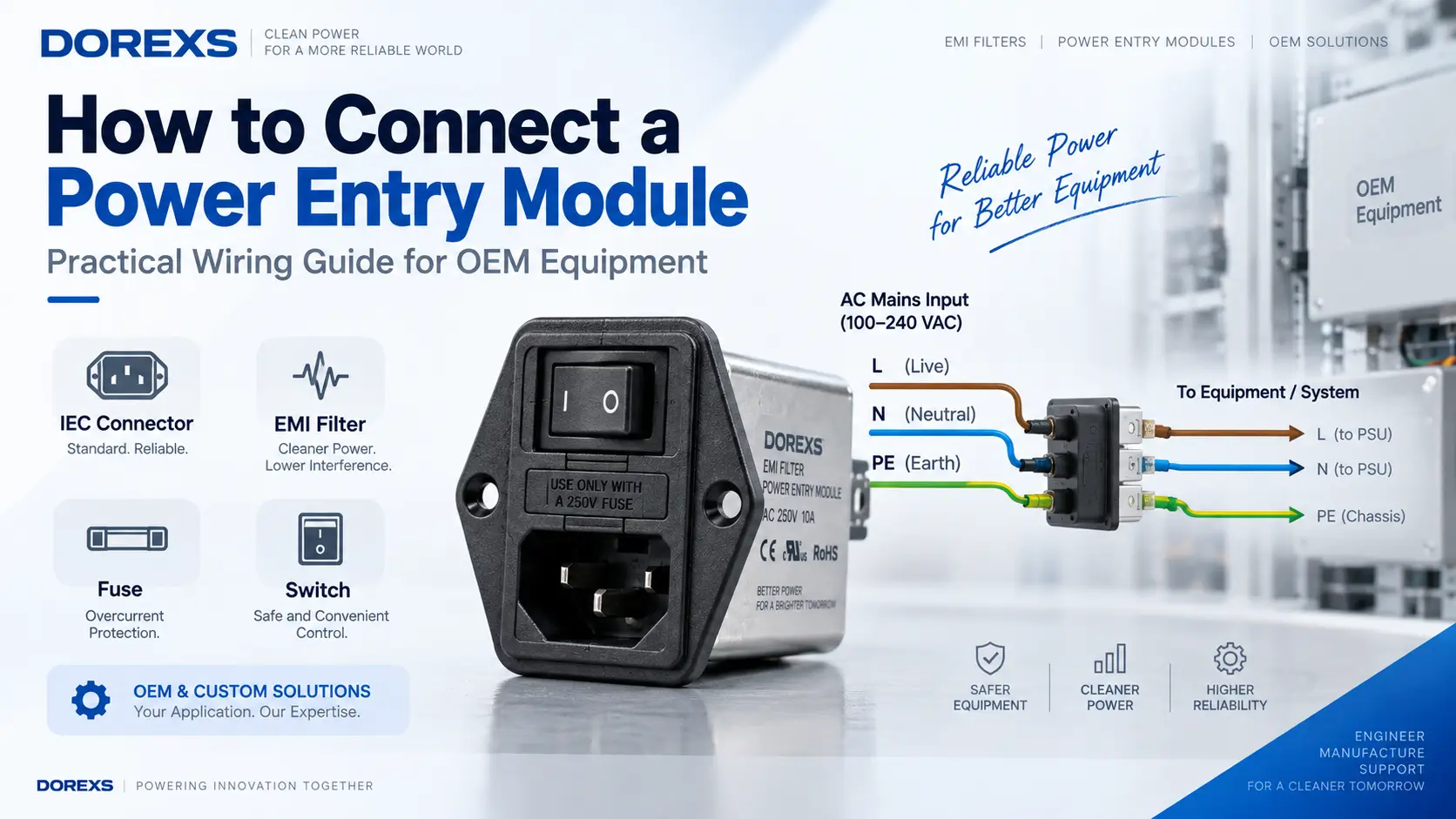
For more demanding environments, DBI5 filters handle higher currents ranging from 1A to 20A, ensuring reliability and performance under tougher conditions. The DBI6 filters feature an integrated socket, simplifying installation and offering enhanced safety options with fuses and low leakage current versions. Both DBI5 and DBI6 filters comply with various safety certifications, including cUL, CE, ROHS, and ISO9001, meeting stringent quality standards.
These filters exemplify how proper design and the right components can substantially reduce noise and enhance the overall load performance of your mode power supply, power supplies, PSU, and output filter psu output.
Customization Options with DOREXS Filters

A standout feature of DOREXS filters is their customization options, allowing you to tailor them to meet specific requirements. DOREXS covers you whether you need parameter adjustments or changes in appearance. This level of customization is crucial for customers needing specific solutions, ensuring the same filter can be adapted for a range of different uses.
For instance, you might need a filter with specific capacitance and inductance values to handle unique noise characteristics in your application. DOREXS can adjust these parameters to provide optimal performance. Customization options also include modifying the physical form of the filters to fit seamlessly into existing designs.
These customization options ensure that DOREXS provides the best possible performance from your power supply filters, regardless of specific needs.
Summary
In the ever-evolving world of electronics, noise reduction in switch mode power supplies is more critical than ever. Understanding the types of noise, selecting the right components, and implementing practical design tips can significantly enhance your designs. X- and Y-capacitors play a vital role in this, effectively addressing different types of noise in power supplies.
External filtering techniques, including the use of LC filters and common mode chokes, are essential for improving the stability and quality of outputs in SMPS. Choosing the right capacitors and inductors, considering parameters such as ESR and ESL, ensures effective filtering. Practical implementation tips, like minimizing current loops and using continuous ground planes, further enhance noise performance.
The DBI5 and DBI6 filters from DOREXS exemplify how proper design and the right components can significantly reduce noise and improve overall performance. With customization options available, you can tailor these filters to meet your specific needs, ensuring optimal performance in any application.
Frequently Asked Questions
What are the main differences between differential mode noise and common mode noise?
Differential mode noise happens when currents travel oppositely in two conductors, whereas common mode noise flows in the same direction through both. Essentially, one deals with opposite currents and the other with synchronized ones.
How do X- and Y-capacitors help in noise filtering?
X-capacitors filter out differential mode noise by providing a low-impedance path, and Y-capacitors tackle common mode noise by grounding it, stopping it from spreading through your system. So, together, they really clean up the signal and keep everything running smoothly.
What are some external filtering techniques for SMPS?
For effective external filtering in SMPS, you can use LC filters for differential mode noise and common mode filters with ferrite cores to tackle common mode noise. These techniques help keep your signals clean and ensure smoother operation.
How can I select the right capacitors and inductors for my SMPS?
To choose the right capacitors and inductors for your SMPS, focus on key specs like material type, voltage rating, ESR, and ESL for capacitors, while ensuring inductors can handle the required current without saturating. This way, you'll be set up for success!
Can DOREXS filters be customized to meet specific requirements?
Absolutely, DOREXS filters can be tailored to fit your specific requirements in terms of both functionality and design. So, you can get exactly what you need!
EMC Filter VFD: Complete Guide to Electromagnetic Compatibility Filters for Variable Frequency Drives
Why is Power Conserved in Transformers? Understanding the Core Principle