The Working Principle of EMI Filters-A Comprehensive Guide
EMI filters are crucial in preventing electromagnetic interference (EMI) from disrupting electronic devices. They utilize components such as capacitors and inductors to block unwanted noise while letting clean signals pass. Grasping the working principle of EMI filters is vital for anyone involved in designing reliable and compliant electronic systems.

Key Takeaways
- Electromagnetic interference (EMI) is classified into conducted and radiated types, each requiring distinct filtering approaches to ensure device functionality and reliability.
- EMI filters mitigate unwanted noise by utilizing components such as capacitors, inductors, and resistors, and can be passive or active based on their design requirements.
- Proper selection and installation of EMI filters are crucial, considering factors such as rated voltage, current, and leakage current to maintain compliance and enhance system performance.
Understanding Electromagnetic Interference (EMI)
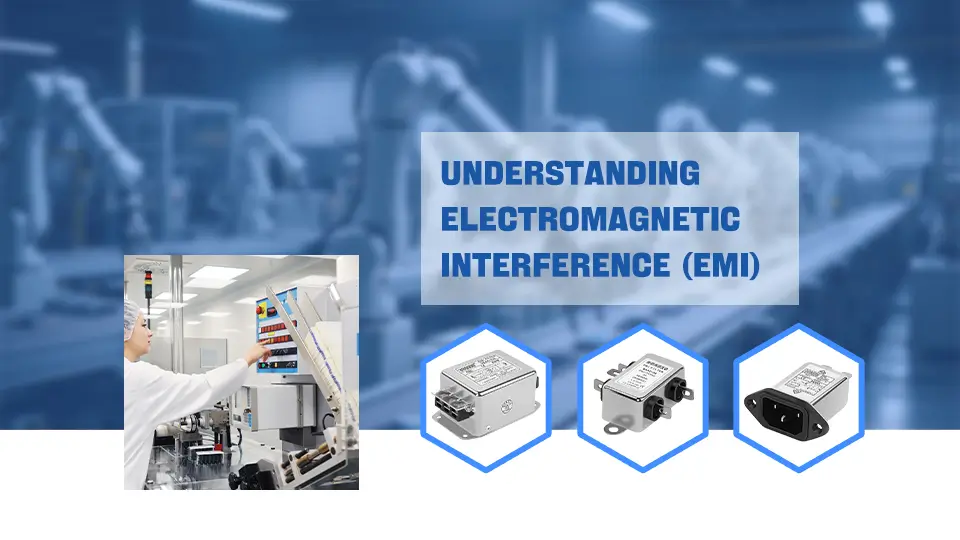
Electromagnetic interference (EMI) is caused by external electromagnetic waves in the electromagnetic environment, including electromagnetic energy. It results in noise interference and electrical noise. This type of interference, including radio frequency interference, can significantly impact the performance of electronic devices, leading to malfunctions and data loss. EMI is classified into two main types: conducted and radiated EMI, each requiring different filtering methods. Additionally, noise signals can further complicate the effects of EMI.
Conducted EMI is coupled through parasitic impedances, power connections, and ground connections; it travels along power and signal lines, entering devices through these pathways. On the other hand, radiated EMI spreads through the air without requiring physical pathways and is typically coupled through radio transmissions. Understanding these distinctions is crucial for effective EMI filtering.
Both conducted and radiated EMI can cause significant disruptions in electronic systems. Devices in close proximity to each other, or those connected to the same signal and power lines, are particularly vulnerable. Effective EMI filtering is essential for ensuring that electrical and electronic devices operate seamlessly, free from noise interference.
What Are EMI Filters?

EMI filters are essential components used in electrical systems to mitigate electromagnetic interference. Their primary function is to remove unwanted noise from signals, ensuring clean and reliable operation. Integrating EMI filters into designs helps manufacturers meet EMC standards, avoid fines, and ensure operational compliance and device reliability.
There are various types of EMI filters designed to address different interference issues. These include passive EMI filters, which use components like capacitors, resistors, transformers, and inductors to absorb and dissipate unwanted energy. Active EMI filters, on the other hand, generate a counteracting current to cancel out interference. Each type of EMI filter plays a crucial role in maintaining electromagnetic compatibility in electronic systems.
Given the diverse applications of EMI filters, it is essential to choose the right type for specific needs. From household appliances to industrial machinery, EMI filters are indispensable in ensuring that electronic devices function efficiently without being affected by electromagnetic noise.
Key Components of EMI Filters
The key components of EMI filters include:
-
Capacitors, which redirect high-frequency noise to ground via a low-impedance path, preventing it from interfering with the input signals.
-
Inductors
-
Circuit protection elements These components work together to minimize electromagnetic interference and ensure system stability.
Inductors play a crucial role by allowing lower frequency signals to pass through while blocking high-frequency interference. This selective filtering is fundamental to the operation of EMI filters, ensuring that only desired signals are transmitted while unwanted noise is suppressed. Single-stage passive filters consist of a single capacitor and inductor for basic filtering, while multiple-stage passive filters incorporate several components for improved noise suppression, including a low pass filter.
Circuit protection components further enhance the functionality of EMI filters by safeguarding against voltage spikes and other electrical anomalies. These electronic component collectively ensure that electronic systems remain stable and free from disruptive electromagnetic interference.
Circuit protection components further enhance the functionality of EMI filters by safeguarding against voltage spikes and other electrical anomalies. These electronic component collectively ensure that electronic systems remain stable and free from disruptive electromagnetic interference.
How EMI Filters Work

EMI filters function by absorbing or reflecting noise filtering while allowing genuine signals to pass. They are crucial in ensuring that electronic devices operate correctly by suppressing harmful interference while maintaining a clean power supply. The design of different emi filters often includes features that redirect unwanted currents either to the ground or back to the source of interference.
Multilayer ceramic capacitors integrated into the printed circuit board effectively block high-frequency noise. The EMI filter effectively removes noise from the signal. As a result, a clean signal passes through, ensuring device performance remains unaffected. This ensures that electronic devices can perform their intended functions without disruptions caused by electromagnetic noise.
Understanding how EMI filters work allows engineers to design more effective solutions to combat electromagnetic interference, enhancing the reliability and efficiency of electronic systems.
Types of EMI Filters
EMI filters primarily function as low-pass filters, allowing lower frequency signals to pass while filtering out high-frequency electromagnetic noise. Passive EMI filters use passive components such as capacitors, resistors, transformers, and inductors, including passive electronic components, to absorb and dissipate unwanted energy. Active EMI filters, on the other hand, utilize active electronic components like amplifiers to counteract interference.
The types of EMI filters based on frequency range include:
The types of EMI filters based on frequency range include:
-
Low pass
-
High pass
-
Bandpass
-
Band reject
Each type has specific applications and advantages, making it essential to choose the right filter for a given situation. Custom EMI filters can also be designed for specialized applications to meet specific requirements.
Single Phase EMI Filter
Single-phase EMI filters typically operate at an input voltage of around 250 VAC. These filters are crucial in reducing conducted noise and ensuring reliable operation in electronic equipment. Design engineers should consider the following factors when choosing a single-phase EMI filter:
-
Insertion loss
-
Rated voltage
-
Rated current
-
Filter bandwidth
Typical applications for single-phase EMI filters include household appliances, office equipment, and sensitive equipment. For example, DOREXS has developed a single-phase EMI filter that is ideal for test and measurement equipment with a leakage current of less than 0.34 mA.
DOREXS's DEA4 model is another example, which is known for its effective attenuation of conducted electromagnetic interference.

Three Phase EMI Filter
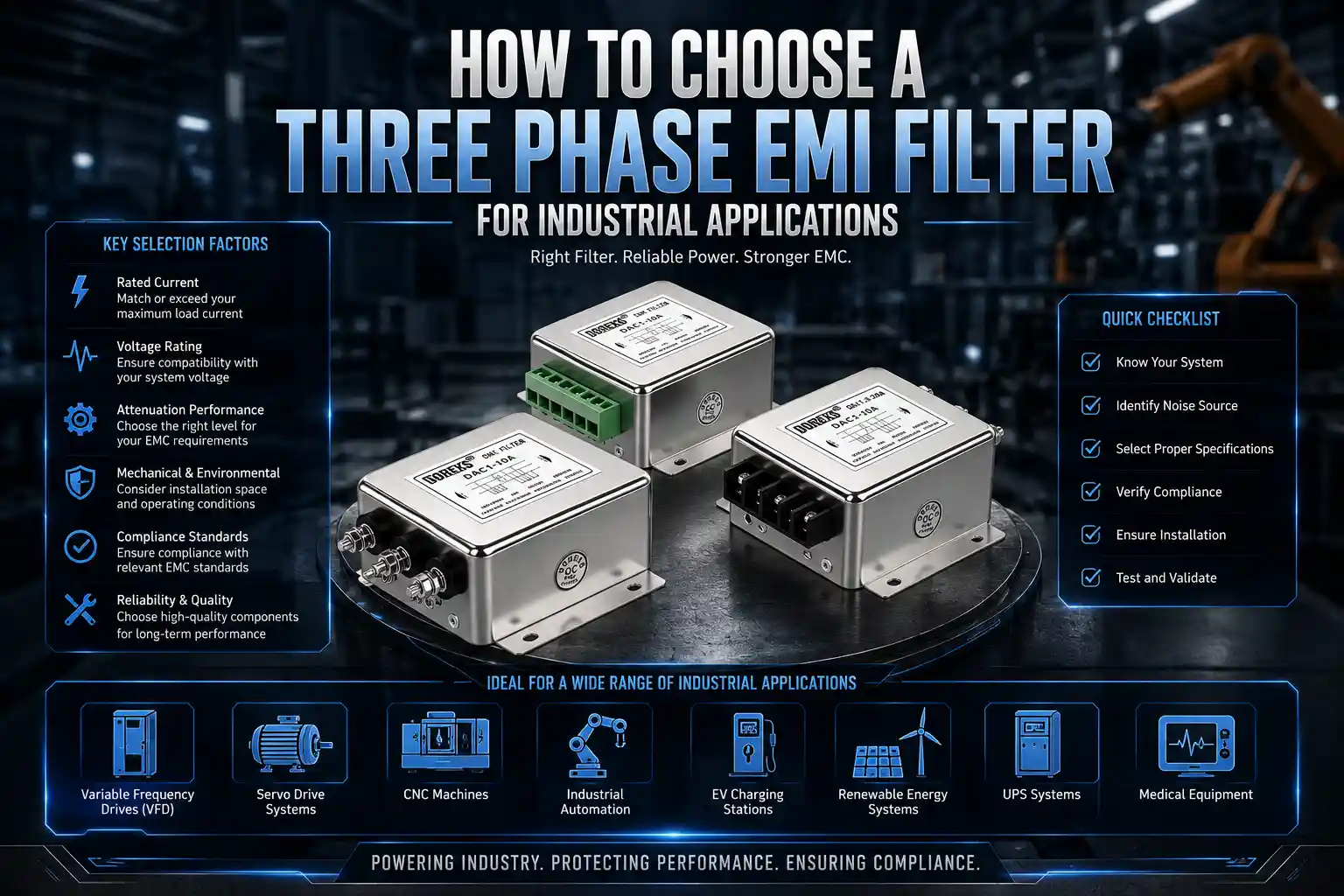
Three-phase EMI filters are often used in applications like motor drives and frequency converters. The two main configurations for three-phase EMI filters are Wye (star) and Delta. These filters are designed to handle higher power levels and are crucial for industrial applications.
Key factors engineers should consider when selecting a three-phase EMI filter include:
Key factors engineers should consider when selecting a three-phase EMI filter include:
-
Leakage current
-
Filter attenuation
-
Physical footprint
-
Rated voltage
-
Safety certifications
For example, DOREXS Electronics produces EMI filters for switching power supplies and home appliances, including transient voltage suppressor electrical devices with a rated voltage of 250 V and a current capacity of 16 A.
DOREXS's DF2 three-phase EMI filter is capable of handling rated currents up to 1000 A in inverter applications.

Common Mode and Differential Mode Noise Suppression
Common-mode noise can lead to significant radiated emissions due to circuit imbalances, making effective filtering essential. Common-mode currents are primarily responsible for electromagnetic interference and can significantly impact circuit performance. The response to common-mode noise involves balancing the circuit using mutual inductance to increase impedance to such interference.
Differential-mode filtering is achieved by placing capacitors between lines and using an inductor in series, while common-mode filtering typically involves capacitors to ground. Ground balance and physical layout are critical for effective EMI noise suppression, as improper routing can nullify filter performance. This is particularly important when considering differential mode current.
Both common-mode and differential-mode noise suppression are key functions of EMI filters. Effective suppression of these noise types ensures that electronic systems operate without disruptions from electromagnetic interference.
Differential-mode filtering is achieved by placing capacitors between lines and using an inductor in series, while common-mode filtering typically involves capacitors to ground. Ground balance and physical layout are critical for effective EMI noise suppression, as improper routing can nullify filter performance. This is particularly important when considering differential mode current.
Both common-mode and differential-mode noise suppression are key functions of EMI filters. Effective suppression of these noise types ensures that electronic systems operate without disruptions from electromagnetic interference.
Applications of EMI Filters

EMI filters are commonly utilized in various emi filter applications, including:
-
Power supplies
-
Inverters
-
Medical devices, where minimizing noise is essential
-
Consumer electronics, to enhance device reliability by preventing electromagnetic interference
- Precision audio and A/V installations, to avoid degrading sound and video quality
In telecommunications, EMI filters ensure the clarity of signals and prevent data loss. Medical equipment uses EMI filters to protect sensitive devices from interference that could compromise patient safety. Aerospace applications rely on EMI filters to maintain the integrity of instruments and communication systems in high-risk environments.
Industrial automation systems use industrial emi filters to minimize interference from large machinery and ensure smooth operation. Electric vehicle charging stations implement electromagnetic interference filters to manage high-frequency noise and improve charging efficiency. These diverse applications highlight the critical role of EMI filters in modern technology.
Industrial automation systems use industrial emi filters to minimize interference from large machinery and ensure smooth operation. Electric vehicle charging stations implement electromagnetic interference filters to manage high-frequency noise and improve charging efficiency. These diverse applications highlight the critical role of EMI filters in modern technology.
Choosing the Right EMI Filter
Choosing the right EMI filter involves several considerations:
-
The rated voltage of an EMI filter must be equal to or exceed the maximum input line voltage of the device.
-
Rated current indicates the maximum current the filter can handle without overheating.
-
The operating ambient temperature range defines the safe temperature limits within which the filter can function.
Leakage current refers to the unwanted current that flows from the power line to the ground through the filter. Different power system configurations can affect the choice of the EMI filter, necessitating proper selection. Types of noise to analyze include common noise, differential noise, and radiated noise.
Insertion loss performance is vital for EMI filters to ensure compliance with emissions regulations. Before selecting an EMI filter, engineers need to evaluate the particular needs of the electrical system. This assessment is crucial for making an informed decision. Spatial considerations for size are also important, as devices may have limited installation space.
Insertion loss performance is vital for EMI filters to ensure compliance with emissions regulations. Before selecting an EMI filter, engineers need to evaluate the particular needs of the electrical system. This assessment is crucial for making an informed decision. Spatial considerations for size are also important, as devices may have limited installation space.
Installation Tips for EMI Filters
To achieve optimal performance:
-
Mount EMI filters as close as possible to the noise source or point of power entry.
-
Ensure proper grounding for safety and to enhance the high-frequency performance of panel mount filters.
-
Place ferrite chokes typically around 5 cm from the device’s power or signal connector for improved efficiency.
Manufacturers often provide guidance on selection, design, installation, cable routing, and noise suppression techniques to assist in effective EMI filter installation. Regular maintenance checks of grounding connections are crucial to maintaining low impedance and effective EMI filtering.
Having a variety of EMI filters available can enhance installation efficiency. After replacing an EMI filter, it is important to check for both conducted and radiated noise. Combining EMI filters with shielding can further enhance protection against radiated electromagnetic interference.
Having a variety of EMI filters available can enhance installation efficiency. After replacing an EMI filter, it is important to check for both conducted and radiated noise. Combining EMI filters with shielding can further enhance protection against radiated electromagnetic interference.
Benefits of Using EMI Filters

EMI filters protect electronic devices by safeguarding against conducted and radiated interference. Preventing failures caused by electromagnetic disturbances, EMI filters enhance system reliability. Adherence to regulatory standards is critical for products to meet EMC testing and certification requirements.
Using EMI filters contributes to long-term cost reductions by minimizing maintenance and repair needs associated with electronic device failures. The benefits of EMI filters extend beyond immediate interference suppression, providing lasting value and operational efficiency.
Top EMI Filter Manufacturers
EMI filter manufacturers play a crucial role in providing effective solutions for electromagnetic interference protection. DOREXS high performance emi filters, for example, provide high-performance solutions for electromagnetic interference protection. These manufacturers contribute to improving the reliability and compliance of electronic devices through their emi filters play solutions, including emi suppression filters.
Companies like Astrodyne TDI, Crane Aerospace & Electronics, and TDK Corporation are also notable for their specialized EMI filter offerings. These manufacturers cater to a wide range of applications, from industrial to military and consumer electronics.
Companies like Astrodyne TDI, Crane Aerospace & Electronics, and TDK Corporation are also notable for their specialized EMI filter offerings. These manufacturers cater to a wide range of applications, from industrial to military and consumer electronics.
Summary
Summarizing the key points discussed, EMI filters are indispensable in mitigating electromagnetic interference in electronic systems. Understanding the working principles, types, and applications of EMI filters enables engineers to design more reliable and efficient electronic devices. The benefits of using EMI filters extend to enhanced system reliability, regulatory compliance, and long-term cost savings.
In conclusion, the role of EMI filters in modern technology cannot be overstated. As electronic systems become more complex, the need for effective EMI filtering solutions will continue to grow, ensuring that devices operate smoothly and reliably in an increasingly noisy electromagnetic environment.
In conclusion, the role of EMI filters in modern technology cannot be overstated. As electronic systems become more complex, the need for effective EMI filtering solutions will continue to grow, ensuring that devices operate smoothly and reliably in an increasingly noisy electromagnetic environment.
Frequently Asked Questions
What is the primary function of an EMI filter?
The primary function of an EMI filter is to eliminate unwanted noise from signals, ensuring the reliable operation of electronic devices. This helps maintain signal integrity and improves overall performance.
How do EMI filters work to suppress electromagnetic interference?
EMI filters function by absorbing or reflecting electromagnetic noise, enabling legitimate signals to pass through, thus ensuring the proper operation of electronic devices without interference.
What are the key components of an EMI filter?
The key components of an EMI filter are capacitors, inductors, and circuit protection elements, all of which effectively collaborate to reduce electromagnetic interference.
What should engineers consider when choosing an EMI filter?
When selecting an EMI filter, engineers must prioritize rated voltage, rated current, operating temperature, insertion loss performance, and the specific needs of their electrical system to ensure optimal performance.
Why are EMI filters important in medical and industrial applications?
EMI filters are essential in medical and industrial applications as they protect device performance by mitigating electromagnetic interference, thereby ensuring safety and reliability in critical operations.
Top Power Supply Noise Filter Solutions for Cleaner Electrical Signals
Top LC Filter Tips for Improved Circuit Performance