Top Tips for Effective EMC Filter Design
Effective EMC filter design is crucial for minimizing electromagnetic interference in electronics. This guide covers everything from essential components to techniques for passive and active filter design. You’ll also discover how to choose the right filter for your needs and ensure compliance with regulatory standards.

Key Takeaways
-
Designing effective EMC filters requires understanding key components such as capacitors, inductors, and resistors, each crucial for noise suppression.
-
Addressing both differential mode and common mode noise is essential, as they can significantly disrupt electronic device performance.
-
Selection, simulation, and testing of EMC filters are vital in ensuring compliance with regulatory standards and optimal functionality across various applications.
Key Components of EMC Filters
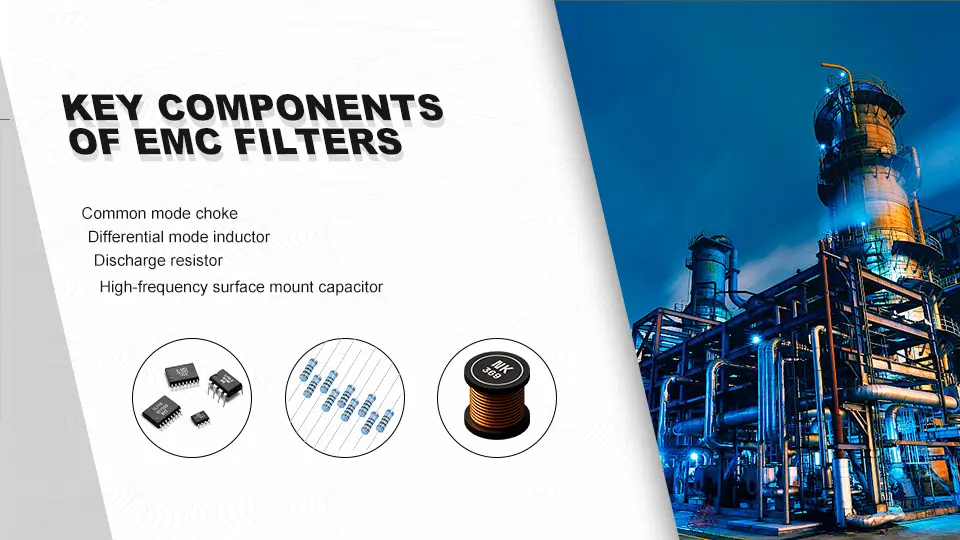
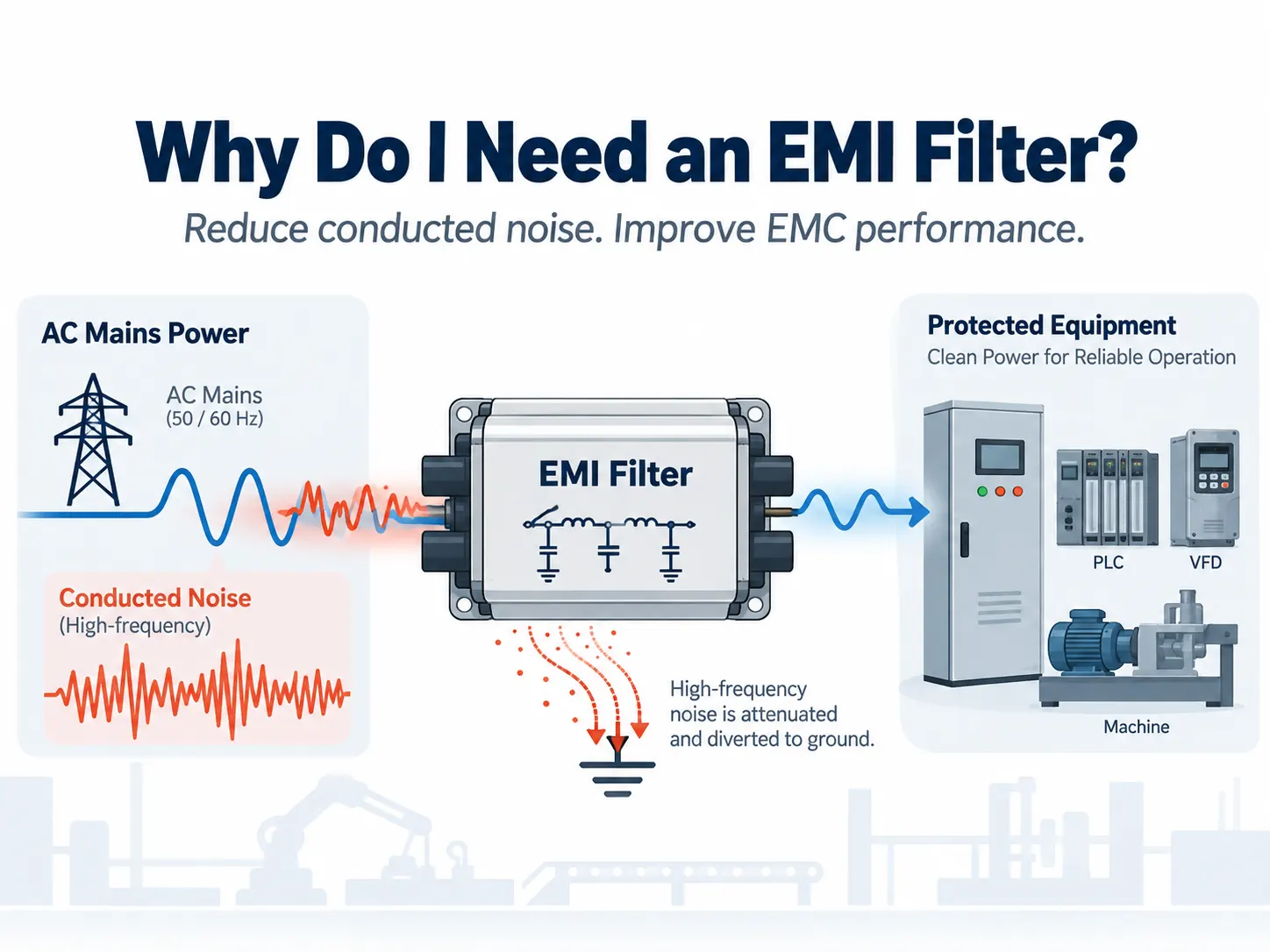
Designing an effective EMC filter begins with understanding its core components. At the heart of every EMC filter are capacitors, inductors, and resistors, each playing a crucial role in noise suppression and filtering.
Capacitor are fundamental to EMC filters, especially in shunting high-frequency noise to the ground. Their roles include:
-
Creating a low impedance path for AC signals, effectively suppressing unwanted noise.
-
Safety Class Y isolation capacitors attenuate common mode voltage noise.
-
Ensuring input-output isolation through Safety Class Y capacitors, while also considering parasitic capacitance, including the use of two capacitors and capacitive coupling.
The roles of components in the filter system are:
-
Inductors act as low-pass filters, allowing only desired frequencies to pass through.
-
When paired with capacitors, inductors form differential mode chokes, which enhance the filter’s ability to attenuate noise.
-
Input surge current limiting resistors manage the surge currents when AC voltage is applied, which is crucial for the filter’s longevity and performance.
Understanding these components and their functions is the first step in designing an effective EMC filter. The right combination of capacitors, inductors, and resistors can significantly enhance the filter’s performance, ensuring it meets the necessary standards for electromagnetic compatibility.
Understanding Differential Mode and Common Mode Noise
Differential mode and common mode noise are two primary types of interference that need to be addressed in EMC filter design. Regarding differential mode noise:
-
It occurs between two conductors.
-
It is typically addressed using LC circuits.
-
These filters are designed to suppress noise between the conductors.
-
The goal is to ensure that only the desired signals pass through.
Common mode noise, on the other hand, involves interference that occurs on both conductors relative to the ground. This type of noise can be particularly challenging to mitigate, but common mode passive EMI filters are specifically designed to address this issue. Understanding the nature and sources of these common mode currents allows you to design filters that effectively target specific types of interference.
Both types of noise can cause significant disruption to electronic devices, leading to malfunction or reduced performance. Incorporating the appropriate filters ensures that your devices operate smoothly and reliably, free from the detrimental effects of unwanted noise source.
Designing Passive EMC Filters
Designing passive EMC filters involves using inductors, capacitors, and resistors to suppress electromagnetic interference effectively. These components work together to form low-pass filters that block high-frequency noise while allowing low-frequency signals to pass through.
Pi filters and T filters are common configurations that require specific source and load impedances to function optimally. Implementing higher-order filters, such as cascaded filters, allows for a steeper roll-off outside the passband, enhancing the filter’s ability to suppress unwanted frequencies. This combination of design elements ensures that passive EMC filters can achieve the desired filtering performance and compliance with EMI standards.
Carefully selecting and configuring your passive components creates filters that provide effective noise suppression, ensuring EMC compliance and reliable operation in various environments.
Active EMC Filter Design Techniques

Active EMI filters take noise suppression a step further by incorporating op amps and passive components such as resistors and capacitors. These transistor-driven filters can dynamically adjust their performance to enhance noise suppression in complex scenarios.
One of the critical considerations in active EMI filter design is the stability of the circuit. Adjusting the transfer function can affect the stability, so it is essential to carefully design and test the filter to ensure it remains stable under all operating conditions. Active filters are particularly effective in applications where passive filters alone may not provide sufficient attenuation, such as in the case of a single phase emi filter.
Leveraging both active components and passive components allows you to design filters that offer superior performance, ensuring compliance with stringent electromagnetic compatibility requirements. This component is essential for achieving optimal results.
Selecting the Right EMC Filter for Your Application

Selecting the right EMC filter is crucial for ensuring proper noise suppression and meeting regulatory standards. Factors such as frequency range and insertion loss are critical in determining the efficiency of an EMC filter. Additionally, the environmental conditions in which the filter will operate can significantly impact its performance.
For instance, industrial equipment and electric motors may require robust filters that can handle high levels of conducted EMI, while medical equipment might need filters with low leakage current to ensure patient safety. Considering these factors helps you choose the appropriate EMC filter that meets specific needs and ensures regulatory compliance.
Proper selection and implementation of EMC filters not only enhance device performance but also ensure that your products operate reliably in their intended environments, free from the detrimental effects of electromagnetic interference.
Simulation and Testing for EMC Compliance
Simulation tools are indispensable for ensuring that EMI filter designs meet regulatory standards and perform effectively in real-world applications. Pre-layout SPICE simulations are particularly useful for qualifying EMI filter designs before finalizing the physical layout. These simulations allow you to identify potential issues and make necessary adjustments early in the design process, saving time and resources.
Additionally, EMI filter circuits should be considered when a design fails EMC testing or when specific systems require filtration. Incorporating simulation and testing into your design process ensures that your EMC filters meet necessary standards and provide reliable performance in various applications.
Effective simulation and testing are critical steps in achieving EMC compliance to ensure compliance with emc regulations, ensuring your devices operate smoothly and meet the stringent requirements of regulatory standards.
Practical Applications of EMC Filters
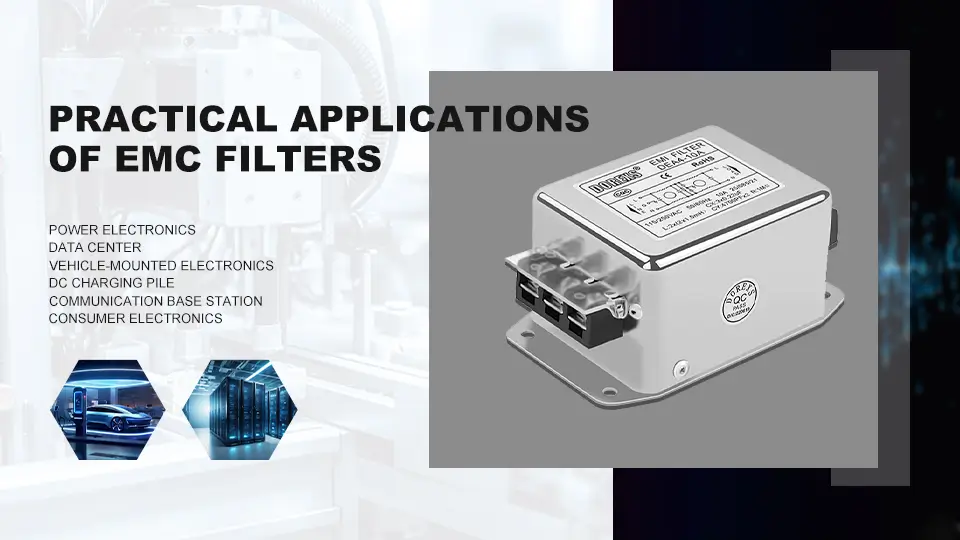
EMC filters are essential in eliminating electromagnetic interference, ensuring the proper functioning of electronic devices and electrical devices across various industries. Key applications include:
-
Power supply systems
-
Communication systems
-
Medical devices
-
Industrial equipment
These filters help mitigate the impact of high-frequency EMI and external interference, allowing devices and other devices to operate reliably and efficiently at higher frequencies and low frequencies.
In consumer electronics, EMC filters ensure that devices like smartphones and laptops function without disruption from unwanted signals. In industrial settings, EMC filters protect sensitive electronic equipment from the effects of conducted EMI, ensuring smooth operation and compliance with safety standards.
Understanding the practical applications of EMC filters highlights their importance in maintaining performance and reliability of electronic devices in diverse environments.
Ensuring EMC Performance in Complex Systems

In complex systems, maintaining EMC performance is critical due to the presence of multiple noise sources and interactions between different components. EMI/EMC components play essential roles in noise suppression, ensuring that systems operate properly even in the presence of external electrical interference.
Voltage surges and high-frequency EMI can significantly impact the performance of electrical systems, necessitating the use of robust power supplies and EMC filters to mitigate these effects. Implementing effective noise suppression techniques and ensuring proper voltage rating EMC performance enhances the reliability and functionality of complex systems, particularly in environments where power lines and radiated emi are a concern.
Achieving EMC compliance in complex systems requires careful planning and design, but the benefits of reliable and interference-free operation make it a worthwhile endeavor.
Summary
Effective EMC filter design is essential for mitigating electromagnetic interference and ensuring the reliable operation of electronic devices. By understanding the key components of EMC filters, distinguishing between differential mode and common mode noise, and employing both passive and active design techniques, you can create filters that meet regulatory standards and perform effectively in various applications.
From selecting the right filter for your needs to simulation and testing for compliance, each step of the design process is crucial. With practical applications spanning multiple industries, EMC filters play a vital role in maintaining the performance and reliability of modern electronics. Embrace these techniques and insights to enhance your filter designs and achieve optimal electromagnetic compatibility.
Frequently Asked Questions
What are the key components of an EMC filter?
The key components of an EMC filter are capacitors, inductors, and resistors; capacitors shunt high-frequency noise to ground, inductors function as low-pass filters, and resistors help manage input surge currents. These elements work together to improve electromagnetic compatibility in electronic devices.
How do differential mode and common mode noise differ?
Differential mode noise manifests between two conductors, whereas common mode noise affects both conductors in relation to the ground. Effective noise reduction requires distinct filtering methods tailored to each type; differential mode filters utilize LC circuits, while common mode filters specifically target common mode interference.
What are the benefits of using higher-order filters in EMC design?
Employing higher-order filters in EMC design enhances the suppression of unwanted frequencies due to their steeper roll-off characteristics, resulting in improved filtering performance. This leads to more effective management of electromagnetic interference in electronic systems.
Why is simulation and testing important for EMC compliance?
Simulation and testing are essential for EMC compliance as they ensure that EMI filter designs adhere to regulatory standards and function effectively in practice. Identifying potential issues early allows for necessary adjustments, ultimately enhancing product reliability.
What are some practical applications of EMC filters?
EMC filters are crucial in power supply systems, communication technologies, medical devices, and industrial equipment, as they effectively eliminate electromagnetic interference, ensuring the reliable operation of electronic devices. Their application is essential for maintaining device integrity across various industries.
Troubleshooting EMI Problems and Solutions in Ozone Generators
Best Practices for EMI PCB Design and Layout