Military Grade EMI Filters: EMC Filters on Military Products
Background: Challenges from electromagnetic interference and transient voltages

Engineers in the military and aerospace fields face many challenges with electromagnetic interference (EMI) and transient voltage compliance. Standards set by different military organizations vary and are more stringent than similar standards in commercial applications. These standards sometimes do not agree on test limits and methods. Electronic noise from one device can affect the normal operation of other devices. EMI standards are designed to prevent these potential problems from occurring. Lack of necessary EMI control can lead to noise interference, such as unwanted noise in communications or computing equipment, and false triggering and false readings in sensor circuits. Radio frequency interference (RFI) is another type of interference that can affect the performance and signal quality of sensitive equipment.
In addition to generating noise signals that can cause interference, the normal operation of equipment can also generate considerable transient voltages. These transient voltages occur at the input of the equipment and are specified in military standards and adjusted for the specific environments in which different levels of equipment are located. For example, the requirements for land-based equipment are more different than those for airborne equipment, and filters must be suitable for airborne and flight-critical applications, where reliability during flight is critical. Naval systems also require EMI filters that are suitable for harsh marine environments and meet Navy-specific standards.
As a result, the challenge facing military system designers is to address the EMI and transient voltage performance of equipment that is about to be produced and meet the most stringent requirements set by the end customers in a timely manner. This includes ensuring protection through robust EMI filter construction, which is essential for reliable operation in harsh environments. This how-to will explain the basics of EMI and transient voltage compatibility applied to military systems using switching power supplies (SMPS). It will focus on basic terminology that arises in EMI and transient voltage suppression and address a variety of requests from several different military organizations. EMI military filters are designed to meet applicable military and electrical standards, including those for naval and airborne systems, and are tested to ensure compliance and reliability.
Military EMI filters often come with certifications such as MIL-STD-461 compliance, validating their quality and reliability for military and industrial use.
Introduction to Military EMI
As an industry leader in emi filters, companies such as DOREXS have developed custom military emi filters that are engineered to meet the rigorous requirements of military standards, including mil std and mil std 461. These filters play a vital role in safeguarding sensitive electronic equipment, supporting the success of military and aerospace operations by maintaining system integrity and performance in environments where failure is not an option.
Military Standards for EMI
Military operations demand the highest levels of reliability and performance from electronic systems, especially when operating in harsh environmental conditions. To achieve this, military standards such as MIL-STD-461 have been established to provide comprehensive guidelines for the design, testing, and manufacturing of military equipment. These standards specify strict requirements for conducted emissions, radiated emissions, and immunity to electromagnetic interference, ensuring that equipment can operate effectively even in the presence of significant EMI. Custom military EMI filters are engineered to meet these rigorous standards, providing tailored solutions that protect sensitive electronic systems from interference. Through thorough testing and adherence to military standards, these filters enable military equipment to withstand the challenges of real-world operations, ensuring mission success and operational safety.
Ensuring Compliance with MIL Standards
Custom military emi filters are engineered to meet these demanding requirements, providing robust protection against EMI and supporting the operational readiness of military equipment. Leading manufacturers like DOREXS and Astrodyne TDI offer emi military filters that are meticulously designed and tested to comply with mil std and mil prf specifications.
By integrating these filters into their products, manufacturers can ensure that their equipment not only meets but exceeds the expectations for performance and reliability in military and aerospace applications, regardless of the operational environment.
EMI Power Line Filters
EMI power line filters play a vital role in protecting military and aerospace electronic equipment from electromagnetic interference transmitted through power lines. These filters are specifically designed to suppress high-frequency noise and other forms of EMI, ensuring that sensitive systems such as communication equipment, radar systems, and navigation devices function without disruption. Built to operate reliably in harsh environmental conditions, EMI power line filters are capable of withstanding the rigors of military applications, from ground vehicles to aircraft and naval systems. By integrating these filters into power distribution networks, military organizations can maintain the stability and reliability of their electronic systems, even in the presence of significant electromagnetic challenges.
Robust EMI filters are essential within the power distribution systems that house critical military and aerospace equipment, ensuring both protection and compliance with stringent standards.

Electromagnetic interference (EMI)
Electromagnetic interference can be divided into four major categories:
- Conducted emission
- Conducted susceptibility
- Radiated emission
- Radiated susceptibility
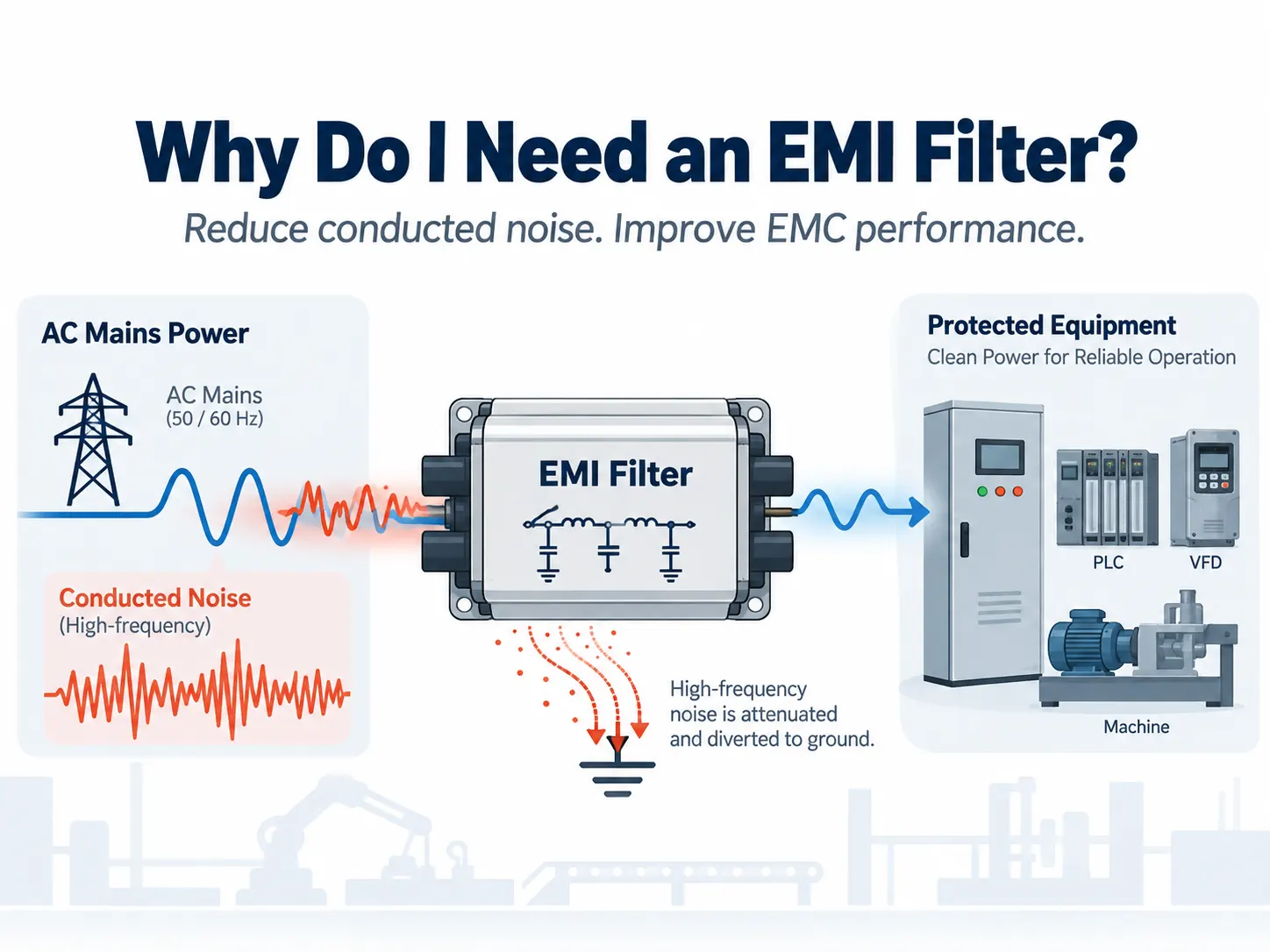
Conducted noise arises from cable transmissions connecting the input power bus and equipment, while radiated interference arises from unintended transmission or reception of noise signals. Electromagnetic interference emission standards (EMI emission standards) are about the "noise" generated by equipment, while electromagnetic interference susceptibility standards (EMI susceptibility standards) describe the "noise environment* that equipment can tolerate---in order to operate normally.
From a design perspective, conducted emissions can be further divided into common-mode noise and differential-mode noise. Differential mode conducted noise arises from the input and output current of the converter (the normal current in the circuit). On the other hand, common-mode current flows in the chassis ground in the same direction as the power line and return line. Differential mode current is generally related to switching currents in power converters, while common mode current is mainly the result of pulsating voltages in the circuit.
Electromagnetic compatibility requires the system to meet all types of standards for conducted interference and radiated interference. However, when considering filter function, it is usually based on how well the filter protects the mains supply from emissions emitted by its equipment. Figure 1 shows a typical switching power supply load with external filter and transient voltage suppression circuitry. The switching current (SMPS switching current) I can be attenuated by built-in and external filters.
The input current I2 of the switching power supply is mainly DC, plus a specific current ripple (ripple current). This current ripple and higher frequency peaks can be further attenuated by the filter, so the current I3 flowing out of the power bus is essentially DC. If there is still a small amount of AC in I3, the filter must be designed to keep the AC content below the level specified in the application standard. The attenuation of the switching current to the DC level is a measure of the differential mode performance of the filter. The common mode effectiveness of the filter can be determined by the reduction in common mode current produced by the common mode current delivered through the common mode current source. An effective electromagnetic interference filter must keep the common mode current and differential mode current in the power circuit within specified standards. In military power systems, alternating current (AC) is often present alongside DC, and EMI filters must be designed to mitigate interference from both AC and DC sources. Alternating current is especially relevant in power line filters and in systems where DC/DC converters generate internal AC waveforms from DC input.
EMI Filter Design and Manufacturing
The manufacturing process involves rigorous testing and quality control to guarantee that every filter meets the required specifications and can perform consistently in a wide range of applications. By partnering with experienced manufacturers, organizations can be confident that their emi filters are not only compliant but also capable of delivering reliable performance in the most challenging military and aerospace environments.
Transient suppression
Filters are used to attenuate the electrical noise generated by the normal operation of electronic equipment, while transient voltage suppression works to overcome occasional or intermittent disturbances, which usually occur at the power distribution bus. This type of power disturbance occurs from large generator switches, starting engines, transient loads, etc. They can be roughly divided into three categories:
1) Voltage ripple
2) Voltage surge
3) Voltage spike
Voltage ripple refers to the difference between the actual DC input voltage and the standard DC input voltage. Surges are generated by load transients on the distribution bus and typically last from a few milliseconds to a hundred milliseconds. On the other hand, voltage spikes are generally caused by reactive load switching. The spikes have considerable high-frequency, high-voltage oscillations that last less than 5 milliseconds. The function of the transient suppression circuit is to protect the EMI filter and at the same time protect the downstream circuits from damage caused by transient voltages. Figure 1 shows an input bus voltage and an input surge operating at standard DC levels. The transient voltage suppressor forces the input voltage to a level that ensures the safety of the EMI filter and downstream converters, as shown in Figure 1 for Vbus. In this way, the transient voltage suppression function is similar to the sensitivity function of the EMI filter: they both protect the load equipment from interference originating from the power distribution bus.DC/DC converters are electronic devices that may use internal transformers to achieve voltage regulation and isolation, even when operating from a DC input.
Off-the-shelf EMI filters can be a cost effective solution for many standard military applications, while custom filters may be required for high-performance or specialized needs. Commercial off-the-shelf (COTS) EMI power line filters are specifically designed for military and aerospace applications, offering rapid deployment and compliance with standards such as MIL-STD-461.
In conclusion
The electromagnetic interference filtering and transient voltage suppression required in military systems must ensure:
- Various electrical parts must not produce additional electrical interference that affects other equipment.
- All components attached to the power bus can tolerate power bus interference and operate in this typical interference manner.
Several different sets of electromagnetic interference and voltage transient specifications have been established over the years to illustrate many needs. In some cases, the standards of the various organizations are very similar, while in other cases they are quite different, either in the methods used to test equipment compatibility or in the actual levels of interfering signals. Solutions that meet multi-standard specifications enable hardware to be used in various regions around the world. However, designers must be aware that in some applications, a design that meets multiple different specifications is often over-engineered (and thus more expensive, larger, and more cumbersome). Therefore, it is necessary to make trade-offs in the overall performance of the system to meet the requirements of specific applications and schedules. Off-the-shelf EMI filters can be a cost effective solution for many standard military applications, while custom filters may be required for high-performance or specialized needs.
Applications of EMI Filters
Custom Tempets EMI Filters

DOREXS EMI SOLUTIONS
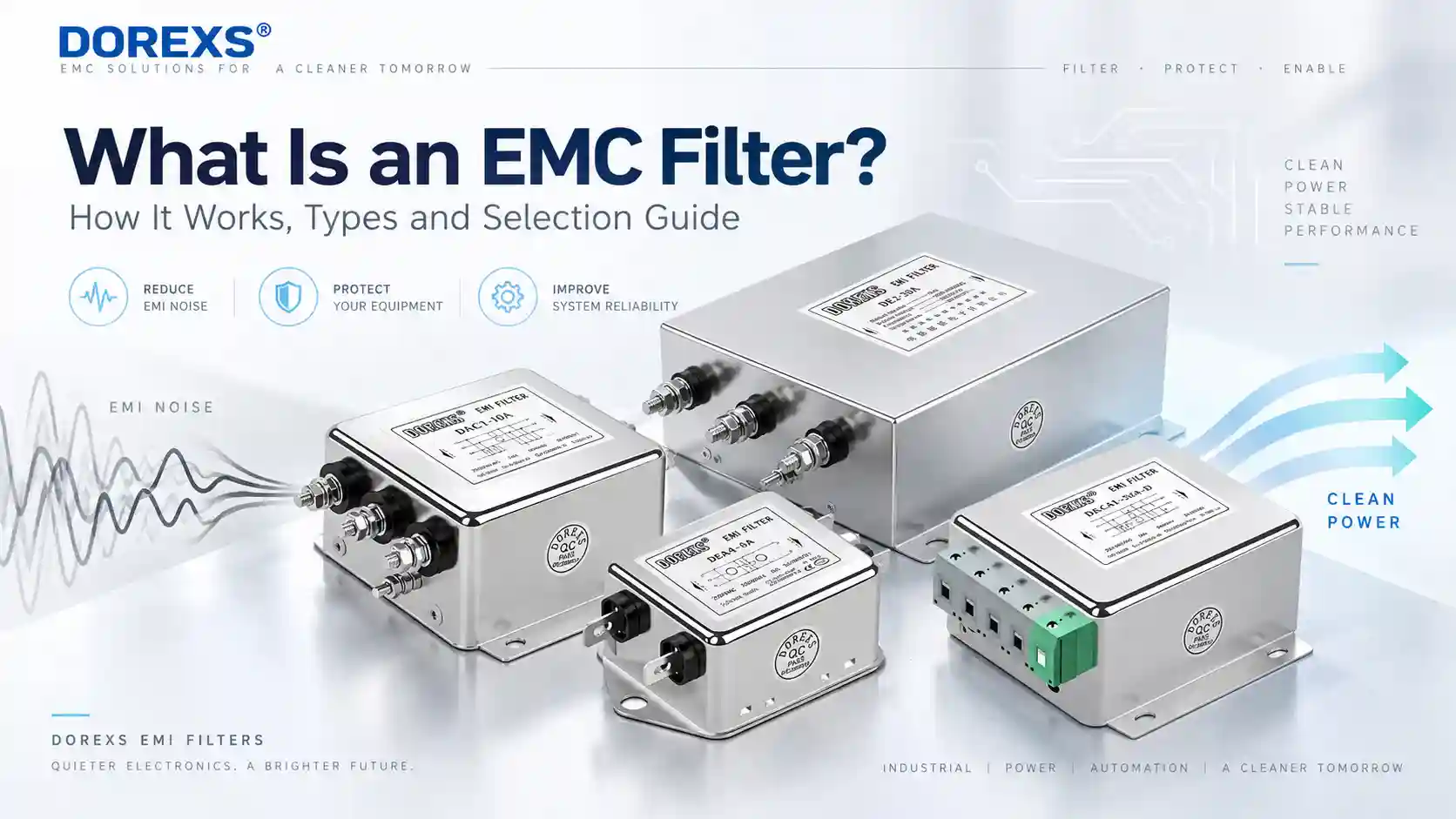
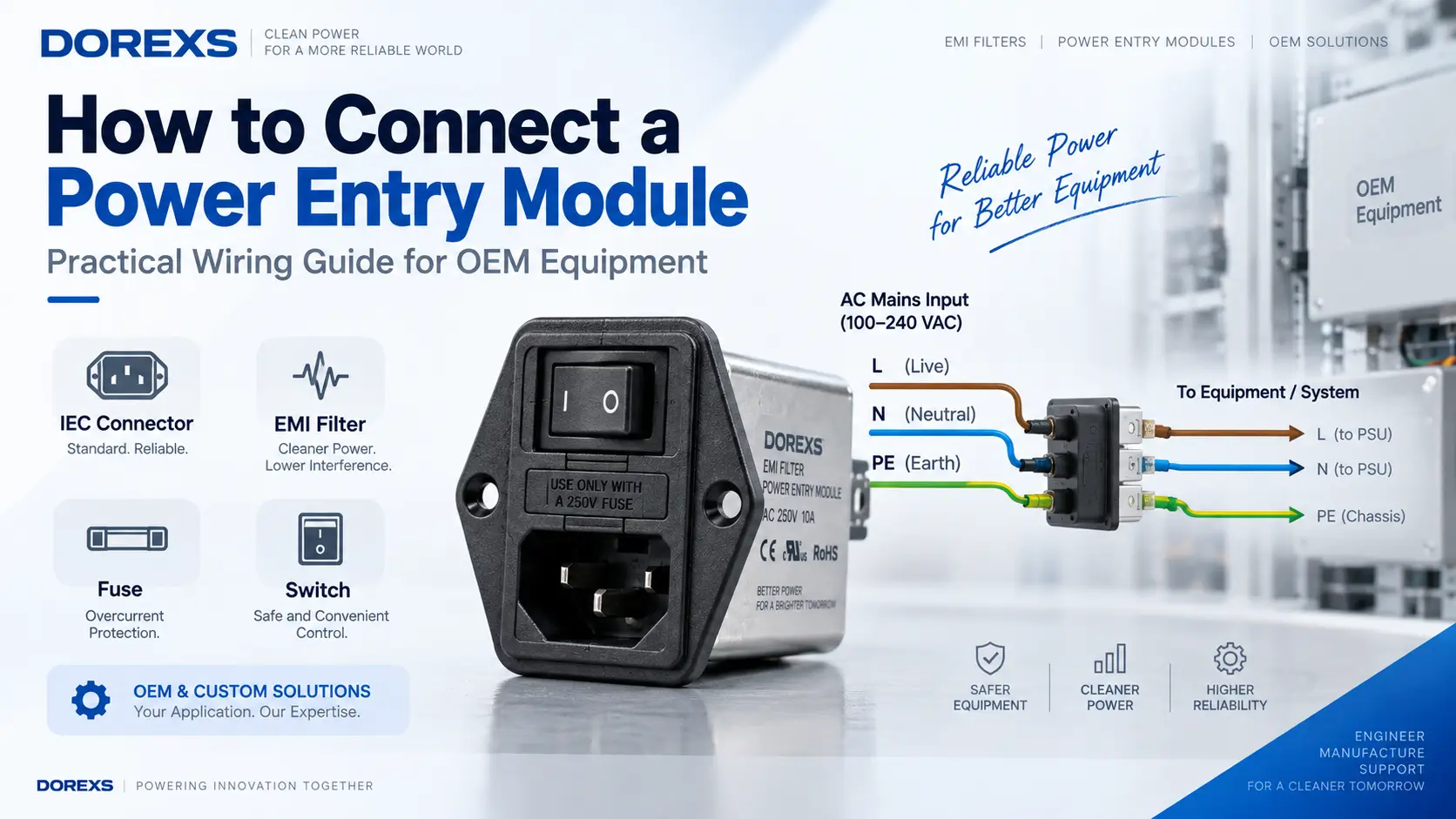
DOREXS offers EMI filters for different applications, from one phase or three phase EMI/EMC filters with IEC socket, power entry filter and chassis mounting filters. DOREXS also offer quality medical-grade EMI filters.
Find out more about DOREXS connectivity solutions, CONTACT US NOW!
As an industry leader in military grade EMI/EMC filters, DOREXS delivers proven solutions that meet the highest standards for protection, compliance, and reliability in demanding defense and aerospace environments.
What is a DC EMI Filter
EMI Filter Design