What is a Power Entry Module: Complete Guide to PEM Components and Applications
Introduction
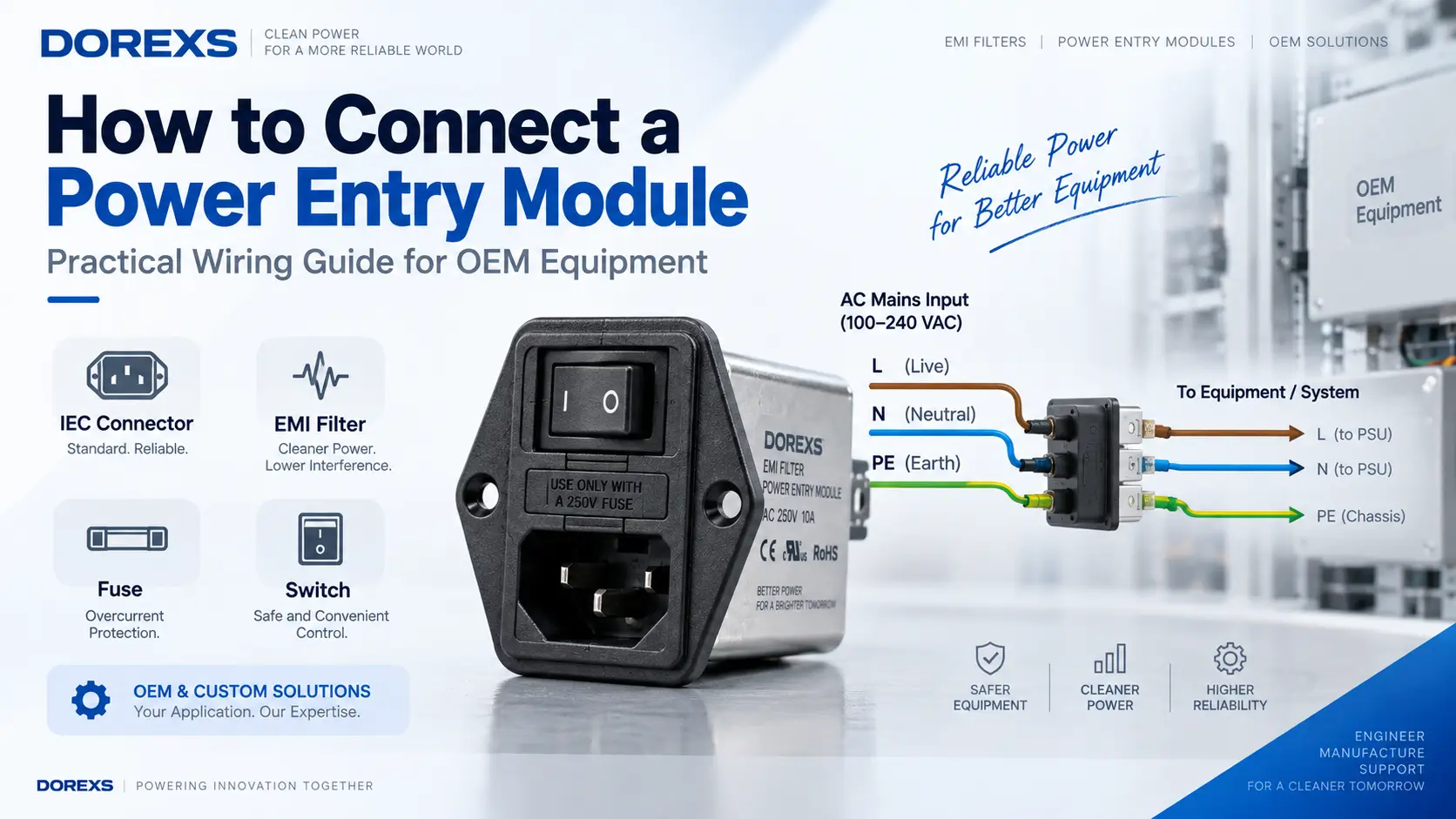
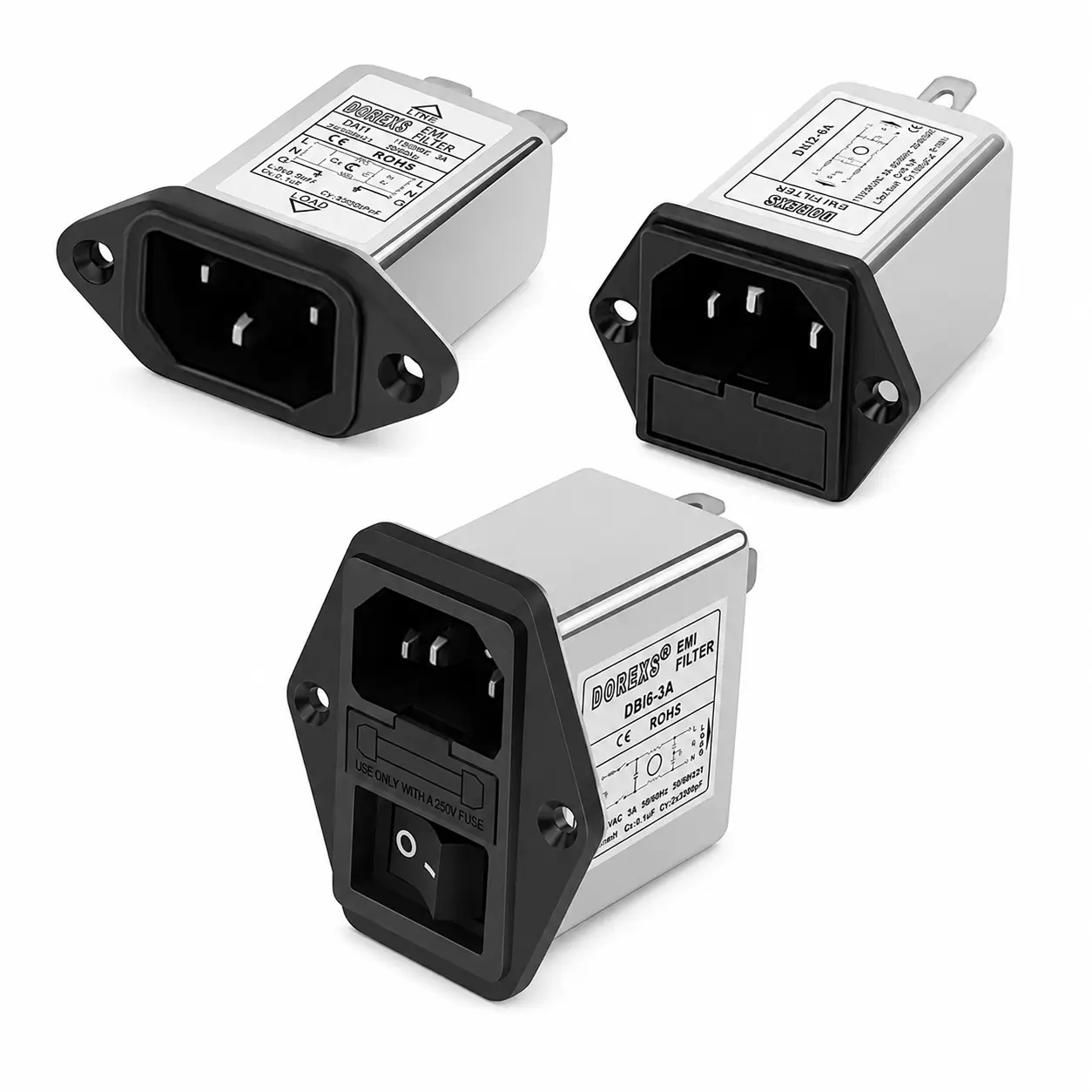
A power entry module (PEM) is a compact unit that integrates multiple power connection and conditioning functions-such as a power inlet, switch, fuse holder, EMI filter, voltage selector, and sometimes an outlet-into a single panel-mounted assembly for electrical equipment. Rather than sourcing and wiring individual components separately, equipment manufacturers use a PEM to consolidate these functions, reducing assembly complexity, saving panel space, and simplifying compliance with safety standards.
This guide covers the architecture, core components, application categories, and selection criteria for power entry modules across industrial, medical, and consumer electronics use cases. Custom transformer design and internal power supply topology fall outside the scope of this article. The target audience includes engineers, procurement teams, and manufacturers who need EMC-compliant power solutions and want to understand how PEMs fit into their designs.
A direct answer: A power entry module is an electromechanical device that combines 2 to 5 power-related functions-inlet, switching, circuit protection, filtering, and voltage selection-into a single unit that mounts directly to an equipment panel, replacing what would otherwise be several discrete components requiring separate wiring and certification.
By the end of this guide, you will understand:
-
The core components inside a PEM and how each function contributes to equipment safety
-
How IEC 60320 inlet standards relate to power entry module design
-
The differences between commercial-grade and medical-grade modules
-
Key selection criteria including EMC filtering, leakage current, and certification requirements
-
Cost and engineering advantages of integrated modules over discrete component assemblies
Understanding Power Entry Module Fundamentals
Power entry modules emerged as a practical solution to a persistent engineering problem: wiring discrete inlets, switches, fuses, and filters inside equipment chassis was labor-intensive, error-prone, and complicated the certification process. By replacing multiple individual components with a pre-certified integrated assembly, PEMs simplify power entry in electronic devices while directly addressing electromagnetic compatibility requirements at the point where AC mains power enters the equipment.
Basic PEM Architecture
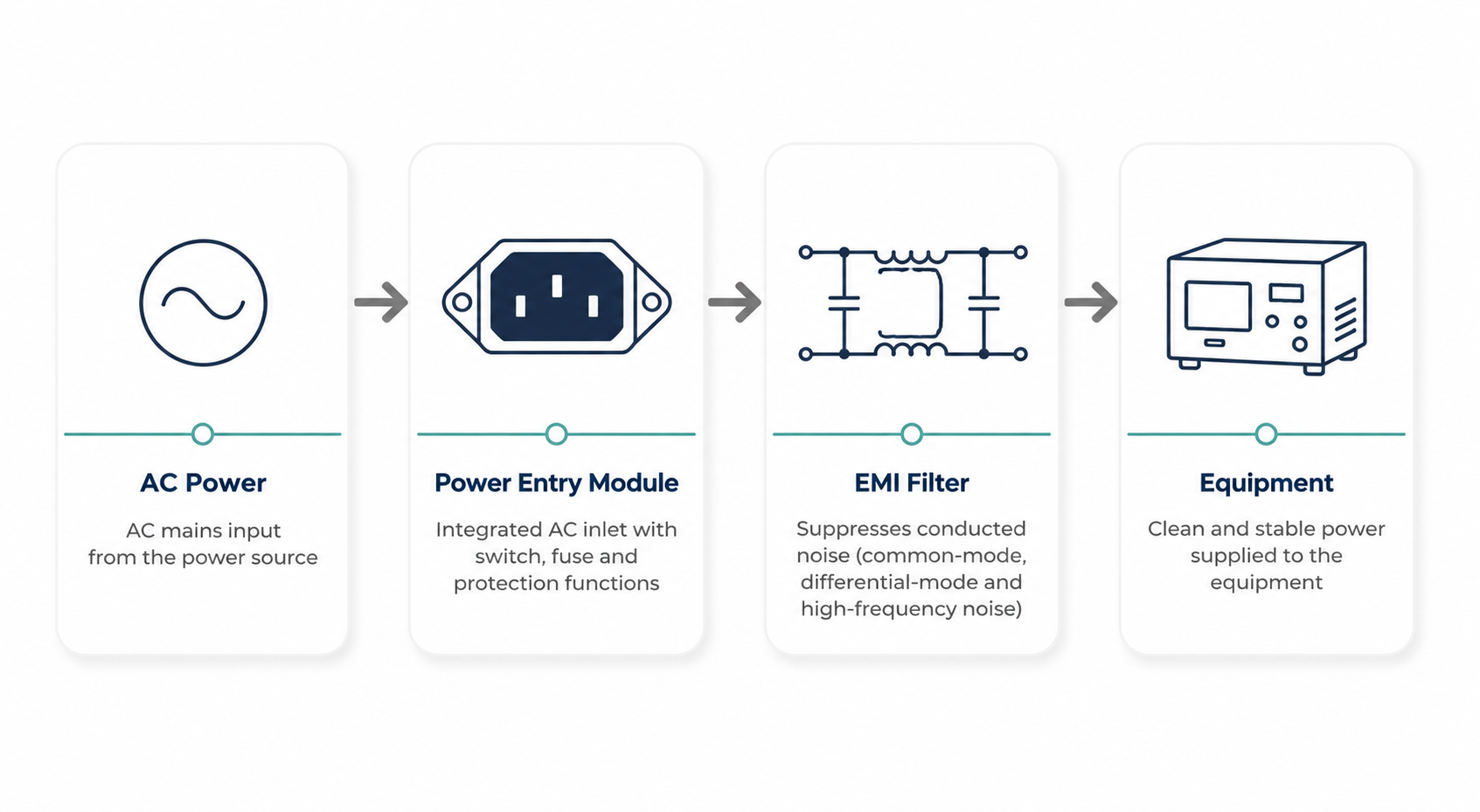
A typical power entry module merges 2 to 5 electrical functions into a modular design. At minimum, most modules include an inlet and a fuse holder. More complete configurations add a rocker switch, an EMI filter, and a voltage selector for 115 or 230VAC operation. All of these functions occupy a single panel cutout rather than requiring separate mounting holes, wiring runs, and fasteners for each component.
Power entry modules simplify wiring and reduce the footprint required on device chassis. The panel mounting approach-whether snap-in or screw-mount-means installation of a PEM can save panel space and reduce wiring complexity compared to assembling discrete parts. Termination options include quick-connect tabs, solder lugs, and PCB pins, giving designers flexibility in how the module interfaces with internal circuitry.
This integrated approach directly supports equipment power management and compliance with safety standards, since the module arrives as a tested, certified assembly rather than a collection of parts that must be verified individually.
IEC 60320 Standard Compliance
The IEC 60320 standard defines appliance couplers-the inlet and connector shapes, temperature ratings, current ratings, and grounding configurations used in detachable power cord assemblies worldwide. The IEC 60320 inlet is the most common power entry type found in PEMs.
Common inlets include IEC 60320 C14, C6, C8, and C20. The C14 inlet (mated with C13 cords) handles 10A standard in most international markets, with UL/CSA allowing up to 15A in North America. The C20/C19 configuration serves high-current applications up to 16–20A, suited for server racks and high-power industrial equipment. The C8 "figure-8" connector provides an ungrounded, lower-current option for smaller appliance designs, while C15/C16 hot-condition variants handle elevated temperatures up to 120°C for specialized applications.
This standardization ensures that equipment designed with IEC 60320 inlets is compatible with power cord assemblies available in international markets-a critical advantage for companies selling products globally.
Core Components and Functions
Each component within a power entry module serves a specific role in bringing AC power safely into equipment. Understanding these functions helps engineers choose the right combination of features for their application requirements.
Power Inlet Function
The inlet is the entry point where external AC mains connect to the equipment via a detachable cord. Its primary specifications include current ratings from 3A to 20A, voltage ratings typically spanning 125–250VAC, and grounding type (Class I grounded versus Class II double-insulated).
Inlet selection depends on the target market and equipment power demands. For example, a C14 inlet suits most general-purpose equipment up to 10A, while a C20 inlet handles higher-current devices. The grounding configuration affects both the safety classification and the connections available for EMI filtering. Because the inlet determines which power cord assembly the end user will need, it also influences international market compatibility-a C14-based module accepts standardized cordsets used worldwide rather than requiring region-specific fixed cords.
Integrated Switching
Most PEMs include a rocker switch that allows users to control equipment power without disconnecting the cord. Switch configurations include single-pole (disconnecting the line conductor only) and double-pole (disconnecting both line and neutral), with double-pole designs required by some safety standards and particularly common in medical devices.
Illuminated switch options provide visual status indication. Switch ratings must match the inlet's current and voltage capacity, and lifespan ratings (measured in mechanical cycles) determine long-term reliability. In some module designs, the switch interlocks with the fuse holder access to prevent exposure to live parts during maintenance-an important safety feature in medical and industrial environments.
Circuit Protection Elements
Modules can include circuit protection like fuses or breakers to protect equipment against overcurrent and short circuits. Fuse holder integration typically accommodates 5×20mm international cartridge fuses or 1/4×1-1/4 inch North American sizes, with options for fast-acting or time-delay blow characteristics.
Dual-fuse configurations-protecting both line and neutral conductors-are required for medical equipment and certain high-safety industrial applications. Fuses must be ordered separately for safety compliance, and fuse drawers in medical-grade modules often require a tool to open, reducing the risk of accidental shock during replacement. Some PEMs substitute a circuit breaker for the fuse, offering resettable protection without component replacement.
Power entry modules enhance safety by protecting against overcurrent and short circuits, making them a critical part of any equipment's protection strategy.
EMI/RFI Filtering
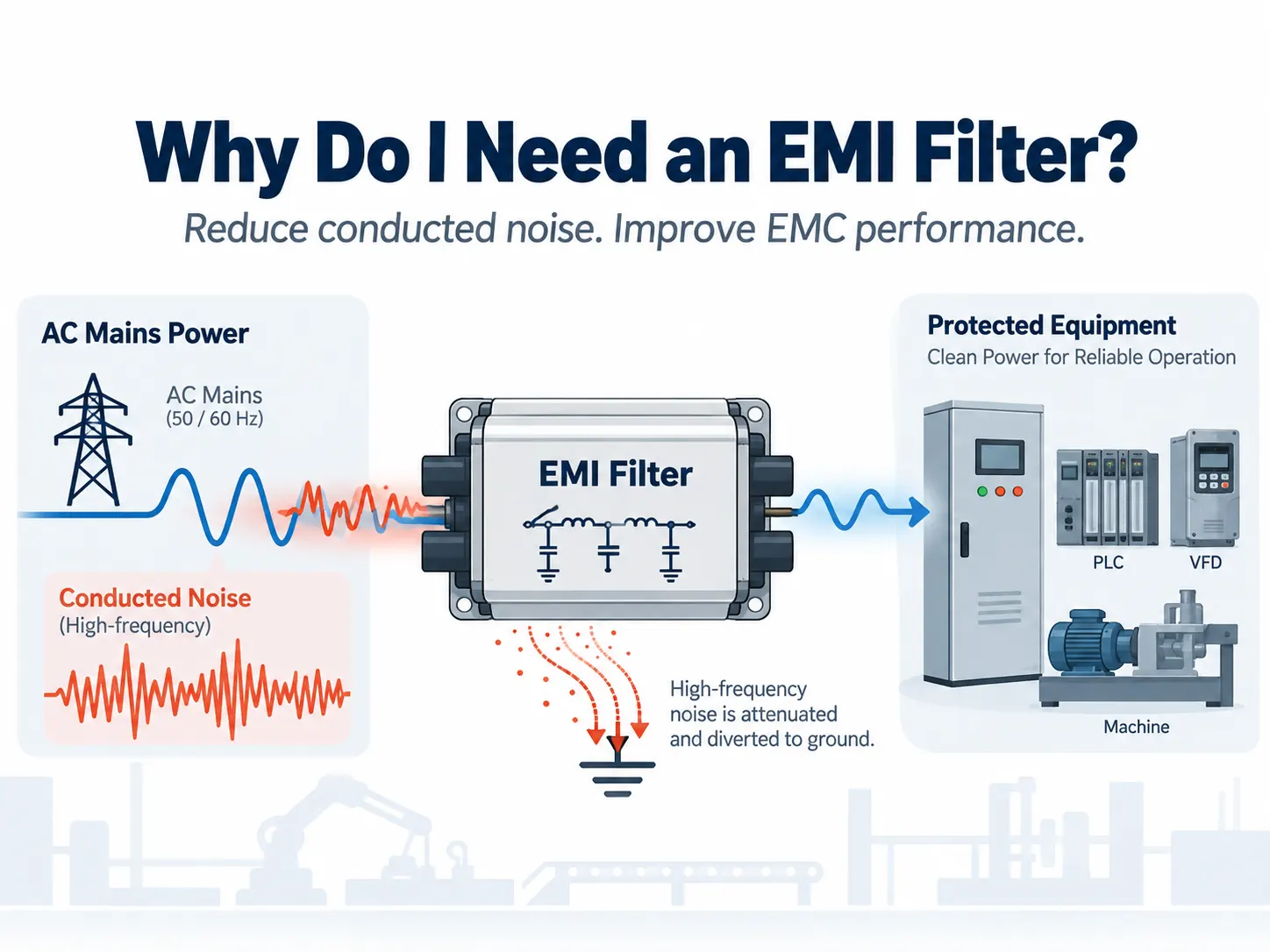
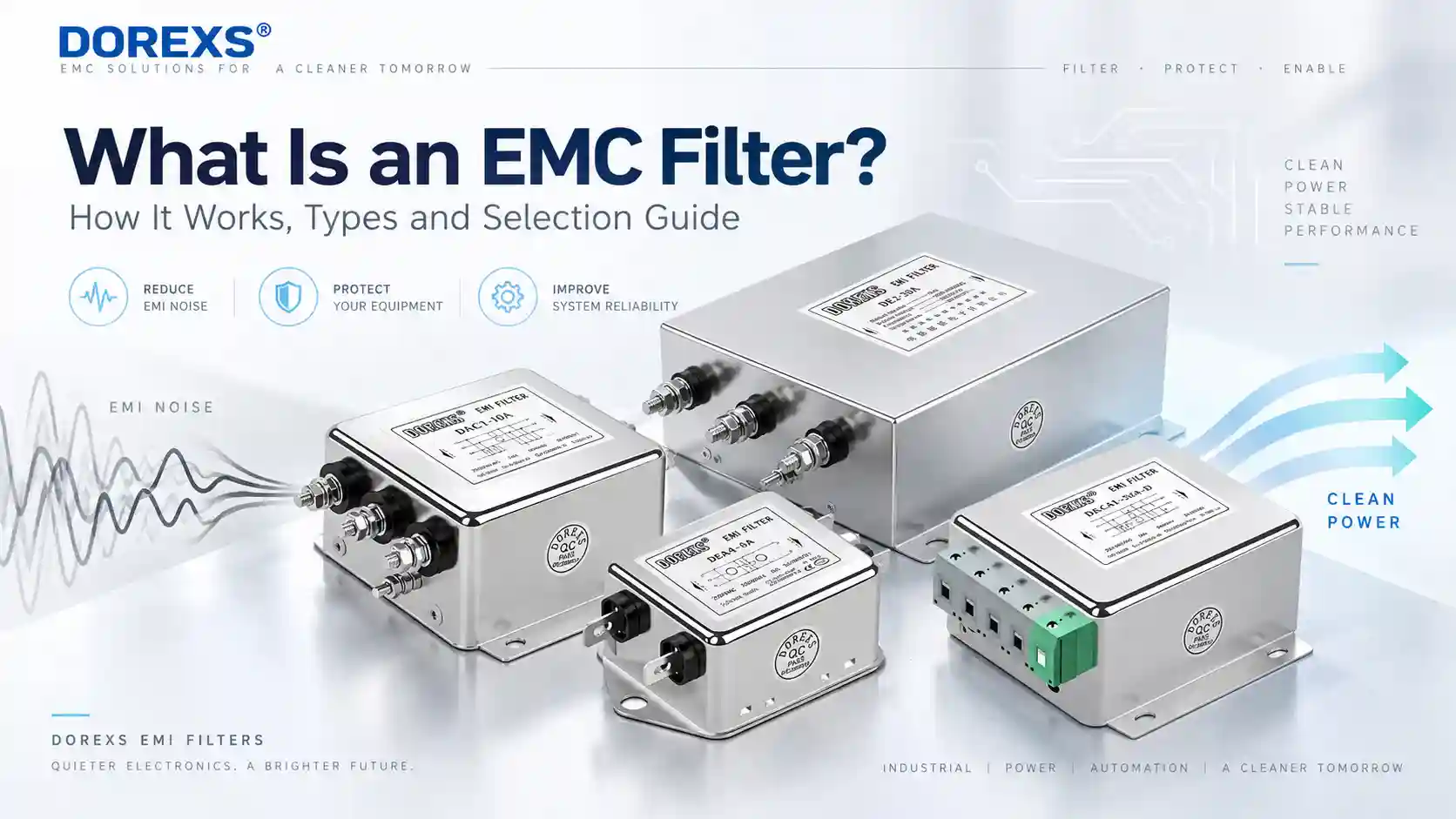
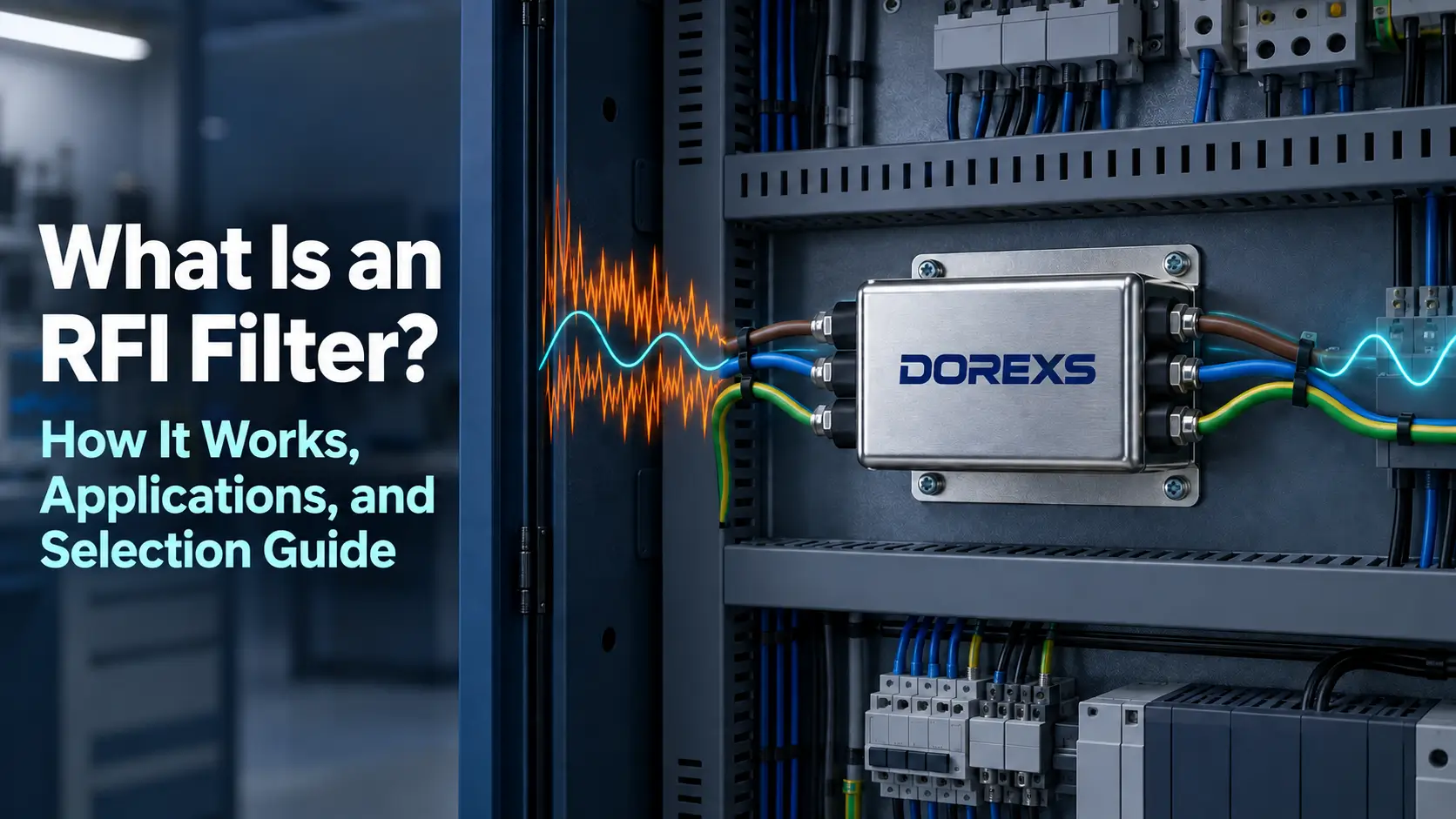
Integrated EMI filters suppress high-frequency electrical noise at the point of power entry, addressing both conducted emissions leaving the equipment and external interference entering it. RFI/EMI filters are designed to remove radio frequency interference using arrangements of inductors (common-mode chokes) and capacitors (line-to-line and line-to-ground).
EMI filters remove electromagnetic interference from equipment and prevent equipment from radiating noise to others. Filters help provide clean electricity to sensitive equipment by attenuating differential-mode and common-mode noise across specified frequency bands. Filter performance is typically expressed as attenuation in dB at given frequencies.
For medical devices, filter design faces a critical constraint: medical-grade filters reduce leakage current to 5µA at 250VAC, which means line-to-earth capacitance must be minimized. This trade-off between filtering effectiveness and leakage current is one of the most important engineering considerations in medical PEM design.
Modules help equipment meet international electromagnetic compatibility standards, simplifying the path to CE, FCC, and other regulatory approvals.
Power Entry Module Types and Applications
Understanding which type of module fits a given application requires matching component combinations, performance specifications, and certifications to the intended use environment. Power entry modules are commonly used in medical devices and industrial automation, but the requirements for each differ substantially.
Commercial Grade Modules
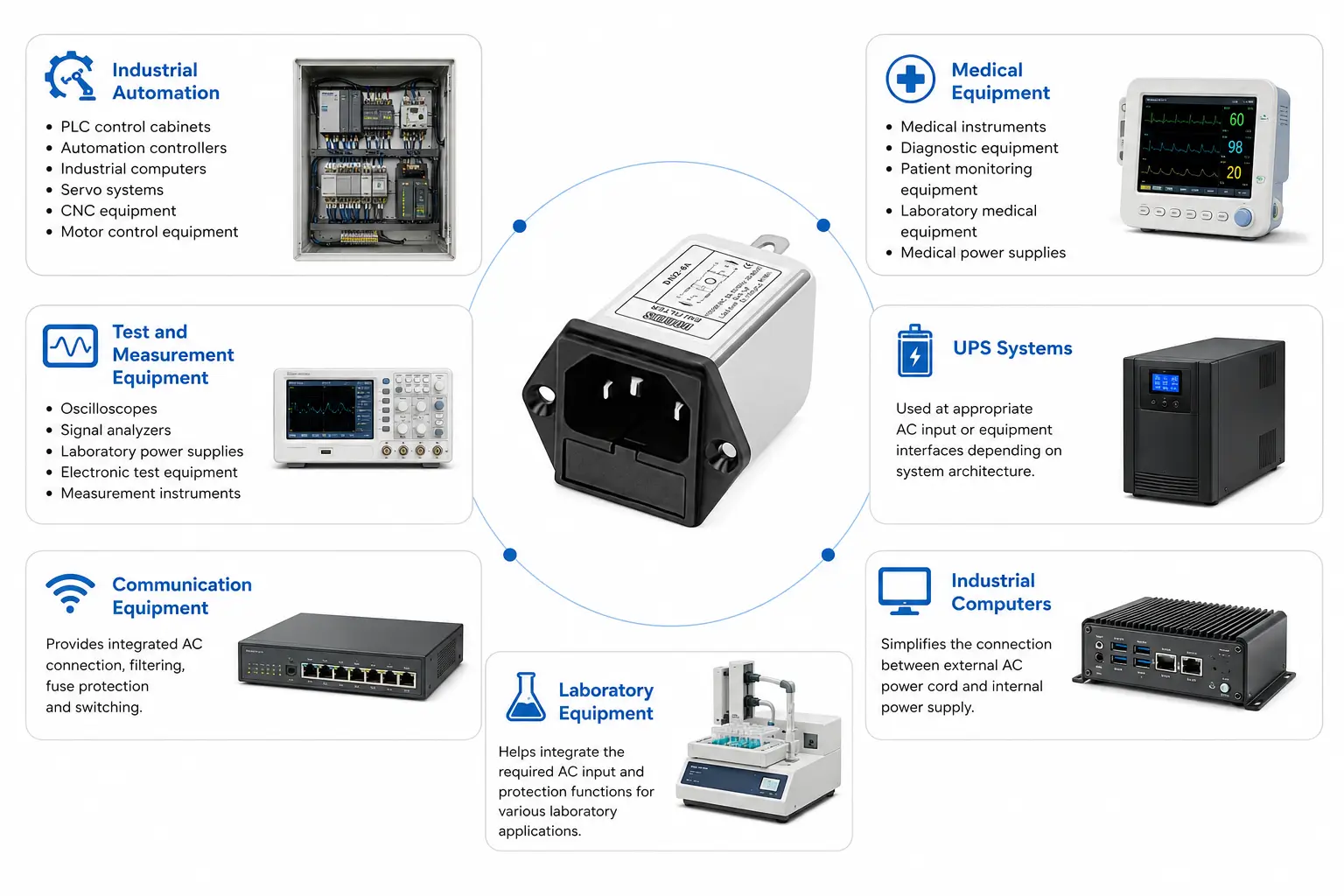
Standard commercial PEMs serve consumer electronics, industrial automation, telecommunications, and general-purpose appliance designs. Typical function combinations include inlet + switch + fuse, inlet + filter + fuse, or inlet + filter + switch + fuse holder-allowing engineers to choose the configuration that matches their needs without over-specifying.
Current ratings commonly range from 1A to 15A at 250VAC, with operating temperature ranges of −25°C to +70°C or higher. Mounting options include snap-in for thinner panels and screw-mount for more robust installations. EMC performance meets CE and FCC conducted emissions requirements, and modules carry certifications from agencies including UL, CSA, VDE, and CCC. Leakage current limits are less stringent than medical grade, allowing the use of larger line-to-earth capacitors for better noise suppression.
These products are ideal for equipment manufacturers who need reliable power entry with integrated protection and filtering but do not face the heightened patient safety requirements of the medical sector.
Medical Grade Modules
Medical equipment requires PEMs compliant with IEC 60601-1, which imposes strict requirements on electrical safety, insulation, and leakage current. Medical equipment requires low-leakage current filters around 5µA-a specification that fundamentally constrains filter topology and capacitor selection.
Key medical-grade features include:
-
Dual fusing on both line and neutral conductors
-
Reinforced insulation meeting 2× MOPP (Means of Patient Protection) or 2× MOOP (Means of Operator Protection) classifications
-
Enhanced creepage and clearance distances-approximately 8mm creepage and 5mm clearance for 2× MOPP at mains voltages
-
Shock-safe fuse access requiring a tool to open the fuse drawer
-
Dielectric strength testing at 4000VAC or higher between primary and patient-accessible parts
These modules must meet not only standard safety certifications but also medical-specific EMC requirements that verify the device will not interfere with or be disrupted by other equipment in a clinical environment.
Selection Comparison Table
Criterion |
Commercial Grade |
Medical Grade |
Industrial Grade |
| Leakage current (line to earth) | Up to low mA; less stringent | ≤5µA at 250VAC for patient-connected equipment | Moderate; depends on application class |
| Fusing requirements | Single fuse (line only) common | Dual fuse (line and neutral) required | Single or dual depending on risk assessment |
| Filter performance | Standard attenuation for CE/FCC | Low-leakage topology with limited Y-capacitors | High attenuation; leakage less constrained |
| Insulation / isolation | Basic or supplementary insulation | Reinforced insulation; 2× MOPP/MOOP | Double insulation common |
| Certifications | UL, CSA, VDE, CCC, CE | UL, CSA, VDE plus IEC 60601-1, hospital-grade | UL, CSA, VDE, CE, industry-specific |
| Fuse access | Standard drawer or holder | Shock-safe, tool-required access | Standard or shock-safe |
| Typical applications | Consumer electronics, IT, telecom | Patient monitors, imaging, lab equipment | Automation, process control, test equipment |
When selecting between these categories, the application environment determines the minimum requirements. Over-specifying-for example, using a medical-grade module in a consumer appliance-increases cost unnecessarily, while under-specifying in a medical context creates serious compliance and patient safety risk.
Common Challenges and Solutions
Engineers implementing power entry designs frequently encounter issues that span EMC performance, mechanical constraints, and regulatory complexity. Here are the most common challenges with practical solutions.
EMC Compliance Requirements
Even when a PEM's datasheet shows excellent filter attenuation, actual EMC test results depend heavily on PCB layout, cable routing, grounding topology, and enclosure design. A filter that performs well on the bench may underperform once installed in the final product.
Solution: Always verify filter performance in the actual application environment. Test conducted emissions and immunity with the production enclosure, final cable routing, and real load conditions. Select PEMs with filter specifications that provide margin above your required attenuation levels, and ensure the module's ground connection has a low-impedance path to the chassis.
Panel Space Limitations
Equipment designs increasingly demand smaller footprints, leaving limited panel space for power entry connections. Mounting separate inlets, switches, fuses, and filters requires multiple cutouts and significant internal wiring volume.
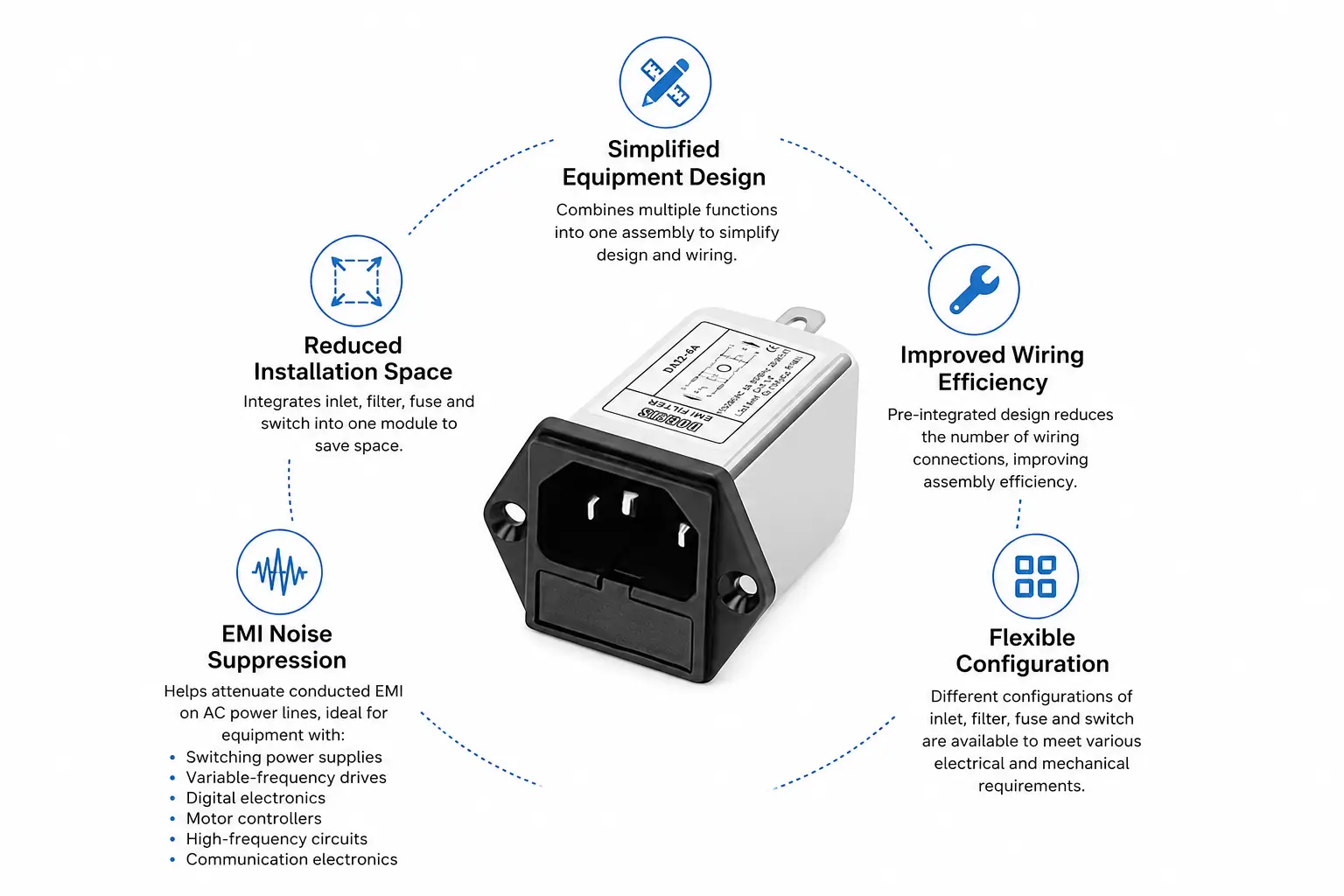
Solution: Modules can combine multiple functions into a single unit, dramatically reducing the number of panel cutouts and internal wire runs. Snap-in mounting styles work for thinner panels and faster assembly, while screw-mount options provide greater mechanical stability. Low-profile and compact unit designs are available for depth-constrained chassis. Power entry modules can reduce assembly labor costs significantly by eliminating the need to install and wire other components individually.
Multi-Regional Certification Needs
Selling equipment in international markets requires navigating multiple safety agency approvals, voltage compatibility, and connector standards. Managing separate certifications for individual components multiplies the compliance burden.
Solution: Choose PEMs that carry multiple agency approvals-modules must comply with UL, CSA, and VDE standards at minimum for broad market access, with CCC added for the Chinese market. Voltage selectors allow operation on 115 or 230VAC, though many modern switched-mode power supply designs accept universal input (90–264VAC), making voltage selectors unnecessary. Power entry modules simplify compliance with safety standards by providing a single pre-certified assembly rather than requiring separate certification of each component.
Conclusion and Next Steps
Power entry modules are integrated solutions that combine multiple electrical functions-inlet, switching, circuit protection, filtering, and voltage selection-into a single certified assembly. They improve safety, reduce assembly costs, save panel space, and streamline EMC compliance for equipment manufacturers across industries. For medical devices, specialized PEM designs meet the stringent leakage current, insulation, and certification requirements of IEC 60601-1.
To move forward with your power entry design, take these steps:
-
Assess your equipment's current power entry requirements-voltage, current, connector type, and target markets
-
Evaluate panel space constraints and determine which functions to integrate versus keep separate
-
Define your EMC filtering needs based on conducted emissions limits and immunity requirements
-
Verify whether your application requires medical-grade specifications, including leakage current limits and MOPP/MOOP classifications
-
Select modules with the appropriate multi-agency certifications for your target markets
Related topics worth exploring include EMI filter circuit design for custom filtering solutions, leakage current fundamentals for medical device safety, and power quality optimization techniques for sensitive equipment.
Additional Resources
-
IEC 60320 standard documentation provides complete specifications for appliance coupler configurations, temperature ratings, and current capacities
-
The IEC inlet EMI filter product line offers a view of available filtered power entry configurations for various current ratings and application types
-
For medical PEM requirements, consult the guide to medical device EMC requirements for detailed IEC 60601-1-2 compliance information
-
EMI power line filter installation guidance covers best practices for grounding, wiring, and physical placement that affect real-world filter performance
How to Connect a Power Entry Module: Practical Wiring Guide for OEM Equipment
How to Choose a Three Phase EMI Filter for Industrial Applications